Digestive Enzymes for IBS: Why “Do They Work?” Is the Wrong Question — Here’s the One That Actually Helps You
Digestive Enzymes for IBS: Why “Do They Work?” Is the Wrong Question — Here’s the One That Actually Helps You...
- TL;DR — The 60-Second Answer
- First Things First — What IBS Actually Is (and Isn't)
- What Does the Science Say? — An Honest Look at 2025 Evidence
- 🔑 The Trigger-to-Enzyme Match Table — Flip the Question
- Subtype-Specific Strategy
- 🔑 The Eastern View — "When Liver Wood Overwhelms Spleen Earth"
- ⚠️ Red Flags — When Enzymes WON'T Help and You MUST See a Doctor
- The "First Bite + Warm Sip" Timing Protocol
- SIBO Overlap — 60–70% of IBS Sufferers Have Both
- Food-First — Before Buying a Pill
- Summary & Next Steps
- Frequently Asked Questions (FAQ)
Digestive Enzymes for IBS: Why “Do They Work?” Is the Wrong Question — Here’s the One That Actually Helps You
You Google “digestive enzymes for IBS” as a last hope — only to read a Healthline article ending with the same wishy-washy line: “More research needed.” Discouraged. You close the tab and continue living with IBS.
I understand that feeling — because someone close to me in my family walked the same path for nearly 8 years before finding the right direction. And I noticed one thing: 90% of articles about enzymes for IBS are answering the wrong question.
The right question isn’t “do enzymes help IBS?” The right question is: “Which trigger food is hurting YOU specifically?“
As someone trained in Traditional Oriental Medicine (a dedicated researcher, not a clinician and not a doctor) with a deep love for Western health science, today I’ll share with you how to flip this question — and why it may change how you see your gut entirely.
📋 Important Note
This article is educational and reflects personal research experience, not a substitute for medical advice. IBS is an official medical diagnosis requiring evaluation by a gastroenterologist. If you haven’t been diagnosed or are taking prescription medications, consult your doctor before adding any supplement — including enzymes.
TL;DR — The 60-Second Answer
Digestive enzymes MAY support some people with IBS — but only when matched to your specific trigger food (dairy → lactase, beans → alpha-galactosidase, FODMAPs generally → FODMAP-targeted blend). Broad-spectrum enzymes for IBS show weaker evidence. This is not a cure — it’s an adjunctive supplement. Always see a doctor first.

First Things First — What IBS Actually Is (and Isn’t)
Before talking about enzymes, let’s understand exactly what IBS is. This is the first step — and the step most people skip.
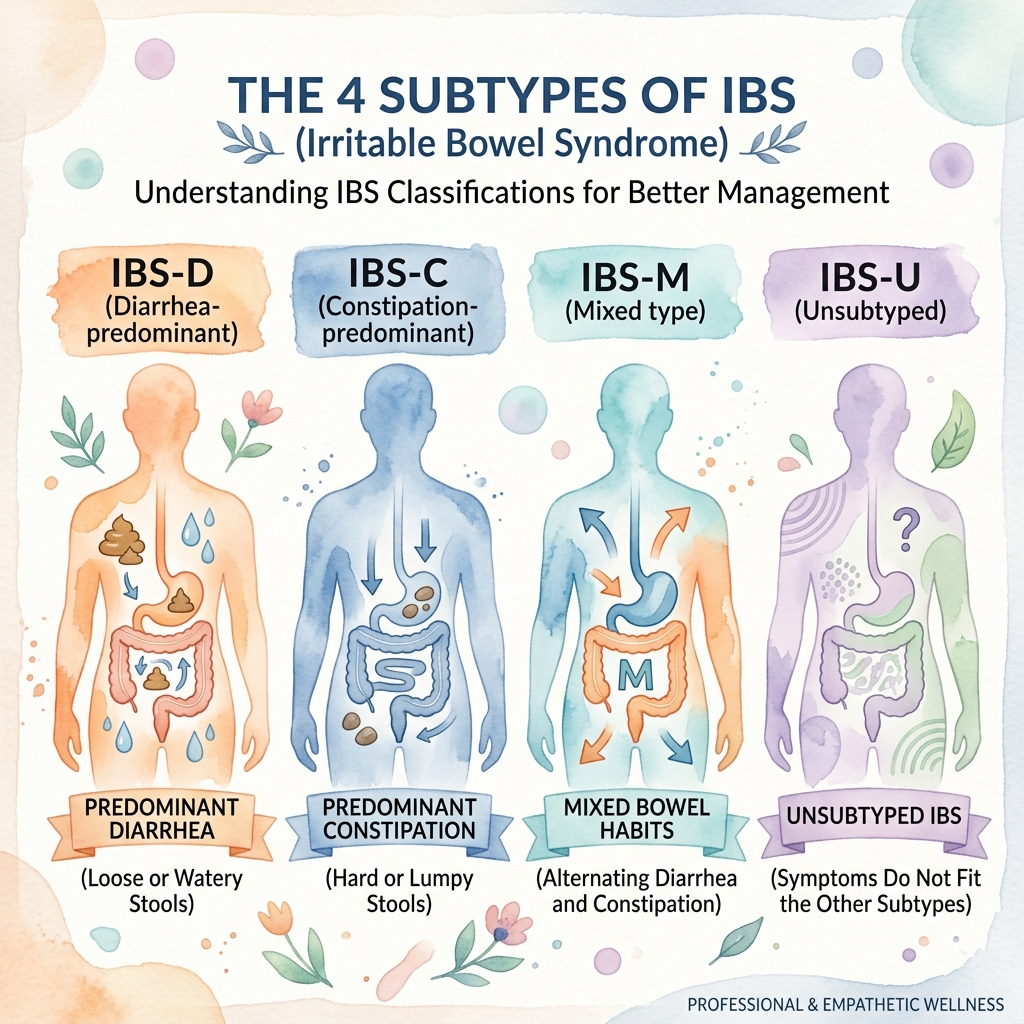
The 4 Subtypes of IBS — Which Are You?
- IBS-D (Diarrhea-predominant): Loose stools, urgency, frequent bowel movements.
- IBS-C (Constipation-predominant): Dry stools, straining, sensation of incomplete evacuation.
- IBS-M (Mixed): Alternating loose and hard stools, unpredictable patterns.
- IBS-U (Unsubtyped): Symptoms that don’t fit neatly into the above three.
Knowing your correct subtype is the first step to choosing the right enzyme strategy. Many people self-prescribe broad-spectrum without realizing IBS-D and IBS-C need entirely different approaches [1].
Your Pancreas (Probably) Isn’t Broken
This is a critical clarification upfront: IBS is NOT exocrine pancreatic insufficiency (EPI). Your pancreas still produces enzymes normally. This is why high-dose pancreatin-style enzyme replacement often does NOT improve IBS — because the problem isn’t your pancreas.
The IBS problem typically lies in three root causes: (1) carbohydrate tolerance issues with specific sugars (lactose, GOS, fructan, polyols) — this is where enzymes may help. (2) Excessive bacterial fermentation in the gut — this requires reducing trigger foods. (3) Gut-brain axis dysregulation driven by chronic stress — this is where enzymes cannot help at all.
Enzymes only help when targeted at (1) — and need to be combined with other strategies for (2) and (3). This is a truth few articles share with you clearly.
What Does the Science Say? — An Honest Look at 2025 Evidence
I’m not going to “spin” numbers to sell you enzymes. Here’s the current scientific truth, divided into three categories:
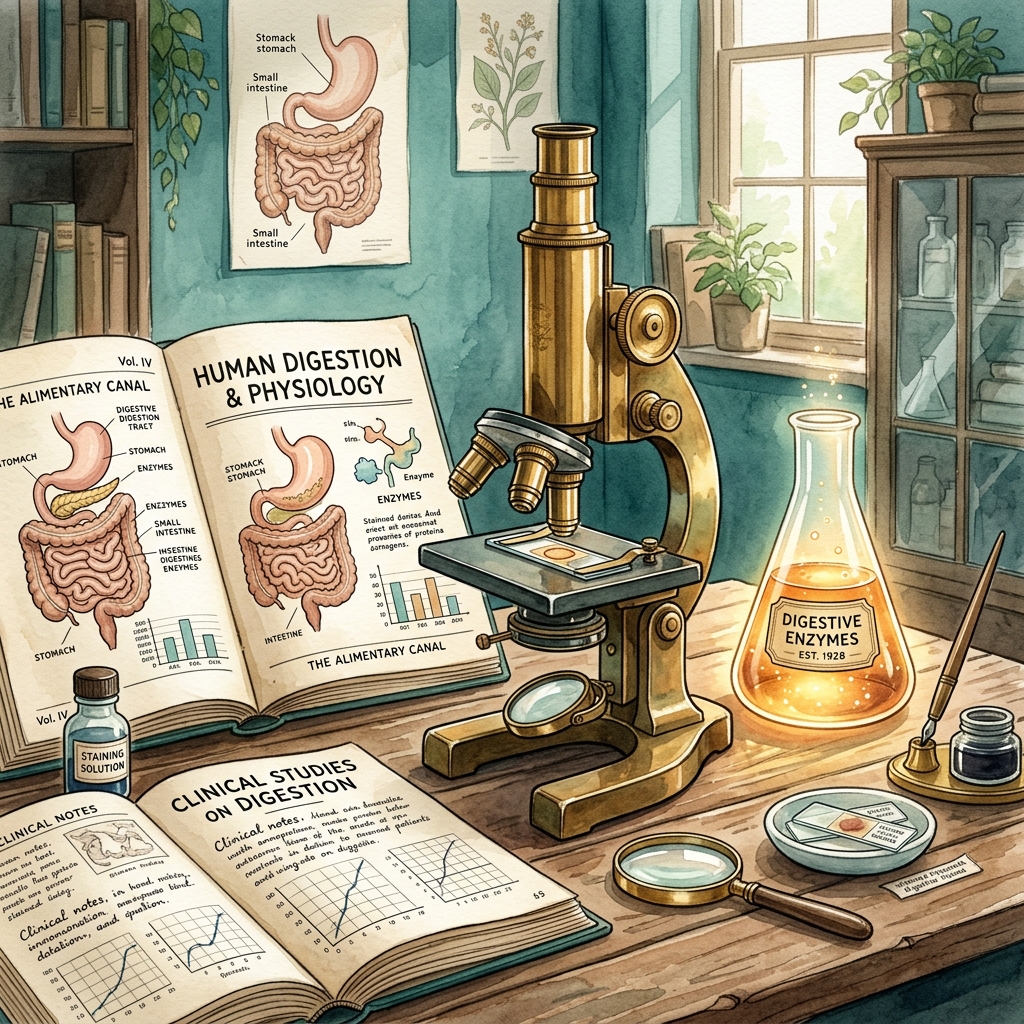
Where Evidence Is STRONG — Targeted Enzymes
- Lactase for lactose intolerance overlap: strong, decades-recognized evidence.
- Alpha-galactosidase for GOS-sensitive subgroup (beans, nuts): 2017 RCT showed statistically significant symptom reduction in GOS-sensitive subgroups [2].
- FODMAP-targeted blends (FODZYME): A 2024 prospective study in the Journal of the Academy of Nutrition and Dietetics — 52% of participants were “responders,” with a 78% reduction in bloating symptoms after 4 weeks [3].
Where Evidence Is WEAK — Broad-Spectrum Enzymes
Broad-spectrum (amylase + protease + lipase) for general IBS: mixed evidence, many studies failing to reach statistical significance versus placebo. High-dose pancreatin: typically doesn’t improve IBS because the pancreas is still functioning normally.
Where Evidence Is EMERGING — Combination Formulas
- Biointol (enzymes + inositol + beta-glucan): 2017 RCT showed reductions in bloating, flatulence, and abdominal pain in IBD/IBS patients [4].
- Enzyme therapy for post-prandial distress: study of 86 patients, 82.5% reported improvement, many still using on-demand after 3.7 years follow-up [5].
Important note: No enzyme is officially FDA-approved to treat IBS. All are adjunctive supplements, not prescription drugs. Don’t let any brand’s marketing mislead you otherwise.
🔑 The Trigger-to-Enzyme Match Table — Flip the Question
This is the most important section of the article. Instead of asking “which is the best enzyme?”, ask “which food is hurting me?”
| IBS Trigger Food | Matching Enzyme | Mechanism | Brand Example |
|---|---|---|---|
| Milk, cheese, ice cream, yogurt | Lactase | Breaks lactose → glucose + galactose | Lactaid |
| Beans, soy, nuts | Alpha-galactosidase | Breaks down GOS | Beano |
| Onion, garlic, wheat, barley | Fructan hydrolase | Breaks down fructan | FODZYME |
| Apples, peaches, plums, sorbitol | (No effective enzyme yet) | Polyols are difficult to break down | Avoid trigger |
| Mixed heavy/oily meals | Broad-spectrum | General digestive support | Multiple brands |
| Beer, carbonated drinks | (No enzyme) | Gas directly enters intestine | Avoid trigger |
How to Use This Table — 5 Concrete Steps
- Keep a food journal for 7–14 days: record exactly what you ate, how long until symptoms appeared, severity on a 1–10 scale.
- Identify YOUR top 2–3 trigger foods: not every common trigger is your trigger.
- Pick the enzyme matching your trigger: don’t blindly buy broad-spectrum if your only issue is dairy.
- Trial for 2–4 weeks at the lowest dose, track your response.
- Bring your journal + trial results to a gastroenterologist for expert evaluation.
Subtype-Specific Strategy
IBS-D (Diarrhea)
- Priority enzyme: Broad-spectrum — supports complete digestion, reduces leftover food for small intestinal bacteria.
- Avoid: High-dose probiotics before ruling out SIBO (read more in Digestive Enzymes vs Probiotics).
- Supportive: Low-dose soluble fiber (psyllium), avoid ice-cold water, use warm ginger tea.
IBS-C (Constipation)
- Priority enzyme: Lipase + protease — helps complete digestion of heavy meals.
- Supportive: Low-dose magnesium citrate (per AGA guidelines), increase water + soluble fiber.
- Be cautious: Enzymes alone rarely solve IBS-C — the issue is usually motility, not enzymes.
IBS-M (Mixed)
- Keep a more detailed journal to identify patterns (cycle length of loose/hard).
- Day-specific enzymes — broad-spectrum for “loose” days, lipase for “hard” days.
- Required: see a gastroenterologist because IBS-M may overlap with SIBO.
🔑 The Eastern View — “When Liver Wood Overwhelms Spleen Earth”
This is the angle absent from every top-SERP Western article. And it’s also the angle that may explain the question: “Why does eating so carefully still leave me with IBS?”
In Traditional Chinese Medicine (TCM), IBS isn’t a standalone disease — it’s a manifestation of a yin-yang imbalance between two organ systems:
- Liver (Wood element) — represents emotion, stress, mental pressure, planning.
- Spleen (Earth element) — represents digestion, absorption, “transformation of pure essence” from food.
Per the five-element principle, Wood overcontrols Earth — when the Liver becomes excessive (chronic prolonged stress), it suppresses the Spleen, disrupting digestion. This pattern is called “Liver-Spleen disharmony” — or in modern language: stress is destroying your digestion.
Why Does Eating Carefully Still Leave You With IBS?
Because you’re addressing the Spleen (food) but ignoring the Liver (stress). Enzymes only “fix the leaves” — better digestion during each individual meal. To “fix the root,” you need to:
- Reduce long-term stress — mindfulness meditation, yoga, walking in nature, 7–8 hours of quality sleep. More important than choosing the right enzyme.
- Keep the belly warm — avoid ice water, raw cold foods, drink warm ginger tea after meals. The Spleen hates cold.
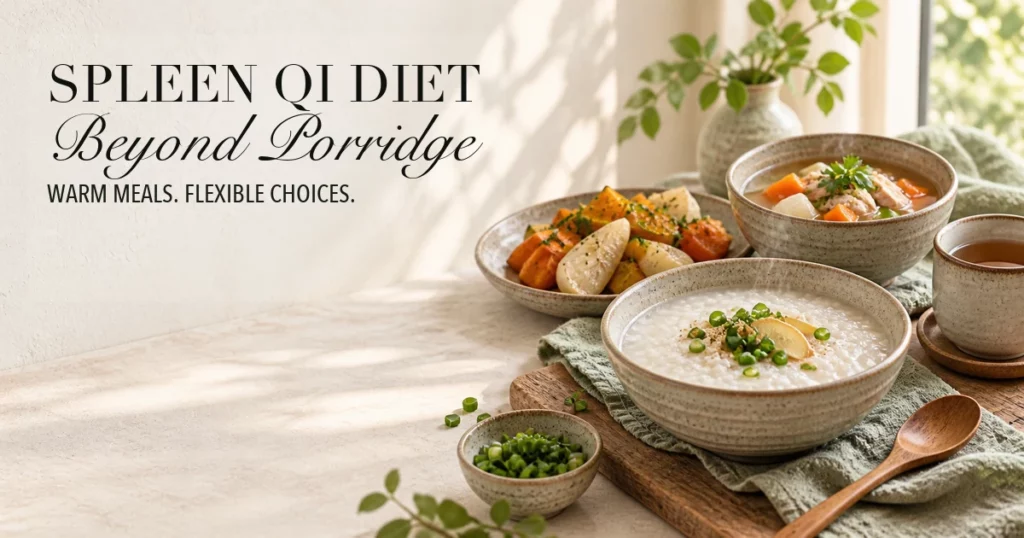
- Nurture the Spleen — eat at regular hours, chew thoroughly 20 times per bite, favor boiled/steamed/stewed foods.
- Soothe the Liver, regulate Qi — chrysanthemum, mint, dried tangerine peel (chen pi), fresh turmeric.
I’ve seen many friends and family members, after reducing stress properly + making fundamental lifestyle changes, no longer need enzymes at all. This is the ultimate goal — not to sell you another pill, but to help you need no pills at all.

⚠️ Red Flags — When Enzymes WON’T Help and You MUST See a Doctor
This section is non-negotiable — because your safety matters more than any other content in this article.
The following symptoms are NOT IBS and require IMMEDIATE gastroenterologist evaluation:
- ❌ Blood in stool (bright red or black tarry)
- ❌ Unexplained weight loss (>10 lbs in 3 months)
- ❌ Fever + severe abdominal pain persisting
- ❌ New symptoms appearing after age 50
- ❌ Family history of colorectal cancer or IBD
- ❌ Unexplained iron-deficiency anemia
- ❌ Nocturnal diarrhea waking you up at night
- ❌ Sudden severe abdominal pain not resolving in 24 hours
If you have any of these signs, do not self-prescribe enzymes. Schedule a medical appointment as soon as possible. Serious conditions (colorectal cancer, Crohn’s, ulcerative colitis) can “masquerade” as IBS — and delayed diagnosis can carry a steep price.
The “First Bite + Warm Sip” Timing Protocol
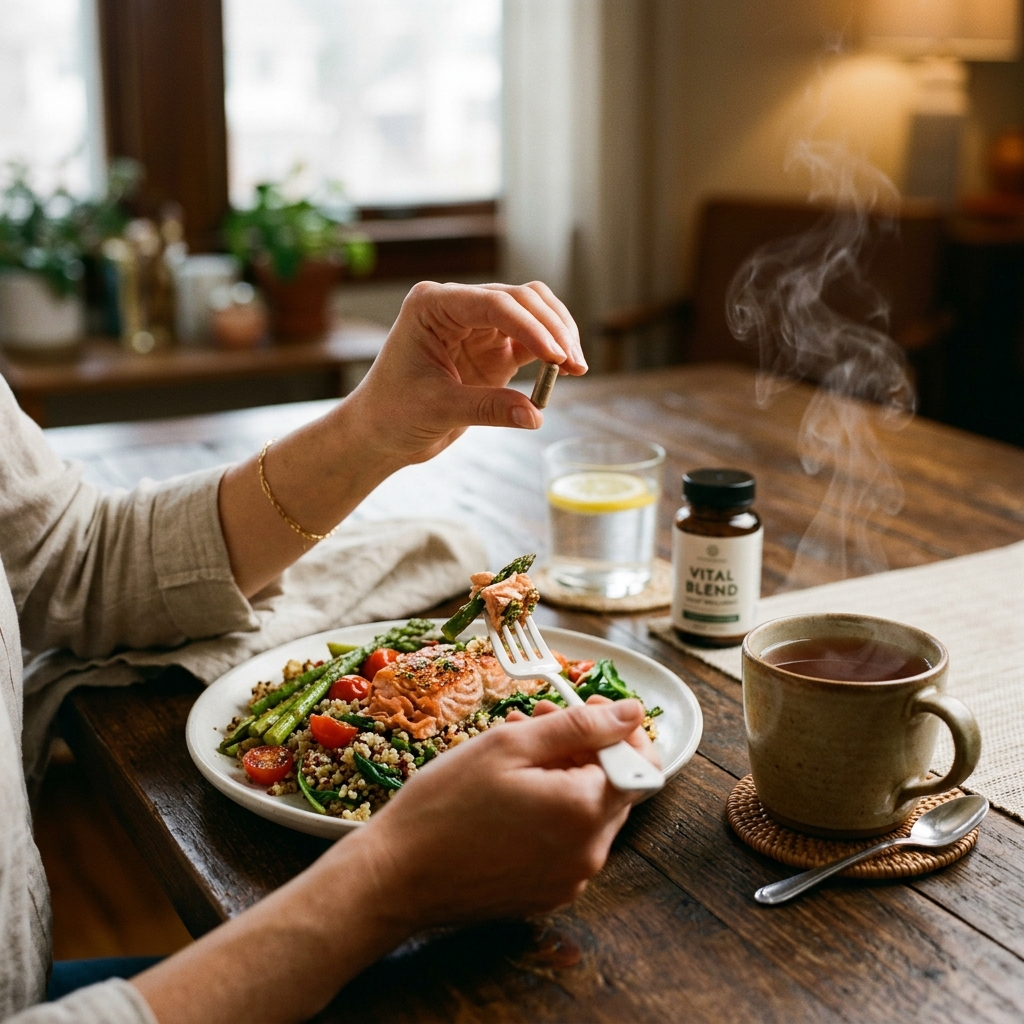
Once you’ve chosen the right enzyme for your trigger, timing is critical: take with your first bite of the meal (not before, not after), wash down with 2–3 sips of warm water (not ice water). For FODMAP enzymes: take precisely when consuming the FODMAP-containing food.
Full protocol details — including why ice water extinguishes Spleen Fire and worsens IBS from both Western and Eastern medicine perspectives — are in When to Take Digestive Enzymes.
SIBO Overlap — 60–70% of IBS Sufferers Have Both
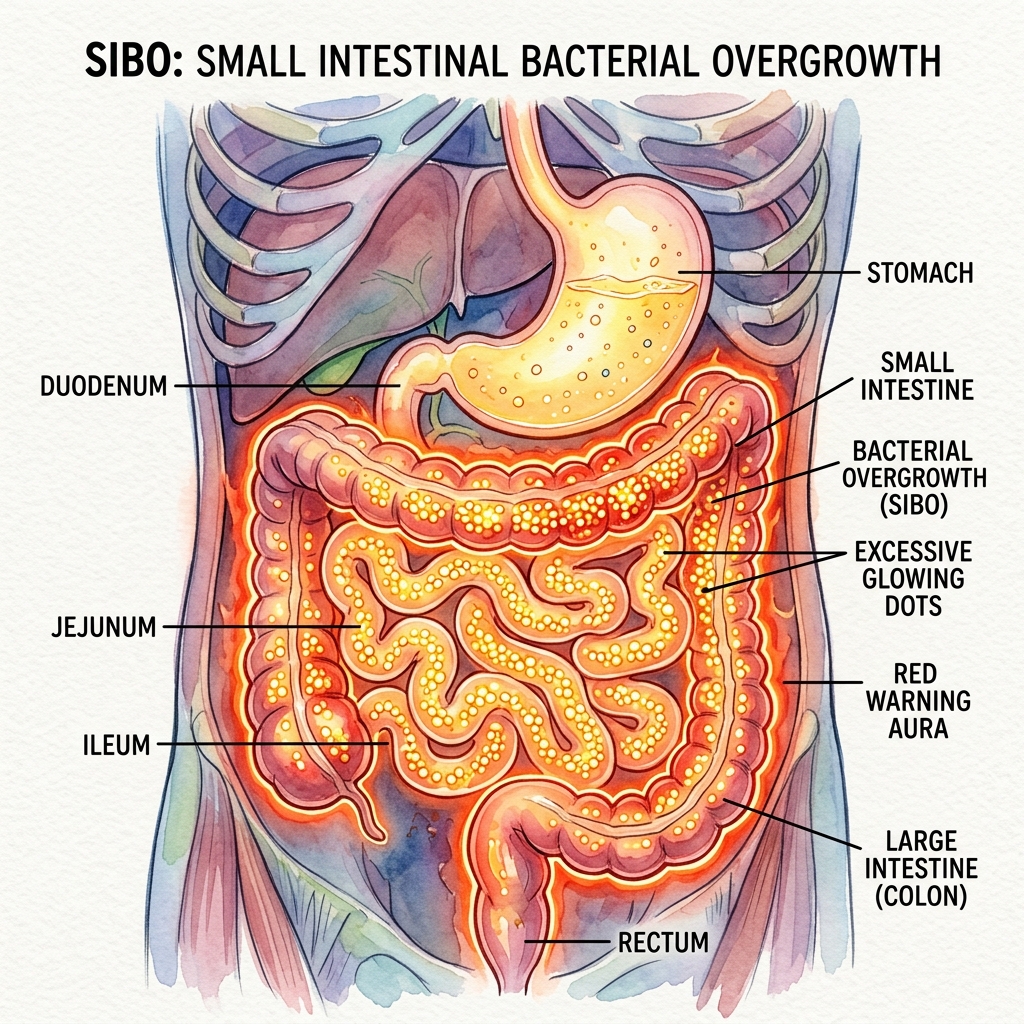
This is a critically important point most Western articles skip. Multiple studies show 60–70% of IBS patients have overlapping SIBO (Small Intestinal Bacterial Overgrowth). In this group, taking probiotics may worsen IBS — pouring gasoline on a fire. Broad-spectrum enzymes may be safer because they reduce “leftover food” for bacterial overgrowth.
I’ve written a detailed analysis of the difference between enzymes and probiotics, and why probiotics can backfire in SIBO, in Digestive Enzymes vs Probiotics. You should read that article before buying any probiotic if you suspect SIBO.
Food-First — Before Buying a Pill
Before spending on expensive enzymes, try the simplest and cheapest solutions first:
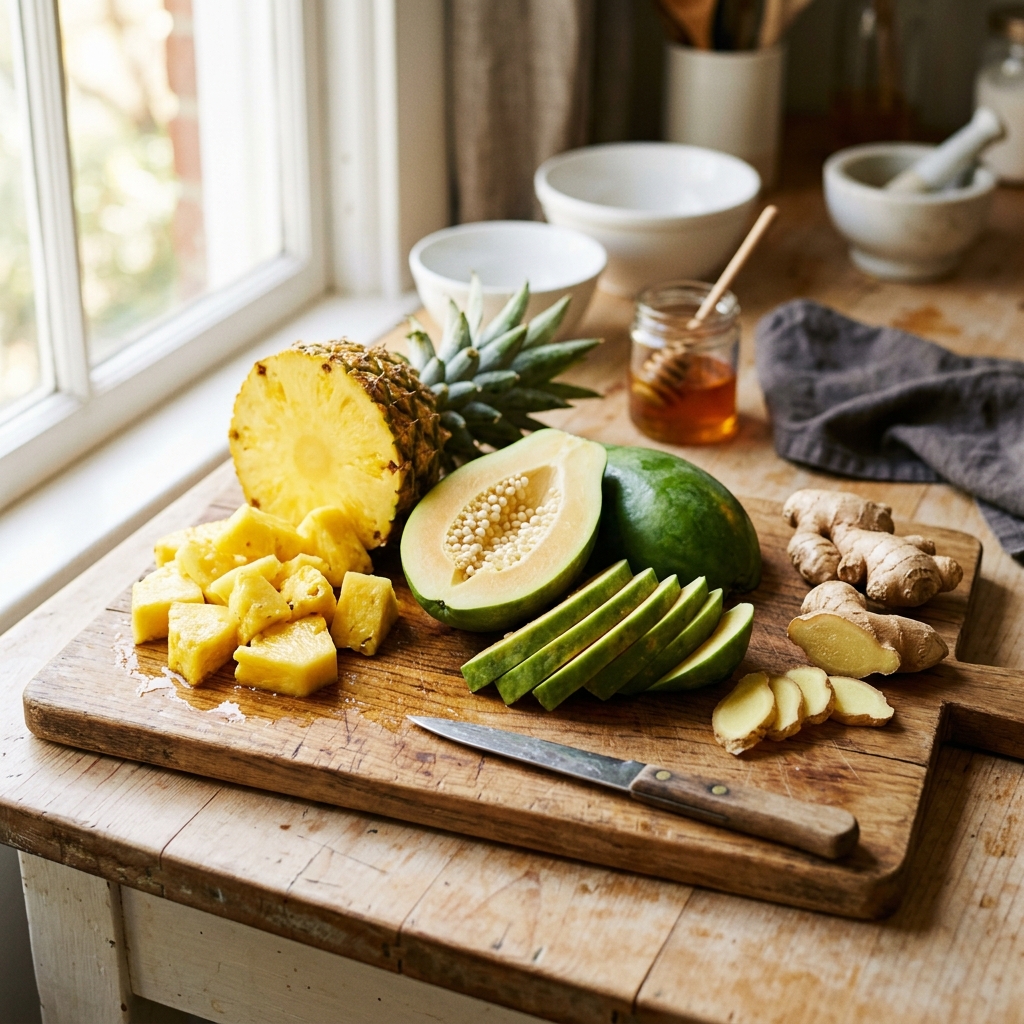
- Fresh pineapple (Bromelain), green papaya (Papain) — natural proteases, can be eaten after meat-heavy meals.
- Fresh ginger (Zingibain) — anti-inflammatory + digestive support + warms the belly. Especially good for IBS-D.
- Avocado and kiwi — natural lipase and actinidin.
- Warm foods + thorough chewing + regular meal times — the simplest solution, most often ignored.
Read more: Foods high in natural digestive enzymes and Pineapple digestive enzymes — Bromelain. For FODMAP authority guidance, see the Monash University FODMAP Program [6].
Summary & Next Steps
If you remember only three things from this article: (1) The right question isn’t “do enzymes help IBS?” — it’s “which trigger food is YOURS?” Match correctly — don’t blindly buy broad-spectrum. (2) Eastern medicine teaches us: IBS often has its root in stress (Liver) suppressing digestion (Spleen). Enzymes only fix the leaves; combine with stress reduction to fix the root. (3) Red flag symptom → see a doctor immediately. No enzyme replaces a medical diagnosis.
CTA — Action for This Week: Step 1: Start a 14-day food journal — log everything you eat + symptoms (severity 1–10). Step 2: Identify your top 2–3 trigger foods. Step 3: Bring this journal to a gastroenterologist for guidance on the right enzyme for you. This is a personalized journey, not a quick pill purchase.
Frequently Asked Questions (FAQ)
Do enzymes actually help IBS?
STRONG evidence for targeted enzymes (lactase, alpha-galactosidase, FODMAP blends) when matched to your specific trigger food. WEAK evidence for broad-spectrum used indiscriminately for general IBS. This is not a “magic pill” for everyone.
What’s the best enzyme for IBS?
No universal “best.” The best is the enzyme matched to YOUR trigger food. Lactose → lactase, beans → alpha-galactosidase, fructan → FODMAP blend.
Can digestive enzymes make IBS worse?
Rarely directly worse, but they can be ineffective if you use the wrong type, leading to frustration and wasted money. If a product contains prebiotics and you have SIBO, it may trigger symptoms.
Do IBS-D and IBS-C use different enzymes?
Yes, very differently. IBS-D usually prioritizes broad-spectrum to reduce leftover food for bacteria. IBS-C needs lipase + protease for heavy meals, but the main issue is usually motility — enzymes aren’t the primary solution.
Is it safe to take enzymes for IBS daily?
For standard-dose plant/fungal-source enzymes, safe for most people. However, always consult your doctor if you’re on medications, pregnant, or have comorbidities.
What enzyme breaks down FODMAPs?
FODMAPs include several different sugars. Lactase for lactose, alpha-galactosidase for GOS, fructan hydrolase for fructan. Polyols currently have no effective commercial enzyme — must avoid the trigger food.
When should I see a doctor about IBS symptoms?
Symptoms persisting >3 months, or occurring >3 times/month → see a doctor. Red flags (blood in stool, weight loss, fever, new symptoms after age 50) → see a doctor IMMEDIATELY.
Are enzymes covered by insurance for IBS?
In the US, most OTC enzymes are not insurance-covered. Pancreatic enzyme replacement therapy (PERT) like Creon is covered, but only for EPI (exocrine pancreatic insufficiency), not IBS.

About Mr. Anh
We turn solid evidence into everyday habits Americans can actually do—plain English, cups/oz, grocery-aisle swaps, and routines that fit real life. Our editorial process: Experience—we road-test tips in real schedules…