Eye Health Diet: The Eye Plate Method for Vision Protection
Most people know carrots are "good for eyes" — and stop there. But the research is far more specific and actionable than that. Discover the Eye Plate Method: a practical meal-building system that protects your retina, macula, and lens every day.
- What Is an Eye Health Diet? (The Gap Every Other Guide Gets Wrong)
- The 6 Critical Eye Nutrition Nutrients — What, Why, and How Much
- The Eye Plate Method — Build Every Meal for Vision Protection
- Foods to Limit — The Eye Health "Avoid" List
- The Mediterranean Diet — The Best Overall Eye Health Pattern
- Can Diet Alone Prevent Macular Degeneration?
- Frequently Asked Questions
- The Bottom Line
- References
📢 Disclosure: This post contains affiliate links. If you purchase through our links, we may earn a small commission at no extra cost to you. We only recommend products we’ve researched and trust. — EssentialWellnessAZ Editorial Team
By 2050, age-related macular degeneration is expected to affect 288 million people worldwide. And here’s the thing — the most powerful protection you have isn’t a prescription. It’s on your plate.
I know what you’re thinking. You’ve heard the carrot advice a hundred times. You’ve maybe added a handful of spinach to your smoothie and figured that covered it. But the research on eye nutrition is far more specific — and far more actionable — than most people realize. The AREDS2 trial, the largest eye nutrition study ever funded by the NIH, showed that particular nutrients at particular doses could slow AMD progression by 25%. Most articles list those nutrients. None of them tell you how to actually eat for your eyes, every single day.
That’s what this guide gives you: the Eye Plate Method — a repeatable meal-building framework that maps your four key eye structures to the specific foods that protect each one. No calorie counting. No milligram math. Just a practical system you can start using at your next meal.
⚡ Quick Takeaways:
- 🎯 Lutein + zeaxanthin are your macula’s built-in blue light shield — dark leafy greens are the #1 source, but cooked delivers significantly more than raw
- 🐟 DHA omega-3 is the structural fat your retina is literally made of — aim for 2+ fatty fish servings per week
- 🍊 A raw red bell pepper has more Vitamin C than an orange — and your eye lens has the second-highest Vit C concentration in your entire body
- 🥚 Egg yolks deliver lutein up to 3× more bioavailable than greens alone — eat them together for maximum uptake
- 💊 If your diet is inconsistent, AREDS2-formula supplements are the only eye supplement category with solid clinical trial backing
What Is an Eye Health Diet? (The Gap Every Other Guide Gets Wrong)
Most eye health content reads like a chemistry textbook. Lutein here. Omega-3 there. Vitamin A somewhere in the middle. You finish reading and still don’t know what to have for breakfast on Wednesday.
The real problem? Most nutrition advice treats your eye like a single organ that just needs “good food.” But your eye is actually four distinct structures — and each one has completely different nutritional requirements.
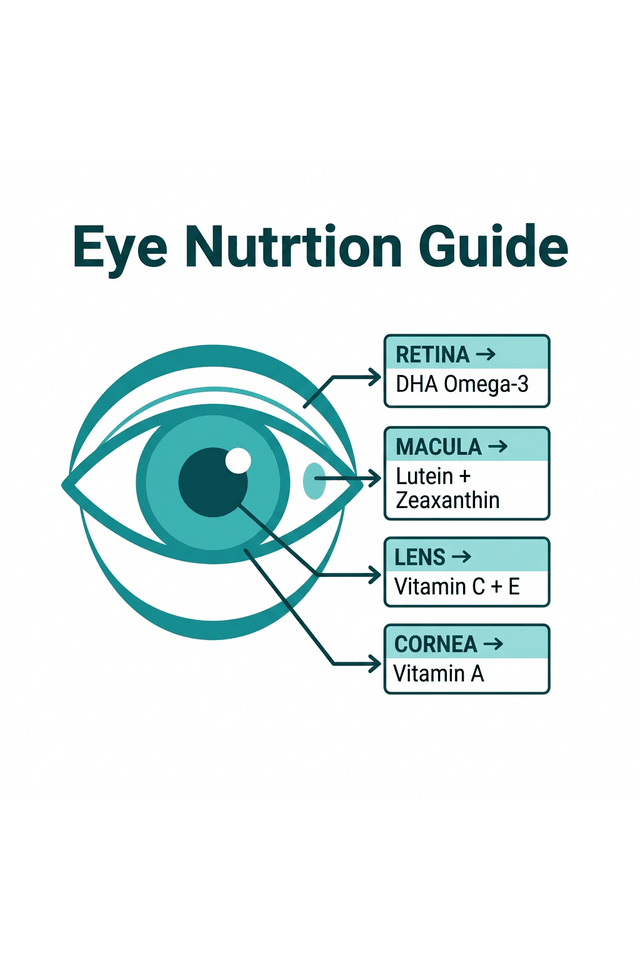
Your Eye Has 4 Structures — Each With Its Own Nutritional Needs
Once you understand this, an eye health diet stops being a vague “eat more vegetables” suggestion and becomes a targeted strategy.
Retina → DHA omega-3. Your retina processes the light signals your brain interprets as vision. Photoreceptor cell membranes require DHA to function — it’s not just “helpful,” it’s structural. DHA makes up roughly 30% of the fatty acids in your retina. A retina low on DHA functions at a cellular disadvantage.
Macula → Lutein + zeaxanthin. The macula is the tiny central zone of your retina responsible for sharp, detailed, central vision — the part you’re using to read these words right now. Lutein and zeaxanthin physically accumulate there and act like biological sunglasses, filtering high-energy blue light before it can oxidize your photoreceptors.
Lens → Vitamin C + Vitamin E. Your lens is transparent because its proteins are tightly organized. Oxidative stress — from UV light, free radicals, and dietary patterns — disrupts that organization, causing proteins to clump. That clumping is a cataract. Vitamin C and E are the primary antioxidants your lens relies on to prevent it.
Cornea + Tear Film → Vitamin A + hydration. Vitamin A is essential for producing mucin — the protein that lets tears adhere to your corneal surface consistently. Even mild Vitamin A insufficiency (not full deficiency) can show up first as dry eyes and reduced night vision.
The Nutrient-Condition Map
The foods you need are largely the same across conditions. The emphasis and doses shift based on your risk profile — which is exactly what the Eye Plate Method accounts for.
The 6 Critical Eye Nutrition Nutrients — What, Why, and How Much
These six nutrients are responsible for virtually all of the evidence-backed dietary protection for your eyes. I’ve organized them by clinical relevance, not alphabetical order.
1. Lutein & Zeaxanthin — The Macula’s Blue Light Shield
If you’re going to prioritize one thing in your eye health diet, make it these two carotenoids. They’re the only nutrients that physically concentrate in your macula — acting like a built-in optical filter against the wavelengths of light most likely to cause oxidative damage over time.
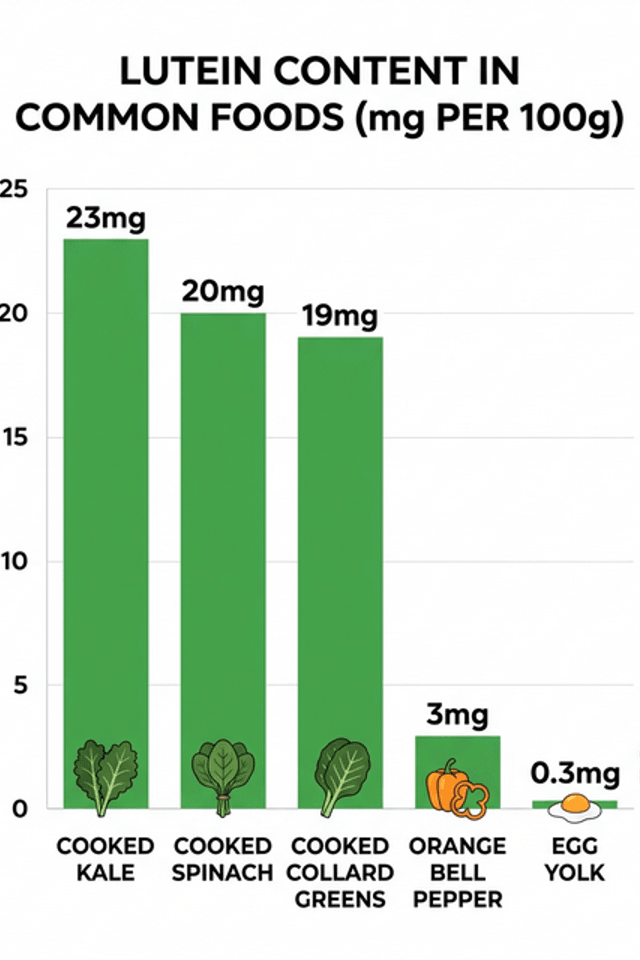
The AREDS2 clinical dose is 10mg lutein + 2mg zeaxanthin daily. Here’s how food stacks up:
Here’s the absorption insight most guides completely skip: A randomized controlled trial at Ohio State University found that pairing lutein-rich vegetables with healthy fat — avocado, olive oil — increased carotenoid absorption by up to 400%. Raw kale with fat-free dressing delivers a fraction of what cooked spinach sautéed in olive oil does. This distinction matters when you’re actually trying to hit therapeutic doses from food.
And the egg insight: Egg yolk has far less total lutein than kale, but the lipid matrix of the yolk makes it dramatically more bioavailable. A 2004 study published in the Journal of Nutrition found that lutein absorption from eggs was 3× higher than from spinach eaten under identical conditions. My personal approach: I scramble two eggs into sautéed spinach almost every morning — you’re stacking bioavailability from both directions simultaneously.
2. Omega-3 (DHA + EPA) — Your Retina’s Structural Fat
DHA is a literal structural component of your retinal photoreceptor membranes — not “good for your eyes” in a vague supportive sense, but actually there, making up ~30% of retinal fatty acid composition. Without sufficient DHA, photoreceptor membrane fluidity decreases and light signal transmission suffers at a cellular level.
EPA plays a complementary role: it’s anti-inflammatory and consistently associated with reduced dry eye severity, specifically by reducing inflammatory cytokine activity in the lacrimal glands that produce tears.
Best food sources by actual DHA+EPA per 3oz serving:
Plant-based note: Flaxseed, chia seeds, and walnuts contain ALA — an omega-3 precursor. But the human conversion from ALA to DHA runs only 5–10%. If you don’t eat fish, you almost certainly can’t reach adequate retinal DHA from plant sources alone. Algal DHA oil (from the same algae fish eat) is the only genuinely bioavailable plant-based DHA option.
For how omega-3 fits into a complete anti-inflammatory eating system, our anti-inflammatory foods guide covers the full picture — omega-3 sits at the center of both eye and systemic inflammation management.
3. Vitamin C — The Lens’s Antioxidant Armor
This one surprised me when I first dug into the research: your eye’s lens has the second-highest concentration of Vitamin C in the entire human body — second only to the adrenal glands. That’s not a coincidence. The lens is continuously bombarded by UV oxidative stress, and Vitamin C is its primary defense.
AREDS2 included 500mg Vitamin C in its formula. Long-term epidemiological data associates higher dietary Vitamin C with roughly 19% reduced cataract risk across multiple large cohort studies.
The bell pepper swap: Most people reach for orange juice. But half a raw red bell pepper delivers 190mg Vitamin C — more than triple a medium orange, with zero added sugar. I keep sliced raw bell pepper on my cutting board basically every day now.
Best Vitamin C sources for eye health:
- Raw red bell pepper (½ cup): 190mg ← most efficient
- Guava (1 fruit): 228mg
- Broccoli (1 cup cooked): 101mg
- Strawberries (1 cup): 85mg
- Kiwi (1 fruit): 71mg
- Orange (1 medium): 70mg
4. Vitamin A & Beta-Carotene — Night Vision and Tear Film
Vitamin A converts in your eye into retinal, the pigment form used to produce rhodopsin — the light-sensitive molecule in your rod cells. Rods handle low-light vision. When Vitamin A drops, rhodopsin production falls, and night vision fades. That’s the real story behind the carrots-and-eyes connection.
Vitamin A also supports the goblet cells that produce mucin for tear film stability. Mild Vitamin A insufficiency shows up as dry eyes and reduced night vision long before it meets the clinical definition of deficiency.
Preformed Vitamin A (immediate use):
- Beef liver (3oz): 6,582mcg RAE — RDA is ~700–900mcg; weekly at most
- Eggs, dairy: moderate amounts
Beta-carotene → converted to Vitamin A (safe in food amounts):
- Sweet potato (1 medium baked): 1,096mcg RAE
- Carrots (½ cup cooked): 665mcg RAE
- Butternut squash, pumpkin, cantaloupe
5. Vitamin E — Free Radical Defense for Photoreceptors
Vitamin E protects the fatty acid membranes of your photoreceptors from oxidative breakdown. It works as part of the “antioxidant triad” in AREDS2 alongside Vitamin C and zinc — each covering different cellular components from different oxidative threats.
Best sources (RDA: 15mg/day):
- Wheat germ oil (1 tbsp): 20mg
- Sunflower seeds (1 oz): 7.4mg
- Almonds (1 oz): 6.8mg
- Avocado (1 fruit): 2.7mg
- Cooked spinach (1 cup): 3.7mg
6. Zinc — The Retina’s Mineral Backbone
Your retina and choroid contain the highest zinc concentration of any tissue in your body. Zinc transports Vitamin A from your liver to your retina and facilitates melanin production in the retinal pigment epithelium — the layer that absorbs excess light and protects photoreceptors from damage.
Best sources:
- Oysters (3oz): 74mg — one serving covers more than a week’s worth at RDA
- Beef (3oz lean): 7mg
- Pumpkin seeds (1 oz): 2.5mg
- Chickpeas (½ cup): 1.3mg
Getting consistent therapeutic doses of all six across a busy week is genuinely achievable through food — but it requires intentional planning. When my own diet goes sideways during travel or busy stretches, PreserVision AREDS 2 by Bausch + Lomb is what I reach for. It’s the original trial-validated formula at the exact dosing from the NIH-funded AREDS2 study. No other eye supplement has that clinical backing.
The Eye Plate Method — Build Every Meal for Vision Protection
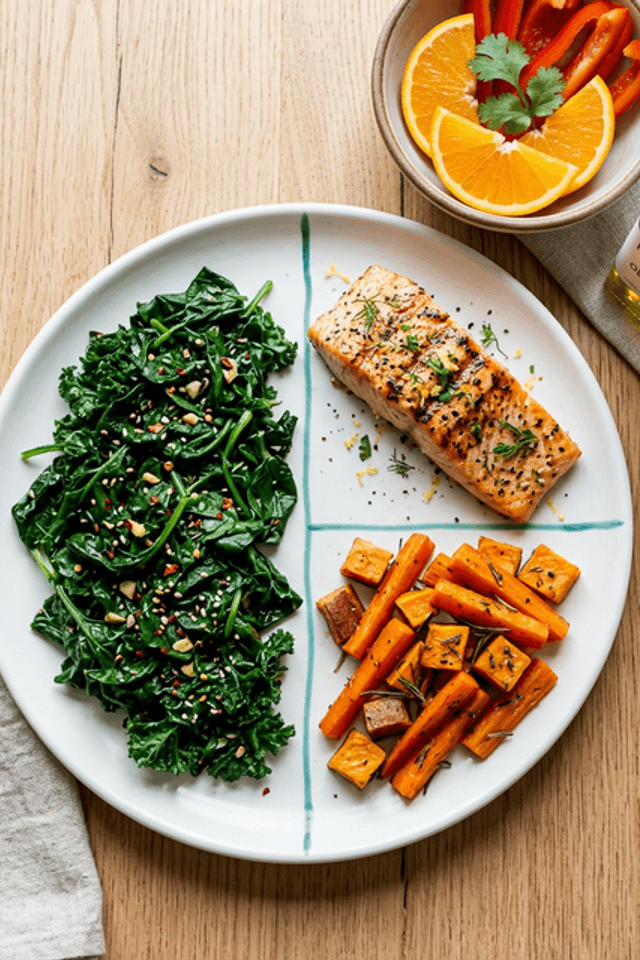
Here’s the problem with nutrient lists: they tell you what to eat, not how to build a meal. The Eye Plate Method solves that. It’s a repeatable template that hits all six eye nutrients without requiring you to calculate anything.
The Eye Plate Formula
½ Plate → Dark leafy greens or cruciferous vegetables
Covers: lutein, zeaxanthin, Vitamin C, Vitamin E
Best choices: cooked spinach, kale, collard greens, broccoli, Brussels sprouts, bok choy
Always cook with olive oil or serve with avocado — fat is non-negotiable for carotenoid absorption.
¼ Plate → Omega-3 protein source
Covers: DHA, EPA, Vitamin D
Best choices: baked salmon, sardines, mackerel, herring, canned tuna, or 2–3 eggs (3–5x/week)
¼ Plate → Orange/red/yellow vegetables
Covers: beta-carotene, zeaxanthin, Vitamin A
Best choices: roasted sweet potato, carrots, orange bell pepper, butternut squash, pumpkin
Daily side → Fresh Vitamin C source
A small daily addition maintains lens antioxidant levels consistently.
Best choices: ½ raw red bell pepper, 1 kiwi, ½ cup strawberries, 1 orange
Cooking fat → EVOO or avocado oil every time
Without fat, most of the lutein in your greens won’t absorb. This isn’t optional.
The Eye Plate in Practice — 5-Day Meal Plan
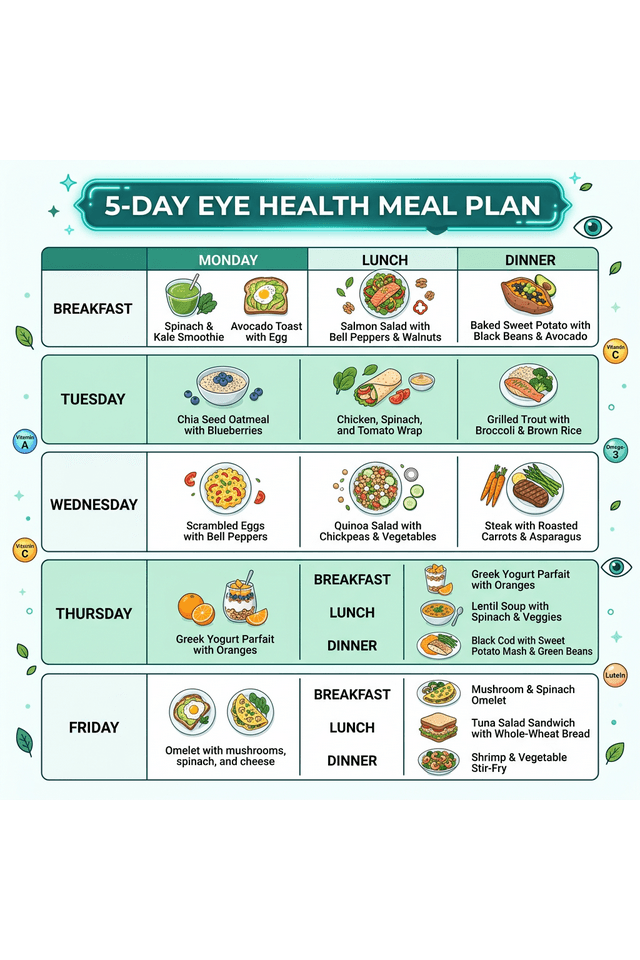
” alt=”5-day eye health meal plan showing breakfast, lunch, and dinner for Monday through Friday covering all 6 critical eye nutrients each day” width=”640″ height=”960″ />
Every single day covers all 6 critical eye nutrients without counting a milligram.
Special Protocol — The Dry Eye Diet
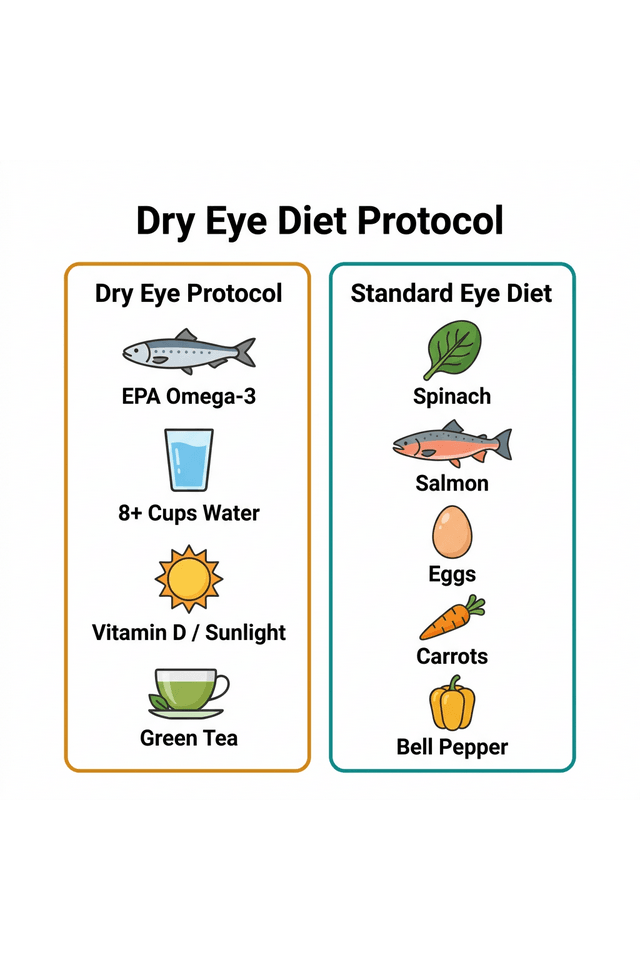
If dry eye syndrome is your primary concern, the Eye Plate Method needs a specific adjustment. EPA specifically — not just DHA — becomes the priority. EPA reduces pro-inflammatory cytokines in the lacrimal glands, which directly improves tear quality.
Dry Eye Protocol modifications:
- Increase fatty fish to 4–5 servings per week, emphasizing sardines and herring (highest EPA per dollar)
- Add Vitamin D: Low serum Vitamin D is independently associated with dry eye in several studies — 15–20min of direct sun or 2,000 IU D3 supplement
- Eliminate alcohol for 2+ weeks minimum — it disrupts tear film stability
- Reduce refined carbohydrates sharply — high-glycemic eating worsens lacrimal inflammation
- Minimum 8 cups of water daily — the tear film needs systemic hydration as raw material
- Add 1–2 cups of green tea daily — EGCG shows early evidence of reducing oxidative load in lacrimal tissue
When I suggested this protocol to a close friend who’d been dealing with chronic dry eye, she noticed meaningful improvement in grittiness within 3 weeks. Your timeline may vary, but it’s worth a focused month of consistency to find out.
Foods to Limit — The Eye Health “Avoid” List
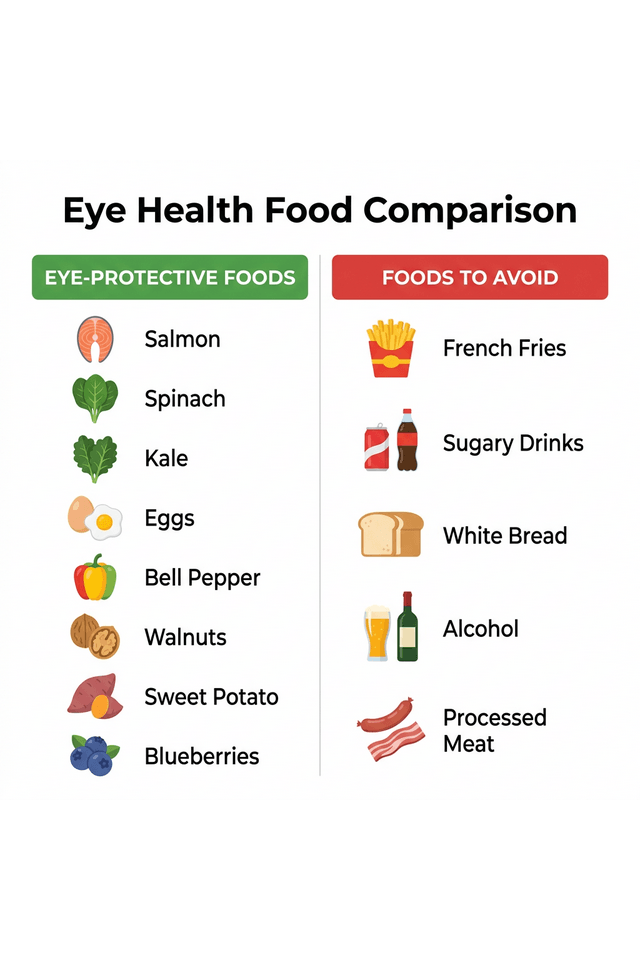
The foods that damage eye health aren’t exotic. They’re the same dietary patterns associated with most chronic disease — but worth understanding specifically in the eye context.
High-glycemic foods — refined carbs, white bread, sugary drinks
The Blue Mountains Eye Study followed 3,654 adults over a decade and found that high-glycemic diets significantly increased early AMD and cataract risk. The mechanism: glucose spikes accelerate oxidative stress in retinal cells and generate advanced glycation end-products (AGEs) that accumulate in the lens. Sound familiar? If you’ve already been reducing refined carbs for other health reasons, your eyes are benefiting too.
Trans fats — commercial fried foods, industrial pastries
Trans fats compete with omega-3 at the cellular membrane level, reducing the DHA ratio actually incorporated into retinal tissue. They also elevate systemic inflammation. Just eliminate them — they offer nothing nutritionally.
Excessive alcohol
Alcohol depletes zinc and B12 and increases oxidative stress across multiple tissues including the retina. Chronic heavy drinking is consistently associated with both accelerated AMD progression and elevated cataract risk. Occasional moderate consumption likely doesn’t create meaningful risk; daily drinking does.
Very high sodium
Elevated sodium intake is associated with increased intraocular pressure (IOP) — the primary risk factor in glaucoma. The effect is modest but consistent in population data. If you have elevated IOP or a glaucoma diagnosis, this is a worthwhile dietary adjustment to make.
Processed and cured meats
Association with higher cataract risk appears in multiple epidemiological datasets — possibly through nitrite content or saturated fat load. The signal isn’t as strong as with AMD, but it’s consistent enough to justify limiting rather than eliminating.
The Mediterranean Diet — The Best Overall Eye Health Pattern
The Mediterranean diet wasn’t designed with eye health in mind. But when researchers look at which dietary patterns most consistently reduce AMD risk, cataract formation, and dry eye severity over time — it keeps coming out on top.
The PREDIMED study, a 7,447-person Spanish randomized trial, found that Mediterranean diet adherence significantly reduced AMD risk versus a low-fat control diet. The mechanism maps directly to the Eye Plate framework: the Mediterranean pattern naturally delivers omega-3 (fatty fish), lutein+zeaxanthin (dark leafy greens), Vitamin C (citrus, peppers), Vitamin E (olive oil, almonds), and zinc (legumes, seafood) — all through regular daily eating, without supplementation.
Mediterranean Eye Health Shopping List:
For how the same Mediterranean pattern simultaneously protects your brain, kidneys, and cardiovascular system, our best foods for brain health guide connects the nutritional crossover in detail.
Can Diet Alone Prevent Macular Degeneration?
This deserves a straight answer — no hedging.
If you have no AMD or early-stage signs: Diet is your most powerful lever. Consistent adherence to the Eye Plate Method over years meaningfully reduces your risk of ever developing intermediate or advanced AMD. Diet-first is appropriate and sufficient.
If you have intermediate AMD: Diet alone is no longer enough. The AREDS2 trial specifically studied intermediate AMD patients and found that the AREDS2 formula reduced progression to advanced AMD by 25%. Standard of care at this stage is diet plus AREDS2-formula supplementation — not one or the other.
If you have advanced AMD in one eye: AREDS2 showed a 19% reduction in second-eye progression. Supplementation becomes adjunctive to diet, not optional.
The exam point no one says clearly enough: AMD has no symptoms in its early stages. You won’t feel it developing. It’s discovered at a dilated eye exam — often after meaningful, irreversible damage has already occurred. Diet protects; exams detect. Annual dilated eye exams after age 40 are non-negotiable.
Frequently Asked Questions
What is the best diet for eye health overall?
The Mediterranean diet is the most evidence-backed overall pattern. It naturally delivers all six critical eye nutrients — omega-3 through fatty fish, lutein+zeaxanthin through dark leafy greens, Vitamin C through citrus and peppers, Vitamin E through olive oil and nuts, Vitamin A through orange vegetables, and zinc through legumes and seafood. Two or more weekly servings of fatty fish is the single strongest dietary predictor of AMD risk reduction across most major studies.
What foods are highest in lutein and zeaxanthin?
Cooked kale (~23mg/cup), cooked spinach (~20mg/cup), and cooked collard greens (~19mg/cup) lead the list. Egg yolks contain only 0.3mg per yolk but are up to 3× more bioavailable due to the yolk fat matrix. For maximum practical uptake: scramble eggs into sautéed leafy greens cooked with olive oil — you’re covering both total amount and bioavailability simultaneously.
Can diet improve vision or only protect existing vision?
For most adults, an eye health diet protects and slows decline — it doesn’t restore lost vision. The meaningful exception is night blindness from Vitamin A deficiency, where correcting intake genuinely restores rod cell function. For everyone else: the goal is arriving at 70 with the visual acuity of someone 15 years younger. Realistic, meaningful, achievable through consistent dietary choices.
Is the Mediterranean diet good for eye health?
Yes — the PREDIMED trial and multiple cohort studies confirm Mediterranean eating significantly reduces AMD risk. It’s also the most researched and most sustainable long-term eating pattern for whole-eye protection. If you want one dietary framework that covers eyes, brain, heart, and inflammation together — Mediterranean is the consensus answer from essentially every relevant research body.
What should I eat daily for eye health?
Use the Eye Plate Method: half-plate dark leafy greens cooked in olive oil; quarter-plate omega-3 protein (fatty fish 4–5x/week, eggs on other days); quarter-plate orange/red/yellow vegetables; one daily Vitamin C food (raw red bell pepper is most efficient per calorie). That single template reliably hits all six nutrients without tracking anything.
Are eggs good for eye health?
Yes — specifically because of lutein bioavailability. Egg yolk fat makes lutein up to 3× more absorbable than the same amount from greens eaten without fat. Moderate egg consumption (3–7/week) has not demonstrated meaningful cardiovascular risk in healthy adults across multiple large analyses. Eating 2–3 eggs alongside spinach cooked in olive oil is one of the most efficient single-meal approaches to lutein optimization you can make.
Are there foods to avoid for eye health?
Yes — consistently. High-glycemic foods (refined carbs, sugary drinks) increase retinal oxidative stress and are associated with higher AMD risk in the Blue Mountains Eye Study data. Trans fats compete with omega-3 at the retinal membrane level. Excessive alcohol depletes zinc and accelerates AMD progression. Very high sodium raises intraocular pressure. None of these cause damage occasionally — the concern is chronic dietary patterns repeated over years.
The Bottom Line
An eye health diet isn’t a list of 10 foods vaguely suggesting you “eat more vegetables.” It’s a targeted nutritional strategy matched to the specific structures of your eye, the conditions you’re protecting against, and the doses that clinical research has actually validated.
The Eye Plate Method makes it simple: half the plate in dark leafy greens (cooked, with fat); a quarter in omega-3 protein; a quarter in orange/red/yellow vegetables; a daily Vitamin C side; and olive oil as your cooking fat. Build from that template daily, and your eye nutrition is covered — without tracking anything.
For most healthy adults under 40, consistent diet alone is both sufficient and powerful. For anyone 40+, especially with family history of AMD or cataracts, adding an AREDS2-formula supplement to a solid diet is the single highest-leverage additional step you can take for long-term vision health.
References
- Age-Related Eye Disease Study 2 Research Group. (2013). Lutein + zeaxanthin and omega-3 fatty acids for age-related macular degeneration. JAMA, 309(19), 2005–2015. PubMed
- Unlu, N.Z., et al. (2005). Carotenoid absorption from salad and salsa by humans is enhanced by the addition of avocado or avocado oil. Journal of Nutrition, 135(3), 431–436. PubMed
- Estruch, R., et al. (2018). Primary prevention of cardiovascular disease with a Mediterranean diet supplemented with extra-virgin olive oil or nuts (PREDIMED). NEJM, 378(25), e34. NEJM
- Chiu, C.J., et al. (2007). Dietary carbohydrate and the progression of age-related macular degeneration. American Journal of Clinical Nutrition, 86(4), 1210–1218. PubMed
- Goodrow, E.F., et al. (2006). Consumption of one egg per day increases serum lutein and zeaxanthin concentrations in older adults. Journal of Nutrition, 136(10), 2519–2524. PubMed

About Jane Smith
We turn solid evidence into everyday habits Americans can actually do—plain English, cups/oz, grocery-aisle swaps, and routines that fit real life. Our editorial process: Experience—we road-test tips in real schedules…