How Foods Support Your Body Naturally
Understanding how everyday foods may support different parts of the body has become a growing interest in the “food as...
Understanding how everyday foods may support different parts of the body has become a growing interest in the “food as medicine” movement. Many people notice visual similarities—like a sliced carrot resembling an eye or kidney beans mirroring the kidney—and wonder whether these patterns hint at real nutritional benefits. While these comparisons can be fun and memorable, the science behind them varies. This article explores how certain foods are commonly linked to body systems, what research actually supports, and how you can add these foods to your routine realistically.
How Foods Relate to Key Body Systems
Before diving into examples, it helps to understand why people connect certain foods with specific organs. These associations often come from cultural traditions, historical observations, or the way a food looks when cut open. For example, carrots have a ringed pattern that looks like an eye, grapes look like clusters of alveoli inside the lungs, and kidney beans mimic the shape of the kidneys. These visual cues make it easier to remember which foods are popularly tied to which body functions.
👉 If you’re also working on reading your body’s signals, our detailed guide on Warning Signs Your Body May Be Low in Key Nutrients covers exactly what you need.
Why people associate certain foods with organs
For many generations, people have made connections between the appearance of foods and their potential benefits. This idea appears in traditional medicine systems around the world. For example, a sliced carrot resembles the iris, leading many to link carrots with eye health. Similarly, grapes grow in clusters that resemble lung tissue, which is why they’re often talked about as “good for breathing.” While these visual similarities make compelling stories, the actual impact depends more on the nutrients inside the food than how it looks. Still, these associations can make healthy choices easier to remember and may encourage people to include more fruits and vegetables in their diet.
👉 For a deeper dive into topics related to everyday, check out: Food Is Medicine: Everyday Healing Foods — it’s packed with practical tips.
What research supports and what’s still uncertain
Scientific evidence doesn’t confirm that foods benefit the exact organs they resemble, but research does support the idea that whole foods provide nutrients that support overall body health. For instance, carrots contain beta-carotene, which the body converts into vitamin A—an essential nutrient for normal vision. Grapes contain antioxidants like resveratrol, which support general cellular health. Kidney beans offer fiber and plant-based protein, both important for blood sugar control and digestive function. While the specifics vary, nutrition experts consistently emphasize that a diet full of whole, minimally processed foods is linked with better long-term health. Where the evidence remains uncertain is whether the particular food-organ pairings have direct, organ-specific effects. More research is needed to understand these relationships.
👉 If you’re also working on topics related to holistic, our detailed guide on The 4 Levels Of Holistic Healing covers exactly what you need.
Common Foods and the Body Functions They’re Linked To
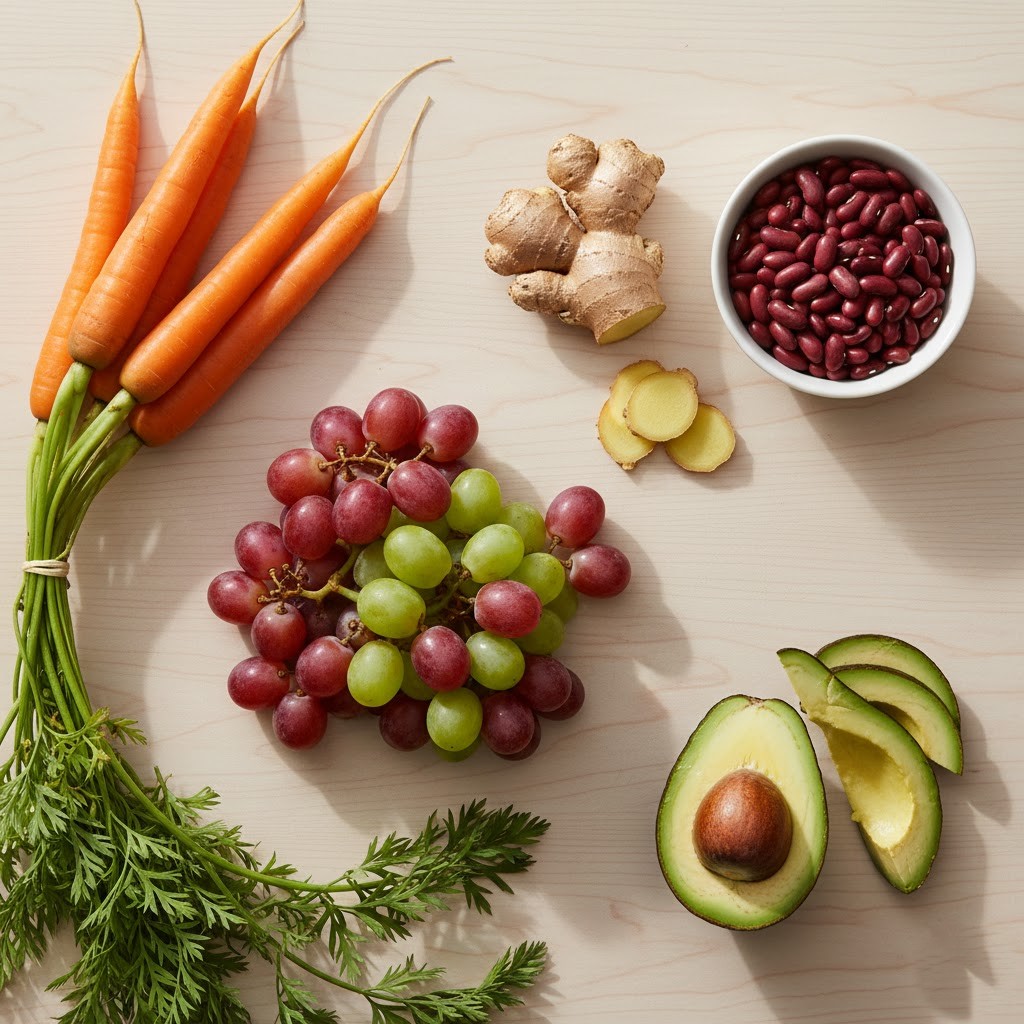
Now that we’ve set the stage, let’s look at popular foods often associated with certain body systems. These examples show how nutrients—not appearance—play the key role.
Carrots and eye health basics
Carrots are one of the most well-known foods linked to eye health, largely because they’re rich in beta-carotene. One medium carrot contains about 200% of the daily recommended vitamin A intake. Vitamin A is essential for night vision and helps maintain normal eye function. However, eating carrots won’t correct vision problems or eliminate the need for glasses. Instead, they help support the body’s natural processes. Carrots are also easy to add to US meals—whether sliced into salads, roasted at 400°F for 20–25 minutes, or blended into a smoothie. Their convenience makes them a simple way to increase your intake of colorful vegetables.
Kidney beans and their nutrient profile
Kidney beans get their name from their anatomical resemblance, but their benefits come from their nutrient density. One cup of cooked kidney beans provides about 13 grams of protein and 11 grams of fiber, which helps support digestion and stable blood sugar. Because many Americans fall short on fiber—often eating less than half of the recommended 25–30 grams per day—adding kidney beans to chili, burrito bowls, or soups can help fill the gap. They also contain potassium and magnesium, minerals important for overall wellness. While there’s no evidence that kidney beans specifically support kidney health, they do contribute to a balanced, nutrient-rich diet.
Grapes and breathing support
Green and red grapes are often linked to lung health because they resemble clusters of alveoli, the tiny sacs responsible for gas exchange in the lungs. Grapes contain antioxidants like resveratrol and quercetin, which may help reduce oxidative stress throughout the body. For example, a one-cup serving of grapes offers roughly 20% of the daily vitamin K recommendation, which supports normal bone and tissue function. Grapes are also hydrating and portable, making them easy for busy Americans to snack on. While research continues into how antioxidants influence lung wellness, grapes remain a refreshing and beneficial fruit to enjoy regularly.
Ginger and digestive comfort
Ginger has long been associated with the stomach, not because of how it looks but because of its warming, soothing qualities. For many people, ginger tea or ginger chews help take the edge off mild nausea or queasiness, such as car sickness or occasional stomach discomfort. The active compound gingerol may play a role in this effect, though results vary from person to person. A small piece of fresh ginger—about 1 teaspoon grated—can be added to stir-fries, hot water with lemon, or smoothies. Since ginger is widely available in US grocery stores year-round, it’s an easy option to incorporate into your routine.
Avocados and women’s reproductive wellness
Avocados are often linked to the uterus because of their shape, but their health benefits come from their nutrient content. A medium avocado contains about 10 grams of fiber and a balance of healthy fats, including monounsaturated fat. These fats are helpful for overall hormonal function and keeping you fuller longer. Avocados also offer folate, which supports normal cell function and is especially important for women of reproductive age. Adding a few slices to toast, tacos, or salads provides a creamy texture and boosts your daily intake of plant fats. While avocados don’t directly influence reproductive organs, they are a nutritious addition to a balanced diet.
How to Add These Foods to Your Routine

Once you know the potential benefits of these foods, the next step is incorporating them into meals you already enjoy. Many Americans are short on time, so simple strategies make healthy eating more realistic.
Simple daily swaps
Small changes can make a meaningful difference. For example, replacing one processed snack with a handful of grapes or swapping mayo for mashed avocado on a sandwich adds nutrients without adding effort. Another easy swap is using carrot sticks instead of chips for dipping into hummus. Even choosing canned kidney beans instead of meat for one dinner per week can increase your fiber intake by at least 10 grams. These small steps help build sustainable habits without overhauling your entire diet.
Easy meal ideas for busy schedules
Quick recipes make it easier to add supportive foods to your weekly rotation. Try roasting carrots, onions, and potatoes at 425°F for about 30 minutes as a side dish for chicken or fish. Blend ½ avocado into a smoothie for a creamy texture and added healthy fat. Prepare a simple bean chili using two cans of kidney beans, diced tomatoes, and chili seasoning for a high-fiber dinner in under 20 minutes. Ginger tea—made by simmering a few slices of fresh ginger in hot water for 5 minutes—is a comforting option after meals. These ideas work well for busy families looking for fast, nutrient-rich meals.
Safety, Balance, and Realistic Expectations
As you explore food-as-medicine ideas, it’s essential to stay grounded in realistic expectations. Food supports overall wellness, but it doesn’t replace medical care.
When to consult a healthcare professional
If you experience ongoing digestive discomfort, vision changes, breathing issues, or reproductive concerns, it’s important to talk with a qualified healthcare provider. While foods like ginger or grapes may complement your overall routine, they are not treatments. For example, sudden vision changes require medical evaluation, and chronic breathing issues may need professional care. A registered dietitian can also help you personalize dietary choices based on your health history and lifestyle. These professionals can guide you in integrating nutritious foods safely and effectively.
Why variety matters in a US diet
Instead of focusing only on foods that resemble certain organs, aim for a diverse range of colors and nutrients. Research continues to show that Americans who eat a variety of fruits, vegetables, legumes, and whole grains tend to have better overall wellness. Eating different foods ensures you get a wide range of vitamins, minerals, antioxidants, and fiber. For example, pairing kidney beans with bell peppers adds vitamin C, which helps the body absorb iron from plant sources. Variety also keeps meals interesting, making it easier to stick with healthier choices long term.
Tips & Swaps
- Swap chips for carrots with hummus for extra fiber.
- Add ½ avocado to breakfast for longer-lasting fullness.
- Use grapes as a quick, portable afternoon snack.
- Add grated ginger to stir-fries for natural warmth.
FAQs
- Do foods really help specific organs they resemble?
Not necessarily. While the visual comparisons are fun and memorable, scientific support varies. What truly matters is the nutrient content of each food, not its shape. These foods can support general wellness but are not targeted treatments. - Are carrots enough to improve vision on their own?
Carrots provide vitamin A, which is essential for normal eye function, but they cannot correct vision problems or eliminate the need for glasses. They’re best used as part of a balanced diet rather than a solution for eye issues. - Can kidney beans help with kidney health?
There’s no evidence that kidney beans directly support the kidneys, despite their name and shape. However, they offer fiber, protein, and minerals that benefit overall health and digestion when included in regular meals. - Is ginger safe for daily use?
Most people tolerate small amounts of ginger well, such as in tea or cooking. However, if you experience ongoing stomach issues or take certain medications, it’s wise to check with a healthcare professional. - Are avocados helpful for reproductive health?
Avocados provide healthy fats and folate, which support general wellness. They don’t directly affect reproductive organs, but they can be part of a nourishing diet for adults of all ages.
Want more practical food-as-medicine guides? Explore our latest wellness insights and simple meal ideas to support your daily routine.
Disclaimer: This content is for informational purposes only and is not a substitute for professional medical advice.

About Sarah Williams
We turn solid evidence into everyday habits Americans can actually do—plain English, cups/oz, grocery-aisle swaps, and routines that fit real life. Our editorial process: Experience—we road-test tips in real schedules…