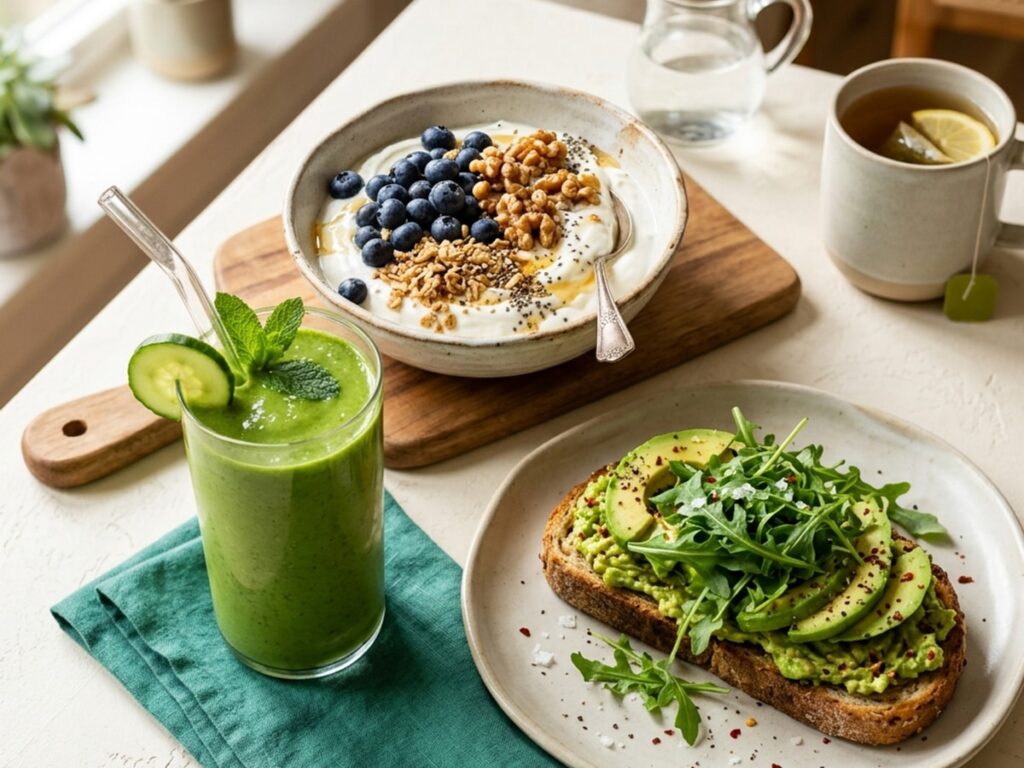
Vegetarian Keto Meal Plan: Easy Meals & Shop List
What a Vegetarian Keto Meal Plan Is (Quick Primer) Transitioning into vegetarian keto works best when you understand the basics...
- What a Vegetarian Keto Meal Plan Is (Quick Primer)
- The Simple “Veg Keto Plate” Formula
- Easy Veg Keto Meals (Breakfast, Lunch, Dinner)
- Vegetarian Keto Shopping List (Print + Save)
- Vegetarian Keto Recipes You’ll Love
- Common Mistakes + Quick Fixes
- Tips & Easy Swaps
- Frequently Asked Questions
- Final Thoughts & CTA
What a Vegetarian Keto Meal Plan Is (Quick Primer)
Transitioning into vegetarian keto works best when you understand the basics and know whether it fits your lifestyle.
👉 This pairs well with our Foods That Naturally Support Common Health Issues guide if you want the full picture on topics related to naturally.
Keto basics in plain English (net carbs, fat, protein)
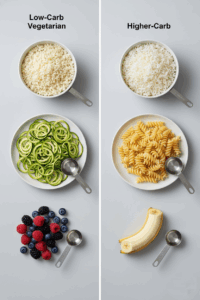
A vegetarian keto meal plan focuses on low net carbs, moderate protein, and higher healthy fats, without meat or fish. Net carbs are calculated by subtracting fiber from total carbs. Most people aim for 20–30 grams of net carbs per day.
For example, 1 cup of broccoli has about 6 grams of total carbs and 2 grams of fiber, resulting in 4 grams of net carbs. Fats—like olive oil, avocado, butter, and cheese—provide most of your calories, while protein comes from eggs, dairy, tofu, and tempeh. The goal isn’t perfection; it’s consistency across meals.
👉 For a deeper dive into getting enough protein, check out: High-Protein Foods: Animal vs. Plant Sources — it’s packed with practical tips.
Who it’s best for—and who should check with a pro
Vegetarian keto can work well for people who enjoy eggs and dairy, want structured meals, and prefer lower-carb eating. It’s often appealing to busy adults who like meal templates instead of strict calorie counting.
However, if you’re pregnant, managing diabetes, or have kidney or digestive conditions, it’s smart to check with a registered dietitian or healthcare provider first. Vegetarian keto is more restrictive than standard vegetarian eating, so professional guidance helps ensure nutrient balance.
👉 For a deeper dive into kidney health and function, check out: Best Foods to Support Kidney Health — it’s packed with practical tips.
The Simple “Veg Keto Plate” Formula
Once you grasp the basics, meals become much easier when you follow a repeatable formula.
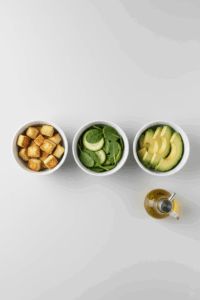
Protein picks (eggs, tofu, tempeh, Greek yogurt, cheese)
Protein anchors every vegetarian keto meal. Common options include 2–3 large eggs, 4–6 oz tofu, ½ cup full-fat Greek yogurt, or 1–2 oz cheese. These amounts typically provide 12–20 grams of protein per meal, enough to support fullness without pushing carbs too high.
For example, a breakfast bowl with ¾ cup full-fat Greek yogurt, chia seeds, and a few berries delivers protein plus fats while staying keto-friendly. Rotating protein sources across the week helps prevent boredom and improves nutrient variety.
Low-carb veggies that actually fill you up
Vegetables still matter on keto—just choose the right ones. Non-starchy veggies like zucchini, cauliflower, mushrooms, spinach, broccoli, and Brussels sprouts are staples. A good target is 1–2 cups per meal, cooked or raw.
For instance, 1 cup of roasted Brussels sprouts provides texture and volume with about 5–6 grams net carbs, making it manageable within daily limits. Cooking veggies in fat (olive oil, butter) boosts satiety and flavor, which helps people stick with the plan long term.
Healthy fats that make meals satisfying (and keto-friendly)
Fats do the heavy lifting on keto. Common vegetarian-friendly choices include olive oil, avocado oil, butter, ghee, heavy cream, nuts, seeds, and avocado. Most meals include 1–2 tablespoons of added fat.
For example, sautéing vegetables in 1 tbsp olive oil adds about 120 calories and improves fullness without adding carbs. If meals feel unsatisfying, the fix is often adding a bit more fat—not more protein or carbs.
Easy Veg Keto Meals (Breakfast, Lunch, Dinner)
With the plate formula in mind, building meals becomes mostly plug-and-play.
Breakfast ideas (yogurt bowls, egg-based options)
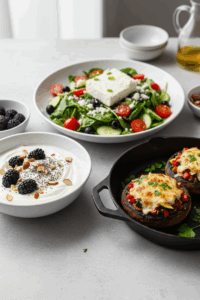
Vegetarian keto breakfasts should be quick and repeatable. A simple option is a Greek yogurt bowl: ¾ cup full-fat Greek yogurt, 1 tbsp chia seeds, 1 tbsp pumpkin seeds, and ¼ cup berries. This keeps net carbs around 6–8 grams.
Egg-based meals work well too. Two eggs scrambled with spinach and cheese, cooked in butter, take under 10 minutes. These breakfasts avoid blood sugar swings that often come from toast or cereal.
Lunch ideas (salads, bowls, leftovers that travel well)
Lunch is where planning helps most. Keto-friendly salads use leafy greens, grilled or baked tofu, cheese, and a high-fat dressing. For example, a bowl with 2 cups mixed greens, 4 oz tofu, olives, and 2 tbsp olive oil vinaigrette fits keto targets.
Leftovers from dinner—like roasted veggies and eggs—also travel well in containers, making weekday lunches easier and cheaper than eating out.
Dinner ideas (stuffed mushrooms, sheet-pan veg + protein)
Dinner can feel hearty even without meat. Large mushroom caps stuffed with cheese, spinach, and herbs bake well at 400°F (205°C) for about 20 minutes. Pair them with roasted broccoli or Brussels sprouts.
Sheet-pan meals are another favorite: toss vegetables and tofu with oil, season, and roast everything together. This method saves time, reduces cleanup, and works well for batch cooking.
Vegetarian Keto Shopping List (Print + Save)
A focused shopping list prevents impulse buys and hidden carbs.

Proteins & dairy
Look for large eggs, full-fat Greek yogurt, heavy cream, cream cheese, mozzarella, cheddar, paneer, tofu, and tempeh. Buying family-size packs of eggs or tofu often lowers cost per serving. Aim for 2–3 protein options per week to rotate meals without overthinking.
Vegetables, herbs, and freezer staples
Fresh staples include zucchini, cauliflower, broccoli, spinach, mushrooms, cucumbers, bell peppers, and Brussels sprouts. Frozen broccoli or cauliflower rice are budget-friendly backups.
Herbs like parsley and basil add flavor without carbs. Keeping 2–3 frozen vegetable options on hand helps when fresh produce runs out.
Pantry, fats, and flavor boosters
Stock olive oil, avocado oil, butter, ghee, nuts, seeds, olives, vinegar, mustard, spices, and salt. These items last weeks and form the backbone of keto cooking.
A well-stocked pantry means meals stay simple, often just protein + veggies + fat + seasoning.
Vegetarian Keto Recipes You’ll Love

If you think keto means giving up comfort food, these vegetarian-friendly swaps will change your mind. Each recipe keeps carbs low while delivering familiar flavors US readers already love—perfect for weeknight dinners or meal prep.
Classic Cheeseburger (Veg Keto Style): All the classic cheeseburger flavors—melty cheese, savory patty, and crisp toppings—served bun-free as a bowl or lettuce wrap to keep carbs in check.
Philly Cheesesteak (Veggie Skillet): Sautéed mushrooms, bell peppers, and onions cooked in olive oil and topped with provolone for a rich, satisfying, bread-free take on the classic.
Mediterranean Power Bowl: A fresh, filling bowl with cucumber, spinach, olives, feta, and olive oil—bold Mediterranean flavors without grains or legumes.
Chaffle: A simple egg-and-cheese waffle that replaces bread, making it perfect for sandwiches, burgers, or a quick keto breakfast.
Buffalo “Chicken” Wings (Cauliflower Bites): Roasted cauliflower tossed in buttery hot sauce delivers the same spicy, crave-worthy kick—minus the meat and excess carbs.
Macaroni and Cheese (Cauliflower Mac & Cheese): Creamy, cheesy comfort food made with tender cauliflower instead of pasta, cutting carbs while keeping the indulgent texture.
Zucchini Noodles: Spiralized zucchini tossed with creamy Alfredo or pesto sauce for a light but satisfying pasta-style dinner.
Spinach & Feta Stuffed Peppers: Naturally vegetarian and keto-friendly, these peppers are packed with spinach, feta, herbs, and healthy fats for an easy baked meal.
These recipes work best when paired with a clear plan. For a step-by-step breakdown, see our keto diet plan for vegetarians designed for beginners on a budget.
Common Mistakes + Quick Fixes
Even with a plan, a few common issues can slow progress.
Hidden carbs (sauces, “keto” snacks, nuts)
Many sauces and packaged “keto” snacks contain more carbs than expected. For example, some dressings add 3–5 grams sugar per tablespoon. Nuts are healthy but easy to overeat; ¼ cup cashews can exceed daily carb limits.
Quick fix: read labels and portion nuts to 1–2 tbsp per serving.
Keto flu basics (water + sodium) and how to prevent it
When starting keto, some people feel tired or headachy due to fluid and sodium loss. Drinking water and adding ½–1 tsp salt per day (spread across meals) often helps.
For example, sipping broth or salting vegetables can reduce symptoms within 2–3 days.
Not enough fiber/protein—easy ways to balance meals
Vegetarian keto sometimes falls short on fiber or protein. Adding chia seeds, flaxseed, or leafy greens boosts fiber, while slightly increasing eggs, tofu, or yogurt improves protein balance.
Small tweaks—like adding 1 tbsp seeds—can make meals more satisfying without breaking keto.
Tips & Easy Swaps
Swap rice for cauliflower rice to save ~30g carbs per cup.
Use zucchini noodles instead of pasta for keto dinners.
Choose full-fat dairy to avoid hidden carbs.
Roast veggies at 425°F (220°C) for better flavor.
Add herbs and spices instead of sugary sauces.
Frequently Asked Questions
Can you do keto as a vegetarian long term?
Yes, many people follow vegetarian keto for months or longer, especially if they eat eggs and dairy. Long-term success depends on variety and adequate protein. Rotating vegetables, protein sources, and fats helps prevent nutrient gaps and boredom. Some people eventually transition to a low-carb vegetarian approach instead of strict keto.
How many carbs should a vegetarian keto plan include?
Most vegetarian keto plans aim for 20–30 grams of net carbs per day. Some people can tolerate up to 40 grams and still feel the benefits. Starting lower helps with adaptation, then adjusting based on energy and comfort is common.
Is vegetarian keto expensive?
It doesn’t have to be. Eggs, tofu, frozen vegetables, and bulk olive oil are relatively affordable in US grocery stores. Planning meals and shopping with a list often costs less than buying specialty keto snacks or eating out frequently.
What about plant-based keto without dairy or eggs?
Vegan keto is possible but more restrictive. Protein options are limited, and careful planning is required. Most people find vegetarian keto with eggs and dairy far more sustainable and easier to balance nutritionally.
Do I need to count calories on vegetarian keto?
Not usually. Many people naturally eat fewer calories because keto meals are filling. Focusing on meal structure and hunger cues works well for beginners, especially in the first few weeks.
Final Thoughts & CTA
A vegetarian keto meal plan doesn’t need to be complicated. Start with simple meals, repeat what works, and keep your shopping list tight. If you want an easy win this week, plan three meals and shop only for those.
Disclaimer: This content is for informational purposes only and is not a substitute for professional medical advice.

About Sarah Williams
We turn solid evidence into everyday habits Americans can actually do—plain English, cups/oz, grocery-aisle swaps, and routines that fit real life. Our editorial process: Experience—we road-test tips in real schedules…