Health Benefits of Popular Nuts
Nuts are a staple in many American kitchens, and for good reason—they’re convenient, versatile, and packed with nutrients that can...
Nuts are a staple in many American kitchens, and for good reason—they’re convenient, versatile, and packed with nutrients that can support a balanced diet. Whether you enjoy almonds on the go, pistachios at your desk, or walnuts in your oatmeal, each nut brings its own mix of healthy fats, protein, and micronutrients. This guide breaks down the most common types of nuts and explains how they fit into everyday eating patterns. If you’re looking for simple, nutritious additions to your meals or snacks, nuts offer options that are easy to find at any US grocery store.
Common Types of Nuts and What They Offer
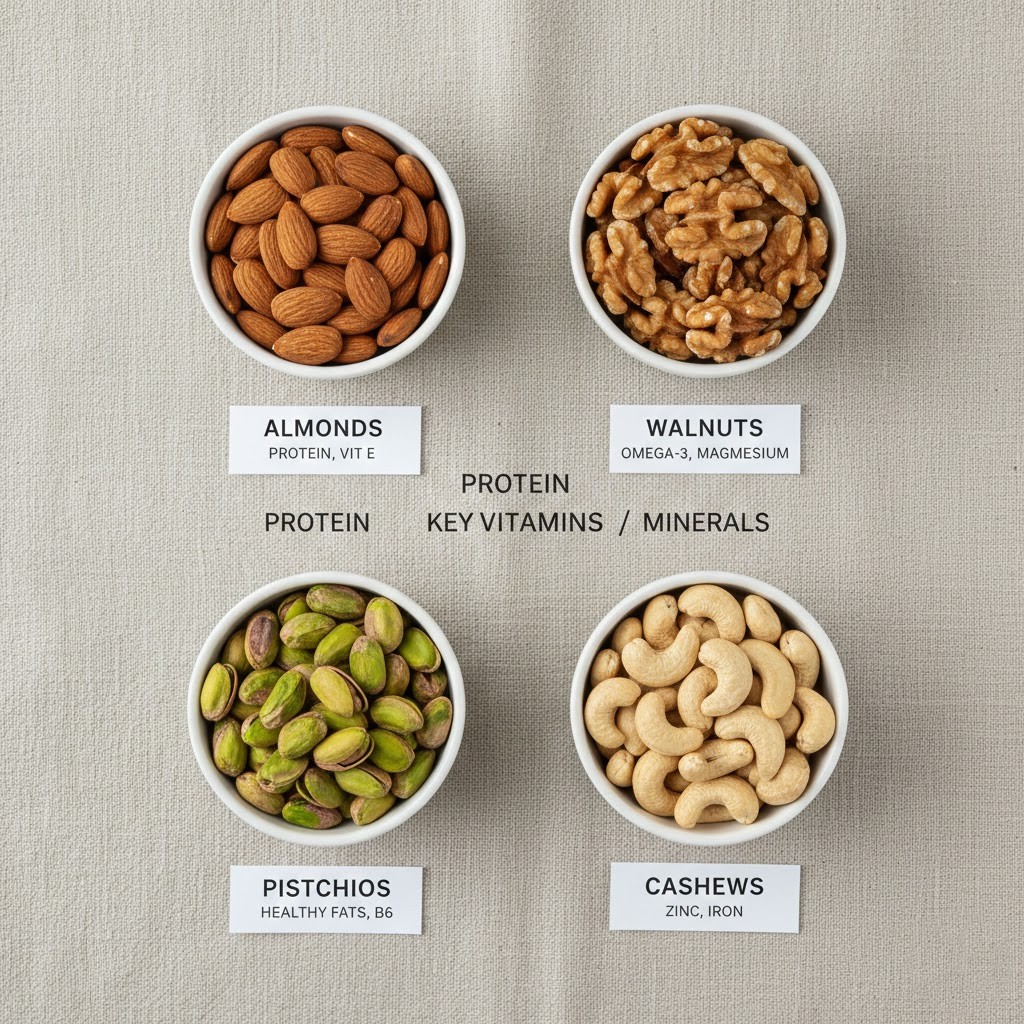
As you explore the different types of nuts available in US grocery aisles, you’ll notice that each one has a unique nutritional profile. While all nuts provide healthy fats and plant-based protein, the specific benefits can vary widely.
👉 This pairs well with our Digestion Time Chart: Chicken, Eggs, Nuts & More guide if you want the full picture on topics related to digestion.
Protein, healthy fats, and energy support
Many nuts provide a surprisingly high amount of plant-based protein and heart-supportive fats. For example, almonds contain about 6 grams of protein per 1 oz (about 23 almonds), making them a filling option for busy days. Cashews, which offer around 5 grams of protein per 1 oz, also include monounsaturated fats that can support long-lasting energy levels. If you’re looking for a richer option, macadamia nuts contain more fats—roughly 21 grams per 1 oz—which can make them especially satisfying. These fats, particularly monounsaturated fats, play a role in helping you feel full while giving your body a steady calorie source for daily activities.
👉 Want to go further? Our complete breakdown of 5-Ingredient Healthy Buffalo Chicken Wings walks you through topics related to ingredient step by step.
Vitamins, minerals, and antioxidant profiles
Beyond healthy fats and protein, many nuts are rich in vitamins and minerals essential for overall wellness. Walnuts are particularly notable for their alpha-linolenic acid (ALA), a plant-based omega-3. Pistachios provide more than 1.5 mg of vitamin B6 per cup (shelled), supporting metabolic and cognitive function. Brazil nuts are well known for their selenium content—just one Brazil nut can provide well over the daily recommended amount. Meanwhile, hazelnuts deliver vitamin E and antioxidants that help defend cells from everyday stressors. While these nutrients support general health, they should be enjoyed as part of a balanced eating pattern, not used as a replacement for medical treatment.
👉 For a deeper dive into topics related to holistic, check out: The 4 Levels Of Holistic Healing — it’s packed with practical tips.
How to Add Nuts to Your Daily Diet

As you begin incorporating popular nuts into your daily routine, it’s helpful to understand how much to eat and simple ways to include them without overwhelming your calorie intake.
Smart portions for everyday snacking
Although nuts are nutrient-dense, they’re also calorie-dense, so portions matter. A standard serving is 1 oz—about a small handful or roughly ¼ cup, depending on the nut. For example, a serving of peanuts is around 28 pieces, while pistachios average 49 kernels per 1 oz. Sticking to this amount helps you enjoy their benefits without unintentionally adding hundreds of extra calories. Pre-portioning nuts in small snack bags can make it easier to stay consistent, especially if you’re often on the go or working through busy afternoons.
Simple ways to mix nuts into meals
You can easily add nuts to dishes you already enjoy. Sprinkle 2 tbsp of chopped walnuts over oatmeal, stir a small handful of cashews into a stir-fry, or toss sliced almonds over a salad for extra texture. At breakfast, pistachios pair well with Greek yogurt and fruit, creating a balanced bowl with protein and crunch. Nuts also work well in baked goods—adding ¼ cup of chopped pecans to banana bread batter enhances flavor without overwhelming sweetness. If you prefer savory meals, crushed peanuts add a satisfying topping to noodle dishes or grain bowls. These small additions allow you to benefit from the nutrients without dramatically changing your daily eating habits.
How Different Nuts Compare in Flavor & Everyday Use
Moving from nutrition to daily practicality, it’s worth considering the flavor and texture differences between nuts. These differences help determine which nut fits best in your personal preferences or recipes.
Taste and texture favorites
Almonds are known for their mild sweetness and firm crunch, making them ideal for both snacking and baking. Pistachios have a naturally buttery, slightly sweet flavor and a satisfying snap, especially when roasted. Pecans, softer and richer, work beautifully in oatmeal or desserts. Cashews bring a creamy texture that blends easily into sauces—many home cooks use 1 cup of soaked cashews to create dairy-free cream bases. Macadamia nuts offer a uniquely rich flavor, offering a more indulgent option that pairs especially well with cookies or tropical-style dishes.
Best uses in everyday cooking
Each type of nut lends itself to certain dishes. Walnuts complement savory meals like roasted vegetables, while almonds fit well in trail mixes or granola. Brazil nuts, with their stronger flavor, stand out when chopped and sprinkled sparingly on salads. Hazelnuts elevate desserts—adding 2–3 tbsp to chocolate-based recipes introduces a familiar, warm flavor. Peanuts remain the most versatile, used in everything from sandwiches to peanut sauces. These flavor profiles help you choose the right nut for your lifestyle, tastes, and cooking habits.
Storing Nuts for Freshness and Long Shelf Life

Once you’ve stocked up on your favorite nuts, proper storage helps maintain freshness and flavor. Even though nuts are shelf-stable, their natural oils can degrade over time.
How to store nuts at home
Most nuts last longest when kept in airtight containers in a cool, dry place. For optimal freshness, refrigerate or freeze them. In the fridge, nuts typically last up to 6 months, while freezing can extend their lifespan to one year or more, depending on the variety. If you buy nuts in bulk—something many US shoppers do at warehouse stores—dividing them into smaller airtight bags makes them easier to manage.
Signs of freshness and spoilage
Fresh nuts should taste clean and mildly sweet or savory depending on the type. If you notice bitterness, waxy texture, or a “paint-like” smell, the oils may have gone rancid. This can happen more quickly with high-fat nuts like walnuts or pecans. A quick freshness check before eating helps ensure you’re getting the best flavor and maximum enjoyment from each serving.
Tips & Swaps
- Choose unsalted nuts to keep sodium intake low.
- Mix 2–3 nut types for balanced flavor and nutrients.
- Roast nuts at 350°F for 8–10 minutes to enhance flavor.
- Swap peanuts for almonds when you want more crunch.
- Use pistachios instead of candy for a colorful yogurt topping.
FAQs
- Are nuts healthy for everyday snacking?
Yes—when eaten in appropriate portions. Most nuts contain healthy fats, protein, and micronutrients that support balanced eating. A typical serving is 1 oz, which offers a nutritious boost without excessive calories. Nuts are best enjoyed as part of a varied diet that includes fruits, vegetables, whole grains, and lean proteins. - Which nuts are best for high-protein diets?
Almonds, peanuts, and pistachios provide some of the highest protein amounts per ounce. For example, almonds offer about 6 grams per serving, while peanuts offer 7 grams. These options work well for people looking to add more plant-based protein to meals and snacks throughout the day. - Are raw or roasted nuts healthier?
Both options can be part of a healthy diet. Raw nuts retain slightly more nutrients, while roasted nuts offer deeper flavor. Lightly roasted nuts without added oils or sugars are a popular choice in US grocery stores. The differences in nutrient content are small enough that personal preference usually matters most. - Can nuts help with weight management?
Nuts can support satiety due to their protein and healthy fat content, helping you feel fuller longer. However, they are calorie-dense, so maintaining proper portions—usually 1 oz—is essential. Pairing nuts with fruits or yogurt can create a balanced, satisfying snack without overeating. - Are nuts safe for people with allergies?
Tree nut and peanut allergies are common in the United States. Anyone with known allergies should avoid trigger nuts entirely and read ingredient labels carefully. If symptoms arise, a healthcare professional should be consulted immediately.
If you found this guide helpful, explore more nutrition-focused articles on our site and discover simple ways to build a balanced, enjoyable eating routine.
Disclaimer: This content is for informational purposes only and is not a substitute for professional medical advice.

About Sarah Williams
We turn solid evidence into everyday habits Americans can actually do—plain English, cups/oz, grocery-aisle swaps, and routines that fit real life. Our editorial process: Experience—we road-test tips in real schedules…