The Sigmoid Trap: How to Do a Stomach Massage for Constipation (The ILU Method)
You’ve chugged water. You’ve eaten fiber. You might have even taken a brisk walk. But you’re still sitting there, feeling...
You’ve chugged water. You’ve eaten fiber. You might have even taken a brisk walk. But you’re still sitting there, feeling like a tightly inflated balloon, desperately rubbing your belly button hoping for relief.
Why isn’t it working?
Because you are likely rubbing the wrong spot. Stool almost never gets stuck behind your belly button (that’s your small intestine). When you are severely backed up, the traffic jam is happening in the “Sigmoid colon”—a tight curve located in your lower left abdomen.
If you press deeply into your lower left side right now, you might even feel a firm, sausage-like lump. That’s the blockage.
To clear it, aimless rubbing won’t help. You need a targeted, physical therapy-approved technique known as the ILU Massage (or the “I Love You” massage). Here is exactly how to perform a stomach massage for constipation to mechanically support your colon and finally get gentle relief.
The Science: Why Abdominal Massage Works
When fiber and water aren’t enough to trigger a bowel movement, you may need mechanical intervention.
Your large intestine is shaped like a giant square frame around your abdomen. Stool travels up the right side (ascending), across the top under your ribs (transverse), and down the left side (descending) into the sigmoid colon and rectum.
A targeted abdominal massage helps in two distinct ways:
- Mechanical Relief: It physically mimics peristalsis (the rhythmic muscle contractions of your gut), manually pushing trapped gas bubbles and hardened stool along the correct anatomical pathway.
- The Vagus Nerve Switch: Deep, rhythmic pressure stimulates the Vagus Nerve. According to physiotherapy experts, this shifts your nervous system out of a stressed, clenched “fight or flight” state and activates your “rest and digest” parasympathetic nervous system, allowing your intestinal muscles to finally relax and open.
Preparation: Setting Up for Success
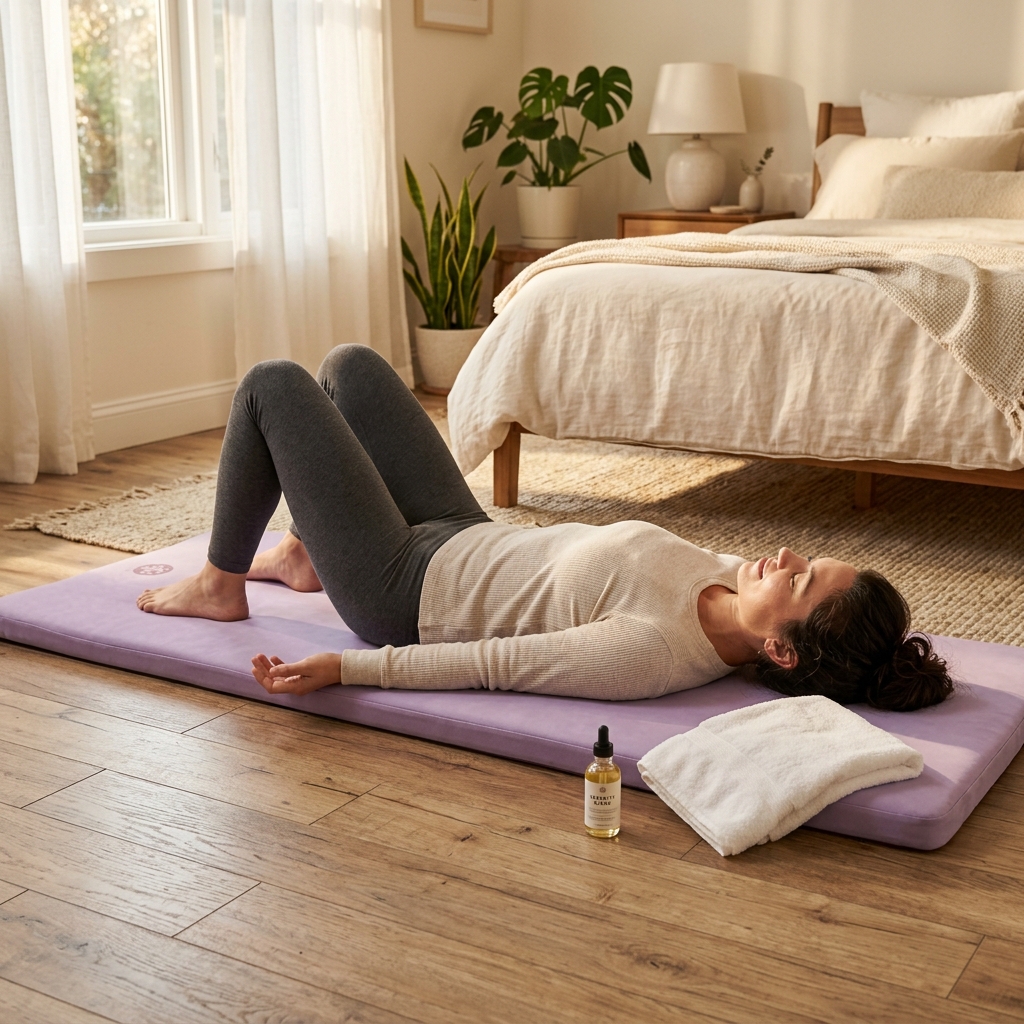
Before you begin the ILU massage, prepare your body:
- Lie Flat: Lie on your back on a comfortable surface (like a yoga mat or your bed). Bend your knees and place your feet flat on the floor. This completely relaxes your abdominal wall, allowing you to massage deeper without resistance.
- Lubricate: Use a few drops of a carrier oil (like coconut oil, jojoba oil, or a soothing castor oil) on your hands. This reduces skin friction and generates comforting warmth.
- Breathe: Take deep, slow diaphragmatic breaths. Never massage while holding your breath or tensing your stomach.
The “I Love You” (ILU) Massage Step-by-Step

The ILU technique traces three letters across your abdomen. Clinical guidelines, such as those detailed by pediatric and rehabilitation specialists, stress one crucial rule: You must always perform these strokes in the exact order below so you are pushing stool toward the exit, not backwards.
Step 1: The “I” (Clearing the Exit)
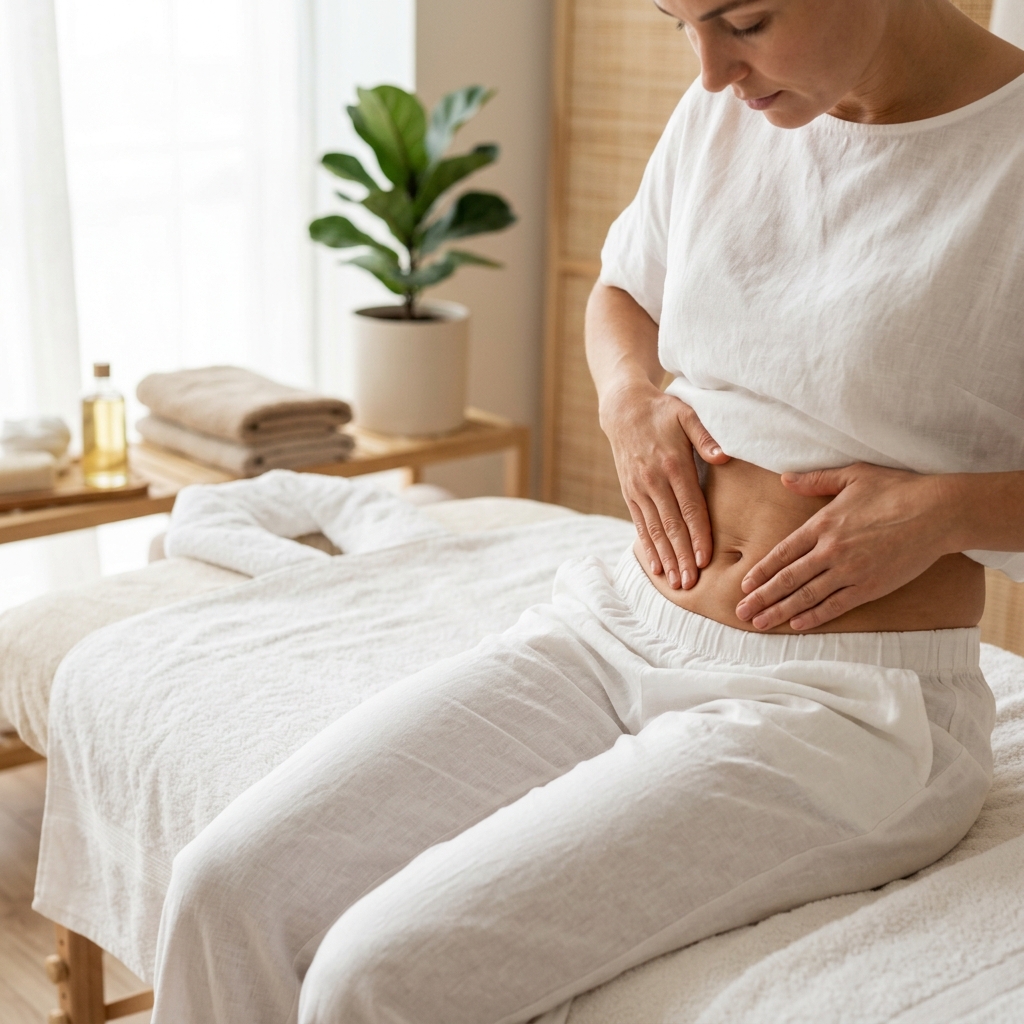
- Location: The descending colon (Left side).
- Action: Place your fingertips just under your left rib cage. Apply firm, steady pressure and stroke straight down to your left hip bone, drawing the letter “I”.
- Why: You must clear the “exit” (the Sigmoid Trap) before you try to push new material from the rest of your colon toward it.
- Repetition: Repeat this downward stroke 10 times.
Step 2: The “L” (Moving the Middle)

- Location: The transverse and descending colon.
- Action: Start at your right rib cage. Stroke horizontally straight across to your left rib cage, and then stroke down to your left hip bone (drawing an upside-down “L”).
- Repetition: Repeat this stroke 10 times.
Step 3: The “U” (The Full Sweep)
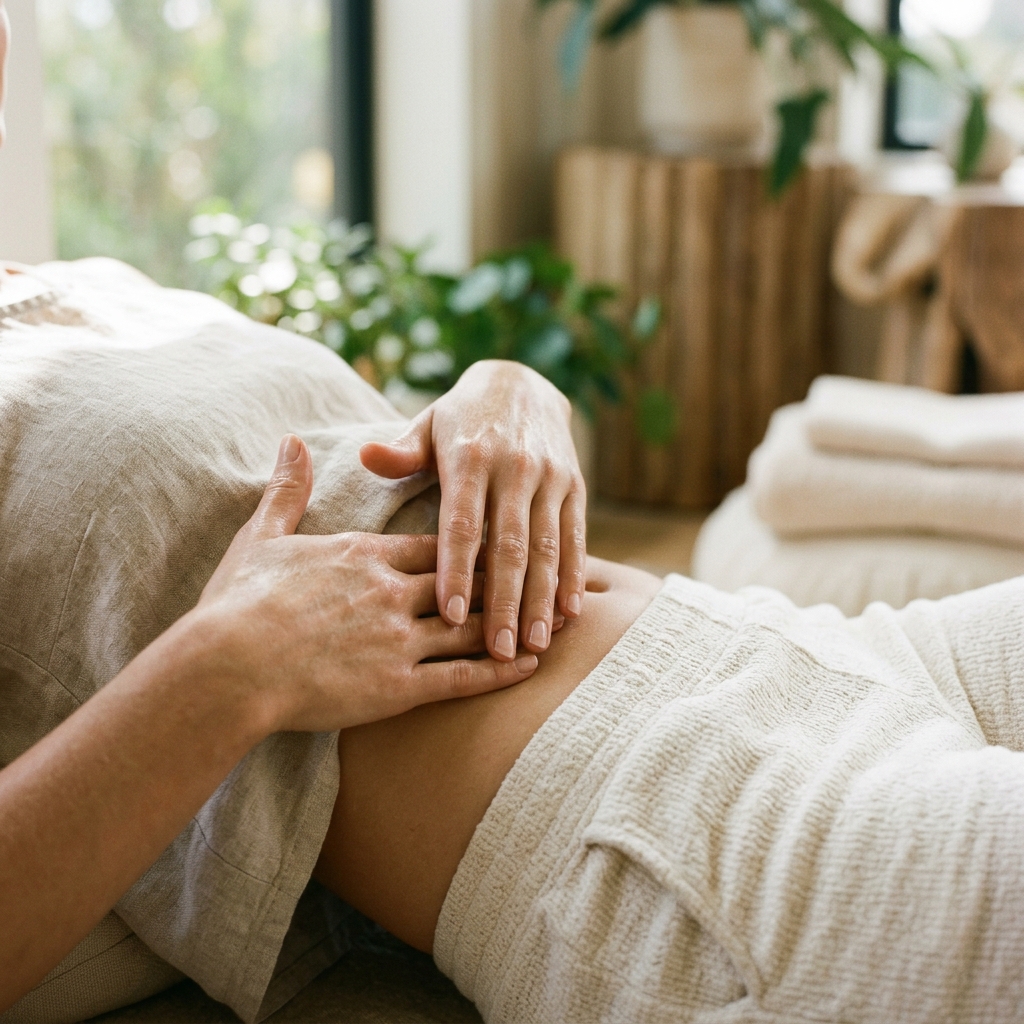
- Location: The ascending, transverse, and descending colon.
- Action: Start at your right hip bone. Stroke UP to your right rib cage, ACROSS to your left rib cage, and DOWN to your left hip bone (drawing an upside-down “U”).
- Repetition: Repeat this full sweep 10 times.
3 Crucial Mistakes to Avoid
While abdominal massage is safe and gentle, doing it wrong can make you feel worse:
- Rubbing Counter-Clockwise: Your digestive tract moves clockwise. If you rub counter-clockwise, you are literally pushing stool and gas backwards up into your ascending colon. Always go Clockwise (up the right, down the left).
- Pressing Too Hard: The massage should involve deep, firm pressure, but it should never cause sharp, stabbing pain. If you experience severe, sudden pain, stop immediately and consult a doctor (it could be a medical emergency like appendicitis).
- Massaging on a Full Stomach: Wait at least 1 to 2 hours after eating a heavy meal before performing deep abdominal massage to prevent nausea or reflux.
Frequently Asked Questions
How long does it take for a stomach massage to make you poop?
For many people, the relief is rapid. You may hear gurgling sounds (borborygmi) immediately, and have the urge to go within 15 to 30 minutes. For severe constipation, it may take a few hours or require daily practice.
Can I do an abdominal massage while sitting on the toilet?
Yes! If you are already on the toilet, you can perform the ILU sweeps or gently lean forward while applying pressure to your lower left abdomen. Combining this with a step stool (like a Squatty Potty) to elevate your knees is highly effective.
The Next Step: Keeping the Pipes Clear
The ILU massage is a fantastic emergency tool to manually clear the “Sigmoid Trap.” But once the traffic jam is cleared, you need to ensure it doesn’t happen again tomorrow.
The secret to maintaining this newly found regularity is switching your diet from dry, bulky “broom” fibers to soothing, water-absorbing “magic gel” fibers.
To learn exactly what to eat next, check out our guide on the Best High-Fiber Foods for Regularity, complete with a 7-day gentle digestion meal plan to keep your colon lubricated and happy.
Disclaimer: This content is for informational purposes only and is not intended as medical advice. If you experience chronic constipation, severe abdominal pain, or suspect an impaction, please consult your healthcare provider.

About Mr. Anh
We turn solid evidence into everyday habits Americans can actually do—plain English, cups/oz, grocery-aisle swaps, and routines that fit real life. Our editorial process: Experience—we road-test tips in real schedules…