Tea vs. Coffee: Which Fits Your Wellness Goals?
When you’re trying to decide between tea and coffee, the choice often comes down to how each drink supports your...
When you’re trying to decide between tea and coffee, the choice often comes down to how each drink supports your daily habits, energy needs, and nutrition goals. Both beverages are popular across the US, and both offer unique benefits—yet their nutritional differences can influence how they fit into your routine. This guide breaks down the key factors clearly so you can make a confident, wellness-aligned choice that works with your lifestyle, whether you’re cutting calories, watching caffeine, or simply rethinking your morning ritual.
Key Nutrition Differences Between Tea and Coffee
Before choosing one drink over the other, it helps to understand how they compare nutritionally. Even though they seem similar, tea and coffee vary in caffeine, calories, and macros, which may shape their role in your daily habits.
👉 Want to go further? Our complete breakdown of Hidden Signs You May Be Low in Key Nutrients walks you through spotting nutrient deficiencies early step by step.
Caffeine levels and how they affect energy
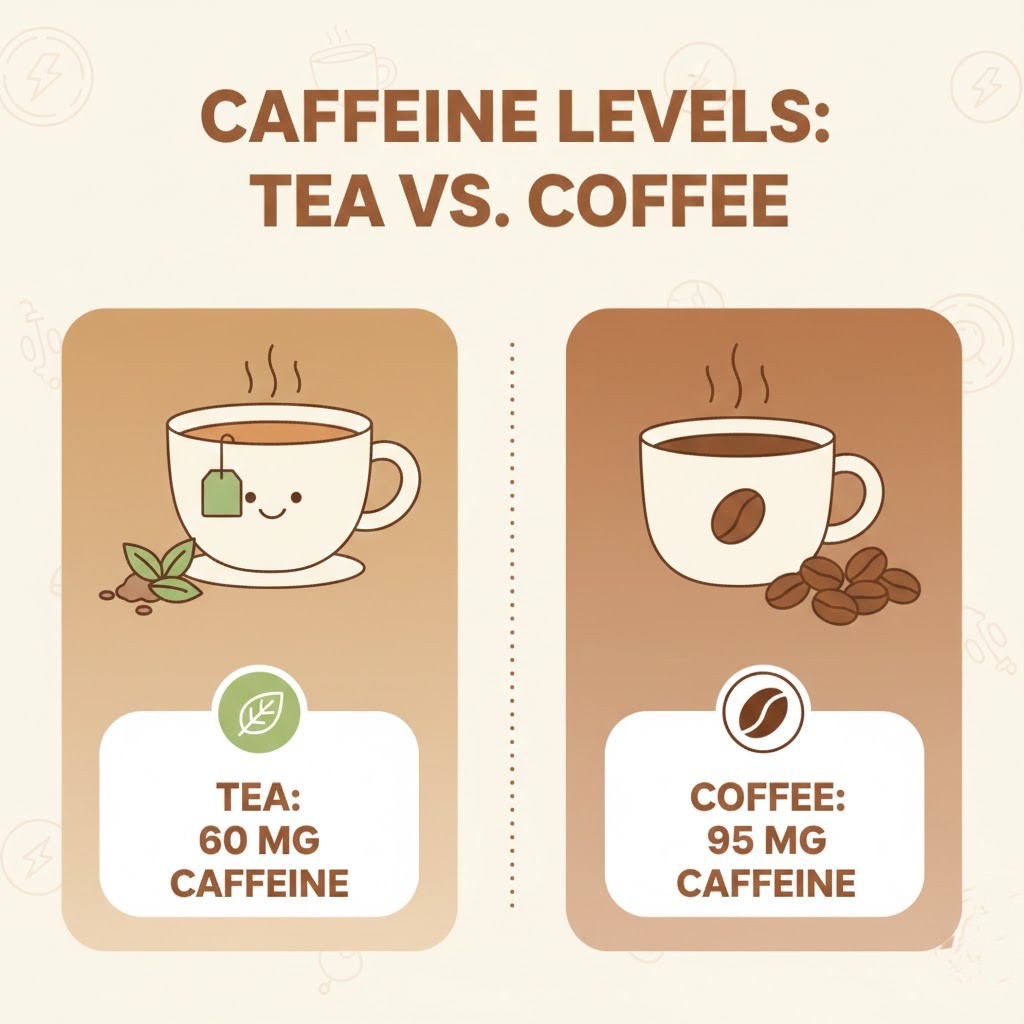
Caffeine is often the deciding factor when comparing tea and coffee. A standard 1-cup (8 oz/240 ml) serving of brewed coffee typically contains around 95 mg of caffeine, while tea averages closer to 60 mg per cup. This roughly 35 mg difference can make coffee more appealing during busy US mornings when many people look for a quick, strong energy boost.
However, caffeine affects everyone differently. For example, someone sensitive to caffeine might experience jitters or afternoon crashes after a full cup of coffee, while tea’s lower caffeine level and slower-release profile may feel smoother. If you’re trying to reduce stimulant intake without giving up your morning ritual, switching from coffee to tea even a few days a week can help you stay energized without overdoing it. Some US tea drinkers also choose green tea because it contains L-theanine, an amino acid associated with steady focus.
👉 Want to go further? Our complete breakdown of 10-Minute Core Burn Workout at Home (No Equipment) walks you through topics related to equipment step by step.
Comparing calories, sugar, fat, and protein
Calories and macros can play a surprisingly big role in your daily drink choice. Plain coffee by itself has almost no calories, but the popular café-style version shown in the comparison graphic—coffee with milk and 9 g of sugar—comes in at about 30 calories per cup. In contrast, the tea version shown carries 95 calories, mostly due to the added milk and sugar.
If you drink multiple cups a day, this difference adds up. For example, two cups of that sweetened tea equal 190 calories, while two cups of the coffee recipe equal just 60 calories. Both options contain similar sugar content (9 g), but the tea includes more fat (4 g vs. coffee’s 1 g) and slightly more protein (3 g vs. 2 g). If calorie reduction is part of your wellness goals, these numbers may help guide your decision.
👉 This pairs well with our Body Warning Signs You Shouldn’t Ignore guide if you want the full picture on reading your body’s signals.
How to Choose the Right Drink for Your Daily Routine

Now that you know how tea and coffee differ nutritionally, it’s easier to think about which one supports your lifestyle. Your choice might shift based on stress levels, energy needs, and the kinds of drinks you already enjoy.
When tea is the better fit
Tea can be a great match if you’re trying to balance energy with calm focus. For example, starting your day with black tea may help you stay alert while avoiding the jumpy feeling some people get from coffee. If your afternoons tend to feel long or stressful, switching to a lower-caffeine tea—like green or oolong—can give a light lift without interrupting your sleep later. Many US drinkers use herbal teas in the evening as a way to unwind, especially before bedtime.
Another reason tea may fit your goals is flexibility. You can easily reduce calories by adjusting sugar or swapping milk for lighter options such as almond milk. If you prefer warm, comforting drinks but want to stay under 100 calories a day from beverages, tea makes this easier. The 60 mg caffeine level also works well for people who enjoy multiple cups throughout the day without exceeding their comfort zone.
When coffee supports your goals better
Coffee tends to be the preferred choice if you need a stronger morning boost, especially before work, workouts, or long commutes. The 95 mg of caffeine in a cup of coffee can help many people feel more alert quickly. If you are reducing sugary beverages, coffee can be easier to drink with little or no sugar, especially if you enjoy its naturally bold flavor. For example, switching from a 9 g sugar tea to unsweetened coffee can cut around 36 calories daily if you normally drink two cups.
Coffee may also fit your wellness plan if you monitor daily macros closely. With only 1 g of fat and 30 calories in the example shown, it’s a simple way to enjoy a warm beverage without shifting your nutrition balance. Many Americans who follow calorie-conscious approaches—like intermittent fasting, macro counting, or general weight maintenance—find coffee easier to keep “clean.” Just remember that flavored syrups, creamers, and specialty drinks from cafés can raise calories quickly, so customizing your cup at home can be a smarter choice.
Tips to Personalize Your Drink for Wellness
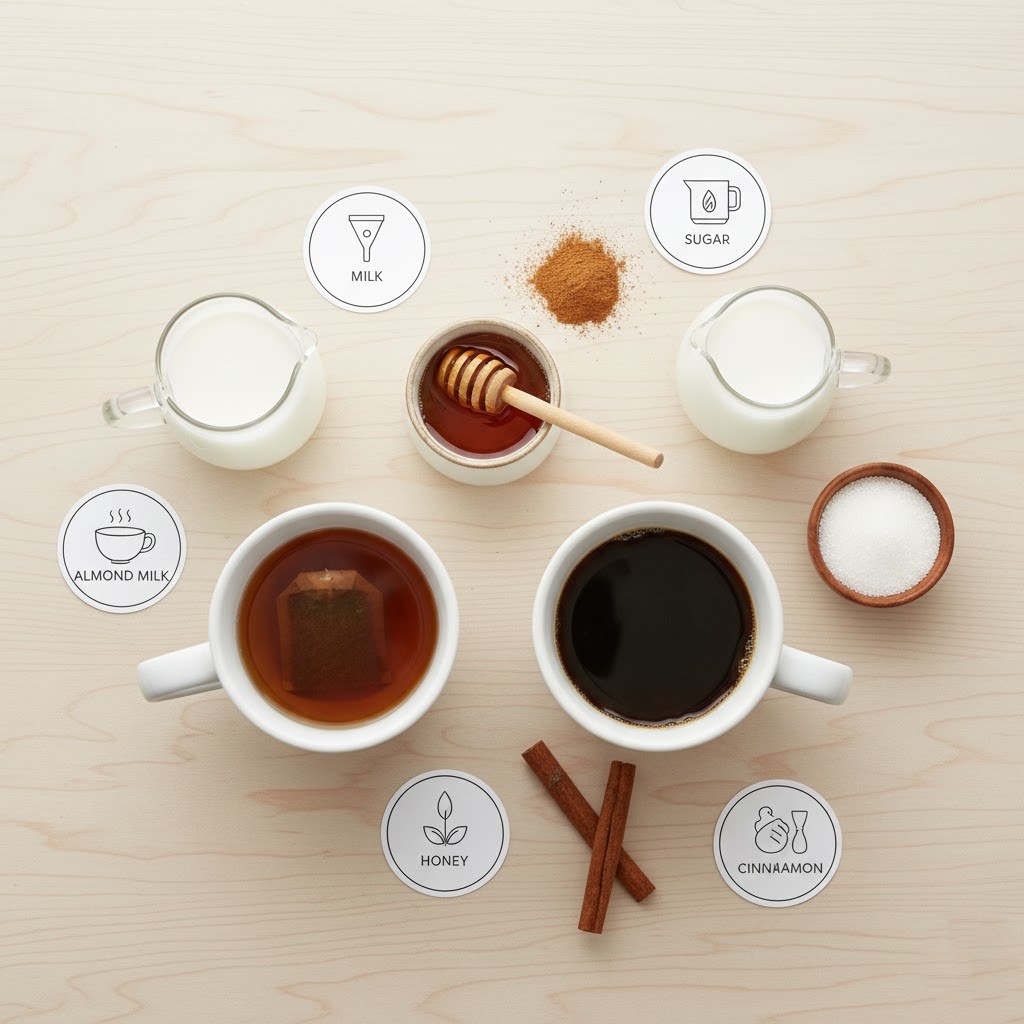
- Choose unsweetened versions when possible to reduce daily calories.
- Use plant-based milk to cut fat compared to whole milk.
- Try half-caff coffee if full strength feels too stimulating.
- Switch to herbal tea in the evening to support better sleep.
- Use a measured teaspoon of sugar to avoid accidental over-sweetening.
FAQs
- Is tea healthier than coffee?
Not necessarily—tea and coffee offer different benefits. Tea is often lower in caffeine and easier to keep low-calorie, while coffee offers a stronger energy boost. Your wellness goals, caffeine tolerance, and taste preferences determine which is the “healthier” choice for you. - Which drink is better for weight loss?
If calories are your main focus, coffee may be easier to customize with no sugar and minimal add-ins. However, low-calorie tea options can work just as well. What matters most is how you prepare the drink and how often you consume it throughout the day. - Can I drink both tea and coffee in the same day?
Yes—many people in the US enjoy coffee in the morning and tea later for lighter energy. Just pay attention to total caffeine intake. Staying under 400 mg daily is a common guideline for most healthy adults. - Why does tea sometimes have more calories than coffee?
Tea itself is naturally low-calorie, but many popular tea preparations include milk and sugar, which raise calories quickly. Coffee is often served more simply, which keeps its total intake lower unless you add creamers or syrups. - What’s the best drink for reducing afternoon crashes?
Tea generally provides a gentler lift because its caffeine content is about 60 mg per cup. Many people find this steadier and easier to manage compared to the stronger spike from coffee.
Trying to match your beverage to your wellness goals? Start by adjusting just one cup a day—switching between tea and coffee can help you find the balance that keeps you energized and feeling your best.
Disclaimer: This content is for informational purposes only and is not a substitute for professional medical advice.

About Sarah Williams
We turn solid evidence into everyday habits Americans can actually do—plain English, cups/oz, grocery-aisle swaps, and routines that fit real life. Our editorial process: Experience—we road-test tips in real schedules…