Sugar Content of Fruits: The Ultimate Low, Medium, and High Guide
Disclaimer: I’m trained in traditional medicine in Vietnam, but I’m not currently practicing medicine or providing personal diagnosis or treatment...
- The Great Sweetness Myth: Why Taste Can Deceive You
- The Pancreas Workload: Why The "Fruit Matrix" Matters
- The Juice Trap: Why Whole Fruit is Different
- The Reference Guide: Low, Medium, and High Sugar Fruits
- How to Test Your Own Tolerance (The Food Journal Method)
- Frequently Asked Questions
- The Bottom Line
Disclaimer: I’m trained in traditional medicine in Vietnam, but I’m not currently practicing medicine or providing personal diagnosis or treatment advice through this website. I write from personal experience, ongoing research, and my own food-first wellness experiments. My work explores digestion, daily energy, traditional self-care, movement, breathwork, meditation, and simple habits that support everyday well-being. Everything I share here is educational and reflective, not medical advice. It should not replace diagnosis, treatment, or care from a licensed healthcare professional.
In the wellness world, fruit has unfairly become an enemy. Many people avoid bananas, grapes, and mangoes entirely, fearing that natural fruit sugar will ruin their health or derail their blood sugar.
The confusion stems from a massive misunderstanding of how our bodies actually process sugar. People often equate a crisp, whole apple with a can of soda, or they believe that because a fruit tastes incredibly sweet, it must be dangerous for their system. Furthermore, many fall into the “juice trap,” believing a glass of orange juice is just as healthy as eating a whole orange. This misunderstanding leads to unnecessary dietary restrictions and deprives your body of essential, healing nutrients.
In this guide, we’re going to debunk the biggest myth about fruit sugar: the Glycemic Index illusion. You’ll learn why the sweetness of a fruit doesn’t equal its blood sugar impact, how the “Fruit Matrix” protects your pancreas from exhaustion, and how to use our low, medium, and high sugar fruit lists to build a balanced, energy-rich diet.
The Great Sweetness Myth: Why Taste Can Deceive You
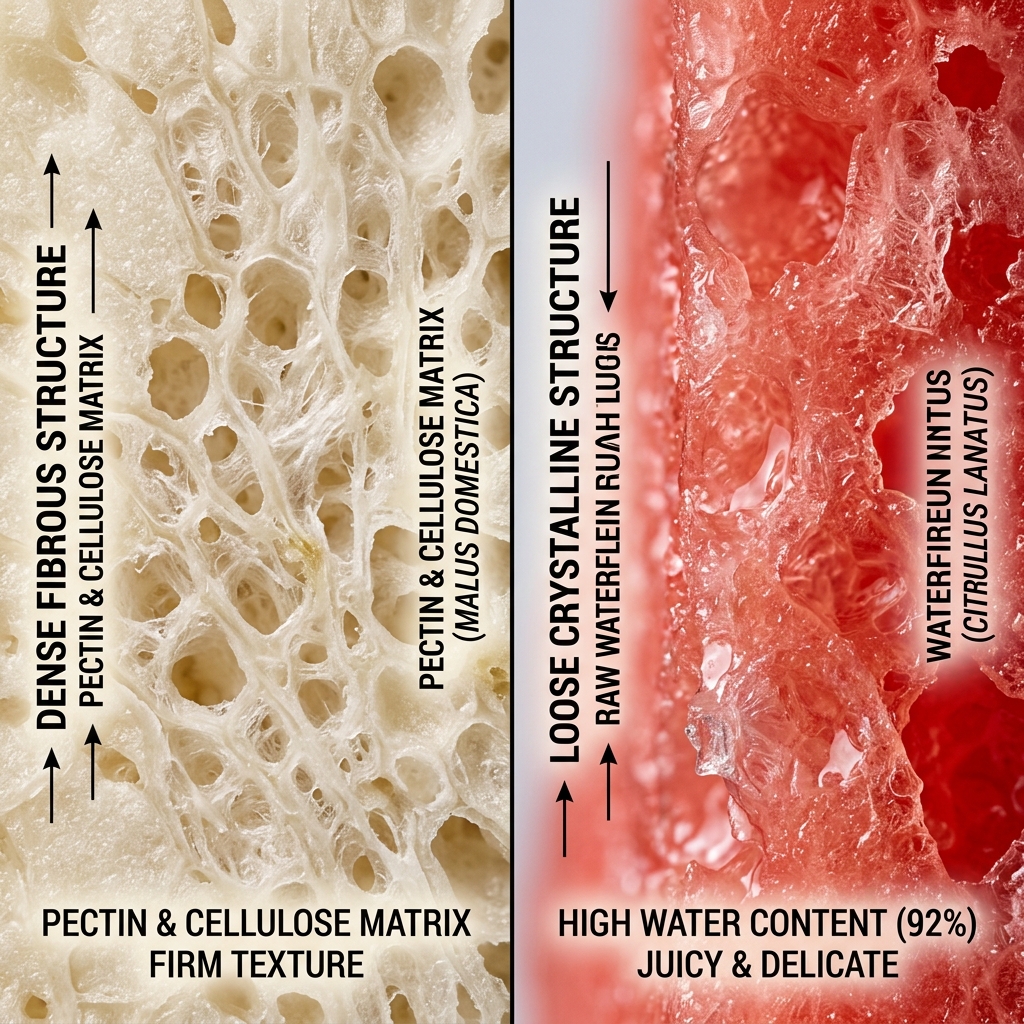
If you’re trying to manage your energy levels, you’ve likely heard of the Glycemic Index (GI). However, most people completely misunderstand how it works when it comes to fruit.
What is the Glycemic Index (GI)?
According to guidelines from Harvard Medical School, the Glycemic Index is simply a scale that measures how rapidly a carbohydrate-containing food raises your blood sugar levels. A high GI food causes a rapid, massive spike in blood glucose, while a low GI food provides a slow, steady, and sustained release of energy.
Sweetness Doesn’t Equal High GI (The Watermelon vs. Apple Paradox)
Here’s the biggest myth: “If a fruit tastes very sweet, it must have a high GI.” That’s simply not true.
Take an apple and a slice of watermelon, for example. A crisp apple tastes incredibly sweet, much sweeter than a watery piece of watermelon. Yet, an apple has a low GI, while watermelon has a remarkably high GI. Why? Because the apple is packed with a dense, complicated structure of fiber. Your body has to work hard to break down the apple, meaning the sugar drips slowly into your bloodstream. Watermelon, on the other hand, lacks that dense fiber structure. Its sugar hits your bloodstream almost instantly, regardless of how sweet it actually tastes on your tongue.
The Pancreas Workload: Why The “Fruit Matrix” Matters
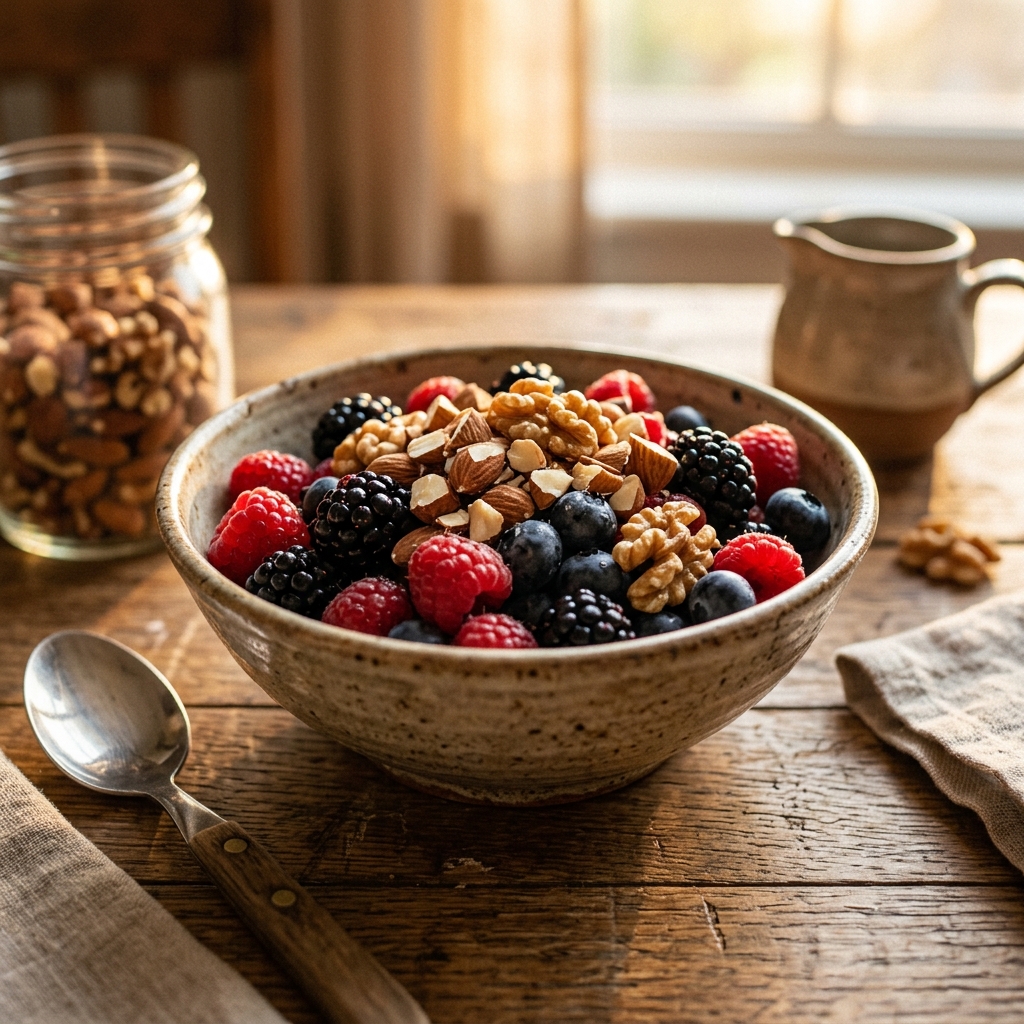
To understand why fruit sugar is fundamentally different from a candy bar, you need to understand the “Fruit Matrix” and how it protects your internal organs.
How Rapid Sugar Spikes Exhaust Your Pancreas
When you consume a high-GI food without any fiber (like a soda or pure fruit juice), sugar floods your bloodstream. Your body goes into an emergency response. The pancreas is forced to work in overdrive, rapidly pumping out massive amounts of insulin to clear the sugar from your blood. Over time, this constant cycle of massive insulin spikes and rapid drops leads to severe “energy crashes,” fatigue, and pancreatic exhaustion.
The Protective Fiber Barrier
This is where the “Fruit Matrix” comes in. In a whole piece of fruit, the sugar molecules are physically trapped inside intact plant cell walls and surrounded by a dense matrix of soluble and insoluble fiber.
When you eat whole fruit, that soluble fiber forms a thick gel in your digestive tract. This gel acts as a physical barrier. It dramatically slows down gastric emptying and prevents the sugar from rushing into your blood. Instead of an emergency flood of sugar, your pancreas only has to deal with a slow, manageable trickle. The fruit matrix literally protects your pancreas from exhaustion. This is the same reason soluble and insoluble fiber slows digestion and changes how sugar lands.
What I noticed:
“I used to think drinking a massive glass of fresh apple juice every morning was the pinnacle of health. But by 10:00 AM, I’d experience a devastating energy crash. My hands would shake, and I felt starved. Once I learned about the Fruit Matrix, I switched to eating a whole, crisp apple paired with a handful of almonds. The difference was night and day. Because the fiber was intact (and I added protein from the nuts), I had sustained, calm energy until lunch. The juice exhausted my pancreas; the whole fruit nourished it.”
The Juice Trap: Why Whole Fruit is Different
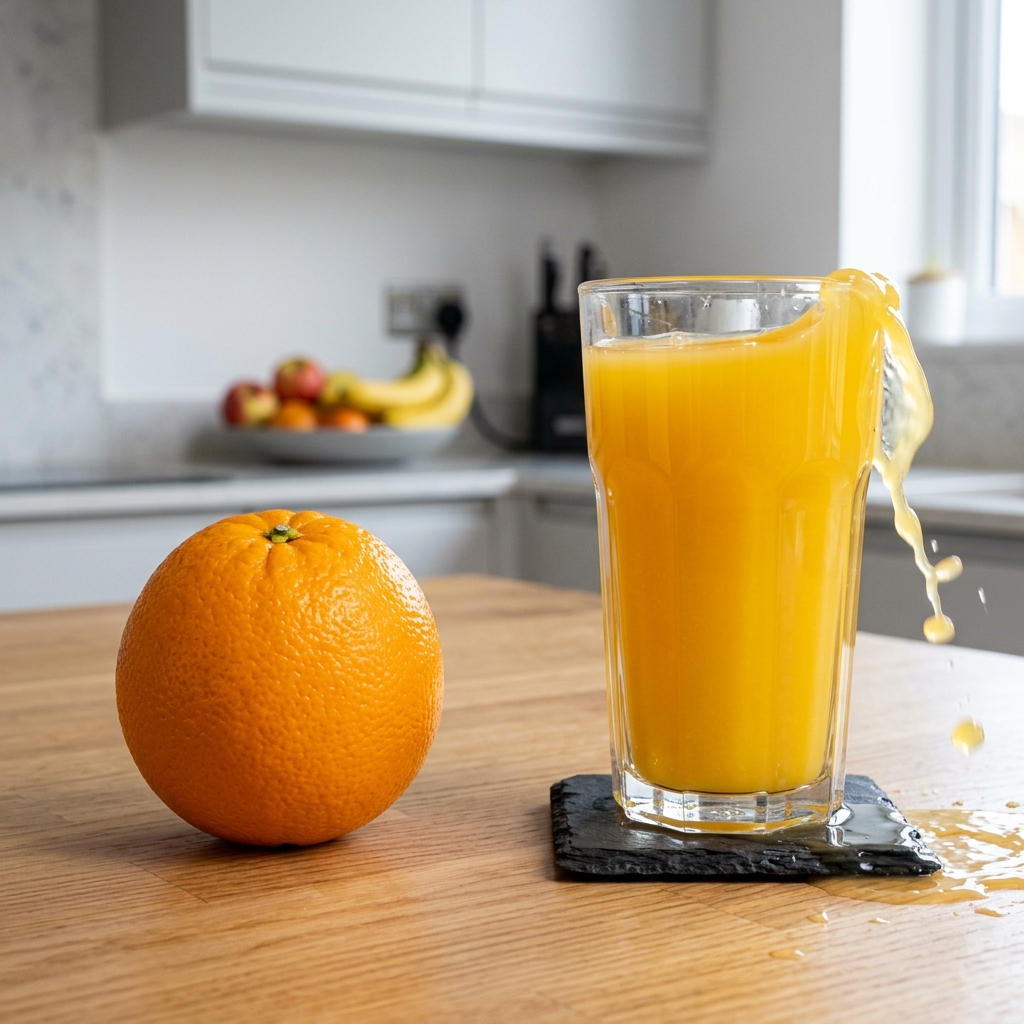
If the fiber matrix is what protects your pancreas, what happens when we put fruit in a machine?
The Destruction of the Cell Wall
When you run fruit through a juicer, the machine mechanically destroys the plant cell walls and entirely strips away the protective fiber matrix. You’re left with a glass of pure, unprotected sugar water. Even if it contains vitamins, your body processes it exactly like a sugar-sweetened beverage. It causes an immediate, massive spike in blood glucose.
Why Blending is Better Than Juicing
If you must drink your fruit, blending (making a smoothie) is significantly better than juicing. Blending breaks down the cell walls, which does speed up digestion slightly, but it retains 100% of the fiber. To further slow down the sugar release in a smoothie, always add a source of fat or protein, like chia seeds, avocado, or Greek yogurt. Here are gut health drinks that do not rely on a giant glass of fruit juice.
The Reference Guide: Low, Medium, and High Sugar Fruits
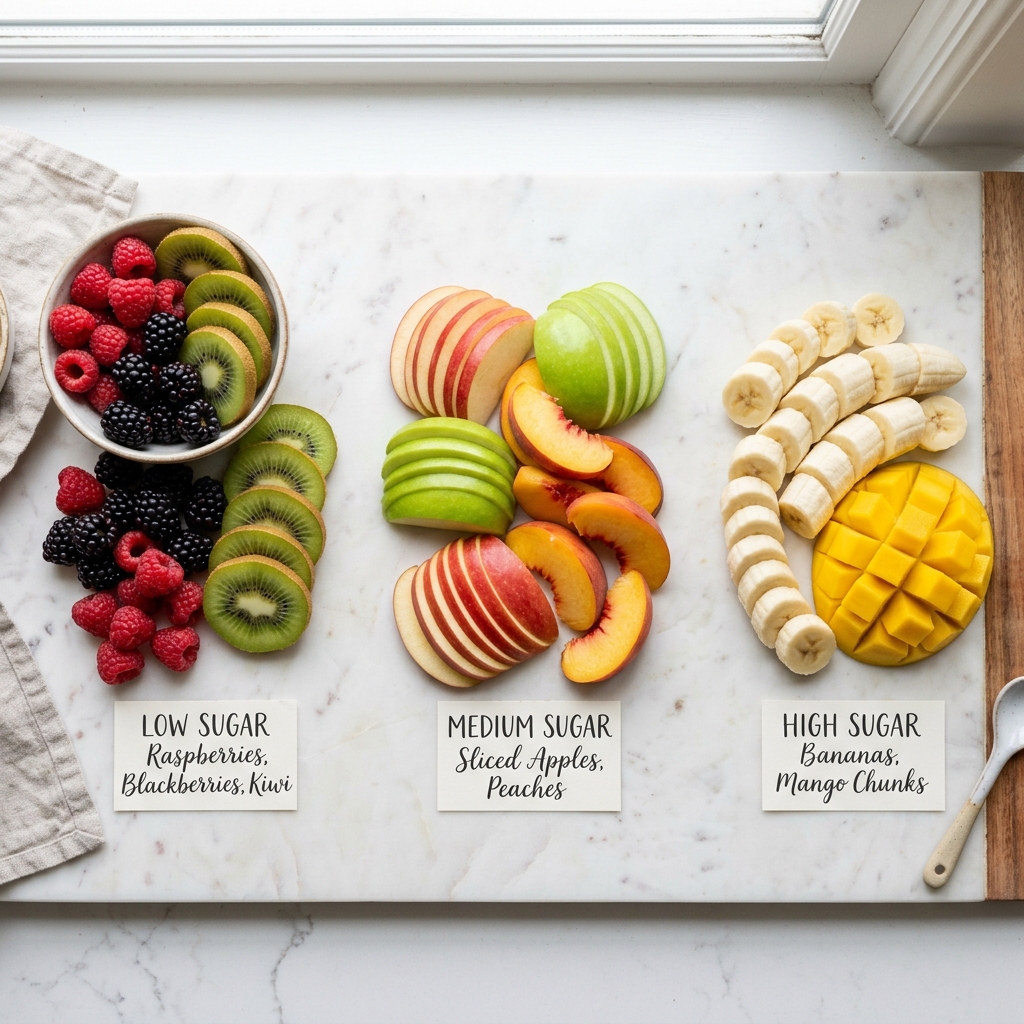
Now that you understand the mechanics, you can use fruit strategically. Here’s a practical guide to help you choose the right fruit for the right moment.
Low Sugar Fruits (The Daily Staples)
These fruits have the lowest sugar content and the least impact on your pancreas. They’re excellent choices for everyday snacking and can be eaten abundantly.
- Berries (Raspberries, Blackberries, Strawberries): Extremely high in fiber and antioxidants. They are also berries that are easiest on digestion while still giving you fiber.
- Lemons and Limes: Perfect for flavoring water and supporting digestion.
- Kiwis: Surprisingly low in sugar while being incredibly dense in Vitamin C and fiber.
Medium Sugar Fruits (The Balanced Fuel)
These fruits have moderate sugar levels but are protected by a very strong fiber matrix, making them perfect for sustained energy.
- Apples: The ultimate low-GI fruit due to their dense pectin (fiber) structure.
- Peaches and Plums: Excellent sources of hydration and gentle energy.
- Oranges: (Eaten whole, not juiced!) The fleshy pulp provides a strong fiber barrier.
High Sugar Fruits (The Pre-Workout Energy)
These fruits contain higher amounts of simple sugars or have a less dense fiber matrix (higher GI). You don’t need to avoid them; simply use them when you need rapid energy, like before a workout, or pair them with a protein source.
- Bananas: As they ripen, their starch turns into rapidly absorbing sugar. See how banana ripeness changes resistant starch into fast sugar.
- Mangoes: High in sugar, but incredibly nutrient-dense. Best eaten after a meal or with a handful of nuts.
- Grapes and Cherries: Easy to overeat because they’re small and lack a dense fiber structure. Eat them mindfully.
How to Test Your Own Tolerance (The Food Journal Method)

The ultimate test of how a fruit impacts your body isn’t a chart; it’s your own physical reaction.
Pairing Fruit with Fat and Protein
If you want to eat a high-sugar fruit (like a ripe mango) but want to protect your pancreas from a spike, use the pairing method. Eat the mango alongside a hard-boiled egg, a spoonful of almond butter, or a slice of cheese. The fat and protein will dramatically slow the digestion process.
Tracking the 2-Hour Energy Crash
Use a food journal to track your energy. Eat a high-sugar fruit alone on an empty stomach and note how you feel exactly two hours later. If you feel sudden fatigue, shakiness, or intense hunger, your pancreas likely had to work too hard. The next day, eat the same fruit paired with a handful of walnuts. Note the difference. You’ll likely find that the “energy crash” completely disappears. If you want a practical food-first example, use a gut-healthy meal plan that shows how to pair fruit with protein and fat.
Frequently Asked Questions

Which fruits are lowest in sugar?
Raspberries, blackberries, lemons, and avocados (yes, avocado is a fruit!) contain the lowest amounts of natural sugar and very high amounts of dietary fiber.
Is fruit sugar the same as added sugar?
Chemically, the fructose in a piece of fruit is similar to the fructose in high-fructose corn syrup. However, biologically, they act completely differently because fruit sugar is bound within the “Fruit Matrix” of fiber, water, and micronutrients, which dictates a slow, safe absorption rate.
Should I avoid high sugar fruits completely?
Absolutely not. You simply need to understand timing and pairing. Eat high-sugar fruits when you need immediate energy (like before physical activity), or pair them with fats and proteins to slow down their digestion.
The Bottom Line
Fruit sugar, when consumed in its whole, natural state, is protected by a powerful matrix of fiber that dictates how your body absorbs it.
You don’t need to fear the natural sweetness of fruit. By understanding the Glycemic Index illusion and respecting the fruit matrix, you can enjoy all fruits without putting unnecessary strain on your pancreas. Remember, it’s rarely the fruit that is the problem; it’s how we process it or what we pair it with.
Ready to start tracking how different fruits make you feel? Start with one fruit, one pairing, and one energy note at a time.
Disclaimer: The information provided on EssentialWellnessAZ is for educational purposes only. It is not intended as a substitute for professional medical advice, diagnosis, or treatment.

About Mr. Anh
We turn solid evidence into everyday habits Americans can actually do—plain English, cups/oz, grocery-aisle swaps, and routines that fit real life. Our editorial process: Experience—we road-test tips in real schedules…