Stress Eating Triggers and Solutions That Actually Help
If stress keeps pushing you toward food, the problem usually is not a lack of discipline. Learn the most common stress eating triggers and the simple solutions that help you feel more in control again.
- Stress Eating Triggers and Solutions: Why It Starts
- The Most Common Stress Eating Triggers
- How to Tell Stress Hunger From Physical Hunger
- Stress Eating Triggers and Solutions: The 7-Step Reset
- A 1-Day Meal Rhythm That Makes Stress Eating Less Likely
- What To Do in the Exact Moment You Want To Stress Eat
- Frequently Asked Questions
- The Bottom Line
You tell yourself you will eat better tomorrow, then one stressful afternoon turns into chips at your desk, takeout on the drive home, and something sweet before bed.
That is exactly why people start searching for stress eating triggers and solutions. You are not looking for more guilt. You are looking for a way to stop feeling pulled toward food every time your nervous system gets overloaded. And the good news is that stress eating is not just about willpower. It is usually a mix of biology, habit, under-fueling, and a brain that has learned food is the fastest available relief.
In this guide, you will learn what actually triggers stress eating, how to tell it apart from real hunger, and the practical steps that make the pattern much easier to interrupt. By the end, you will have a simple reset you can use on hard days without turning food into another thing to fight with.
Quick Takeaways:
- Stress eating is usually driven by cortisol, habit loops, and unmet needs such as sleep, food, or emotional relief
- The biggest triggers are often skipped meals, poor sleep, overstimulation, restrictive dieting, and evening “finally off duty” routines
- You do not need a perfect diet to reduce stress eating, but you do need better meal rhythm and a better stress outlet
- Mindful pauses, protein plus fiber, and a calmer food environment work better than all-or-nothing rules
Stress Eating Triggers and Solutions: Why It Starts

Stress eating usually starts because your body is trying to solve a real problem with the fastest tool it knows. Sometimes that problem is emotional overload. Sometimes it is low blood sugar after a long gap without food. Sometimes it is exhaustion, overstimulation, or the need to shut your brain off for five minutes.
A study published in Psychoneuroendocrinology found that women with higher cortisol responses to stress ate more calories on stress days and showed a stronger preference for sweet foods. That matters because it explains why stress eating can feel so physical. You are not imagining the pull toward quick, rewarding food. Your stress response can genuinely change appetite and food preference.
Researchers in another study published in Psychoneuroendocrinology found that emotional eaters were more likely to eat more after distress, especially when their cortisol stress response was dysregulated. In plain English, stress eating is not just “I had a bad day and wanted a treat.” It is often a learned coping pattern sitting on top of a real biological stress response.
I think this is the shift that helps most people the fastest: stop treating stress eating like a character flaw. If food has become your fastest form of relief, the answer is not more shame. The answer is building a system where your body is less stressed, your meals are more stable, and food is no longer your only easy exit ramp.
The Most Common Stress Eating Triggers
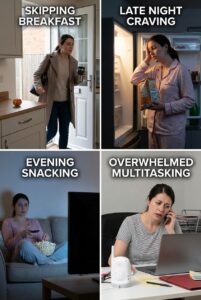
The biggest mistake people make is assuming stress eating only happens after obvious emotional blowups. In real life, it is usually quieter than that. It builds all day.
The first common trigger is under-eating earlier in the day. If breakfast was just coffee and lunch was light, your body is already set up to want fast calories by late afternoon. This is why steadier meals matter so much. Our guide to anti-inflammatory breakfast ideas can help if mornings are where things usually start slipping.
The second trigger is poor sleep. A randomized crossover study published in Nutrients found that one night of sleep curtailment increased hunger, food cravings, food reward, and chocolate intake in women. This means your late-night cravings are not always about discipline. Sometimes they are the predictable result of a tired brain looking for easy reward.
The third trigger is evening decompression. Once the workday ends, your brain finally notices how fried you feel. That is when snacking while scrolling, standing in the kitchen, or eating in front of the TV starts to look like relief. The fourth is all-or-nothing dieting. If you spent the day trying to be “good,” stress can flip that into “I already messed up, so it does not matter now.” The fifth is emotional discomfort you never got space to process. Boredom, loneliness, frustration, and resentment all push the same button when food is your usual comfort habit.
Stress eating is also tightly tied to your overall stress load. If your digestion gets worse when life gets chaotic, read our guide to gut brain connection symptoms. If your whole system feels wired before the food even enters the picture, nervous system regulation tips is the better place to start.
How to Tell Stress Hunger From Physical Hunger

Knowing the difference between stress hunger and physical hunger changes everything, because the right response is not always the same.
Physical hunger usually builds gradually. You may notice an empty stomach, lower energy, irritability, or trouble focusing. Most real food sounds good. A chicken bowl, eggs and toast, yogurt with fruit, or leftovers all sound workable. Stress hunger feels different. It tends to come on fast, feel urgent, and aim at a very specific payoff: crunchy, salty, sweet, creamy, or all of the above.
Harvard Health notes that common signs of stress eating include eating when you are not physically hungry, eating out of boredom, feeling out of control around food after a stressful task, and skipping meals only to overeat later. (Harvard Health, January 23, 2026) That last pattern matters a lot. Many people think they are stress eating because they are weak around food, when they are actually stress eating because they were underfed, overcaffeinated, and overstimulated for eight straight hours.
Here is the check-in I personally like best before reaching for food:
- “Would a real meal help right now?”
- “Did I eat enough protein, fiber, and calories earlier?”
- “What happened in the last 30 minutes?”
If the answer is yes to the first question, eat. If the second answer is no, eat a balanced meal or snack instead of trying to white-knuckle it. If the third answer is “my boss emailed, my kid melted down, I got lonely, or I sat down and finally felt my stress,” you may need relief as much as food.
Stress Eating Triggers and Solutions: The 7-Step Reset

A randomized controlled trial published in the European Eating Disorders Review found that a mindful eating program reduced emotional eating and external eating compared with usual care. That does not mean you need a long meditation practice. It means even a brief pause between the trigger and the food can change the pattern.
Here is the reset that works best in real life:
- Name the trigger – Say it plainly: “I am stressed,” “I am tired,” or “I am lonely and overstimulated.” Naming the state lowers the confusion and helps you choose the right response.
- Eat enough earlier – Build meals around protein, fiber, and real carbohydrates so you are not trying to manage stress on fumes. Our low glycemic index foods guide is useful here if blood sugar crashes are part of the loop.
- Create a 10-minute pause – Drink water, step outside, stretch, or breathe with a longer exhale. You are not banning food. You are interrupting autopilot.
- Keep a structured backup snack – Greek yogurt with berries, an apple with peanut butter, cottage cheese, trail mix, or a protein shake work much better than waiting until you are ravenous.
- Remove the easiest trigger foods from arm’s reach – If the chips, cookies, and candy live on the counter, they will keep winning. Make the easiest choice the better one.
- Give stress another exit – A quick walk, shower, voice memo, texting a friend, or five minutes without a screen all work better than pretending stress is not there.
- Get support if the pattern feels compulsive – If stress eating regularly turns into binge-like episodes, guilt, secrecy, or feeling out of control, talk to a healthcare professional or therapist. That is support, not failure.
The goal is not to never eat for comfort again. Most people do that sometimes. The goal is to stop food from being your only coping skill.
A 1-Day Meal Rhythm That Makes Stress Eating Less Likely
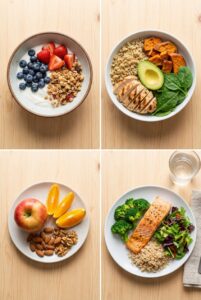
If you want to reduce stress eating fast, the most effective move is usually not cutting foods out. It is eating more deliberately before the stress spiral starts.
Start your morning with protein and fiber. Eggs and oats, Greek yogurt with berries and chia, or a smoothie with protein and flax all work. If breakfast is where you usually fall short, fibermaxxing benefits and plant based protein sources can help you build easier combinations that actually hold you.
At lunch, aim for a meal that feels like enough. Think a grain bowl with chicken or tofu, beans, greens, olive oil, and something crunchy. The goal is not eating “clean.” The goal is arriving at 4 p.m. still reasonably regulated. If your afternoons go off the rails because lunch gets pushed around, BioTRUST has been one of the more practical protein options I would use as a backup, because a quick shake is still better than getting home ravenous and eating everything in sight.
For the afternoon, plan a real snack before you are desperate. Fruit plus nuts, yogurt, a sandwich half, hummus with crackers, or leftovers all work. A snack is often the thing that prevents the nighttime “I cannot stop” feeling.
Dinner should feel grounding, not restrictive. Protein, a starch, vegetables, and enough flavor to feel satisfying. If your stress eating hits hardest at night, the issue is often that dinner was too light, too delayed, or emotionally unsatisfying. Our gut healthy meal plan is a good next read if you want more structure without obsessing over every bite.
Sleep support matters too. The more tired you are, the more rewarding hyper-palatable food tends to feel. If evening cravings show up with stress tension and poor sleep, a simple magnesium glycinate is the kind of support I would look at before any trendy appetite product. Life Extension is one of the cleaner approved brands I would start with for that.
What To Do in the Exact Moment You Want To Stress Eat
This is the part people usually need most, because insight alone does not help much when you are standing in the kitchen already halfway into the habit.
First, do not argue with yourself. That usually makes the urge louder. Instead, slow the moment down. Put the food down for one minute. Plant your feet. Take one longer exhale than inhale. Then decide which of these three lanes fits best:
- You are actually hungry – Eat a real meal or a real snack now.
- You are not hungry, but you are overloaded – Use a 5-minute coping tool first, then reassess.
- You are both hungry and stressed – Eat something balanced, then reduce stimulation.
I like this framework because it avoids the fake choice between “eat nothing” and “eat everything.” You are allowed to need food. You are also allowed to need comfort. You just want to match the tool to the problem more accurately.
If you need one low-friction option for those chaotic days when meals are clearly not happening well, build yourself a default backup instead of relying on willpower. A protein shake, yogurt cup, sandwich, or trail mix pack can close the gap before stress turns into a full evening rebound.
And if the urge still feels loud after you eat, that is a clue the food was never the full problem. At that point, reduce the noise. Get away from the kitchen. Turn off the scrolling. Put on different clothes. Walk outside. Put your phone in another room. Sometimes the fastest way to stop stress eating is to stop feeding the stress.
Frequently Asked Questions
What causes stress eating the most?
The most common causes are chronic stress, skipped meals, poor sleep, restrictive dieting, and using food as your main way to unwind. It is usually a layered pattern, not one single trigger.
How do I stop stress eating at night?
Start earlier than night. Eat enough protein and fiber during the day, plan an afternoon snack, and make dinner satisfying. Then lower stimulation after dinner so food is not your only decompression tool.
Is stress eating the same as binge eating?
Not always. Stress eating can be occasional and mild. Binge eating tends to involve larger amounts of food, feeling out of control, eating rapidly, and distress afterward. If that sounds familiar, professional support is important.
What foods help reduce stress eating?
Meals built around protein, fiber, and slower-digesting carbohydrates help most. Think yogurt and berries, eggs and oats, beans and rice, salmon with potatoes, fruit with nuts, or a sandwich with protein and produce.
The Bottom Line
The most effective stress eating triggers and solutions are usually less dramatic than people expect. Eat enough earlier. Sleep more consistently. Notice your real triggers. Make the better choice easier. Give stress somewhere else to go besides the pantry.
If I could give you one place to start, it would be this: stop waiting until the craving hits to make a plan. A solid breakfast, one structured afternoon snack, and a 10-minute pause before autopilot eating will do more than another round of food guilt ever will.
Want to keep going? Read nervous system regulation tips next if your body feels permanently on edge, or use our gut brain connection symptoms guide if stress and digestion keep showing up together.
And if your meals are inconsistent enough that you keep arriving at the evening completely under-fueled, BioTRUST is the kind of simple backup I would naturally keep on hand. It is not magic. It just makes the better choice easier on chaotic days.
The information on this site is for educational purposes only and is not intended as medical advice. Always consult a qualified healthcare provider before making any changes to your diet, exercise routine, or supplement use.

About Jane Smith
We turn solid evidence into everyday habits Americans can actually do—plain English, cups/oz, grocery-aisle swaps, and routines that fit real life. Our editorial process: Experience—we road-test tips in real schedules…