Everyday Foods That Support Your Body Naturally
Eating well doesn’t have to be complicated. Many everyday foods found in US grocery stores can play a meaningful role...
Eating well doesn’t have to be complicated. Many everyday foods found in US grocery stores can play a meaningful role in supporting different parts of the body, from skin and hair to digestion and overall balance. While these foods aren’t cures or treatments, adding them to your routine can be an easy way to nourish your body with vitamins, minerals, and natural compounds that help you feel your best. This guide breaks down how simple ingredients—like blueberries, carrots, flaxseeds, figs, and papaya—connect to the idea that food is medicine in a practical, approachable way.
How Everyday Foods Help Different Parts of the Body
Transitioning into the first category, it’s useful to look at how specific foods offer gentle support for key functions without making big health claims. These options are easy to find, budget-friendly, and naturally nutrient-dense.
👉 If you’re also working on topics related to everyday, our detailed guide on Full Body Cleanse Foods for Everyday Wellness covers exactly what you need.
Fruits that support skin, hair, and bone wellness
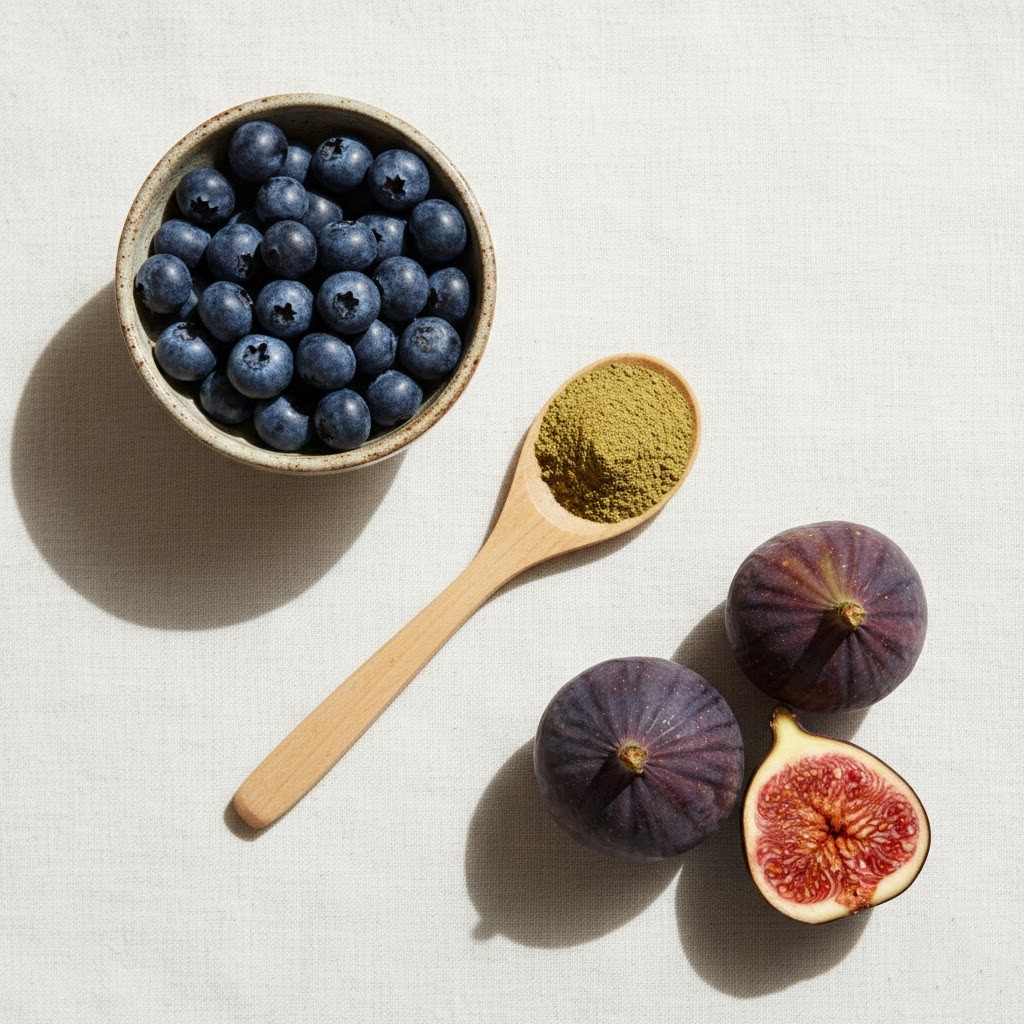
Blueberries, known for their deep blue color, are rich in natural compounds such as anthocyanins. Adding just ½ cup of fresh blueberries to breakfast yogurt or oatmeal gives your body a boost of antioxidants that may help maintain overall skin appearance by supporting the body’s natural defense processes. They’re also widely available year-round in most US supermarkets, often for under $5 per pint depending on season.
Amla, also known as Indian gooseberry, has become easier to find in powdered or dried form in specialty stores or online. Even 1 tsp of amla powder blended into a smoothie can add a tart flavor and vitamin C content, which the body uses to maintain collagen formation—an important part of healthy-looking hair and skin. While fresh amla is less common in the US, powdered versions offer a convenient option.
Figs, whether fresh or dried, bring natural sweetness along with minerals such as calcium and magnesium. Including 2–3 dried figs as a snack can support your daily mineral intake. These minerals play a role in maintaining bone structure, making figs a simple addition to salads or snacks throughout the week.
👉 If you’re also working on topics related to comparison, our detailed guide on Tea vs. Coffee: Which Fits Your Wellness Goals? covers exactly what you need.
Seeds and veggies linked to balance and digestion
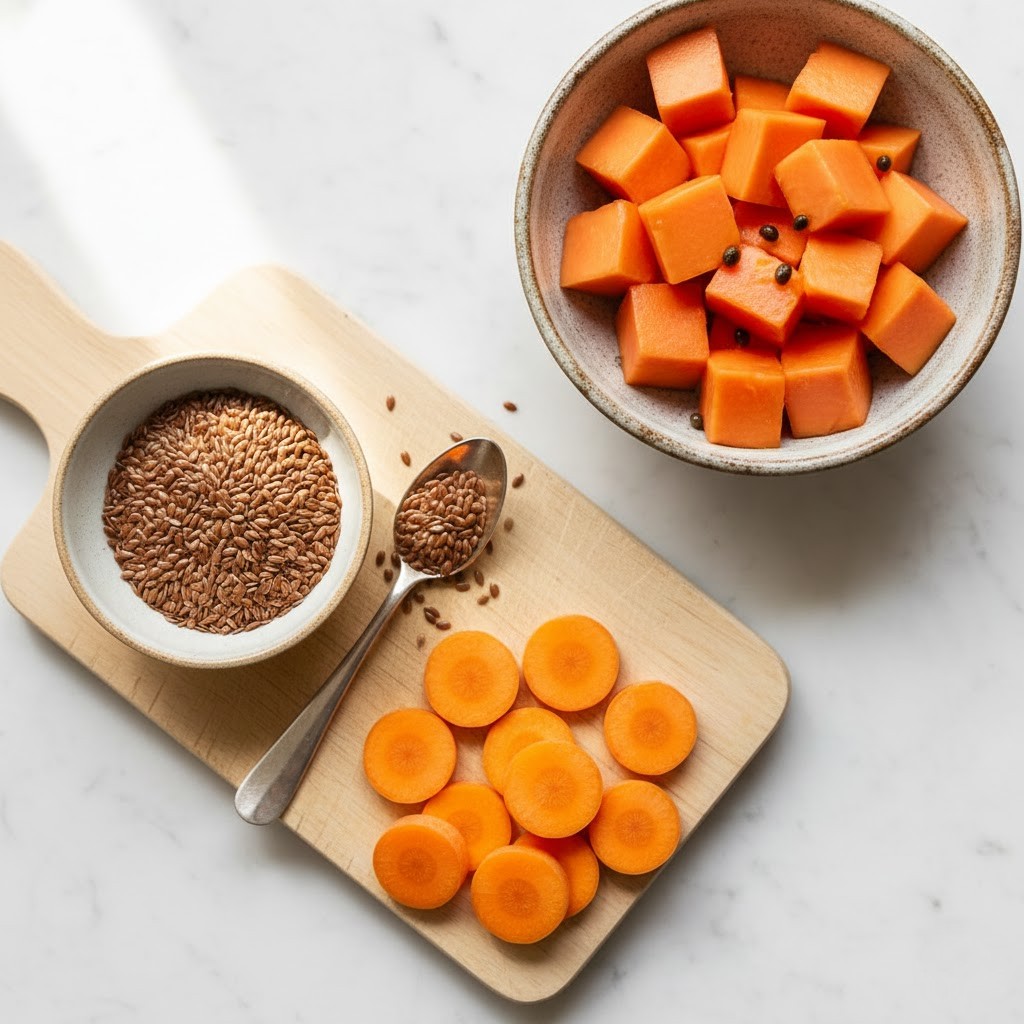
Flaxseeds are a staple in many American households, especially among those who enjoy homemade smoothies or baked goods. With their fiber and plant compounds, 1 tbsp of ground flaxseed can support the body’s natural hormonal balance processes. Ground flax blends easily into pancake batter or oatmeal, making it simple to incorporate without changing texture.
Papaya is loved for its tropical sweetness and digestive comfort. A 1-cup serving of fresh papaya contains naturally occurring enzymes that help support the body’s digestive function. Cubed papaya works well in fruit bowls or blended into a smoothie with orange juice for a refreshing snack.
Carrots, especially raw or lightly steamed, are high in beta-carotene. Just ½ cup of sliced carrots can contribute to your daily intake of vitamin A precursors, which support normal eye function. Carrots are also one of the most affordable vegetables in US grocery stores, often costing less than $2 per bag.
👉 This pairs well with our Habits Linked to Common Health Issues guide if you want the full picture on topics related to health.
Simple Ways to Add These Foods to Your Daily Routine
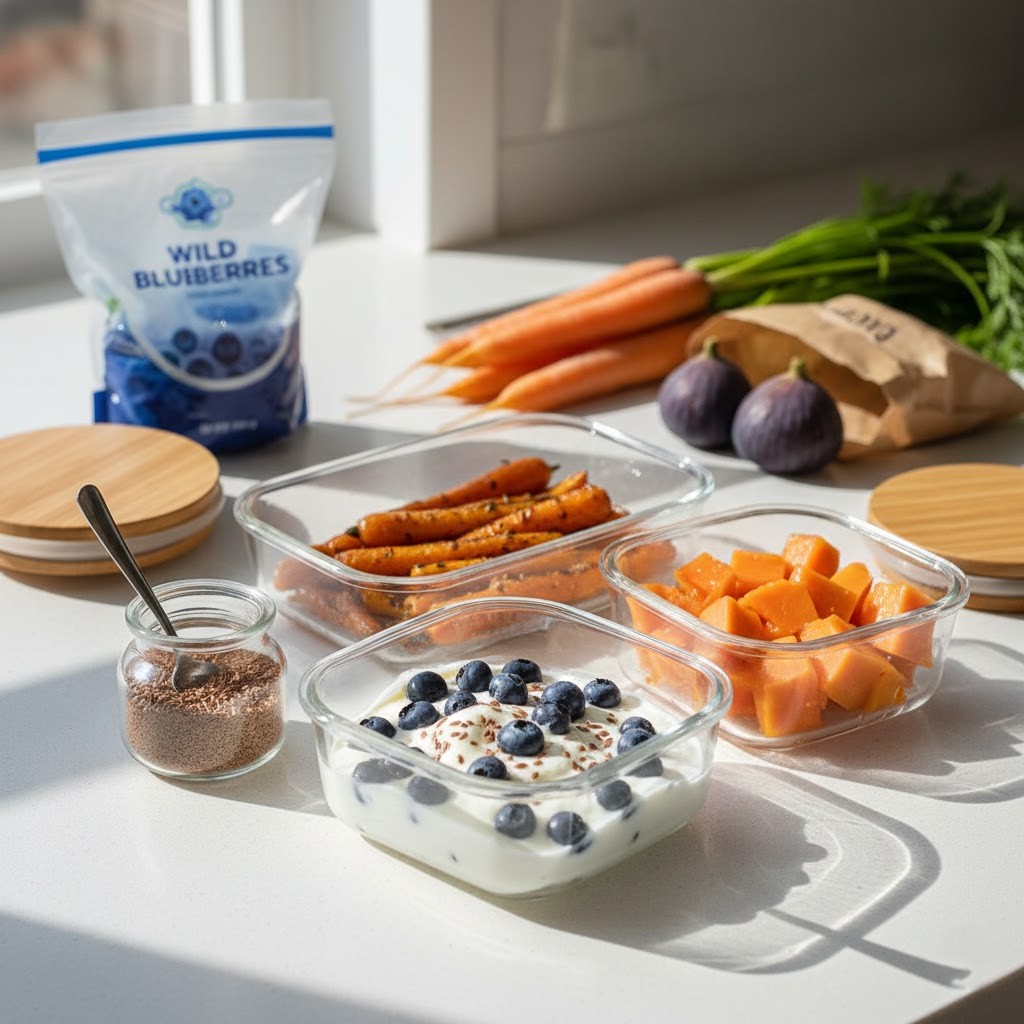
As we shift toward more practical strategies, the goal is to help you fit these foods naturally into your everyday meals—even on busy weekdays.
Quick meal and snack ideas for busy schedules
If you’re rushing in the morning, toss ½ cup of blueberries into Greek yogurt for a 2-minute breakfast. You can also blend them into a smoothie using 1 cup frozen berries, which are cost-effective at around $3–$4 per bag in most national grocery chains.
For boosting your nutrient intake on the go, mix 1 tbsp of ground flaxseed into a single-serve yogurt or sprinkle it over a salad at lunch. This tiny addition increases fiber without affecting flavor, and grinding the seeds improves absorption compared to whole seeds.
Papaya makes a great nighttime snack when you want something light. Chilling 1 cup of papaya cubes in the fridge creates a refreshing treat after work. You can also prep papaya bowls on Sundays as part of meal prep to save time during the week.
Roasting carrots at 400°F with a little olive oil takes about 20–25 minutes. A tray of roasted carrots can last 3–4 days in the fridge, making it easy to add a scoop to dinner plates or grain bowls.
Budget-friendly grocery tips for US households
Buying frozen blueberries instead of fresh can save up to 30% while still delivering similar nutrients. Frozen fruit also lasts longer, reducing food waste.
Dried figs typically come in bulk bags, allowing you to portion out 2–3 figs at a time as a pre-lunch snack. They stay shelf-stable, making them cost-effective for large families.
Look for papaya when it’s on sale—prices often drop during warmer months. Even when it’s not discounted, a single medium papaya usually yields 3–4 cups of fruit.
Carrots are one of the cheapest vegetables in the produce aisle. A 2-lb bag often costs under $2, giving you a full week of snacks, sides, or ingredients for soups and stir-fries.
Step-by-Step: How to Build a Simple “Food Is Medicine” Routine
Here’s a quick routine you can follow 6–10 steps at a time to make these foods part of your lifestyle. Each step is meant to be simple and flexible.
- Start your morning with a serving of blueberries in oatmeal or yogurt.
- Add 1 tsp–1 tbsp of ground flaxseed to a smoothie or breakfast bowl.
- Snack on 2–3 dried figs mid-morning or afternoon.
- Prep 1 cup of fresh papaya for a digestion-friendly snack after dinner.
- Include carrots—raw, roasted at 400°F, or blended into soup—at least 3 times a week.
- Try adding amla powder to a smoothie once or twice weekly.
- Keep frozen blueberries, papaya, or carrot sticks prepped for grab-and-go convenience.
- Build weekly grocery lists around these staples to make them a natural habit.
- Adjust portion sizes to fit your personal needs and schedule.
- Stay consistent by pairing these foods with meals you already enjoy.
Tips & Swaps
- Swap frozen blueberries for fresh to save money.
- Use baby carrots for faster meal prep.
- Replace sugary snacks with dried figs.
- Add flaxseed to store-bought pancake mixes.
- Use papaya in place of dessert for lighter evenings.
- Try amla powder in smoothies instead of lemon juice.
- Roast carrots with sweet potatoes for variety.
FAQs
- Q: Is this approach meant to replace medical treatment?
No. These foods offer gentle nutritional support but do not replace professional care or treatment. They’re best used as part of a balanced diet alongside regular checkups and medical advice when needed. - Q: How often should I eat these foods to see benefits?
There’s no strict schedule. Many people include these foods several times per week—like blueberries 3–4 times weekly or carrots a few servings per week—based on preference and availability. - Q: Are these foods safe for kids?
Generally, most kids can enjoy fruits like blueberries, papaya, and carrots. However, dried figs and flaxseeds may be harder for younger kids to handle. Always consider age-appropriate textures and check with a pediatrician if unsure. - Q: Can I meal prep these foods for the week?
Yes. Carrots, blueberries, and papaya store well when prepped in advance. Store cut papaya for up to 3 days, roasted carrots for up to 4 days, and blueberries for several days in airtight containers. - Q: What if I don’t like the taste of one of these foods?
You can blend fruits like blueberries or papaya into smoothies, or add carrots to soups. Flaxseed works well hidden in oatmeal or muffins, and figs pair nicely with nuts or cheese boards.
Want more simple, food-focused wellness tips? Explore our latest guides to find easy ways to support your body naturally—one everyday ingredient at a time.
Disclaimer: This content is for informational purposes only and is not a substitute for professional medical advice.

About Mike Johnson
We turn solid evidence into everyday habits Americans can actually do—plain English, cups/oz, grocery-aisle swaps, and routines that fit real life. Our editorial process: Experience—we road-test tips in real schedules…