Your Body’s Warning Signs You Shouldn’t Ignore
Your body communicates in small, everyday ways long before a problem becomes serious. Many people overlook mild headaches, fatigue, or...
Your body communicates in small, everyday ways long before a problem becomes serious. Many people overlook mild headaches, fatigue, or changes in circulation because they seem harmless or temporary. But these subtle shifts are often early indicators that something in your daily habits, nutrition, or overall health needs attention. Understanding common body warning signs can help you respond sooner, make informed choices, and know when a professional check-in is warranted. This guide breaks down key symptoms, what they may signal, and how you can support your well-being with practical steps.
What Your Body’s Warning Signs Can Reveal
Our bodies are constantly giving feedback, and learning to read that feedback helps you take proactive steps toward better health. This section explains why small symptoms matter and when it might be time to reach out to a healthcare professional.
👉 Want to go further? Our complete breakdown of Body Warning Signs You Shouldn’t Ignore walks you through reading your body’s signals step by step.
Why Subtle Symptoms Shouldn’t Be Overlooked
Minor symptoms—like frequent headaches or muscle cramps—may seem easy to brush off, but they often reflect underlying nutrition or hydration gaps. For example, recurring headaches may be related to not drinking enough water throughout the day. Many adults in the US drink less than the recommended 64 oz of water daily, which can trigger dehydration symptoms. Similarly, night cramps may point to low magnesium intake, especially if you rarely consume foods like almonds, leafy greens, or whole grains. While a single symptom doesn’t confirm a deficiency, consistent patterns offer helpful clues that your body needs extra support. Paying attention early allows you to adjust habits before symptoms escalate.
👉 Want to go further? Our complete breakdown of Your Body’s Warning Signs You Shouldn’t Ignore walks you through reading your body’s signals step by step.
When It’s Time to Talk to a Healthcare Professional
Although everyday symptoms are often mild and manageable, some patterns warrant professional evaluation—especially if they persist for more than two to three weeks. For instance, chronic fatigue that doesn’t improve with better sleep may point to low vitamin D or iron levels, both common among adults who spend limited time outdoors or follow restricted diets. Yellowing eyes should also be reviewed promptly, as this can reflect issues with liver function. A healthcare professional can run targeted bloodwork, identify possible deficiencies, and rule out more serious conditions. When in doubt, it’s always better to seek guidance early rather than ignore lingering signs.
👉 For a deeper dive into topics related to popular, check out: How Long It Takes to Walk Off Popular Snacks — it’s packed with practical tips.
Symptoms Commonly Linked to Nutrient Deficiencies
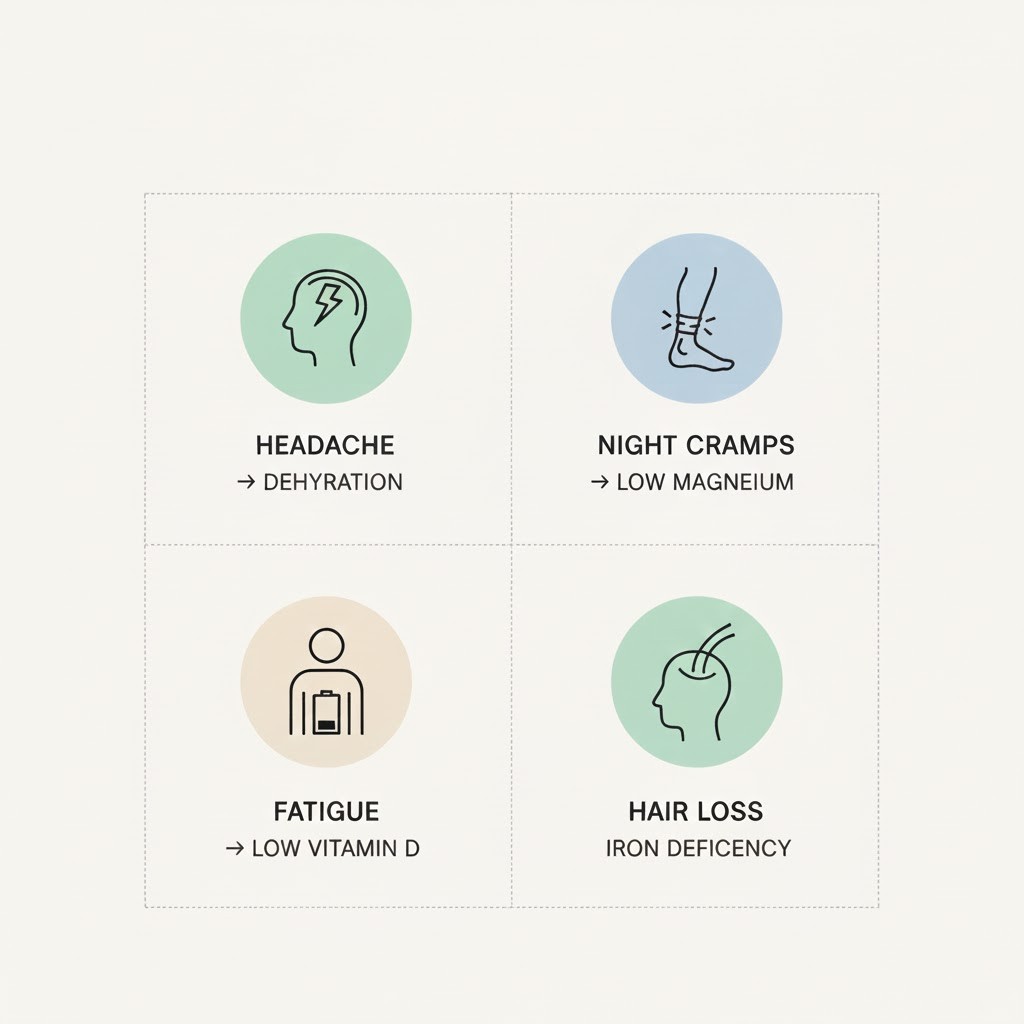
As we shift into specific examples, this section highlights how several everyday symptoms may relate to hydration or nutrient intake, helping you spot patterns worth addressing.
Headaches, Cramps, and Possible Hydration or Mineral Gaps
Frequent headaches can be tied to dehydration, especially if you consume several cups of coffee or work in a heated indoor environment. Mild dehydration—even as little as 2% loss of body water—can trigger pressure sensations in the temples and behind the eyes. Likewise, night cramps are often linked to low magnesium—an essential mineral involved in muscle relaxation. Adults who rarely eat foods like pumpkin seeds, spinach, and yogurt may unintentionally fall short of the recommended daily amount. Noticing these signs can help you evaluate whether you’re hydrating consistently and incorporating enough mineral-rich foods into meals.
Fatigue, Hair Loss, and Low Vitamin or Iron Levels
Unusual levels of fatigue often point to low vitamin D, especially among people who spend much of the day indoors or live in northern US regions with limited winter sunlight. Just 10–15 minutes of midday sun exposure can help, but many adults still fall short. Excess hair loss may signal iron deficiency, particularly among women of reproductive age. Iron plays a role in oxygen transport, and low levels can leave you feeling winded after light activity. If you notice new hair shedding paired with fatigue or pale skin, discussing a blood test with your provider can clarify whether low iron is a factor.
Circulation Changes and Oral Health Red Flags
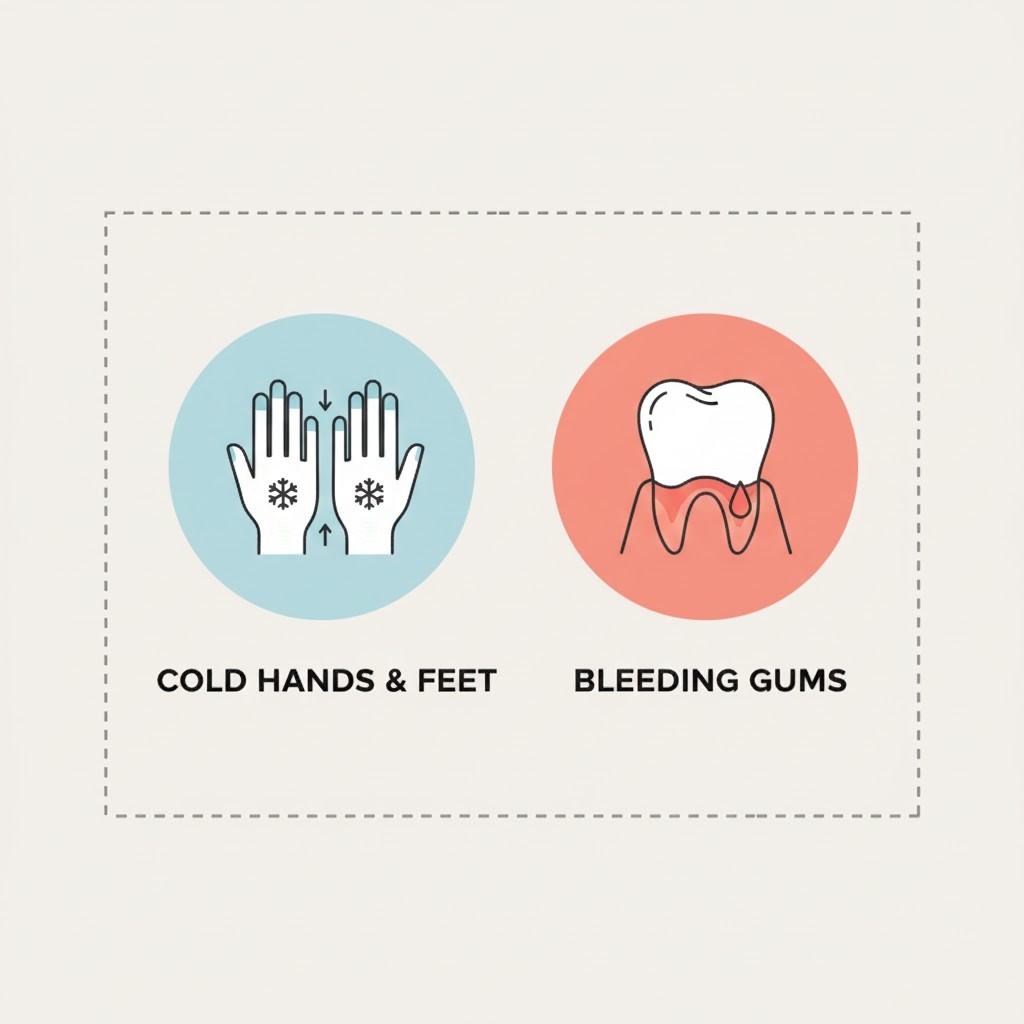
Next, let’s explore how circulation and gum health can also provide meaningful insights into what your body needs.
Cold Hands and Feet and What They May Signal
Cold hands and feet—even in a warm room—may reflect circulation challenges. Poor circulation can develop when the body reduces blood flow to the extremities, often due to nutrient gaps, low activity levels, or lifestyle habits like prolonged sitting. For example, someone who works at a desk 8 hours a day may experience noticeable coldness by evening. Although occasional chilliness is normal, persistent cold hands and feet may indicate that your cardiovascular system needs support. Taking movement breaks every hour and incorporating omega-3-rich foods like salmon or walnuts may help improve comfort over time.
Bleeding Gums and Vitamin C Concerns
Bleeding gums—especially when brushing or flossing—may be connected to low vitamin C intake. This nutrient supports the health of gum tissue, yet many adults fall short if they rarely eat fruits and vegetables such as oranges, strawberries, or bell peppers. For instance, consuming just 1 cup of strawberries provides nearly 100% of the recommended daily amount of vitamin C. While occasional gum bleeding can also be linked to brushing technique, persistent bleeding deserves attention. Not only does this symptom help identify potential nutrient gaps, but it may also signal the need to update dental hygiene habits or schedule a checkup.
How to Support Better Daily Health

Now that you’ve learned to recognize common warning signs, this section offers actionable steps for supporting daily well-being in sustainable ways.
Practical Habits for Hydration, Nutrition, and Checkups
Small adjustments often make a meaningful difference. Try starting your morning with an 8-oz glass of water and keeping a refillable bottle at your desk to maintain hydration. Add more nutrient-dense foods into your meals, such as leafy greens for magnesium, citrus fruit for vitamin C, or fortified dairy alternatives for vitamin D. Setting reminders for yearly checkups can also help you stay ahead of deficiencies. For example, many people schedule bloodwork every 12 months to track vitamin levels and adjust supplements if needed. These simple routines help create a clearer picture of your overall health.
When Lifestyle Tweaks Aren’t Enough
If symptoms persist even after improving hydration and nutrition, it may be time to explore additional support. For example, vitamin D deficiency often requires supplements because food sources alone rarely provide enough. Similarly, if iron levels remain low despite eating iron-rich foods like lentils or beef, a supplement may be necessary under professional guidance. Some signs—such as yellowing eyes or ongoing numbness—should always be evaluated promptly. Recognizing when to switch from self-care to medical care ensures you’re addressing the root cause, not just the surface symptoms.
Tips for Supporting Your Body’s Warning Signs
- Add one magnesium-rich food to at least one daily meal.
- Keep a water bottle nearby and aim for 64 oz per day.
- Schedule annual bloodwork to track vitamin and mineral levels.
- Take short walking breaks every hour to support circulation.
- Include at least one vitamin C-rich fruit or vegetable daily.
Frequently Asked Questions
- Are body warning signs always linked to nutrient deficiencies?
Not always. While many common symptoms—like fatigue or muscle cramps—can be tied to hydration or nutrient gaps, other factors such as stress, sleep changes, medication, or underlying medical conditions may also play a role. If symptoms persist, it’s wise to seek professional guidance to identify the root cause accurately. - How long should I monitor symptoms before seeing a doctor?
If symptoms last longer than two to three weeks, worsen over time, or disrupt daily activities, reaching out to a healthcare professional is recommended. More urgent signs—such as yellowing eyes, severe fatigue, or significant hair loss—should be evaluated sooner. When unsure, it’s best to err on the side of caution. - Can improving hydration really reduce headaches?
Yes, mild dehydration is a common trigger for headaches. Drinking enough water—typically around 64 oz per day for many adults—can help reduce frequency. However, hydration isn’t the only factor, so persistent headaches may require further evaluation to rule out other causes. - What foods help increase vitamin D levels?
Fatty fish like salmon, fortified milk or plant-based alternatives, and eggs offer small amounts of vitamin D. However, most adults do not reach ideal levels from food alone. Brief sun exposure and supplements—when recommended by a provider—are often more effective. - Are cold hands and feet always caused by circulation problems?
Not necessarily. Temporary coldness can happen in cool environments or during stress. But if the symptom is persistent, it may relate to circulation, thyroid concerns, or nutrient gaps. Discussing the pattern with a provider can help determine the cause.
Want to better understand your body’s signals? Explore more guides at EssentialWellnessAZ.com and learn simple ways to support your health every day.
Disclaimer: This content is for informational purposes only and is not a substitute for professional medical advice.

About Jane Smith
We turn solid evidence into everyday habits Americans can actually do—plain English, cups/oz, grocery-aisle swaps, and routines that fit real life. Our editorial process: Experience—we road-test tips in real schedules…