What Your Body Odor Says About Your Health
Noticing a new or stronger body smell can be uncomfortable—and a little scary. While most odors are harmless and fixable...
- When a New Smell Becomes a Health Clue
- Sour or Acidic Smell and Acid Reflux
- Fruity Breath and Possible Diabetes
- Ammonia and Fishy Smells: Kidneys and Vaginal Health
- Rotten Egg, Metallic, and Other Unusual Smells: When to Call a Doctor
- Simple steps to take if you notice a new smell
- Quick tips to support healthier body odor
- FAQs
Noticing a new or stronger body smell can be uncomfortable—and a little scary. While most odors are harmless and fixable with better hygiene or a change in diet, some can hint at underlying health issues. Understanding which smells might matter can help you decide when to relax, when to tweak your routine, and when to call your doctor for a checkup.
When a New Smell Becomes a Health Clue
Before you panic about body odor, it helps to know what’s normal and what might be worth a closer look.
👉 Want to go further? Our complete breakdown of Best Foods to Support Kidney Health walks you through kidney health and function step by step.
Normal sweat vs. warning-sign odors
Everyday sweat has a salty or slightly musky smell, especially after a workout, a hot day, or wearing tight synthetic clothing. This type of odor usually improves after a shower, clean clothes, and using antiperspirant or deodorant.
Warning-sign smells are often new, persistent, and difficult to cover up. You might notice a sour, fruity, fishy, sulfur-like, or metallic odor that sticks around even after bathing. If a smell shows up suddenly, keeps getting worse over a few days, or comes with other symptoms like pain, fatigue, fever, or weight loss, your body may be asking for medical attention rather than stronger perfume.
👉 This pairs well with our Warning Signs Your Body May Be Low in Key Nutrients guide if you want the full picture on reading your body’s signals.
Smell changes plus other symptoms to watch
Smell alone doesn’t diagnose a disease, but odor plus other symptoms can raise concern. For example, fruity breath along with increased thirst, frequent urination, and blurry vision may point toward blood sugar problems. A fishy vaginal odor combined with itching or burning might suggest an infection.
Keep track of when you notice the odor, what you were eating, and how you felt that day. If the smell lasts more than one to two weeks, especially with symptoms like abdominal pain, shortness of breath, swelling, or yellowing of the skin or eyes, it’s a good idea to contact your primary care provider or gynecologist.
👉 This pairs well with our Hidden Vitamin Deficiency Symptoms You Shouldn’t Ignore guide if you want the full picture on spotting nutrient deficiencies early.
Sour or Acidic Smell and Acid Reflux
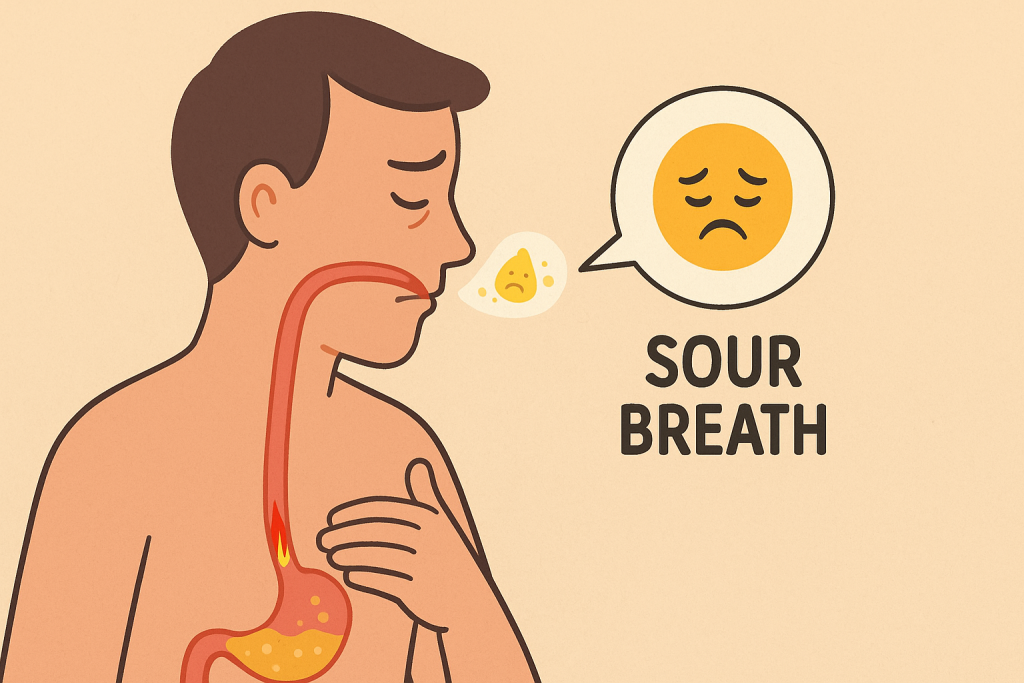
Some people notice a sour or acidic smell on their breath or body, especially after meals or at night, which can be related to acid reflux.
How reflux can change your breath and sweat
Acid reflux happens when stomach acid moves up into the esophagus. This can create heartburn, a sour taste in the mouth, and breath that smells like vinegar or spoiled food. If reflux is frequent—more than two times a week—it might be gastroesophageal reflux disease (GERD).
Lying flat after big or spicy meals, eating late at night, or drinking a lot of coffee, soda, or alcohol can make reflux worse. Over time, repeated reflux may irritate your throat and teeth and may increase the risk of complications, which is why persistent sour breath deserves a mention at your next appointment.
Everyday habits that may make it worse
Simple changes can sometimes calm reflux-related odors. Try eating smaller portions, staying upright for at least 2–3 hours after dinner, and limiting trigger foods like tomato sauce, citrus, fried foods, and hot peppers. Many people also feel better when they cut back on caffeine and alcohol or avoid late-night snacks.
Over-the-counter antacids or acid-blocking medicines may offer temporary relief, but if you need them most days of the week, talk with your doctor. They can rule out more serious problems and recommend a long-term plan that’s safe for you.
Fruity Breath and Possible Diabetes
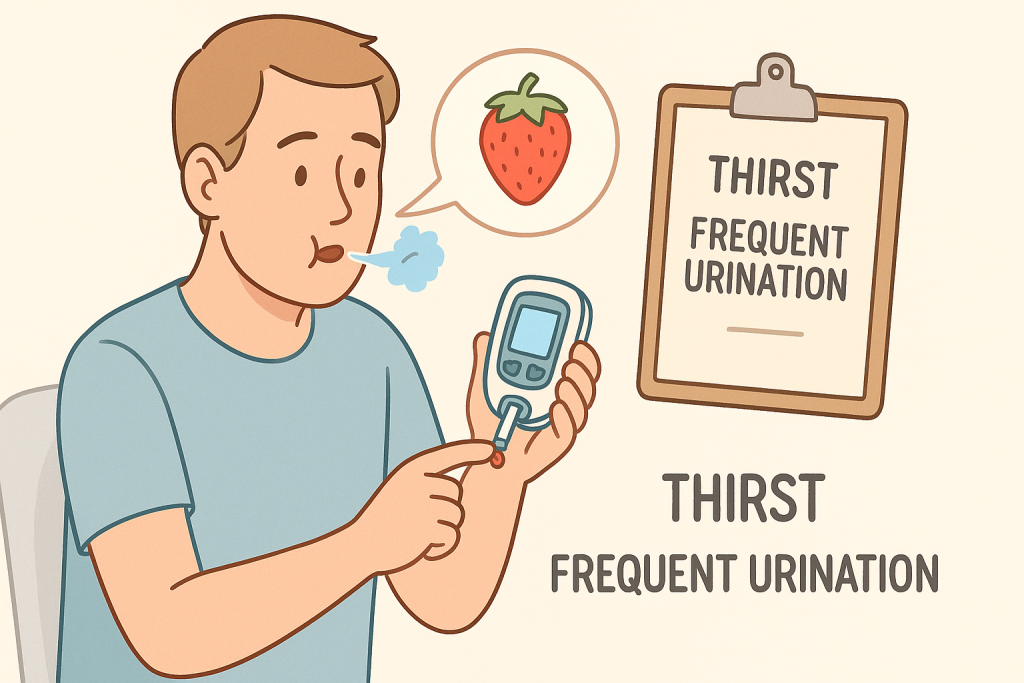
A sweet, fruity odor on the breath can be more than just leftover gum or flavored water—it may be related to blood sugar.
Why high blood sugar can cause fruity odor
When your body can’t use sugar (glucose) properly, it starts breaking down fat for energy. This process creates chemicals called ketones, which can build up and produce a fruity or nail-polish-like smell on your breath. In people with diabetes, very high ketone levels can signal diabetic ketoacidosis (DKA), a serious emergency.
If you or a loved one with diabetes suddenly develops fruity breath, rapid breathing, nausea, or confusion, seek urgent or emergency care right away. Even without known diabetes, persistent fruity breath is a reason to ask for a blood sugar check.
Other diabetes warning signs in daily life
Beyond breath odor, diabetes can show up in ways that are easy to miss at first. Common symptoms include increased thirst, needing to pee more often (including several times at night), blurry vision, slow-healing cuts, and unexplained weight loss.
You might also notice frequent yeast infections, recurrent skin infections, or numbness and tingling in the feet. If several of these symptoms sound familiar, especially if you have a family history of diabetes or carry extra weight, schedule a visit for screening labs and a personalized plan.
Ammonia and Fishy Smells: Kidneys and Vaginal Health
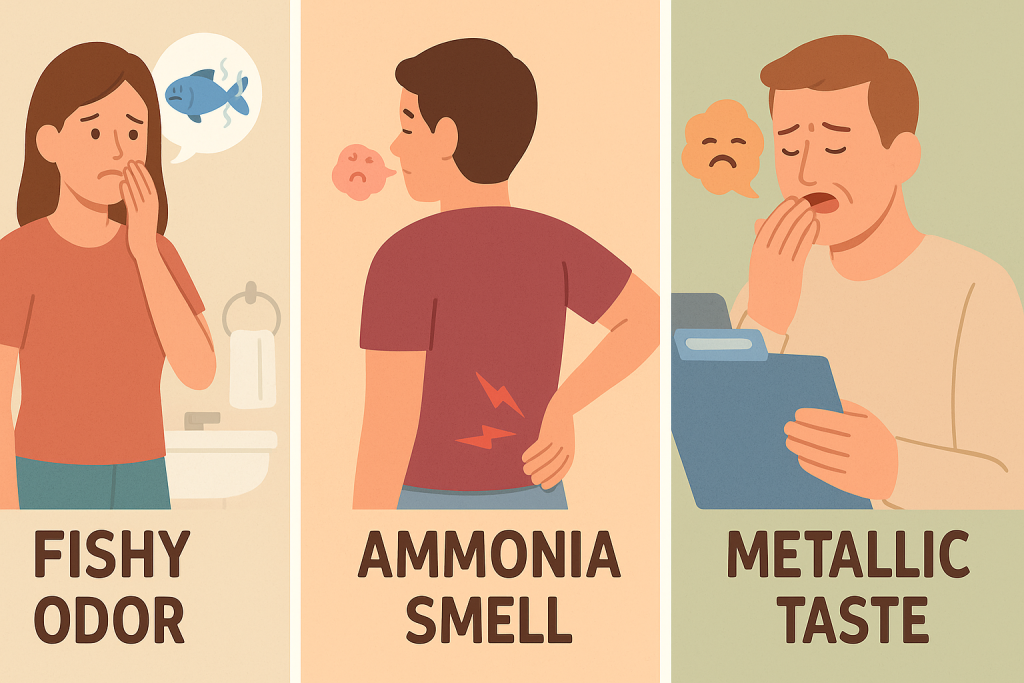
Some odors are more specific and may point toward certain areas of the body, such as the kidneys or the vagina.
Ammonia odor and kidney strain or disease
An odor that smells like ammonia or strong urine on your sweat or breath can sometimes be linked to kidney issues. Healthy kidneys filter waste products from the blood and send them out in urine. When they’re not working well, waste can build up and affect body odor and taste.
People with kidney disease may also notice swelling in the legs or around the eyes, fatigue, changes in how often they urinate, or high blood pressure. Dehydration or a high-protein diet can also create a short-term ammonia smell, so drinking more water and slightly lowering protein intake for a few days may help. If the odor and other symptoms persist, call your provider.
Fishy odor, bacterial vaginosis, and STI checkups
A fishy vaginal odor is often caused by bacterial vaginosis (BV), an imbalance in the normal vaginal bacteria. BV is common in women of reproductive age and can cause a thin gray or white discharge and stronger odor after sex. While BV isn’t considered a classic sexually transmitted infection (STI), sexual activity can play a role.
Because BV can look similar to some STIs, it’s important to be examined and tested rather than self-treating repeatedly with over-the-counter products. Your gynecologist or clinic can do a quick swab and, if needed, prescribe antibiotics. If you notice itching, pain, or bleeding, or if you’re pregnant, reach out for care sooner rather than later.
Rotten Egg, Metallic, and Other Unusual Smells: When to Call a Doctor
A few other distinct smells can also offer clues about what’s happening inside your body.
Sulfur or “rotten egg” smell and gut issues
A sulfur or rotten-egg odor—especially in gas or burps—can be related to how your gut breaks down certain foods. Eggs, garlic, onions, cabbage, broccoli, and some protein powders naturally contain sulfur compounds. When gut bacteria digest them, you may get stronger-smelling gas for a day or two.
However, if that smell is constant and comes with frequent diarrhea, constipation, bloating, or abdominal pain, it might signal irritable bowel syndrome (IBS), food intolerances, or other digestive issues. Keeping a food and symptom diary for at least 7–10 days can help your provider see patterns and decide whether you need testing or a referral to a gastroenterologist.
Metallic taste or smell and possible liver problems
A persistent metallic taste in your mouth or a metallic body odor may sometimes be linked to liver disease or other metabolic problems. The liver helps process toxins and waste products; if it’s struggling, those substances can build up and affect taste and smell.
Watch for other signs like yellowing of the skin or eyes, dark urine, pale or gray stools, easy bruising, or swelling in the abdomen or legs. Some medications and vitamin supplements, especially iron and certain antibiotics, can also cause a temporary metallic taste. If the taste or smell lasts more than a couple of weeks, talk with your doctor and bring a list of everything you take, including over-the-counter products.
When smells come from medications or diet instead
Not every strange odor means disease. Asparagus can give urine a distinct smell within an hour. Large amounts of garlic, curry, or alcohol can change sweat and breath. Some common medications—like metronidazole, certain antidepressants, or high-dose vitamins—may alter taste or odor too.
If your smell change started soon after beginning a new medication or supplement, ask your clinician or pharmacist whether this side effect is expected. Never stop a prescription medicine on your own without medical guidance, especially if it was prescribed for blood pressure, heart disease, seizures, or mental health.
Simple steps to take if you notice a new smell
When you notice a strange odor, a few practical steps can help you figure out what’s going on and protect your health:
- Note when the smell started and what it smells like.
- Write down recent changes in food, medications, or supplements.
- Check for other symptoms like pain, fever, fatigue, or weight changes.
- Try basic fixes—extra hydration, gentle soap, breathable cotton clothing—for a week.
- If the smell continues or worsens, schedule a visit with your primary care provider or gynecologist.
- Seek urgent or emergency care if you have severe pain, trouble breathing, chest pain, confusion, or signs of very high blood sugar.
Quick tips to support healthier body odor
- Shower daily and after workouts; dry skin folds well.
- Choose loose, breathable cotton clothing and socks.
- Drink at least 6–8 cups of water per day unless your doctor limits fluids.
- Store leftovers safely at or below 40°F to avoid food-borne illness.
- Limit smoking and heavy alcohol use, which can worsen breath.
- See your dentist twice a year to address gum disease–related odor.
FAQs
- When should I worry about a new body odor?
Worry more if the smell is strong, new for you, and sticks around for more than one to two weeks, especially with other symptoms like pain, fever, shortness of breath, or weight loss. In those cases, contact your healthcare provider for an evaluation. - Can poor hygiene alone cause strong odors?
Yes, skipping showers, wearing the same tight clothes, or not changing socks and underwear can allow sweat and bacteria to build up and smell stronger. If odor improves quickly with better hygiene but returns only when routines slip, disease is less likely—but regular checkups are still helpful. - What if my child has a strange smell on their breath or body?
In kids, unusual odors combined with vomiting, belly pain, extreme tiredness, or breathing changes should be checked promptly. Fruity breath, in particular, can sometimes signal serious blood sugar problems. Call your pediatrician or urgent care if something feels off or symptoms come on suddenly. - Do natural deodorants work as well as regular ones?
Natural deodorants can help with odor but usually don’t reduce sweat as strongly as antiperspirants that contain aluminum salts. Some people do fine with natural options; others need stronger sweat-blocking products. If regular deodorants suddenly stop working, consider a medical checkup rather than just switching brands. - Can I diagnose myself based on smell alone?
No. Smell can offer helpful clues, but many conditions share similar odors, and diet or medications may be involved. Only a healthcare professional can evaluate your full history, examine you, and order appropriate tests. Use odor as a prompt to seek care, not as a self-diagnosis. - Will changing my diet erase all body odor?
Diet changes—like cutting back on garlic, onions, heavily processed foods, or alcohol—can reduce certain odors. However, if an underlying condition like diabetes, reflux, or liver disease is present, food changes alone usually won’t fix the problem. Partnering with your healthcare team is the safest approach.
If you’ve noticed a new or persistent smell that doesn’t feel normal for your body, don’t ignore it. Track your symptoms, make small lifestyle tweaks, and reach out to a trusted healthcare provider for personalized guidance.
Disclaimer: This content is for informational purposes only and is not a substitute for professional medical advice.

About Jane Smith
We turn solid evidence into everyday habits Americans can actually do—plain English, cups/oz, grocery-aisle swaps, and routines that fit real life. Our editorial process: Experience—we road-test tips in real schedules…