Vegan Vitamin Survival: B12, D, and Omega-3 (The Honest Guide)
Disclaimer: I’m trained in traditional medicine in Vietnam, but I’m not currently practicing medicine or offering diagnosis or treatment through...
- The Quick Answer
- The 4-Supplement Vegan Watch List
- B12 Is the Non-Negotiable One
- Why B12 Deficiency Can Hide for Years
- The Simplest B12 Rule
- Methylcobalamin vs Cyanocobalamin
- Vitamin D: Vegan Does Not Protect You From Winter
- Omega-3: ALA Is Not the Whole Story
- Iron, Zinc, and Iodine: The Quiet Watch List
- Common Vegan Nutrition Mistakes
- What to Test at Least Periodically
- The TCM Lens: Neutral on Identity, Strict on Observation
- What This Looked Like in Real Life
- FAQ
- Bottom Line
Disclaimer: I’m trained in traditional medicine in Vietnam, but I’m not currently practicing medicine or offering diagnosis or treatment through this website. I write from ongoing research, personal observation, and patterns I’ve seen in my own family and community. This article is educational and should not replace advice from your doctor or registered dietitian, especially if you are pregnant, anemic, underweight, dealing with nerve symptoms, or managing a diagnosed deficiency.
There are two bad ways to talk about vegan nutrition.
One side says:
“Plants are enough for everything if you eat clean enough.”
The other side says:
“A vegan diet is nutritionally doomed.”
Both positions are lazy.
The honest middle is simpler:
- a vegan diet can be done well
- a vegan diet can also fail quietly
- the failure points are not random
- and most of them are predictable
That is what this article is about.
This is not an anti-vegan article.
It is also not a vegan-advocacy article written to protect the label from biology.
It is a practical guide to the few nutrients that repeatedly become problems when all animal foods are removed:
- B12
- vitamin D
- omega-3
- and, depending on the person, iron, zinc, and iodine
If you are coming from the vitamin rich foods pillar, think of this as the spoke for the reader who says:
“I want to stay plant-based, but I also want to know where the nutritional weak points really are.”
That is the right question.
The Quick Answer

If you want the shortest answer first:
- strict vegans need a reliable B12 source, usually a supplement
- winter vitamin D is a problem for many vegans for the same reason it is a problem for many omnivores: weak UVB plus indoor life
- plant omega-3 intake does not guarantee enough DHA and EPA
- vegan women need to pay extra attention to iron
- zinc and iodine are not always dramatic, but they are common quiet weak points
The most important sentence in this whole article is this:
B12 is not optional for a strict vegan diet.
That is not a moral statement.
It is a biology statement.
The second most important sentence is this:
A plant-based diet can be food-first, but it is not always food-only.
That is where many smart readers lose time.
The 4-Supplement Vegan Watch List
This is the point where vegan nutrition stops being ideological and becomes operational: know the few nutrients that repeatedly need backup.
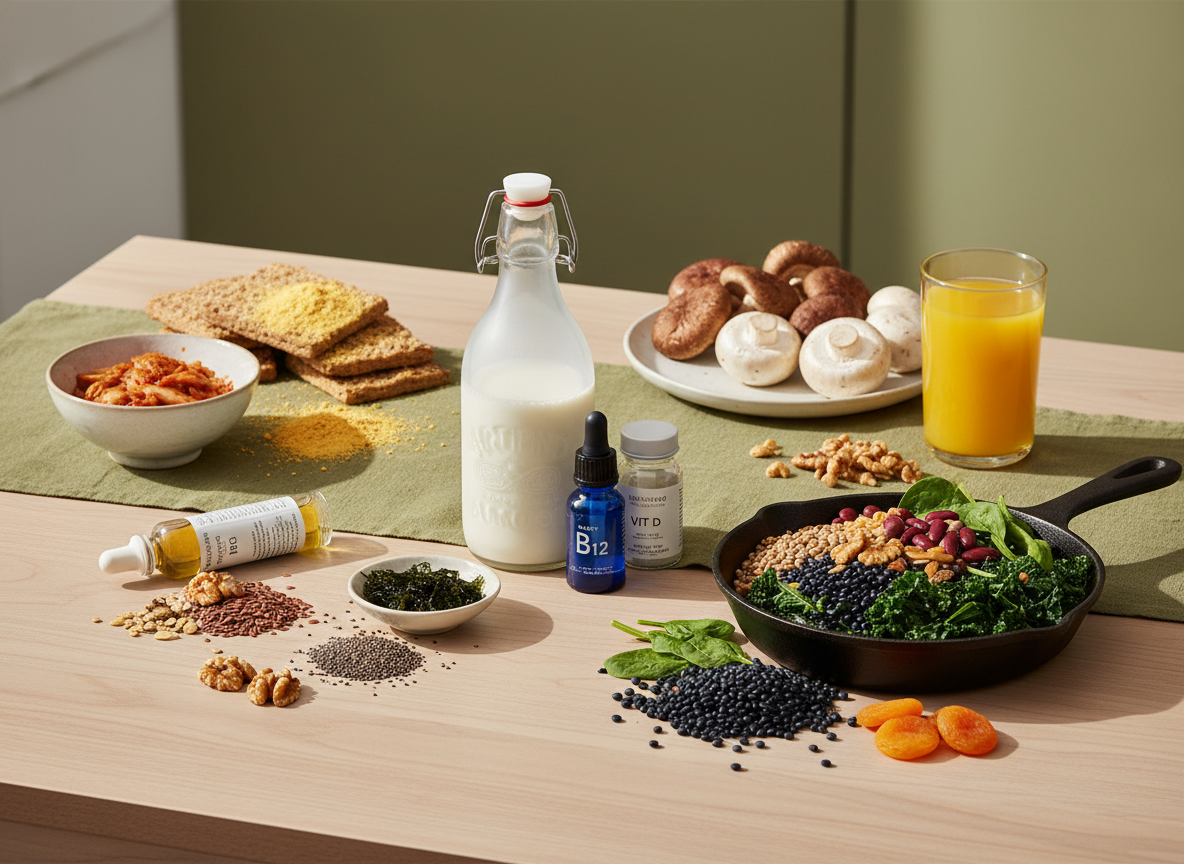
If I had to reduce the whole conversation to one practical checklist, it would be this:
-
Step 1
B12 — non-negotiable for strict vegans
-
Step 2
Vitamin D — especially in winter or indoor lifestyles
-
Step 3
Omega-3 DHA/EPA — often best bridged with algae oil
-
Step 4
Iron — especially for menstruating women, pregnancy, endurance training, or already low ferritin
After that, a second watch-list often matters:
- zinc
- iodine
- sometimes calcium, depending on the overall diet
This does not mean every vegan is deficient.
It means every vegan should know where the pressure points are before symptoms force the lesson.
That is the whole purpose of a survival guide:
not fear,
not ideology,
just fewer preventable mistakes.
B12 Is the Non-Negotiable One
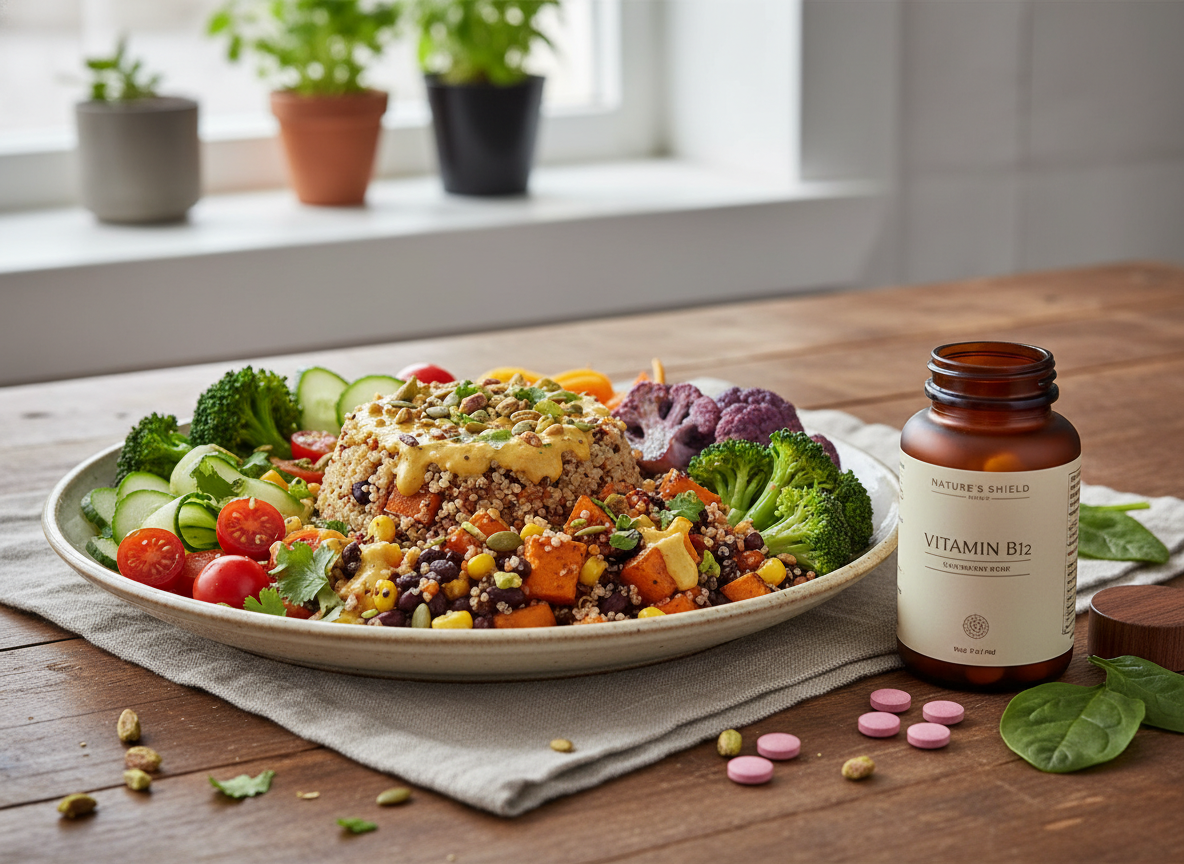
If you remember only one nutrient from this article, make it B12.
Why?
Because unlike protein debates or social media arguments about seed oils, this one is not subtle.
A strict vegan diet does not reliably provide meaningful, bioactive B12 from normal plant foods. Reference: NIH ODS B12 and Vegan Society B12.
That means:
- vegetables do not solve it
- legumes do not solve it
- mushrooms do not solve it
- spirulina does not solve it
- “natural detox algae” products do not solve it
This is the point many readers are not told clearly enough:
plant foods contain zero dependable bioactive B12 unless they are fortified.
And even then, fortified food only works if:
- you read the label correctly
- you consume it consistently
- and the dose is actually enough
That is a lot less reliable than many people assume.
Why B12 Deficiency Can Hide for Years
The delay is what makes B12 dangerous. Feeling fine for a while is not the same thing as being covered long-term.
One of the most dangerous parts of vegan B12 deficiency is the delay.
People often think:
“I’ve been vegan for two years and I feel fine, so I must be covered.”
Maybe.
Maybe not.
The liver can store B12 for a long time.
That creates a false calm period.
For some people, the first few years look fine.
Then the reserve runs down.
Then symptoms start.
And by then, the problem may already be more serious than simple fatigue.
That is why waiting for symptoms is a weak strategy.
B12 deficiency is not something you want to discover only after:
- numbness
- tingling
- brain fog
- unusual fatigue
- mood changes
- or memory problems
show up and stay.
This is also why “I feel okay” is not a real B12 protocol.
The Simplest B12 Rule
For a strict vegan, the cleanest rule is:
- use a dependable B12 supplement
- use it consistently
- stop romanticizing plant foods that do not actually cover the gap
The practical dosing discussion usually lands in one of these ranges:
- a modest daily dose
- or a larger dose a few times per week
The exact protocol depends on product form, your bloodwork, and your clinician’s guidance.
But the principle is simple:
consistency matters more than supplement drama.
This is where people waste energy arguing about forms before they have even solved adherence.
Methylcobalamin vs Cyanocobalamin
This argument has consumed far too much internet oxygen.
The plain-English version is:
- cyanocobalamin is cheap, stable, and works well for most people
- methylcobalamin is the active form many readers prefer, especially if they want the “already converted” version
For most readers, either can work.
The bigger mistake is not choosing the wrong form.
The bigger mistake is:
- taking it irregularly
- assuming fortified foods are enough when they are not
- or delaying B12 entirely because the internet made the form debate sound more important than actually getting covered
If you want the deep dive, this article should later point to a B12 spoke.
But for now, the honest summary is:
supplement first, optimize form second.
Vitamin D: Vegan Does Not Protect You From Winter

Many vegans assume vitamin D is mainly a vegan problem.
That is only partly true.
Vitamin D is often a modern indoor-life problem first. Context: NIH ODS Vitamin D.
Veganism can add difficulty because oily fish and egg yolks are off the table, but the deeper issue is usually:
- weak winter UVB
- indoor work
- low midday sun
- and no reliable dietary backup
This is why many vegans need the same winter realism as everyone else:
- get sunlight when it is actually useful
- do not confuse brightness with UVB
- and use vitamin D supplementation when the season or lifestyle makes sunshine unreliable
If you want the full winter strategy, go to the vitamin D sunshine guide.
This article just needs to tell the truth:
vegan does not automatically mean vitamin D deficiency,
but it absolutely does not protect you from it either.
Omega-3: ALA Is Not the Whole Story
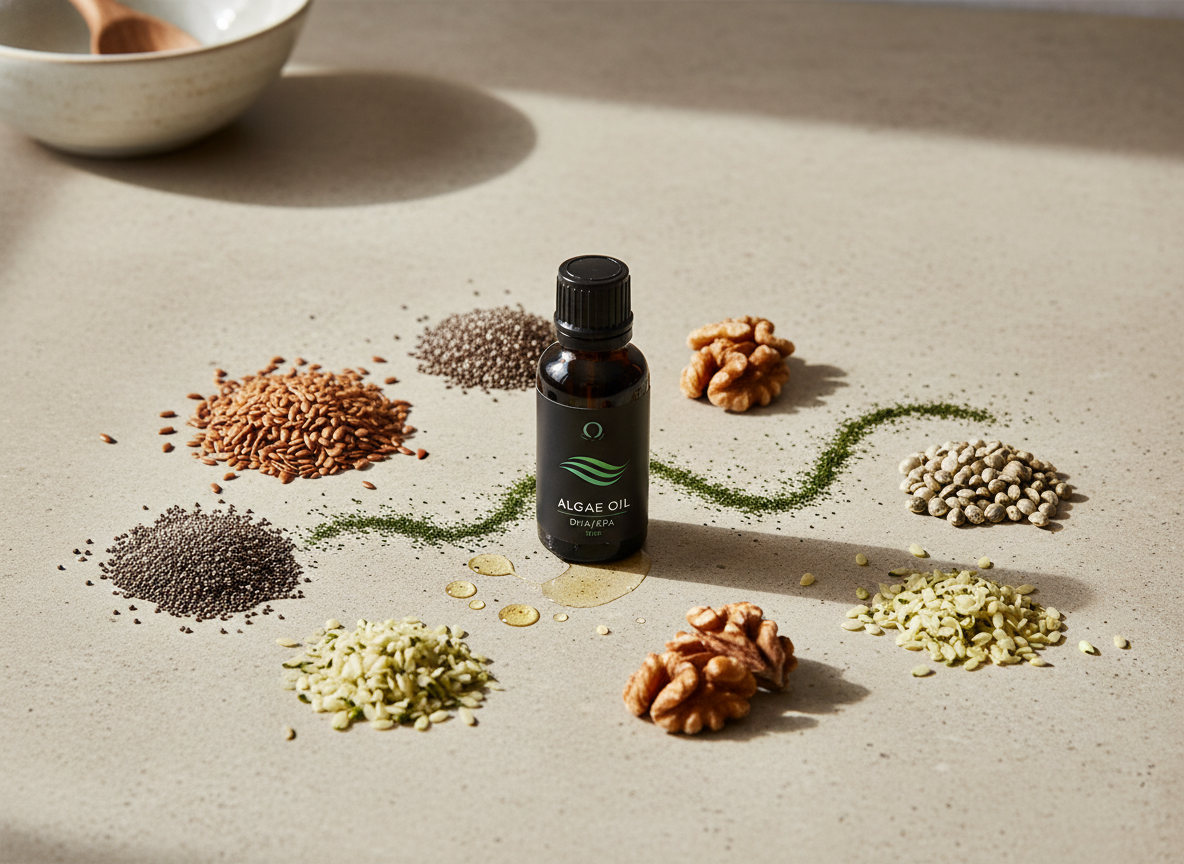
This is the second nutrient vegans often underestimate.
Many plant foods contain ALA omega-3: Reference: NIH ODS Omega-3.
- flax
- chia
- walnuts
- hemp
Those foods are useful.
They should stay in a well-built vegan diet.
But the body converts ALA into DHA and EPA inefficiently.
That conversion is not zero.
It is just limited.
That is why some readers do well with:
- regular ALA-rich foods as the base
- plus algae oil as the direct DHA/EPA bridge
This is one of the few places where “food-first extended” is the best phrase.
You keep the plant-food foundation.
You add the algae bridge when needed.
No drama.
No betrayal of the diet.
Just better biology.
Iron, Zinc, and Iodine: The Quiet Watch List
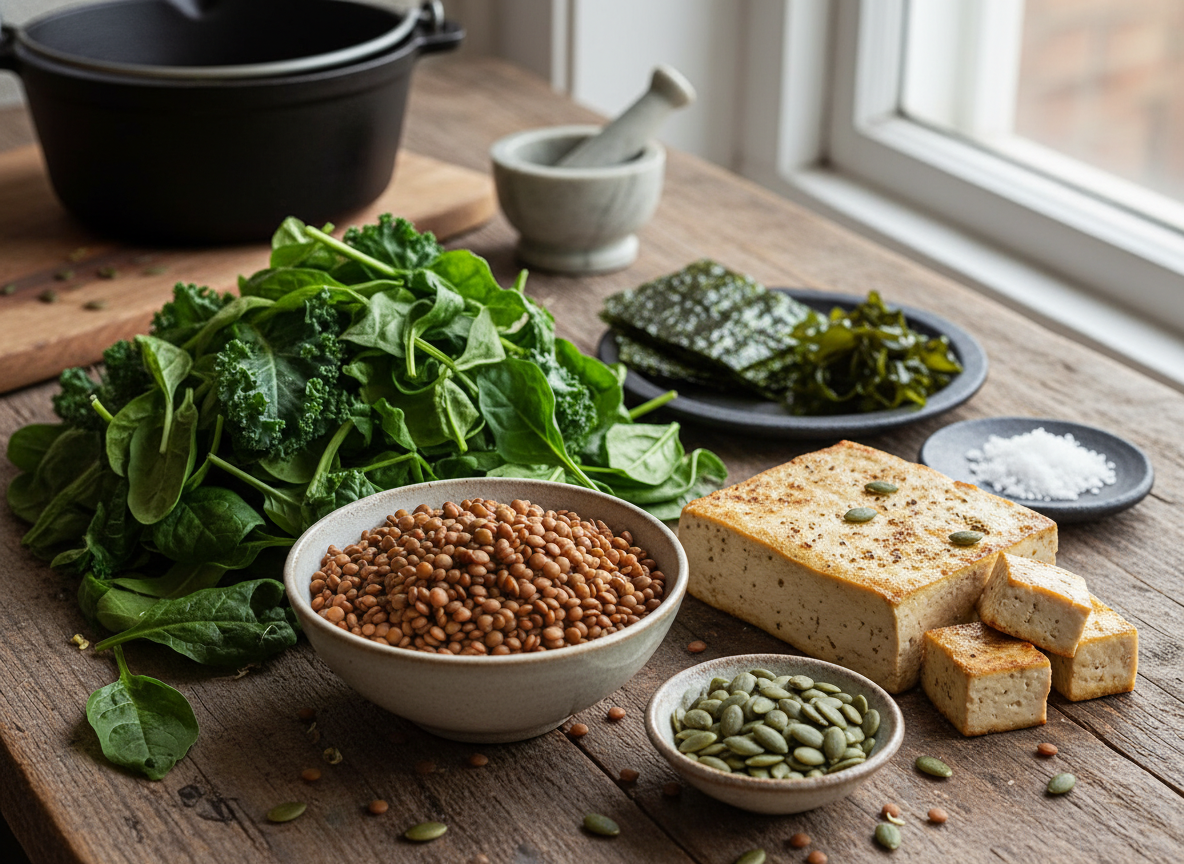
After B12, D, and omega-3, these are the nutrients I watch most carefully in vegan readers.
Iron
Vegan iron is not fake.
But it is non-heme iron, which is harder to absorb and more easily blocked.
That matters most for:
- menstruating women
- pregnancy
- endurance athletes
- people with already-low ferritin
This is where food pairing matters:
- legumes
- tofu
- lentils
- pumpkin seeds
- iron-rich greens
need help from vitamin C-rich foods if you want absorption to improve.
And if ferritin is already low, food may not be enough by itself.
For the women-specific version, go to the iron rich foods for women guide.
Zinc
Zinc is often not dramatic until it becomes annoying.
Low intake or low absorption may show up as:
- lower appetite
- weaker immunity
- poorer wound healing
- skin issues
Phytates in grains and legumes can reduce zinc absorption, which is why soaked, fermented, or thoughtfully varied food patterns often work better than repeating the same “healthy bowl” every day.
Iodine
This one gets missed all the time.
Many readers think sea salt covers it.
Usually it does not.
If sea vegetables are inconsistent, avoided, or used randomly, iodine can become another quiet hole in the plan.
Too little is a problem.
Too much seaweed can also be a problem.
So this is one place where “natural” does not automatically mean “well managed.”
Common Vegan Nutrition Mistakes
Most mistakes here do not come from bad intentions. They come from trusting labels, marketing, or partial truths more than biology.
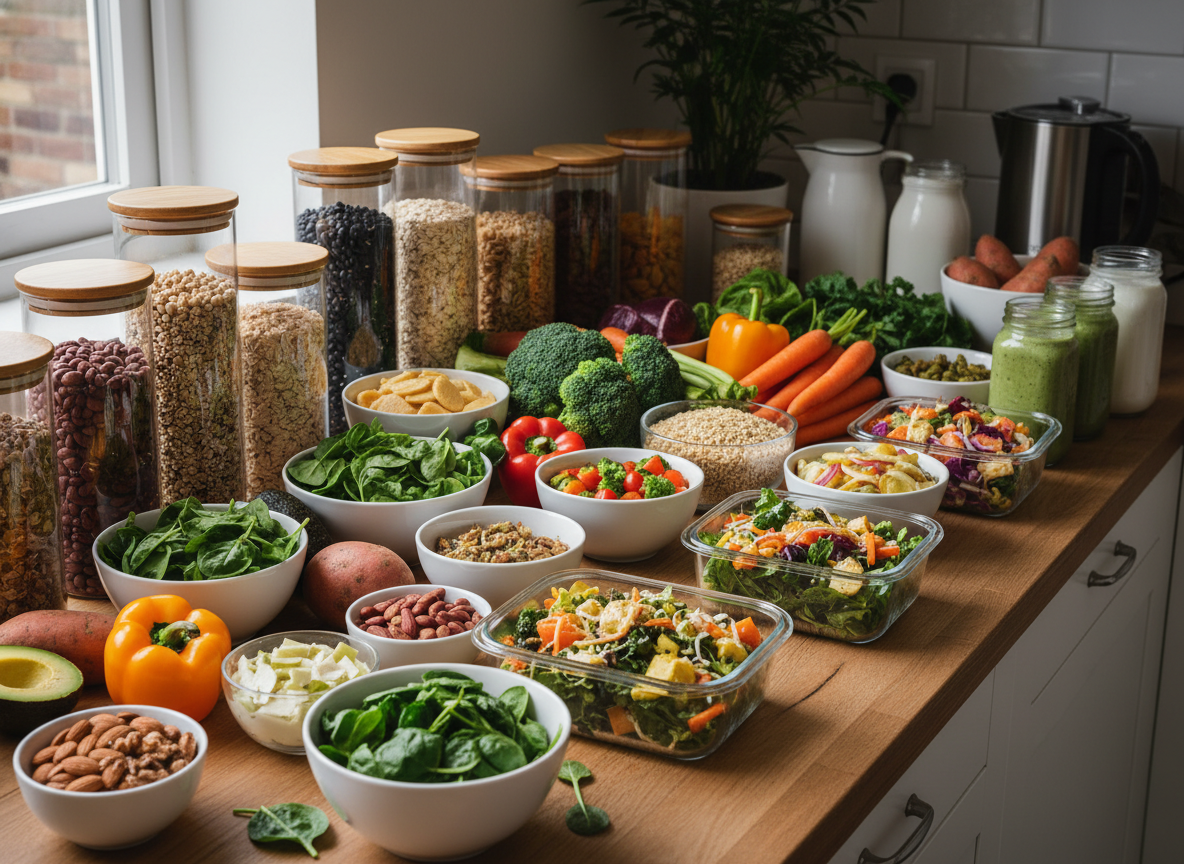
If I had to list the mistakes that show up over and over, they would be these:
1. Trusting spirulina or vague algae claims for B12
If the product is not giving a dependable, measurable B12 strategy, do not count it as coverage.
2. Assuming nutritional yeast automatically solves B12
Some nutritional yeast is fortified.
Some is not.
And even fortified yeast is only useful if:
- you check the label
- the dose is meaningful
- and you use it consistently
3. Treating symptoms as the first test
B12, vitamin D, iron, and omega-3 problems often build quietly before they become obvious.
4. Over-trusting a “clean diet” label
A diet can be organic, whole-food, beautiful, and still incomplete.
5. Thinking bloodwork is anti-food
It is not.
Lab work is often what allows a food-first plan to stay honest.
What to Test at Least Periodically
At some point, good bloodwork saves more time than another year of guessing whether the diet is working.

This is a YMYL area, so the useful frame is not self-diagnosis.
The useful frame is:
“If I want to stay vegan long-term, which numbers help me avoid preventable damage?”
Depending on symptoms, history, and clinician guidance, common labs to discuss include: Framework: Academy of Nutrition and Dietetics position paper.
- B12
- methylmalonic acid or homocysteine in more complex cases
- vitamin D
- ferritin and iron markers
- CBC
- sometimes zinc or thyroid-related markers if iodine intake is questionable
If fatigue is vague and the picture is muddy, also read the subclinical vitamin deficiency guide.
That article is better for the reader who knows something is off but cannot yet tell which nutrient is responsible.
The TCM Lens: Neutral on Identity, Strict on Observation
This is where I think traditional medicine adds something useful.
I do not think TCM needs to take a tribal position on vegan versus omnivore.
Both diets can be done well.
Both can be done badly.
What matters is what the body keeps telling you.
If a vegan pattern repeatedly creates:
- post-meal fatigue
- bloating
- coldness
- low drive
- brain fog
- unstable energy
then the label is not the point anymore.
The pattern is the point.
In TCM language, a diet that persistently weakens the Tỳ Vị axis is not a successful diet just because it fits an identity.
That does not mean veganism is wrong.
It means observation has to outrank ideology.
What This Looked Like in Real Life
One of the clearest cases I watched was a younger friend who went vegan for ethical reasons and did many things right at first.
She cooked more.
She ate more legumes.
She stopped relying on fast food.
From the outside, the diet looked cleaner than before.
But after enough time, the pattern changed.
Her energy got flatter.
Her hands and feet felt colder.
And there was a kind of quiet mental dullness she could not explain because she was still technically “eating healthy.”
The fix was not telling her to abandon veganism.
The fix was getting more honest:
- regular B12
- more structure around iron and vitamin C pairing
- a winter vitamin D routine
- and an algae omega-3 bridge instead of assuming chia alone covered the whole issue
That is the tone I want for this article.
Not attack.
Not protection.
Just enough honesty to keep a good intention from turning into a slow deficiency story.
FAQ
Do vegans need to take supplements?
Strict vegans usually need a dependable B12 source, and many also benefit from vitamin D and omega-3 support depending on season, geography, symptoms, and bloodwork.
Can vegans get enough B12 from food?
Not reliably from unfortified plant foods. Fortified foods may help, but only if used consistently and in meaningful amounts.
Is B12 mandatory for vegans?
For strict vegans, that is the most honest answer. It is the least negotiable nutrient in the whole conversation.
Is nutritional yeast enough for B12?
Only if it is fortified, the dose is high enough, and you use it consistently. Many readers assume too much here.
Is spirulina a real B12 source?
It should not be trusted as a dependable B12 strategy.
Do vegans need omega-3 supplements?
Many vegans do better with algae oil if DHA and EPA coverage is a goal, because ALA conversion is limited.
Can vegans get enough vitamin D naturally?
Sometimes, yes. But in winter, indoor lifestyles, and northern latitudes, many cannot rely on sunshine alone.
What vitamins do vegetarian or vegan women need most?
B12, vitamin D, iron, and sometimes omega-3 deserve the most careful attention, especially in menstruating years.
Is a vegan multivitamin enough?
Maybe, maybe not. A multivitamin can help, but the key is whether the actual nutrients and doses cover your real weak points.
What is the biggest vegan nutrition mistake?
Usually it is not being vegan itself. It is assuming the label guarantees adequacy without checking B12, D, omega-3, iron, and the body’s feedback.
Bottom Line
The goal is not to panic about veganism. The goal is to make a good ethical or lifestyle choice nutritionally durable.
Here is the simplest version:
- B12 is the non-negotiable nutrient
- vitamin D often becomes a winter reality issue
- omega-3 often needs an algae bridge
- iron, zinc, and iodine are the quieter watch-list
You do not need panic.
You do need honesty.
A vegan diet can absolutely be done well.
But it is done well when the weak points are respected, not denied.
If this article made you realize the B12 question is the real one, the future B12 spoke should be your next stop.
If it made you realize your fatigue picture is broader than one nutrient, go to the fatigue decoder.

About Mr. Anh
We turn solid evidence into everyday habits Americans can actually do—plain English, cups/oz, grocery-aisle swaps, and routines that fit real life. Our editorial process: Experience—we road-test tips in real schedules…