Best Fruits for Weight Loss: Low vs High Sugar
When it comes to fruits for weight loss, most people get mixed messages. Some say fruit is “too sugary.” Others...
- Why Fruits for Weight Loss Work (When You Use Them Right)
- High Sugar Fruits for Weight Loss: Enjoy, Don’t Overdo
- Low Sugar Fruits for Weight Loss: Best Everyday Picks
- How to Build a Weight-Loss Friendly Fruit Routine
- Common Mistakes With Fruits for Weight Loss
- Practical Tips & Swaps for Fruits for Weight Loss
- FAQ: Fruits for Weight Loss
- Final Thoughts on Fruits for Weight Loss
When it comes to fruits for weight loss, most people get mixed messages. Some say fruit is “too sugary.” Others treat it like a free food. The truth is more practical: the type of fruit, portion size, and what you pair it with matter. In this guide, we’ll compare low sugar fruits and high sugar fruits, show realistic serving sizes you’ll find in US grocery stores, and help you build a simple routine that supports steady, sustainable weight loss.
Why Fruits for Weight Loss Work (When You Use Them Right)
Before cutting fruit out of your plan, it helps to understand why fruits for weight loss can actually be powerful when used strategically.
👉 This pairs well with our No Sugar Fruits List: Best Low-Sugar Picks guide if you want the full picture on topics related to fruits.
Sugar vs. Fiber: What Actually Matters in Fruits for Weight Loss
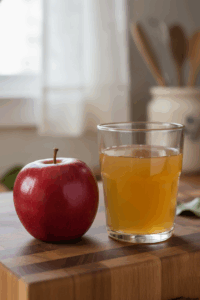
All fruits contain natural sugar, but they also contain fiber and water. For example, 1 medium apple (about 8 oz / 225 g) has roughly 19 grams of sugar but also 4 grams of fiber. That fiber slows digestion and helps you feel full longer.
Compare that to 8 oz of apple juice, which has similar sugar but almost no fiber. The juice spikes blood sugar faster and leaves you hungry sooner. When choosing fruits for weight loss, fiber content is often more important than total sugar alone. Whole fruit behaves very differently in your body than processed fruit products.
👉 This pairs well with our 10 Best Fruits for Digestion (Fiber + Enzymes) guide if you want the full picture on boosting your fiber intake.
Portion Sizes That Make Sense for Fruits for Weight Loss
Even healthy foods can slow progress if portions are oversized. A standard serving of fruit is about 1 cup fresh fruit, 1 medium piece (like an apple or orange), or ½ cup dried fruit.
For example, 1 cup of strawberries has about 7 grams of sugar, while 1 cup of grapes has closer to 23 grams. Both can fit into fruits for weight loss, but portion awareness changes the impact. Measuring 1 cup once or twice at home can recalibrate your eye so you don’t accidentally eat double or triple the intended amount.
👉 If you’re also working on getting all your essential vitamins, our detailed guide on Essential Vitamins: Best Vitamin-Rich Foods List covers exactly what you need.
High Sugar Fruits for Weight Loss: Enjoy, Don’t Overdo
Now let’s talk about high sugar fruits for weight loss and how to include them wisely instead of eliminating them completely.
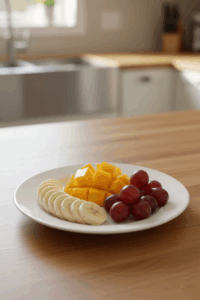
High Sugar Fruit List for Fruits for Weight Loss
Common higher-sugar fruits include bananas, grapes, mangoes, pineapples, cherries, and pomegranates. For example, 1 medium banana has about 14 grams of sugar, and 1 cup of mango chunks contains about 22 grams.
These fruits are nutrient-dense and provide potassium, vitamin C, and antioxidants. The key with fruits for weight loss is context. Eating a banana alone when you’re already hungry may not keep you full long. Eating half a banana sliced over Greek yogurt (¾ cup, about 17 grams protein) creates a more balanced snack.
Smarter Ways to Eat High Sugar Fruits for Weight Loss
Timing and pairing matter. High sugar fruits often work better:
- After a workout, when your muscles use glucose efficiently.
- Paired with protein or healthy fat.
- In smaller portions, such as ½ cup instead of 1 cup.
For example, try ½ cup pineapple with ½ cup cottage cheese (about 14 grams protein), or ½ banana blended into a protein smoothie. This keeps fruits for weight loss supportive rather than disruptive to your calorie goals.
Low Sugar Fruits for Weight Loss: Best Everyday Picks
If you want easier daily choices, low sugar fruits for weight loss are a smart foundation.
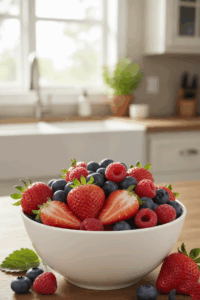
Low Sugar Fruit List for Fruits for Weight Loss
Strawberries, raspberries, blackberries, blueberries, apples, and oranges are strong options. One cup of raspberries contains about 5 grams of sugar and 8 grams of fiber, which is excellent for fullness.
Avocado is technically a fruit and contains less than 1 gram of sugar per serving (¼ avocado) but provides healthy fats. While higher in calories, it can reduce cravings when used in controlled portions. Choosing these lower sugar fruits for weight loss allows you to eat satisfying volumes without overshooting your sugar intake.
Easy Add-Ins Using Low Sugar Fruits for Weight Loss
Low sugar fruits are versatile and easy to build into meals:
- Add 1 cup berries to oatmeal (½ cup dry oats).
- Slice ½ apple into a turkey sandwich.
- Top a salad with orange segments (½ orange).
- Blend 1 cup frozen strawberries into a smoothie.
Because these fruits for weight loss are lower in sugar and higher in fiber, they help stretch meals without dramatically increasing calories. That makes them ideal for breakfast and afternoon snacks.
How to Build a Weight-Loss Friendly Fruit Routine
Putting this into practice is where fruits for weight loss become sustainable rather than confusing.
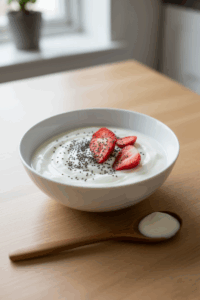
The “Protein + Produce” Formula for Fruits for Weight Loss
A simple rule: pair fruit with protein. Aim for at least 15–25 grams of protein per meal and 10–20 grams per snack.
For example:
- ¾ cup plain Greek yogurt + 1 cup blueberries.
- 2 scrambled eggs + ½ grapefruit.
- 1 scoop protein powder + 1 cup frozen berries.
This combination slows digestion, stabilizes blood sugar, and reduces the chance of overeating later. When fruits for weight loss are paired properly, they support appetite control rather than undermine it.
1-Day Sample Menu Using Fruits for Weight Loss
Here’s a realistic example using US grocery staples:
Breakfast: ¾ cup Greek yogurt, 1 cup strawberries, 1 tbsp chia seeds.
Lunch: Grilled chicken salad with mixed greens and ½ sliced apple.
Snack: ½ banana with 1 tbsp peanut butter.
Dinner: Salmon (4 oz) with roasted vegetables at 400°F and ½ cup pineapple.
This approach includes both low and moderate sugar fruits for weight loss without exceeding reasonable portions. The total fruit intake stays around 2–3 servings for the day, which fits many balanced calorie plans.
Common Mistakes With Fruits for Weight Loss
Even well-intentioned habits can derail progress. Let’s address common pitfalls with fruits for weight loss.
Juice, Smoothies, and Dried Fruit in Fruits for Weight Loss
Juice removes fiber and makes it easy to drink 2–3 servings quickly. An average 16 oz smoothie can contain the equivalent of 3–4 pieces of fruit.
Dried fruit is also concentrated. Just ¼ cup raisins has about 21 grams of sugar. That doesn’t mean these foods are “bad,” but they require tighter portion control. For fruits for weight loss, whole fruit is usually the better default choice.
Adjusting Fruits for Weight Loss With Diabetes or Prediabetes
If you have diabetes or prediabetes, fruits for weight loss require more individualized planning. Pair fruit with protein, monitor blood sugar response, and limit portions to ½–1 cup at a time.
For example, instead of eating 1 full mango, try ½ cup diced mango alongside 20 grams of protein. Blood sugar responses vary by person, so tracking for 1–2 weeks can help you identify which fruits work best for your body.
Practical Tips & Swaps for Fruits for Weight Loss
- Choose whole fruit over juice.
- Measure 1 cup once to learn portions.
- Pair fruit with ≥10g protein.
- Limit dried fruit to ¼ cup.
- Keep fruit visible in the fridge.
- Rotate berries, apples, and citrus weekly.
FAQ: Fruits for Weight Loss
1. Are fruits for weight loss better than cutting fruit completely?
Yes. Completely cutting fruit may reduce sugar intake, but it also removes fiber, vitamins, and antioxidants. For most people, 2–3 servings of whole fruit per day fits well within a calorie-controlled plan and supports fullness better than eliminating fruit entirely.
2. How many fruits for weight loss should I eat per day?
For many adults, 2–3 servings per day works well. A serving is 1 medium fruit or 1 cup fresh fruit. Adjust based on calorie needs, activity level, and blood sugar response if applicable.
3. Are bananas bad for fruits for weight loss?
No. A banana has about 105 calories and 14 grams of sugar. The key is portion and pairing. Half a banana with protein can fit easily into a balanced weight-loss plan.
4. Are low sugar fruits automatically better for weight loss?
Not always, but they are often easier to portion generously. Low sugar fruits like berries allow larger volume for fewer calories, which can help manage hunger more comfortably.
5. Can I eat fruits for weight loss at night?
Timing matters less than total intake. Eating fruit at night won’t automatically cause weight gain. However, pairing it with protein may help prevent late-night cravings.
Final Thoughts on Fruits for Weight Loss
Fruits for weight loss aren’t about restriction—they’re about smarter choices. Focus on whole fruit, reasonable portions, and balanced pairings. Start with 2–3 servings daily and adjust based on hunger, energy, and results. Small changes done consistently will matter more than eliminating fruit entirely.
Disclaimer: This content is for informational purposes only and is not a substitute for professional medical advice.

About Sarah Williams
We turn solid evidence into everyday habits Americans can actually do—plain English, cups/oz, grocery-aisle swaps, and routines that fit real life. Our editorial process: Experience—we road-test tips in real schedules…