Under 500-Calorie Whole Cauliflower Pizza Recipe
Jump To Recipe ↓Under 500-Calorie Whole Cauliflower Pizza If you love pizza but don’t love how heavy it can feel, this low-calorie cauliflower...
- Why This Under-500-Calorie Cauliflower Pizza Works
- Ingredients and Simple Substitutions for Cauliflower Pizza
- Step-by-Step Low-Calorie Cauliflower Pizza Crust
- Bake for a Crispy, Sturdy Cauliflower Pizza Base
- Slice, Serve, and Store Low-Calorie Cauliflower Pizza
- Tips & Swaps for Low-Calorie Cauliflower Pizza
- FAQ: Low-Calorie Cauliflower Pizza
- Ready to Make It Tonight?
Under 500-Calorie Whole Cauliflower Pizza
If you love pizza but don’t love how heavy it can feel, this low-calorie cauliflower pizza changes the game. Using a simple cauliflower crust, this recipe delivers a full, satisfying pizza for under 500 calories total without tiny portions or complicated ingredients. It’s a practical option: one head of cauliflower, one egg, Parmesan, and pantry staples you can find at any US grocery store.
Below, you’ll get clear steps, realistic calorie math, and tips to keep the crust crisp, not soggy. This is pizza you can actually fit into a lighter eating plan, comfort food included.
Why This Under-500-Calorie Cauliflower Pizza Works
This low-calorie cauliflower pizza works because it replaces refined flour with vegetables while keeping structure and flavor intact. Instead of pretending it’s “just like” regular pizza, it leans into what cauliflower does best: volume with very few calories.
What “Under 500 Calories” Really Means for Cauliflower Pizza
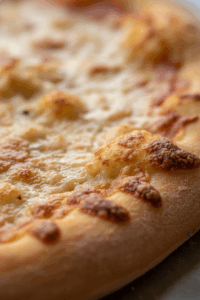
When we say under 500 calories, we mean the entire cauliflower pizza, not a single slice. One medium head of cauliflower is about 146 calories. Add one large egg (around 70 calories), 1/2 cup grated Parmesan (about 216 calories), garlic, and herbs, and the full crust lands near 440–460 calories total. That means an 8-slice low-calorie cauliflower pizza comes in at roughly 55–60 calories per slice, depending on thickness.
How This Low-Calorie Cauliflower Pizza Delivers Real Flavor
Fat and protein are used strategically. Parmesan adds saltiness and umami, while the egg binds the crust so it doesn’t crumble. Italian herbs and garlic boost aroma without adding calories. The result is a pizza that tastes intentional—not like a “diet version.” You still get browning, crisp edges, and a sturdy base that holds toppings, which is why this low-calorie cauliflower pizza feels satisfying.
Ingredients and Simple Substitutions for Cauliflower Pizza
This low-calorie cauliflower pizza keeps ingredients short and flexible, which makes it easy to repeat weekly without burnout.
Core Ingredients for Low-Calorie Cauliflower Pizza Crust
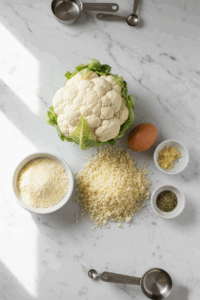
You’ll need 1 medium head cauliflower (about 1.5 lb raw), 1 large egg, 1/2 cup finely grated Parmesan, 1 clove garlic (minced), and Italian herbs. Frozen cauliflower rice also works—use about 4 cups—but fresh cauliflower tends to bake up slightly drier. Stick with finely grated Parmesan (not shredded) for better binding in this low-calorie cauliflower pizza crust.
Optional Add-Ins That Keep Cauliflower Pizza Light
To customize your low-calorie cauliflower pizza, add red pepper flakes, dried oregano, or black pepper for heat. Swap Parmesan for part-skim mozzarella if you prefer milder flavor, but note that calories increase slightly. For dairy-free needs, nutritional yeast can replace some cheese, though texture will be softer. These swaps keep calories reasonable while fitting different preferences.
Step-by-Step Low-Calorie Cauliflower Pizza Crust
This section is where most cauliflower pizzas succeed or fail. Moisture control is the difference between crisp and soggy.
Rice and Steam Cauliflower for Low-Calorie Pizza
Chop cauliflower into florets and pulse in a food processor until rice-sized. Steam for 8–10 minutes until tender. Steaming softens cell walls so water can be removed later. For frozen cauliflower rice, microwave according to package directions, usually 5–6 minutes.
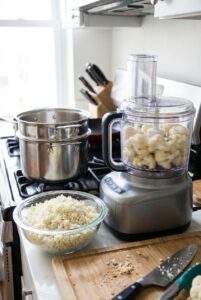
Squeeze Dry: The Crisp-Crust Secret for Cauliflower Pizza
Transfer hot cauliflower to a clean kitchen towel. Let cool slightly, then twist and squeeze hard for 30–60 seconds. You should remove at least 1/2 cup liquid. This step alone can improve crispness by 50% or more in a low-calorie cauliflower pizza crust.
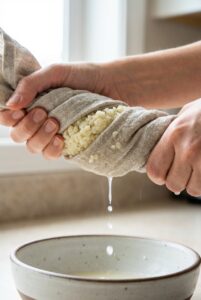
Mix Dough and Shape the Cauliflower Pizza Crust
In a bowl, combine squeezed cauliflower, egg, Parmesan, garlic, and herbs. Mix until it holds together. Spread into a 10–11 inch circle on parchment, about 1/4 inch thick. Thinner crust equals fewer soggy spots in this low-calorie cauliflower pizza.
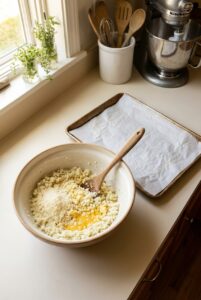
Bake the Cauliflower Pizza Crust
Bake at 400°F (205°C) for 20–25 minutes until golden and firm. Rotate the pan halfway for even browning.
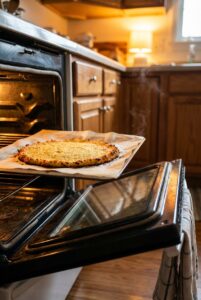
Steps (Quick View):
- Pulse cauliflower into rice.
- Steam 8–10 minutes until tender.
- Cool slightly, then squeeze dry thoroughly.
- Mix cauliflower with egg, cheese, garlic, herbs.
- Shape crust on parchment.
- Bake at 400°F for 20–25 minutes until golden.
Bake for a Crispy, Sturdy Cauliflower Pizza Base
Once baked properly, this low-calorie cauliflower pizza can handle toppings without collapsing.
Best Oven Temperature for Low-Calorie Cauliflower Pizza
An oven set to 400°F works best for cauliflower pizza. Lower temperatures dry the crust slowly and leave moisture inside. Higher temperatures risk burning before moisture escapes. A preheated oven and middle rack ensure even airflow, which matters for keeping this low-calorie cauliflower pizza crisp.
How to Prevent a Soggy Middle in Cauliflower Pizza
After the first bake, flip the crust carefully and return it to the oven for 5 minutes. This extra step evaporates trapped steam. When adding toppings, keep sauces light—2–3 tablespoons total and avoid watery vegetables. These adjustments keep the center firm and make the low-calorie cauliflower pizza easier to slice.
Slice, Serve, and Store Low-Calorie Cauliflower Pizza
This final stage makes the recipe practical for real life, not just photos.

Under-100-Calorie Slice Tips for Cauliflower Pizza
Cut the pizza into 8 equal slices for about 55–60 calories each. If you add toppings like tomato sauce or veggies, keep portions measured—1/4 cup sauce adds roughly 30–40 calories. This keeps the entire low-calorie cauliflower pizza under 500 calories while still feeling generous.
Storage and Reheating Cauliflower Pizza Without Sogginess
Store leftovers in an airtight container in the fridge for up to 3 days. Reheat slices in a 375°F oven or toaster oven for 6–8 minutes. Avoid microwaving—it traps steam and softens the crust. Proper reheating keeps the low-calorie cauliflower pizza crisp even the next day.
Tips & Swaps for Low-Calorie Cauliflower Pizza
- Use parchment paper to prevent sticking and extra oil.
- Flip crust halfway for firmer texture.
- Keep sauce under 3 tbsp total.
- Add toppings after pre-bake only.
- Use finely grated cheese for better binding.
- Reheat in the oven, not microwave.
FAQ: Low-Calorie Cauliflower Pizza
Is cauliflower pizza actually low calorie?
Yes, when made correctly. A full low-calorie cauliflower pizza using one head of cauliflower, egg, and Parmesan is around 450 calories total. Store-bought versions often add starches or oils that double calories, so homemade gives better control.
Does cauliflower pizza taste like cauliflower?
Mildly, but not strongly. Garlic, cheese, and herbs mask most vegetable flavor. Many people describe low-calorie cauliflower pizza as savory and slightly nutty rather than “veggie-heavy.”
Can I freeze cauliflower pizza crust?
Yes. Bake the crust fully, cool, then freeze wrapped tightly for up to 2 months. Reheat directly from frozen at 400°F for 10–12 minutes before topping.
Why is my cauliflower pizza soggy?
Usually from excess moisture. Not squeezing cauliflower dry or using too much sauce are the top causes. Removing liquid is essential for low-calorie cauliflower pizza success.
Can I make this egg-free?
You can, but texture changes. Flax eggs work, but the crust will be softer and more fragile. Expect a fork-and-knife low-calorie cauliflower pizza instead of hand-held slices.
Ready to Make It Tonight?
If you’re craving pizza without blowing your calorie budget, this low-calorie cauliflower pizza is an easy place to start. Save it, share it, and try one small tweak each time until it fits your routine perfectly.
Disclaimer: This content is for informational purposes only and is not a substitute for professional medical advice.

| Prep Time | 15 minutes |
| Cook Time | 30 minutes |
| Passive Time | 10 minutes |
| Servings |
slices
|
- 1 medium head Cauliflower About 1.5 lb raw; yields ~4 cups riced
- 1 large Egg Acts as the binder for the crust
- 1/2 cup Parmesan cheese (finely grated) Use finely grated, not shredded
- 1 clove garlic Minced; optional but recommended
- 1 tsp Italian seasoning Or mix oregano + basil
- 1/4 tsp Salt Adjust to taste
- 1/4 Black pepper Optional seasoning
Ingredients
|
|
- Preheat the oven to 400°F (205°C) and line a sheet pan with parchment paper.
- Pulse the cauliflower into rice-sized pieces, then steam for 8–10 minutes until tender.
- Let the cauliflower cool slightly, then squeeze it in a clean towel until very dry (remove at least 1/2 cup liquid).
- Mix dried cauliflower with egg, Parmesan, garlic, Italian seasoning, salt, and pepper until it holds together.
- Press the mixture into a 10–11 inch circle about 1/4 inch thick on the parchment-lined pan.
- Bake for 20–25 minutes until golden and firm, rotating the pan halfway through.
- (Optional) Flip the crust carefully and bake 5 more minutes for extra crispness.
- Add light toppings (keep sauce to 2–3 tbsp), then bake 5–8 minutes until warmed through.

About Essentialwellnessaz Editorial Team
We turn solid evidence into everyday habits Americans can actually do—plain English, cups/oz, grocery-aisle swaps, and routines that fit real life. Our editorial process: Experience—we road-test tips in real schedules…