5 Quick Breakfasts to Support Weight Loss
Starting your day with a balanced, sensible meal can make a meaningful difference when you’re trying to lose weight. A...
Starting your day with a balanced, sensible meal can make a meaningful difference when you’re trying to lose weight. A quick breakfast doesn’t just save time—it helps you stay consistent, avoid overeating later, and keep your energy stable throughout the morning. The five breakfast ideas below all fall under roughly 250–310 calories and rely on affordable, easy-to-find US grocery staples like eggs, oats, Greek yogurt, and whole-grain bread. Whether you’re heading out the door or working from home, these fast options can fit into almost any routine.
Why Quick Breakfasts Help With Weight Management
A great place to begin is understanding why simple, fast breakfasts support weight-loss efforts. When a meal is quick to prepare, you’re less likely to skip it or choose something high in sugar on the go. These breakfasts provide steady energy, enough protein to keep you satisfied, and the right balance of carbohydrates and healthy fats to prevent mid-morning cravings.
👉 This pairs well with our Foods That Naturally Support Common Health Issues guide if you want the full picture on topics related to naturally.
How protein and fiber keep you fuller longer
Protein and fiber are two nutrients that work well together when your goal is losing weight. For example, eating just 12–15 grams of protein at breakfast can help reduce hunger later in the day. Scrambled eggs, Greek yogurt, and cottage cheese all fall into this range. Fiber adds bulk and slows digestion, which helps you feel full for longer. Foods like oatmeal or whole-grain toast deliver 3–4 grams of fiber per serving, making them excellent for appetite control. By pairing protein with fiber—like adding berries to yogurt or banana slices to oatmeal—you create a breakfast that keeps you satisfied without excess calories.
👉 For a deeper dive into getting enough protein, check out: High-Protein Foods: Animal vs. Plant Sources — it’s packed with practical tips.
Why simple meals improve consistency on busy mornings
Consistency is often the difference between short-term dieting and long-term success. Breakfasts that take under 5 minutes to assemble make it easier to build lasting habits. For example, Greek yogurt with berries requires no cooking and can be portioned ahead of time for several days. Scrambled eggs made on a nonstick pan can be ready in about 3 minutes, and overnight oats take less than 2 minutes the night before. Because these meals are simple and repeatable, you can rely on them even on mornings when you’re rushed, which helps avoid impulsive, high-calorie choices.
👉 Want to go further? Our complete breakdown of Vegetarian Keto Meal Plan: Easy Meals & Shop List walks you through topics related to vegetarian step by step.
5 Quick Breakfasts Under 310 Calories
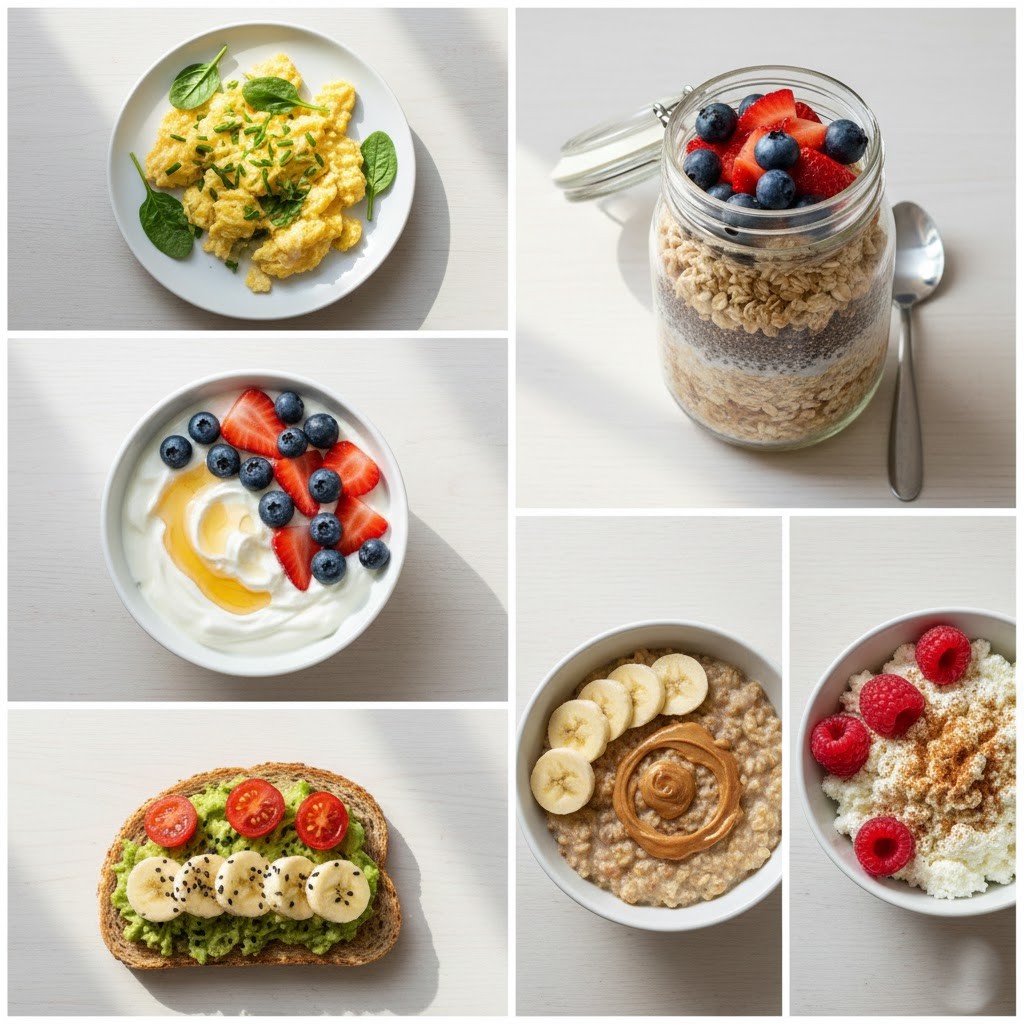
Now that you understand the role of fast, balanced meals in weight management, here’s a closer look at the five breakfasts featured in the image—each designed to be quick, practical, and calorie-friendly.
Scrambled eggs (250 calories)
Scrambled eggs are a classic for a reason: they’re high in protein, cook in minutes, and can be paired with a variety of healthy sides. Two large eggs provide about 12 grams of protein, helping you stay full until your next meal. To keep calories controlled, cook them in 1 tsp of olive oil or use a nonstick spray. You can add low-calorie vegetables like spinach, bell peppers, or tomatoes—each adds flavor for fewer than 10–15 calories per serving. This breakfast is especially helpful on mornings when you need something warm, satisfying, and extremely fast.
Overnight oats with berries (300 calories)
Overnight oats are ideal for busy people because you assemble them the night before. A typical serving includes ½ cup rolled oats, ½ cup low-fat milk, and a handful of berries. Oats provide 4 grams of fiber, which helps control hunger, while berries add natural sweetness and antioxidants without adding many calories. You can customize the flavor using cinnamon, vanilla extract, or a teaspoon of chia seeds for extra texture. Since there’s no cooking involved, it’s one of the easiest breakfasts to prep for the entire workweek.
Greek yogurt with fresh berries (275 calories)
Greek yogurt offers a high-protein base—typically 14–17 grams per ¾-cup serving—without a lot of calories. Pairing it with berries adds fiber and natural sweetness, keeping the total under 275 calories. This breakfast is great for mornings when you’re on the go because you can pack it in a small container with a spoon. For added crunch, sprinkle 1 tbsp of granola, which adds only about 40 calories. Look for plain, unsweetened yogurt to avoid added sugars, then sweeten naturally with fruit or a light drizzle of honey if needed.
Avocado toast on whole-grain bread (280 calories)
Avocado toast remains a favorite because it combines healthy fats, fiber, and whole grains. A typical serving uses one slice of whole-grain bread topped with ¼ of a medium avocado, which provides creaminess and about 3 grams of fiber. Toast helps keep you full due to its complex carbohydrates. You can add toppings like sliced cherry tomatoes, red pepper flakes, or a squeeze of lemon juice for brightness. This breakfast is also easy to scale—add a second slice or a fried egg if you need more calories on active days.
Peanut butter banana oatmeal & cottage cheese with fruit (310 & 250 calories)
These two options round out the list with protein-rich and lightly sweet choices.
Peanut butter banana oatmeal typically includes ½ cup oats, ½ medium banana, and 1 tsp peanut butter, coming in around 310 calories. The banana adds natural sweetness, while the peanut butter provides satiating healthy fats.
Cottage cheese with fruit is lower at about 250 calories, depending on the portion. A ½-cup serving of low-fat cottage cheese offers roughly 12–14 grams of protein, and pairing it with berries or sliced peaches creates a filling, refreshing meal. Both options offer excellent staying power for mornings when you need lasting energy.
Tips & Simple Ingredient Swaps
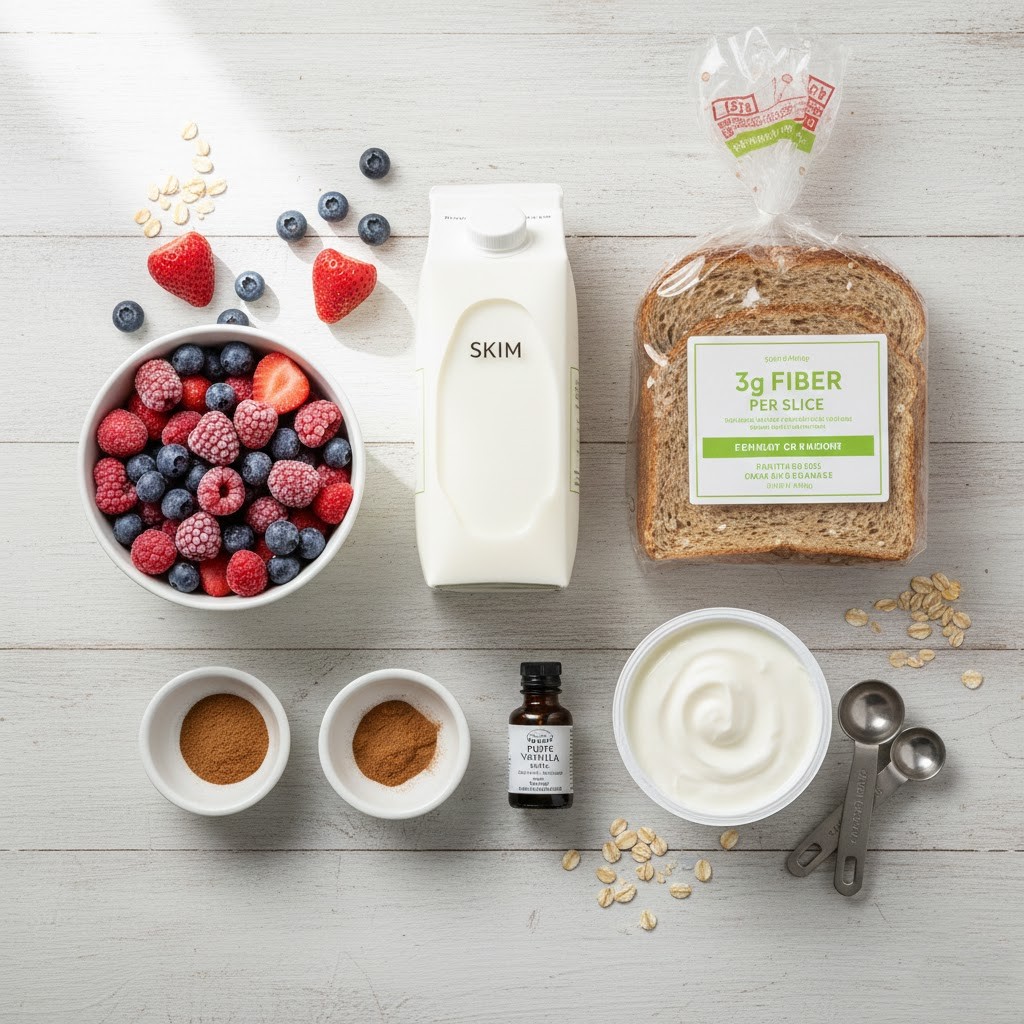
- Use 1% or skim milk to reduce calories in oats or yogurt bowls.
- Try whole-grain bread with at least 3g fiber per slice for better fullness.
- Choose frozen berries—they’re cheaper and last longer.
- Add cinnamon or vanilla extract to breakfast dishes for flavor without calories.
Frequently Asked Questions
- Are these breakfasts enough to keep me full until lunch?
Most people find meals with at least 12–15 grams of protein and 3–4 grams of fiber help control hunger for about 3–4 hours. These breakfasts fall within that range, but your needs may vary based on activity level and calorie requirements. - Can I prep these breakfasts ahead of time?
Yes. Overnight oats, Greek yogurt bowls, and cottage cheese cups can be portioned for 3–4 days. Even scrambled eggs can be meal-prepped using hard-boiled eggs or egg muffins baked at 350°F for 20 minutes. - Are these breakfast ideas suitable for weight loss on a budget?
Absolutely. Items like oats, bananas, eggs, and frozen berries are inexpensive and available at any US grocery store. Buying in bulk—especially oats—can lower costs even more. - What if I need more than 300 calories in the morning?
You can increase portions or add protein, such as an extra egg, a tablespoon of nuts, or an additional slice of whole-grain toast. Boosting your calories slightly won’t harm weight loss if you stay within your overall daily needs. - Can I substitute non-dairy options?
Yes. Almond milk, soy milk, and coconut yogurt all work well. Just check labels for added sugars—look for unsweetened versions to keep calories lower and maintain weight-loss goals.
If you’re ready to simplify your mornings, try rotating these five breakfasts throughout the week. Small, consistent changes like these can make your weight-loss journey feel easier and more sustainable.
Disclaimer: This content is for informational purposes only and is not a substitute for professional medical advice.

About Sarah Williams
We turn solid evidence into everyday habits Americans can actually do—plain English, cups/oz, grocery-aisle swaps, and routines that fit real life. Our editorial process: Experience—we road-test tips in real schedules…