Orange Juice vs Whole Orange: Which Is Healthier?
When you’re standing in the kitchen deciding between pouring a glass of orange juice or grabbing a whole orange, the...
When you’re standing in the kitchen deciding between pouring a glass of orange juice or grabbing a whole orange, the choice feels simple—but nutritionally, it’s not. Both come from the same fruit, yet they affect your body differently. Calories, sugar, fiber, and how full you feel all matter, especially for busy Americans trying to eat well without overthinking every bite. This guide breaks down orange juice vs whole orange in practical terms, using common US portions and grocery-store realities, so you can make the better choice for your routine.
Quick Take: Juice vs Whole Fruit
At a glance, orange juice and whole oranges seem interchangeable, but the form changes how your body processes them. Let’s start with the biggest distinctions most people notice right away.
👉 If you’re also working on topics related to cauliflower, our detailed guide on Under 500-Calorie Whole Cauliflower Pizza Recipe covers exactly what you need.
The biggest difference: fiber
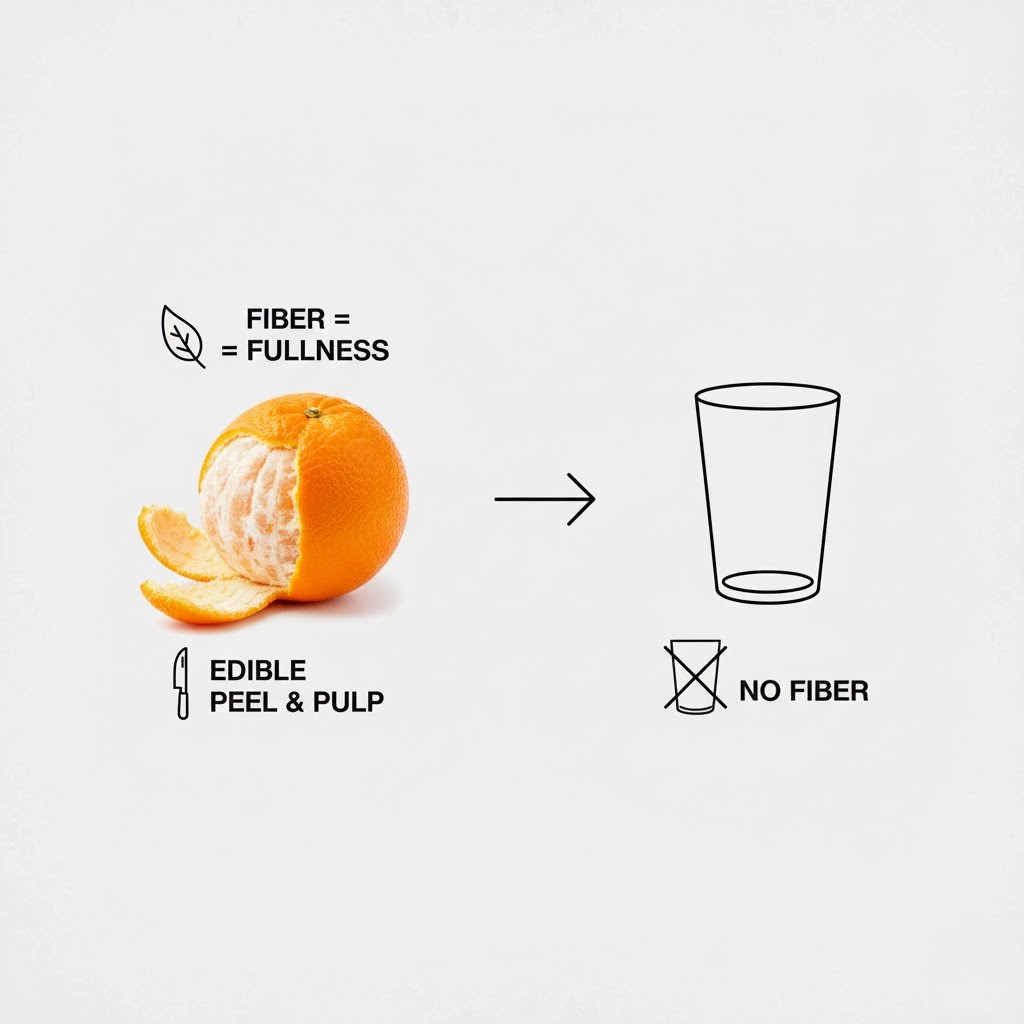
Fiber is the main nutritional divider. A medium orange (about 5 oz) contains roughly 3 grams of fiber, while 1 cup (8 fl oz) of orange juice has almost none. That fiber slows digestion, helps you feel full, and moderates how quickly sugar enters your bloodstream. Without fiber, juice behaves more like a sweet drink than a fruit. For example, drinking 1 cup of juice takes seconds, but eating one orange takes several minutes and requires chewing, which also supports satiety.
👉 If you’re also working on boosting your fiber intake, our detailed guide on 9 High-Fiber Foods to Add to Your Diet covers exactly what you need.
Who should choose which
For most people, the whole orange wins as an everyday choice. It’s lower in calories, more filling, and harder to overconsume. Juice can make sense in specific situations—like when you need quick carbs after exercise or if someone struggles to eat whole fruit. The key is frequency and portion size. Think of juice as an occasional supplement, not a replacement for whole fruit at breakfast every day.
👉 This pairs well with our Roti vs Rice: Which Is Better for Your Diet? guide if you want the full picture on topics related to comparison.
Nutrition Snapshot (Typical Servings)
Looking at numbers side by side helps clarify why these two options feel so different in your body.
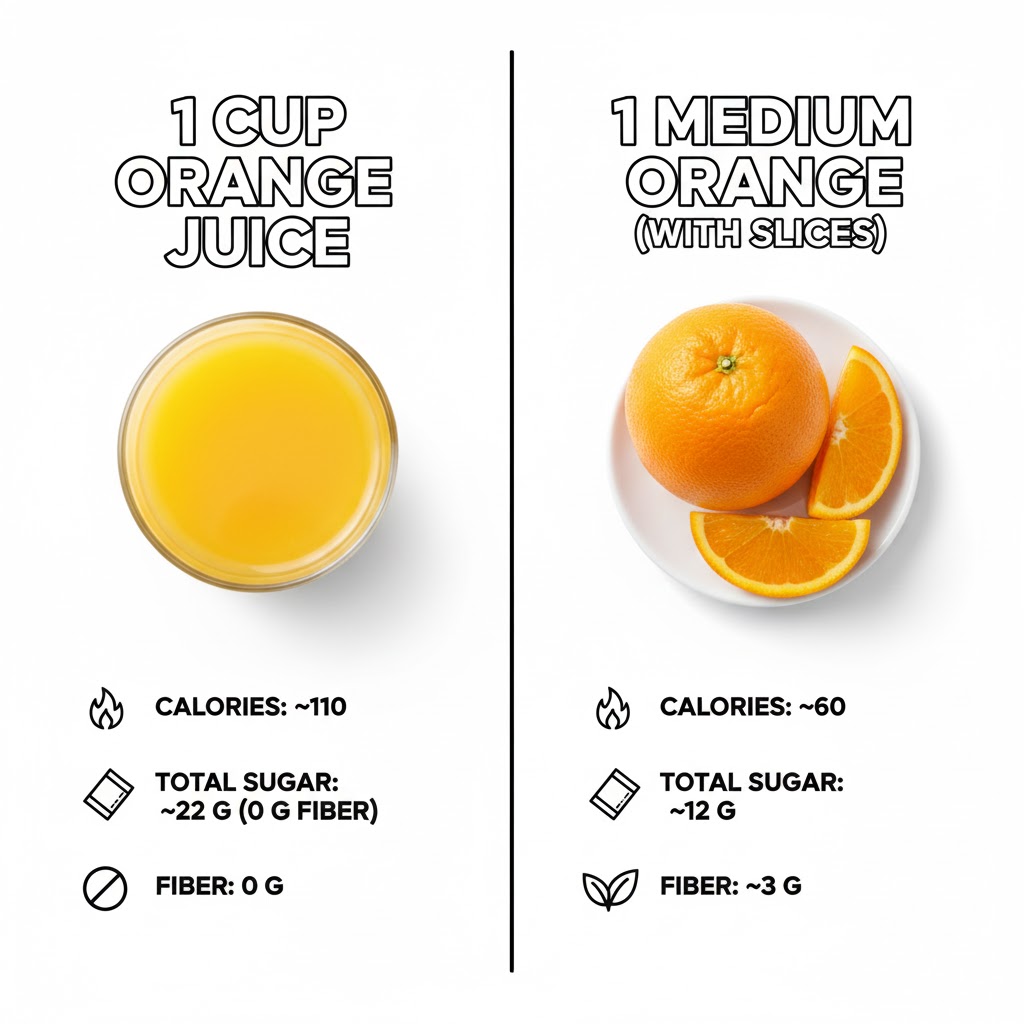
1 cup orange juice vs 1 medium orange
A typical comparison is 1 cup (8 fl oz) of 100% orange juice versus 1 medium orange. Juice provides about 110–130 calories, while a whole orange has closer to 60–70 calories. The juice often represents 2–3 oranges squeezed into one glass, which concentrates calories and sugar. When you eat a single orange, you naturally stop at one fruit instead of consuming multiple at once.
Calories, carbs, and sugar
Carbohydrates tell a similar story. One cup of juice contains roughly 25–27 grams of carbs, mostly from sugar, while a medium orange has about 15–16 grams. Sugar content is around 20–22 grams in juice versus 12 grams in a whole orange. Even though the sugar is naturally occurring, liquid sugar is absorbed faster, which can affect energy levels and hunger later in the day.
Fiber and Fullness
After the initial numbers, the real-life impact shows up in how full you feel and how long that fullness lasts.
How fiber helps you feel satisfied
Fiber adds bulk and slows digestion. Those 3 grams of fiber in a whole orange may sound small, but they meaningfully increase satiety. Eating a whole orange as a snack can keep you satisfied for 1–2 hours, especially when paired with protein like a handful of nuts. Fiber also supports gut health by feeding beneficial bacteria, something juice simply doesn’t do in the same way.
Why juice is easier to overdrink
Because juice doesn’t require chewing and empties from the stomach quickly, it’s easy to drink 12–16 fl oz without noticing—doubling calories and sugar in minutes. Many US glasses hold more than 8 fl oz, so “one glass” is often two servings. This is why juice rarely keeps hunger away. You might drink juice at breakfast and still feel hungry by mid-morning.
Vitamins and Antioxidants
Nutrition isn’t just about calories; vitamins and protective compounds matter too.
Vitamin C, folate, and antioxidants
Both forms are rich in vitamin C. One medium orange provides about 70 mg of vitamin C, close to the daily recommended intake for adults, while 1 cup of juice offers 90 mg or more. Juice can also contain folate and potassium. Antioxidants like flavonoids are present in both, supporting overall health, though amounts vary by processing and freshness.
What you lose—and keep—when you juice
Juicing removes most fiber and some phytonutrients found in the pulp and membranes. Store-bought juice may lose additional nutrients during processing, especially if it’s from concentrate. That said, 100% orange juice with no added sugar still delivers vitamin C efficiently. It’s not “bad,” but it’s less complete than the whole fruit.
When Orange Juice Can Be a Smart Pick
Despite its downsides, juice has a place when used intentionally.
Post-workout or quick carbs
After intense exercise, your body benefits from fast-digesting carbs. A small 4–6 fl oz serving of orange juice can help replenish glycogen quickly. Athletes often pair it with protein to balance blood sugar. In this context, the lack of fiber is actually helpful.
For kids or limited appetites
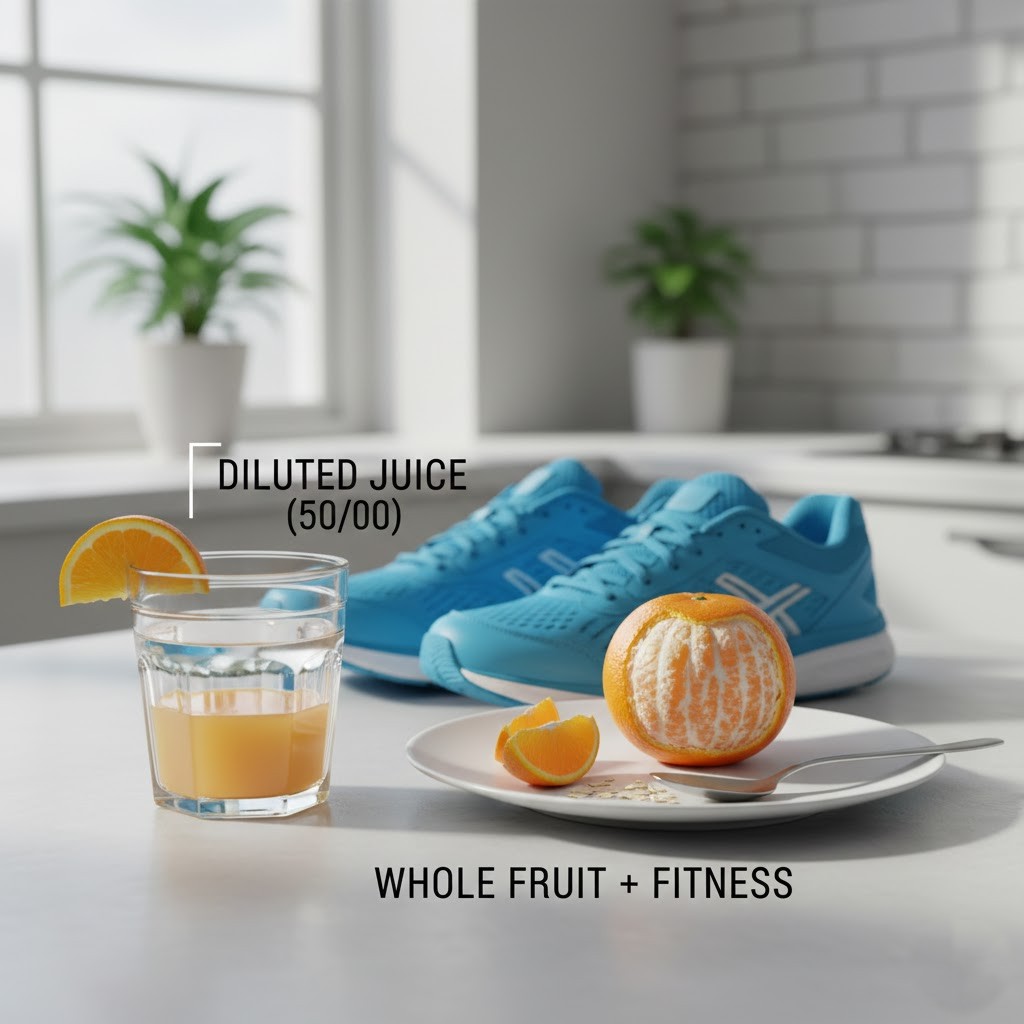
Some children or older adults struggle with chewing or appetite. In these cases, a small serving of juice can contribute vitamins and calories. Diluting juice half juice, half water reduces sugar per sip while keeping the flavor familiar.
Tips & Smart Swaps
- Choose whole oranges for snacks and breakfast.
- Limit juice to 4–6 fl oz per serving.
- Dilute juice with water or ice.
- Pair juice with protein or fat.
- Avoid juice “cocktails” with added sugar.
- Blend whole oranges into smoothies instead of juicing.
Frequently Asked Questions
1. Is orange juice bad for you?
Orange juice isn’t inherently bad, but it’s easy to overconsume. Drinking large portions regularly can add excess sugar and calories without much fullness. In small amounts, especially 100% juice with no added sugar, it can fit into a balanced diet.
2. Is eating oranges better for weight loss?
Yes, for most people. Whole oranges are lower in calories and higher in fiber, which helps control appetite. Eating one orange instead of drinking juice can reduce overall calorie intake and keep you satisfied longer.
3. Does orange juice spike blood sugar?
It can. Without fiber, the sugar in juice is absorbed quickly, potentially causing a blood sugar spike. Pairing juice with protein or limiting portions to 4–6 fl oz can help reduce this effect.
4. How much orange juice is recommended per day?
Many nutrition experts suggest no more than 4–6 fl oz per day for adults, and even less for children. Whole fruit should make up the majority of fruit intake.
5. Are fresh-squeezed juices healthier?
Fresh-squeezed juice may retain more nutrients than processed juice, but it still lacks fiber. Even fresh juice should be consumed in moderation compared to whole fruit.
When it comes to orange juice vs whole orange, the whole fruit is the healthier everyday choice for most Americans. Enjoy juice occasionally and in small portions. Want more simple nutrition swaps like this? Explore our latest wellness guides and build habits that actually stick.
Disclaimer: This content is for informational purposes only and is not a substitute for professional medical advice.

About Sarah Williams
We turn solid evidence into everyday habits Americans can actually do—plain English, cups/oz, grocery-aisle swaps, and routines that fit real life. Our editorial process: Experience—we road-test tips in real schedules…