9 Magnesium-Rich Foods to Add This Week
Magnesium is one of those “quiet helper” minerals: you don’t think about it until your body feels off. It supports...
- Why Magnesium Matters in Plain English for magnesium-rich foods
- 9 Magnesium-Rich Foods to Add This Week as a magnesium foods list
- Easy Ways to Add Magnesium Today using magnesium-rich foods
- Food vs Supplements for magnesium-rich foods: What to know
- Quick FAQs about magnesium-rich foods
- Tips & swaps for magnesium-rich foods
- CTA
Magnesium is one of those “quiet helper” minerals: you don’t think about it until your body feels off. It supports hundreds of everyday processes, yet many people still don’t eat enough magnesium-rich foods. The good news is you don’t need a complicated plan. With a few smart grocery picks (many you can find at Walmart, Target, Costco, or your local store), you can raise your intake in a simple, food-first way. Below is a practical magnesium foods list, plus easy serving ideas you can use this week.
Why Magnesium Matters in Plain English for magnesium-rich foods
Think of magnesium as a behind-the-scenes “helper” that keeps key systems running smoothly, and magnesium-rich foods are one of the easiest ways to support that.

👉 Want to go further? Our complete breakdown of Magnesium-Rich Foods to Support Your Daily Wellness walks you through topics related to magnesium step by step.
What magnesium does in your body with magnesium-rich foods
Magnesium helps your muscles and nerves communicate, supports steady heartbeat rhythms, and contributes to energy production—basically, it’s involved in a lot of “background” body work. A simple example: your muscles need magnesium to relax after they contract, which is one reason magnesium-rich foods show up in wellness conversations. Food sources also come packaged with fiber, healthy fats, and antioxidants—so you’re not relying on a single nutrient.
If you want a concrete “this week” move: add 1 oz (28 g) pumpkin seeds to salads or yogurt. That single ounce can deliver a meaningful magnesium bump while also adding crunch and protein. Or swap your usual snack for 1 oz (28 g) almonds, which also brings vitamin E and healthy fats.
👉 Want to go further? Our complete breakdown of Protein-Rich Foods to Power a Healthy Diet walks you through getting enough protein step by step.
Signs you might not be getting enough magnesium-rich foods
It’s easy to blame stress, sleep, or a busy schedule for how you feel, so don’t self-diagnose. Still, some people notice general issues like muscle tightness, fatigue, or sleep that doesn’t feel restorative when their diet is low in magnesium-rich foods and other nutrients. The catch is these symptoms are non-specific—they can come from hydration, iron, vitamin D, thyroid issues, medications, or plain overwork.
A practical approach is to look at your plate before you look for a pill. If most days you’re skipping leafy greens, beans, nuts, and seeds, your magnesium intake may be lower than you think. Try a 7-day check: include one magnesium-rich food daily (like ½ avocado or 1 cup cooked spinach) and see if you feel more steady—especially with energy and digestion—without expecting overnight miracles.
👉 Want to go further? Our complete breakdown of 9 High-Fiber Foods to Add to Your Diet walks you through boosting your fiber intake step by step.
9 Magnesium-Rich Foods to Add This Week as a magnesium foods list
Now that you know why it matters, here’s a scannable magnesium foods list built around items most US grocery stores carry.
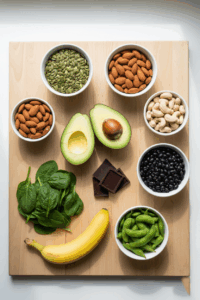
Nuts & seeds magnesium-rich foods: almonds, cashews, pumpkin seeds
Nuts and seeds are the “no-cooking” backbone of magnesium-rich foods because they’re portable and easy to measure. Aim for 1 oz (28 g) as a standard serving—about a small handful. Great picks include almonds, cashews, and especially pumpkin seeds. If you’re watching calories, portioning matters: 1 oz is satisfying without turning into mindless snacking.
Easy ways to use them:
- Stir 1 tbsp pumpkin seeds into oatmeal.
- Add 1 oz almonds to a lunchbox with a piece of fruit.
- Toss 1 oz cashews into a sheet-pan veggie roast (bake at 400°F (205°C) for 15–20 minutes) for crunch.
If you buy flavored nuts, check sodium and added sugar. Plain or lightly salted options keep this magnesium foods list aligned with everyday health goals.
Greens, beans & soy magnesium-rich foods: spinach, black beans, edamame
If nuts and seeds are your snack win, greens and beans are your meal win. Leafy greens like spinach and legumes like black beans offer magnesium-rich foods plus fiber, which many US diets also fall short on. A simple benchmark: aim for 1 cup cooked spinach or 1 cup black beans in a day (not necessarily both). For a fast, freezer-friendly option, edamame (shelled) is an easy add to bowls and salads.
Try these realistic combos:
- “Taco bowl” night: ½–1 cup black beans, salsa, corn, and rice.
- Quick lunch salad: toss 1 cup cooked spinach into a grain bowl.
- Snack upgrade: microwave 1 cup edamame with a pinch of salt and chili flakes.
These are budget-friendly staples, and they’re easy to batch-cook on Sunday for the week.
Fruit & “treats” magnesium-rich foods: avocado, banana, dark chocolate
Not every magnesium-rich food is “health-food coded.” A few familiar options include avocado, banana, and dark chocolate. They won’t replace beans and greens, but they’re great as supporting players in your magnesium foods list. For example, ½ avocado can make a sandwich more filling, while a banana is a convenient pre-walk snack.
For the treat category, choose dark chocolate thoughtfully: a small portion like 1 oz (28 g) can fit into a balanced diet. Pair it with a magnesium-rich snack like almonds for a satisfying “something sweet” that isn’t just sugar. An easy example: a DIY snack plate with 1 oz dark chocolate, 1 oz almonds, and berries can feel indulgent without being huge.
If you’re sensitive to caffeine, note that some dark chocolates can feel stimulating—so enjoy it earlier in the day if sleep is your priority.
Easy Ways to Add Magnesium Today using magnesium-rich foods
If your pantry isn’t stocked yet, don’t overthink it—use these quick strategies to plug magnesium-rich foods into what you already eat.
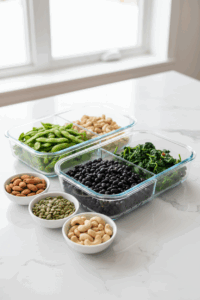
5-minute snack upgrades with magnesium-rich foods
Snacks are a low-effort place to build magnesium-rich foods into your routine because they don’t require full meal planning. Think in “add-ons” you can grab quickly. For instance, portion 1 oz (28 g) pumpkin seeds into small containers for the week. Or keep frozen edamame on hand for a microwave snack.
Fast snack ideas:
- Greek yogurt + 1 tbsp pumpkin seeds + honey drizzle.
- Apple slices + 2 tbsp nut butter + sprinkle of chopped almonds.
- Microwave edamame (1 cup) with lemon and pepper.
- Banana + 1 oz cashews for a no-prep combo.
These swaps work because they’re specific and repeatable. If you do one upgrade per day for a week, you’ve meaningfully improved your magnesium foods list without changing your whole lifestyle.
Simple meal combos for magnesium-rich foods list (breakfast, lunch, dinner)
Meals are where magnesium-rich foods can “stack” naturally—one ingredient at a time. Start with a base you already like (toast, bowl, salad, tacos), then add a magnesium-rich component.
Examples you can repeat:
- Breakfast: oatmeal topped with 1 oz almonds or 1 tbsp pumpkin seeds.
- Lunch: salad with ½ avocado and a side of ½ cup black beans.
- Dinner: grain bowl with 1 cup cooked spinach and ½ cup edamame.
If you meal prep, cook a big batch of beans and greens once and reuse them. You’ll get the benefit of magnesium-rich foods plus fiber and satiety—without relying on willpower every single day.
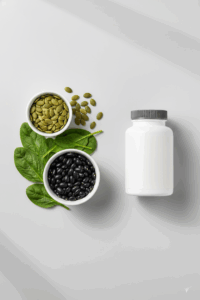
Food vs Supplements for magnesium-rich foods: What to know
If you’re already building a magnesium foods list, you may wonder whether supplements are necessary. Here’s the practical, food-first view.
When magnesium-rich foods are usually enough
For many people, consistently eating magnesium-rich foods is the simplest and safest place to start. Food sources come with supporting nutrients, and you’re less likely to overdo it. If your week includes nuts/seeds, beans, and greens most days, you’re already moving in the right direction.
A realistic “enough” pattern might look like:
- 1 oz (28 g) nuts/seeds most days,
- ½–1 cup beans a few times per week,
- 1 cup cooked greens several times per week.
If that feels big, start smaller: add one magnesium-rich food per day. After 2 weeks, you’ll likely notice it’s just part of your routine—like keeping eggs or yogurt stocked.
When to ask your clinician about magnesium-rich foods and supplements
There are times supplements may be discussed, but it’s smart to check with a clinician or pharmacist first—especially if you have kidney issues, are pregnant, or take certain medications. Magnesium supplements can affect digestion (some forms may cause diarrhea), and magnesium can interact with some medications by affecting absorption timing.
A simple example: if you take a medication that requires specific timing, your clinician may recommend spacing minerals apart. Also, if you have persistent symptoms (like ongoing cramps or fatigue), it’s worth evaluating the bigger picture—sleep, hydration, iron status, thyroid, vitamin D, and medication side effects. Supplements can be helpful for some people, but they’re not a shortcut around a low-quality diet. Start with magnesium-rich foods, then personalize from there.
Quick FAQs about magnesium-rich foods
To wrap up, here are the most common questions readers ask when building a magnesium foods list.
Can you get too much magnesium from food with magnesium-rich foods?
It’s uncommon to get “too much” magnesium from magnesium-rich foods alone because your kidneys typically help regulate normal dietary amounts. Most concerns about excess magnesium come from high-dose supplements, not from eating beans and spinach. If you have kidney disease or are on dialysis, ask your clinician before increasing magnesium significantly—food and supplements may be handled differently for you.
Do cooking and processing reduce magnesium-rich foods benefits?
Some processing can lower nutrient density, and boiling can cause minerals to leach into cooking water. But don’t let perfect be the enemy of good. Frozen spinach is still a solid magnesium-rich foods choice, and canned beans are convenient. If you want to minimize loss, use methods like sautéing, roasting, or steaming—and if you boil greens, use the liquid in soups.
What’s the easiest magnesium-rich food to start with?
For most people, the easiest start is a measured snack: 1 oz (28 g) pumpkin seeds or 1 oz almonds. They require zero cooking and fit into lunchboxes, desk drawers, and car snacks. If you prefer savory, frozen edamame is also quick—microwave 1 cup and season it.
Are magnesium-rich foods good for sleep?
Magnesium-rich foods are often included in sleep-friendly routines because magnesium supports normal nerve and muscle function. That said, sleep is multifactorial—light exposure, caffeine timing, alcohol, stress, and bedtime habits matter a lot. A simple, realistic approach is a balanced evening snack like yogurt with pumpkin seeds or a small piece of dark chocolate with almonds, while also keeping caffeine earlier in the day.
Tips & swaps for magnesium-rich foods
- Swap chips for 1 oz (28 g) pumpkin seeds 3x/week.
- Add ½ cup black beans to tacos, salads, or soups.
- Keep frozen spinach for quick sauté sides.
- Trade mayo-heavy spreads for ½ avocado on toast.
- Use edamame as a snack instead of crackers.
- Choose 70%+ dark chocolate, portioned to 1 oz (28 g).
CTA
Want a simple shopping list and “mix-and-match” meal ideas built around magnesium-rich foods? Save this post, pick 3 items from the magnesium foods list, and add them to your next grocery run—small changes add up fast.
Disclaimer: This content is for informational purposes only and is not a substitute for professional medical advice.

About Sarah Williams
We turn solid evidence into everyday habits Americans can actually do—plain English, cups/oz, grocery-aisle swaps, and routines that fit real life. Our editorial process: Experience—we road-test tips in real schedules…