Top Iron-Rich Foods to Support Anemia Naturally
Iron is one of the most essential nutrients for maintaining healthy energy levels, yet many Americans—especially women and people with...
Iron is one of the most essential nutrients for maintaining healthy energy levels, yet many Americans—especially women and people with higher activity levels—struggle to get enough from food alone. If you’ve been feeling unusually tired, cold, or light-headed, low iron may play a role. The good news: adding more iron-rich foods to your routine can make a meaningful difference. This guide highlights the top foods that support anemia naturally and shows you how to build simple, iron-friendly meals using everyday US groceries.
Why Iron Matters for Anemia
Understanding why iron plays such a central role makes it easier to prioritize the right foods. Iron supports the body’s ability to carry oxygen, and without enough of it, energy levels can drop noticeably.
👉 This pairs well with our Nutrient-Rich Nuts & Seeds: Top Health Benefits guide if you want the full picture on topics related to benefits.
How Iron Supports Healthy Red Blood Cells
Iron is a core component of hemoglobin, the protein in red blood cells responsible for transporting oxygen throughout the body. When you eat foods rich in iron—such as red meat, spinach, and lentils—your body uses that iron to build stronger, more efficient red blood cells. Even small changes matter; boosting your intake by just 2–3 mg per meal can help improve levels over time. For many people, especially women between 19–50, the recommended intake is around 18 mg per day. Eating both heme iron (from animal sources) and non-heme iron (from plants) helps you meet these needs more consistently.
👉 Want to go further? Our complete breakdown of Diabetes Superfoods: What to Eat for Better Blood Sugar walks you through managing blood sugar naturally step by step.
Common Signs of Low Iron Levels
While only a blood test can confirm iron deficiency, many early symptoms happen because your body is struggling to carry enough oxygen. Signs may include fatigue, pale skin, cold hands or feet, brittle nails, or shortness of breath when climbing stairs. Some people also notice cravings for ice or non-food items—called pica—which can appear when iron stores drop significantly. If you relate to multiple symptoms, increasing iron-rich foods may help while you speak with a healthcare provider about testing.
👉 For a deeper dive into topics related to gluten, check out: Gluten-Free Sugar-Free Banana Bread (Low-Carb) — it’s packed with practical tips.
Top Iron-Rich Foods to Add to Your Diet
Now that you know why iron matters, the next step is choosing the right foods. These options are widely available at US grocery stores, budget-friendly, and easy to prepare.
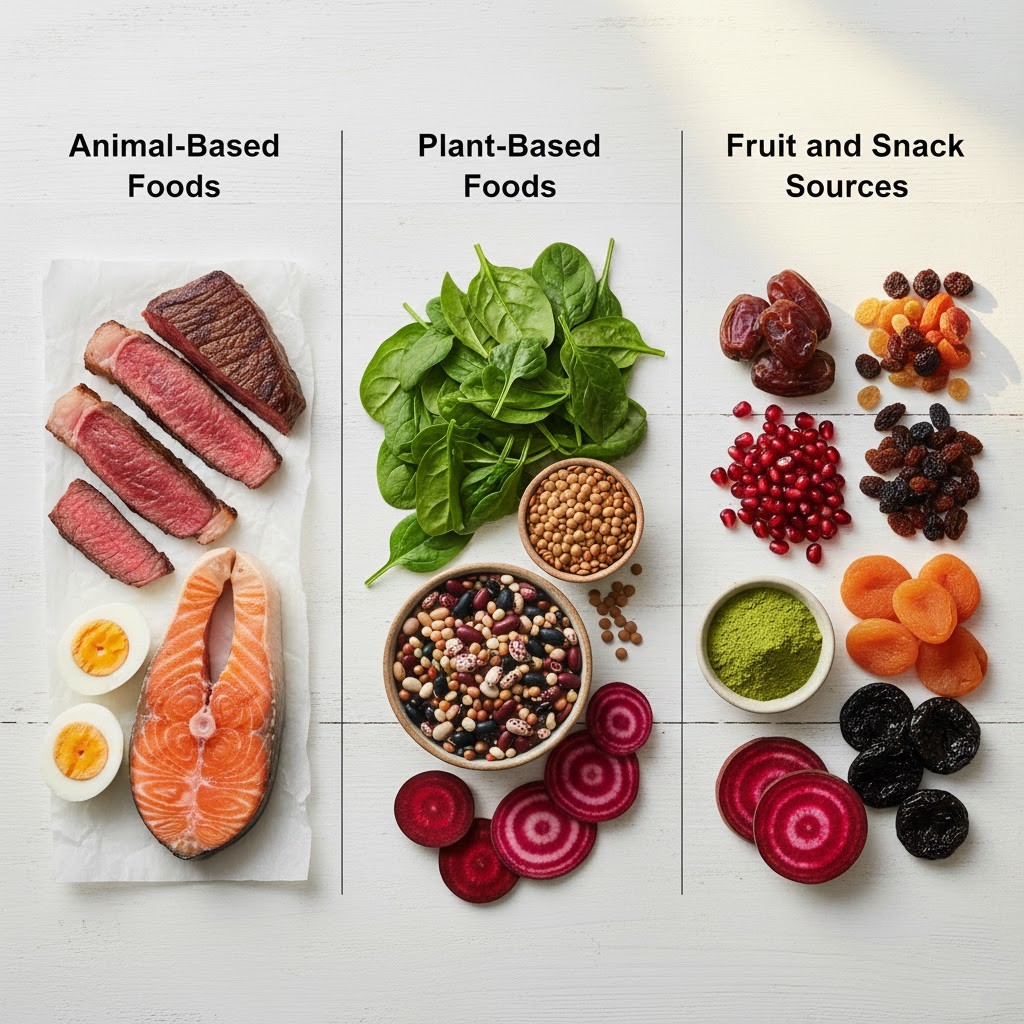
Animal-Based Foods (red meat, eggs, salmon)
Animal sources provide heme iron, which the body absorbs more efficiently—often at a rate of 15–35%, compared to plant sources at 2–20%. Lean red meat remains one of the most concentrated sources, offering around 2 mg of iron per 3-oz serving. Eggs are another simple option, giving about 1 mg of iron per two eggs and pairing well with spinach or beans for a balanced meal. Salmon, while best known for its omega-3s, also offers iron along with vitamin B12, supporting overall energy production. Adding one or two servings of animal-based iron sources per week can help boost total iron intake significantly.
Plant-Based Foods (spinach, lentils, beans, moringa, beetroot)
Plant foods are excellent for building daily iron intake, especially when combined strategically. For example, 1 cup of cooked lentils provides nearly 6.5 mg of iron, while beans add 3–4 mg per cup depending on the variety. Spinach, whether sautéed or blended into smoothies, offers about 3 mg per ½ cup cooked. Moringa powder, a popular natural supplement, is concentrated enough that 1 tbsp can provide up to 2 mg. Beetroot adds antioxidants and small amounts of iron while supporting better circulation. These foods are budget-friendly and easy to find in canned, frozen, or dried options.
Fruit and Snack Sources (dates, raisins, pomegranate, dry fruits)
Fruits can be more than a sweet treat—they can also support healthy iron levels. Raisins contain around 1.5 mg per ¼ cup, making them a simple addition to oatmeal or yogurt. Dates offer potassium and about 0.3 mg of iron per piece, making them ideal for snack plates or energy bites. Pomegranates don’t contain high iron levels themselves but can support blood health through antioxidants. Dry fruit mixes often include iron-rich nuts and seeds, creating a convenient option for busy days. Adding just ¼–½ cup of fruit-based iron sources can help fill nutritional gaps.
How to Boost Iron Absorption
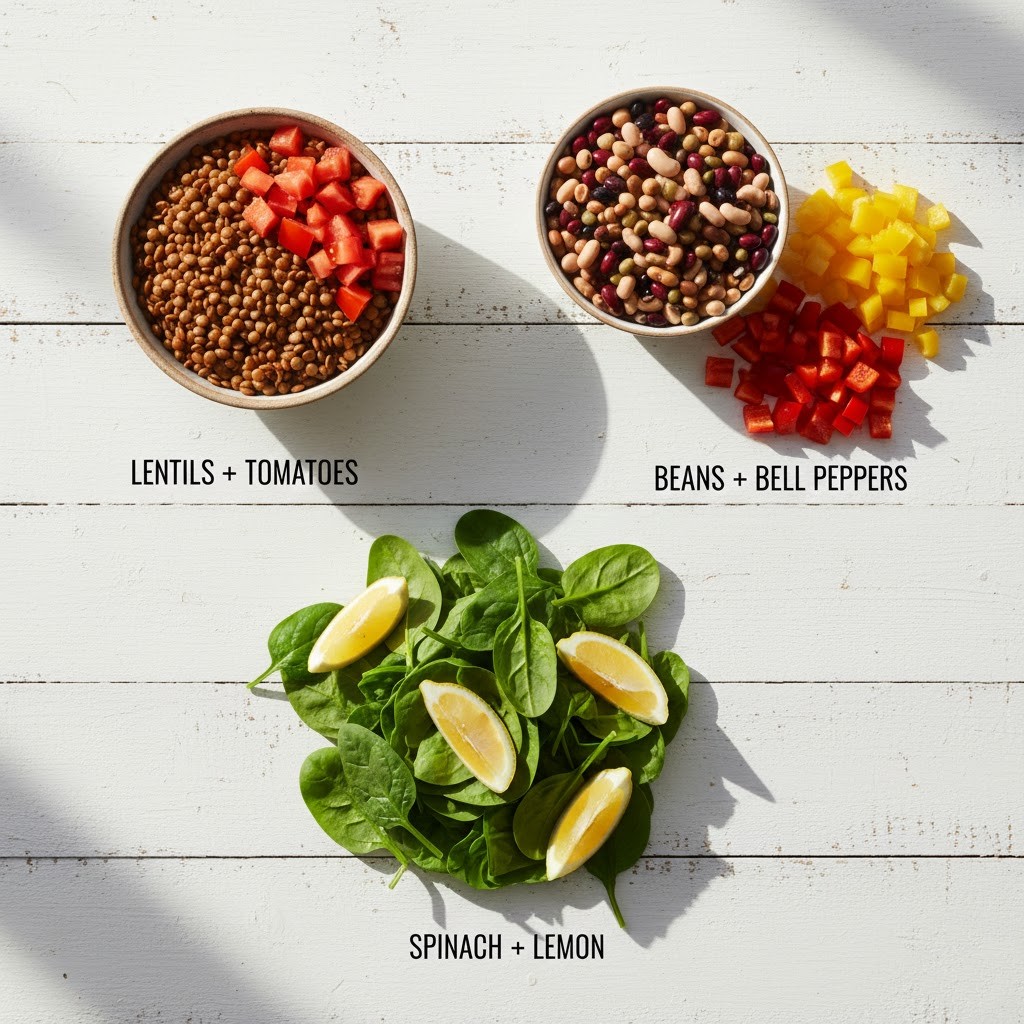
After choosing iron-rich foods, the next step is maximizing absorption. Only a portion of dietary iron converts into usable iron, so pairing foods wisely matters.
Pairing Iron with Vitamin C–Rich Foods
Vitamin C can increase non-heme iron absorption by up to four times, making it one of the simplest strategies to support iron levels naturally. A glass of orange juice, a handful of strawberries, or ½ cup of bell peppers can make a meaningful difference. For instance, pairing lentils with tomatoes or topping spinach with lemon juice boosts absorption significantly. Even adding 1–2 tbsp of salsa or citrus dressing at meals can improve how much iron your body uses.
Habits and Foods That May Inhibit Absorption
Some common foods and beverages can reduce iron absorption if consumed at the same time. Coffee and tea—because of tannins—may reduce absorption by up to 60% when drank with iron-rich meals. Calcium supplements or dairy products compete for absorption as well, so separating them by about two hours may help. High-fiber meals can also slow absorption slightly. You don’t need to eliminate these foods—just adjust timing so your iron-rich meals can work more effectively.
Simple Meal Ideas for an Iron-Friendly Diet
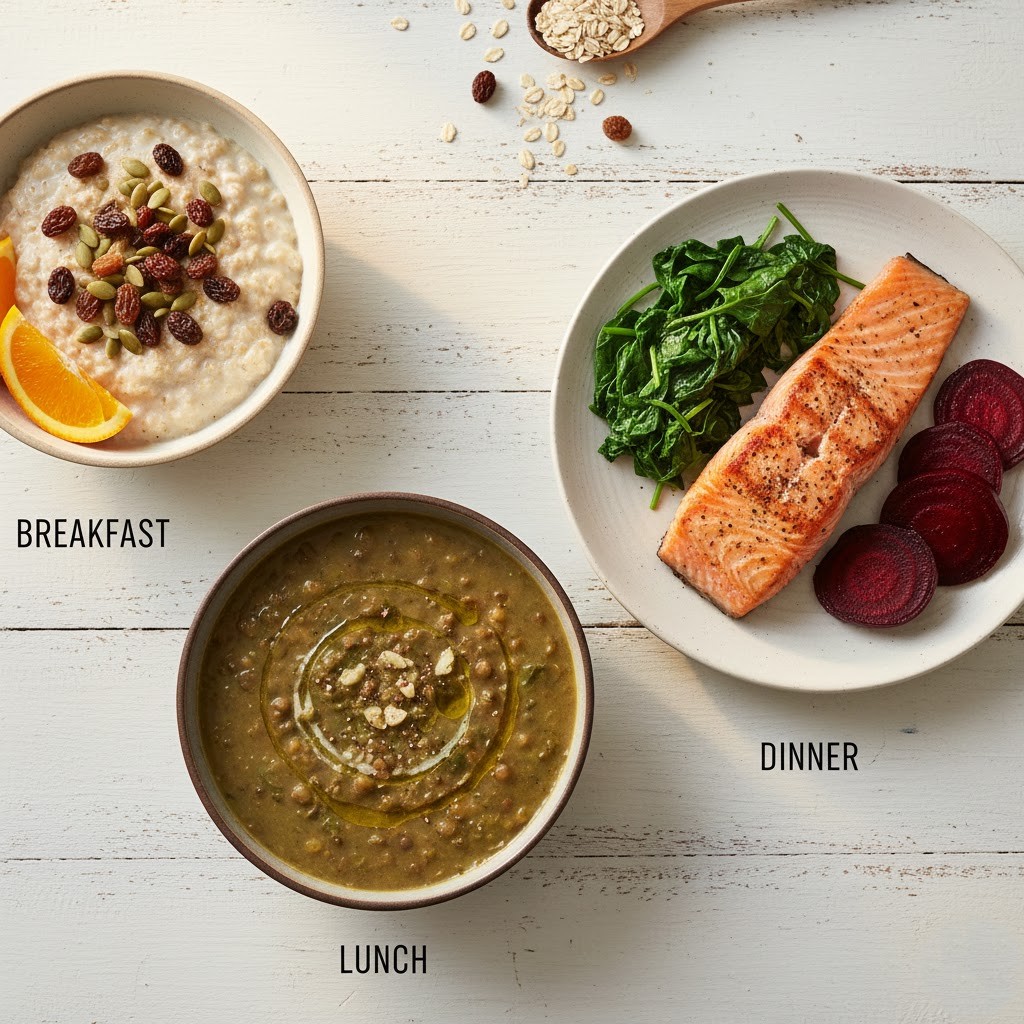
Once you understand the basics, building daily meals becomes easier. These ideas fit well into busy American routines and rely on ingredients you can find at any major grocery store.
Quick Breakfast, Lunch, and Dinner Suggestions
A simple breakfast might include oatmeal topped with raisins, pumpkin seeds, and a splash of orange juice on the side—giving you both iron and vitamin C in one meal. For lunch, try a spinach and lentil soup providing around 8–10 mg of iron per bowl. Dinner options include a 4-oz serving of grilled salmon (about 1 mg iron), paired with sautéed spinach and roasted beets. Even swapping in canned beans or lentils can make meals faster while keeping iron levels strong.
Easy Ways to Include Iron-Rich Snacks in Your Day
Snacks are one of the easiest ways to increase iron intake without major changes to your routine. A small handful of mixed dry fruits can offer 1–2 mg of iron. Energy bites made from oats, dates, and seeds can supply steady iron throughout the week. Smoothies blended with spinach and pomegranate juice taste refreshing while supporting red blood cell health. Even ½ cup of beans added to a snack plate offers around 2 mg of iron. These small additions quickly add up when eaten consistently.
When to Seek Professional Guidance
While diet helps many people improve iron levels naturally, some situations call for additional support.
Who May Need Testing or Supplements
Individuals with persistent fatigue, heavy menstrual cycles, pregnancy, digestive issues, or vegetarian/vegan diets may benefit from iron testing. A simple blood test measuring ferritin and hemoglobin can confirm whether levels are low. If levels are significantly below normal, a healthcare provider may recommend an iron supplement. Many supplements provide between 18–65 mg of elemental iron, though dosage varies widely based on need.
Safe Iron Intake Considerations
While getting iron from food is generally safe, supplements should be monitored. Taking more than recommended can cause digestive discomfort or increase iron storage too rapidly. Spread out supplements or high-iron meals to avoid stomach upset, and avoid pairing them with coffee or dairy. Children should never take iron supplements without medical supervision due to safety risks. Long-term monitoring ensures healthy improvement without complications.
Tips & Swaps
- Add lemon juice to iron-rich meals for better absorption.
- Use canned beans for quick iron boosts.
- Swap spinach into pasta, soups, or omelets.
- Keep raisins or dates in your bag for simple iron-rich snacks.
- Choose fortified cereals with at least 8 mg iron per serving.
FAQs
- What foods are highest in iron for anemia?
Red meat, lentils, spinach, beans, and fortified cereals are among the highest. A single serving of lentils provides about 6–7 mg of iron, while spinach offers about 3 mg per cooked ½ cup. Combining plant and animal sources helps increase total daily intake naturally. - Can you get enough iron from plant-based foods alone?
Yes, many people meet their needs through plant foods like lentils, beans, spinach, and moringa powder. However, plant-based iron absorbs at a lower rate, so pairing foods with vitamin C—such as citrus or tomatoes—helps significantly improve absorption. - How long does it take to improve iron levels through food?
For mild deficiencies, improvements may occur within 4–6 weeks of consistent changes. More severe deficiencies may require supplements, which should always be guided by a healthcare provider. Regular testing ensures healthier increases over time. - Does cooking method affect iron content?
Yes. Cooking in cast-iron pans can add up to 1–2 mg of iron per meal, especially when preparing acidic foods like tomato sauce. Overcooking vegetables may reduce certain nutrients, so light sautéing or steaming is often best. - Should I avoid coffee or tea when trying to increase iron?
Not entirely—just avoid drinking them with meals. Tannins can reduce iron absorption by as much as 60%. Enjoy your coffee at least one hour before or after meals for best results.
Want more simple, nutrition-focused guides like this? Explore our wellness articles to build healthier habits without overcomplicating your daily routine.
Disclaimer: This content is for informational purposes only and is not a substitute for professional medical advice.

About Jane Smith
We turn solid evidence into everyday habits Americans can actually do—plain English, cups/oz, grocery-aisle swaps, and routines that fit real life. Our editorial process: Experience—we road-test tips in real schedules…