How to Increase GLP-1 Naturally: The Food and Habit Guide
If you've been searching how to increase GLP-1 naturally, this guide skips the vague food lists. It gives you a Protein + Fiber + Ferment meal framework, a ranked food list by job, and a 3-day meal plan built around what actually creates a stronger satiety signal.
- How to Increase GLP-1 Naturally Starts With Understanding What GLP-1 Does
- How to Increase GLP-1 Naturally With the 3 Biggest Food Levers
- The GLP-1 Meal Architecture: Protein Trigger + Fiber Amplifier + Ferment Support
- Best Foods to Increase GLP-1 Naturally, Ranked by Job
- Habits That Help Increase GLP-1 Beyond Food
- A 3-Day Natural GLP-1 Meal Plan You Can Actually Use
- Are Natural GLP-1 Strategies Enough for Weight Loss?
- Frequently Asked Questions
- The Bottom Line
If you’re a busy woman in your 20s–40s trying to eat healthier but still feel hungry too soon after meals, you’ve probably searched how to increase GLP-1 naturally—hoping for something that actually works in real life.
The problem? Most advice either goes straight into medication talk or throws out a list of “GLP-1 foods” with no clear way to turn them into meals you can realistically cook on a busy weekday. So you end up understanding what to eat… but not how to make it work consistently.
A better approach is simpler: focus on building meals that actually keep you full and reduce cravings. In this guide, you’ll learn what GLP-1 does, which everyday foods and habits support it, and how to use a practical Protein + Fiber + Ferment framework you can repeat even on your busiest days.
Quick Takeaways:
- GLP-1 is a gut hormone that helps with fullness, slower stomach emptying, and blood sugar control after meals.
- The strongest natural levers are protein, fermentable fiber, and a healthier gut environment.
- You do not need a miracle food. You need a better meal structure.
- A protein-and-fiber breakfast usually works better than a carb-heavy breakfast that looks healthy on paper.
- Natural support can help appetite regulation, but it does not equal a prescription GLP-1 medication.
How to Increase GLP-1 Naturally Starts With Understanding What GLP-1 Does
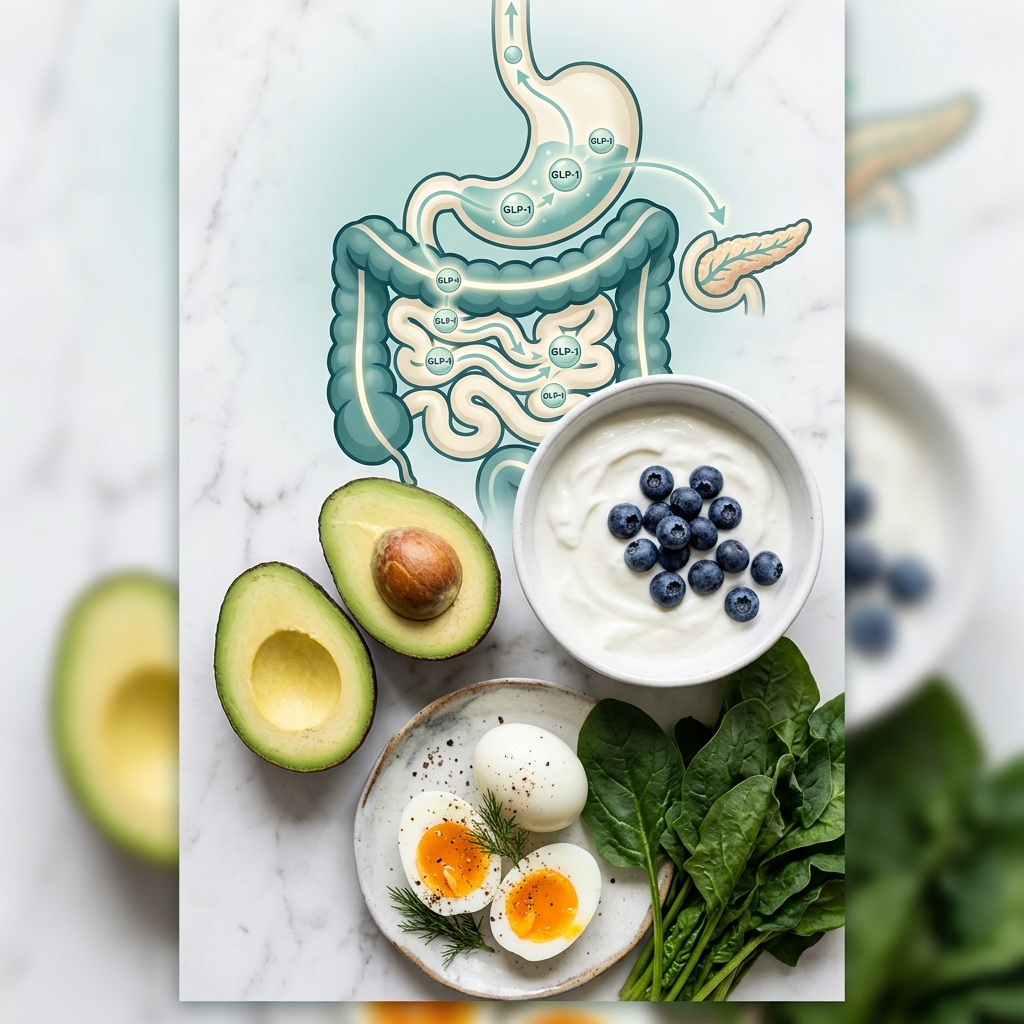
GLP-1 stands for glucagon-like peptide-1. It is a hormone released from your intestine after you eat. In plain English, it helps your body deal with a meal. It increases fullness, slows down how quickly food leaves the stomach, and supports the insulin response when blood sugar rises.
A 2024 review in the American Journal of Clinical Nutrition described GLP-1 as one of the main meal-responsive hormones linking what you eat with appetite and glucose control. That matters because it shifts the conversation away from hype and back to meal quality.
What I think gets lost online is this: yes, you can support GLP-1 naturally, but supporting your own GLP-1 signaling is not the same thing as getting the effect of a prescription GLP-1 drug. Food can help you feel fuller. It can make blood sugar steadier. It can reduce the “I need a snack now” feeling after weak meals. But it should not be sold as a one-to-one replacement for medication.
That distinction is useful, not limiting. It keeps you focused on what food actually does well: building steadier appetite control, better meal satisfaction, and a gut environment that works with you instead of against you.
How to Increase GLP-1 Naturally With the 3 Biggest Food Levers
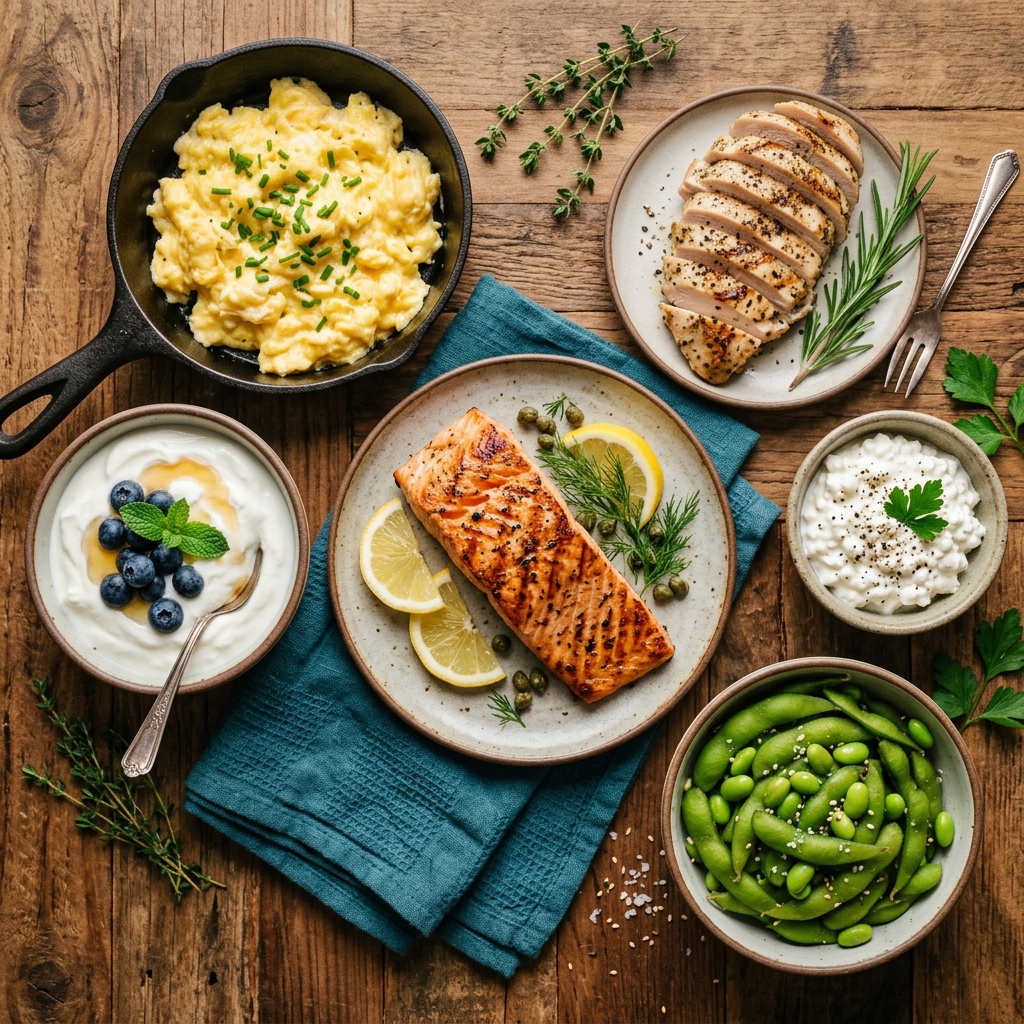
If you want the short answer to how to increase GLP-1 naturally, it comes down to three things: protein, fermentable fiber, and gut-supportive foods. Most content mentions these fast and moves on. The useful part is knowing what role each one plays.
1. Protein Is the Trigger
Protein is one of the strongest meal-level triggers for fullness. It is also one of the easiest things to under-eat, especially at breakfast. I see this all the time in “healthy” eating patterns that are really just coffee, toast, fruit, and a lot of hunger by 10:30 a.m.
In real life, a breakfast built around Greek yogurt, eggs, cottage cheese, tofu, or a protein smoothie usually lands very differently than cereal or toast alone. You feel the difference fast. Less grazing. Less mental noise around food. Better staying power.
Good protein anchors include:
- Eggs
- Greek yogurt
- Cottage cheese
- Salmon or sardines
- Chicken or turkey
- Tofu or tempeh
- Edamame
- Bean-based meals with enough total protein to matter
When my own breakfast is weak on protein, the rest of the day gets harder. That pattern is so consistent that I do not really think of protein as a “fitness” thing anymore. I think of it as an appetite-control thing.
If mornings are chaotic, a clean protein powder can be a practical bridge. I would still treat whole food as the default, but a realistic backup is better than another skipped meal or a muffin that buys you 45 minutes of fullness.
2. Fermentable and Viscous Fiber Is the Amplifier
Protein starts the fullness signal. Fiber helps it last.
Viscous fiber slows digestion. Fermentable fiber feeds gut bacteria that produce short-chain fatty acids, or SCFAs. Those compounds are part of the reason higher-fiber eating often feels steadier and more satisfying over time, not just “better for digestion.”
The foods that matter most here are simple:
- Oats
- Chia seeds
- Flax
- Lentils
- Beans
- Avocado
- Berries
- Green bananas
- Cooked-and-cooled starches that add resistant starch
This is where I think a lot of people underestimate the basics. They chase exotic foods while ignoring lentils, oats, and beans. But those basics are exactly what make meals heavier in a good way. Not heavy like sluggish. Heavy like satisfying.
If you want a practical rule, use this one: every meal should contain either a real fiber source or a good reason why it doesn’t. That one shift changes a lot.
3. Gut Microbiome Support Is the Multiplier
Your gut microbiome is part of the appetite story whether you think about it or not.
When bacteria ferment fiber, they produce metabolites that influence how your gut communicates with the rest of your body. That is one reason fermented foods keep showing up in better appetite and metabolic-health conversations. A 2021 randomized trial published in Cell) found that a high-fermented-food diet increased microbiome diversity and lowered several inflammatory markers.
You do not need to force six servings of fermented food a day for this to be useful. A more realistic version looks like:
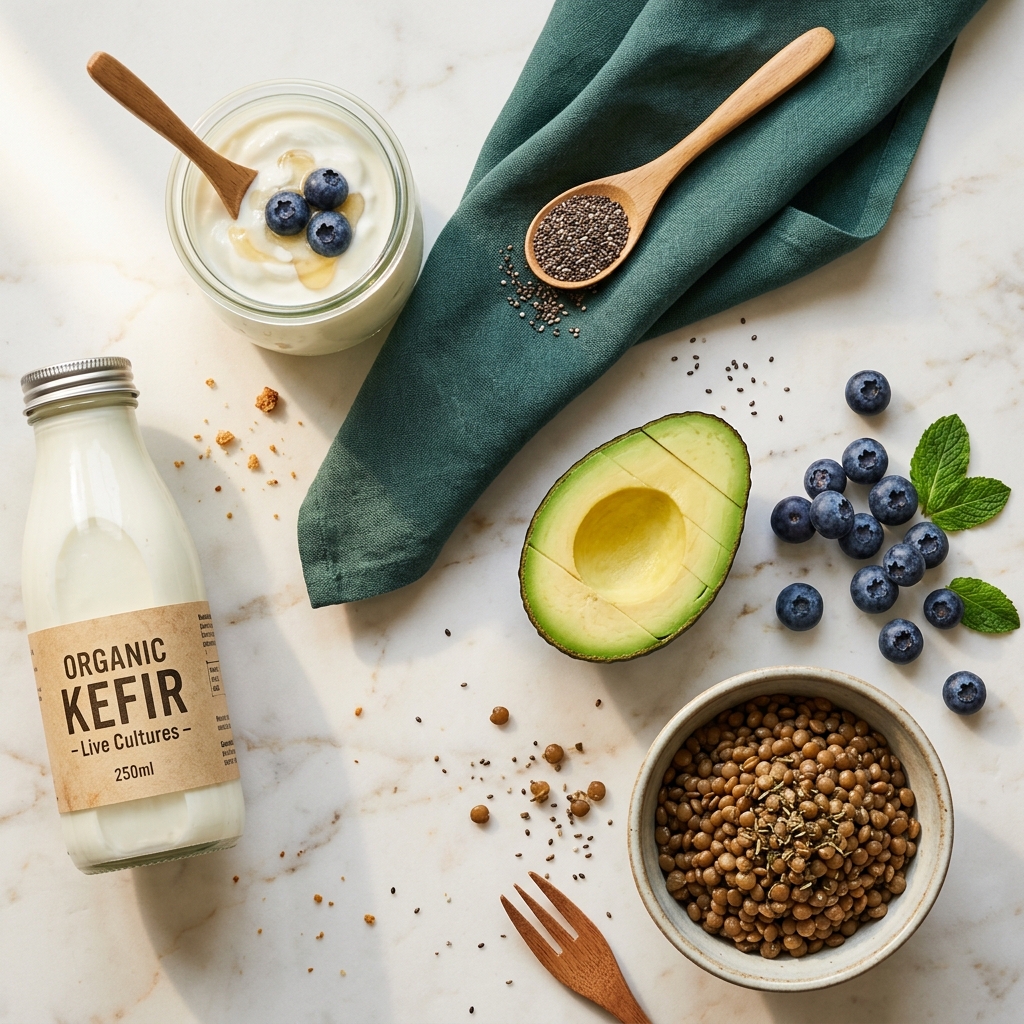
- Kefir in a smoothie
- Plain yogurt with breakfast
- Kimchi with eggs or rice bowls
- Sauerkraut with lunch or dinner
- Tempeh in a plant-forward dinner
What I have found personally is that small, consistent fermented-food habits work better than trying to “go all in” for three days and then forgetting about it for two weeks. A spoonful of sauerkraut most days will beat a huge gut-health reset that you never repeat.
If you want the longer version of that side of the puzzle, our probiotic foods list and gut health tips for women articles go deeper.
The GLP-1 Meal Architecture: Protein Trigger + Fiber Amplifier + Ferment Support
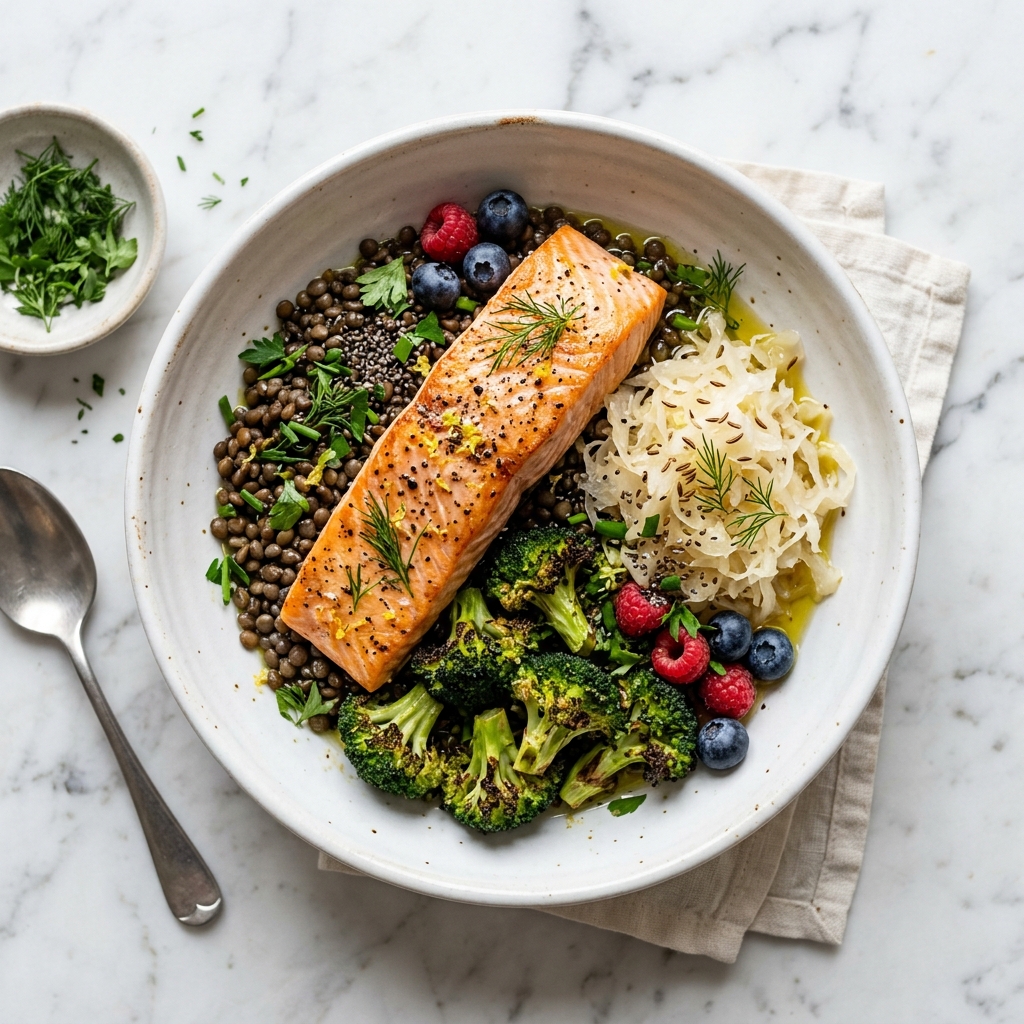
This is the real differentiator. Most articles give you foods. I would rather give you a system.
Here is the GLP-1 Meal Architecture:
- Protein Trigger: start with a real protein source.
- Fiber Amplifier: add a viscous or fermentable fiber source.
- Ferment Support: add a fermented food or at least a microbiome-friendly plant element.
That is it. That is the framework.
And here’s why it works better than random food lists: isolated foods are weaker than structured meals. A spoonful of chia seeds is not the point. Greek yogurt plus chia plus berries is the point. A bowl of rice is not the point. Salmon plus lentils plus greens plus sauerkraut is the point.
Breakfasts That Actually Keep You Full
Breakfast is where people usually lose the plot. It looks healthy, but it does not hold.
Better options:
- Plain Greek yogurt + chia seeds + berries + walnuts
- Eggs + avocado + black beans + salsa
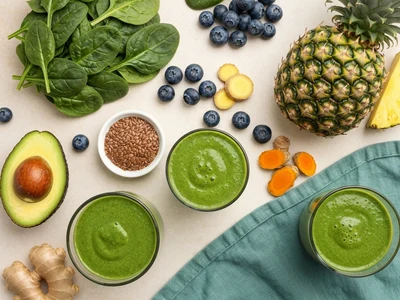
- Kefir smoothie with berries, spinach, flax, and protein
- Oats with chia, then topped with yogurt and berries
These meals tend to work because they do more than check a health box. They digest more slowly and give you a clearer satiety signal. That means fewer snack cravings and less rebound hunger.
I also think breakfast is where pantry quality matters most. If you are trying to build this kind of eating pattern consistently, Thrive Market is useful because it makes the basic staples easier to keep around: chia, lentils, oats, beans, nuts, seeds, and better pantry options overall. Convenience is not a small thing here. It is often the reason a good plan survives real life.
Lunch and Dinner Plates That Support Natural GLP-1
At lunch and dinner, the formula stays the same:
- Salmon bowl with lentils, greens, olive oil, and sauerkraut
- Chicken and quinoa salad with chickpeas and crunchy vegetables
- Tofu or tempeh stir-fry with edamame and cooled rice
- Bean-and-vegetable soup with a fermented side
- Ground turkey skillet with black beans, avocado, and slaw
The goal is not to make every meal look impressive. The goal is to stop eating meals that are mostly refined starch with a token protein source. That is the meal pattern that usually creates the two-hour hunger rebound.
For more examples built around that logic, our anti-inflammatory diet for weight loss and low glycemic index foods guides work well together.
The Biggest Meal Mistakes That Work Against GLP-1
These are the common ones:
- Liquid-carb breakfasts that digest too fast
- Snacks with barely any protein
- Meals built around refined carbs with very little fiber
- Ultra-processed “healthy” foods that do not satisfy
- Grazing all day instead of eating real meals
If your appetite feels chaotic, your meals usually are too. That is not a moral judgment. It is just a pattern worth noticing.
Best Foods to Increase GLP-1 Naturally, Ranked by Job
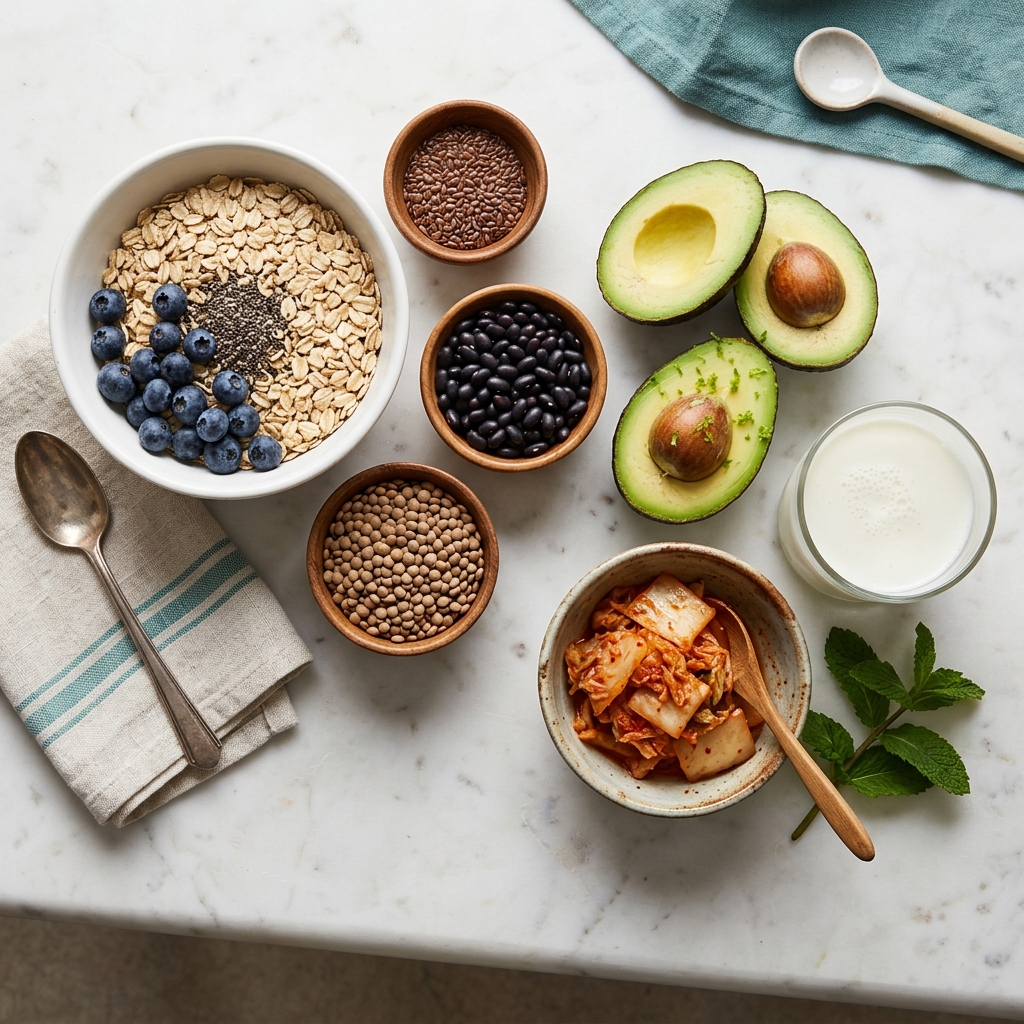
I do not love giant “top foods” lists unless each food has a role. These do.
Best Protein Foods for GLP-1 Support
These are your anchors:
- Greek yogurt
- Eggs
- Salmon and other fish
- Chicken or turkey
- Cottage cheese
- Tofu and tempeh
- Edamame
Best Fiber Foods for GLP-1 Support
These are the appetite extenders:
- Lentils
- Black beans
- Chickpeas
- Chia seeds
- Oats
- Flax
- Avocado
- Berries
- Green bananas
Best Gut-Support Foods That Help the Signal Last
These help the surrounding environment:
- Kefir
- Plain yogurt with live cultures
- Kimchi
- Sauerkraut
- Tempeh
- Polyphenol-rich plants like berries, cocoa, herbs, and colorful vegetables
Here is the simple skimmer table:
| Food | Main Job | Best Time to Use It | Easy Pairing |
|---|---|---|---|
| Greek yogurt | Protein trigger | Breakfast or snack | Chia + berries |
| Eggs | Protein trigger | Breakfast or lunch | Avocado + beans |
| Lentils | Fiber amplifier | Lunch or dinner | Salmon or chicken |
| Chia seeds | Fiber amplifier | Breakfast | Yogurt or oats |
| Oats | Fiber amplifier | Breakfast | Yogurt + berries |
| Kefir | Gut support | Breakfast or smoothie | Flax + berries |
| Kimchi | Gut support | Lunch or dinner | Rice bowls or eggs |
| Sauerkraut | Gut support | Lunch or dinner | Chicken or sausage plate |
| Avocado | Satiety support | Any meal | Eggs, beans, or salmon |
| Berries | Fiber + polyphenols | Breakfast or snack | Yogurt or kefir |
If you eat more plant-based, our plant based protein sources guide can help fill out the protein side without pushing you toward snack foods that look healthier than they behave.
Habits That Help Increase GLP-1 Beyond Food
Food does most of the work, but the habits around meals still matter.
Eat Meals in a Way That Slows the Spike
Start meals with protein, vegetables, or fiber-rich foods when you can. Avoid building meals around naked carbs like crackers, toast, sweet drinks, or low-protein snack plates. Add acid, herbs, or fermented sides where they fit naturally.
That sounds small, but it changes how a meal lands. In my experience, eating protein and fiber first is one of those changes that seems too basic to matter until you do it for a week and realize you are not prowling the kitchen two hours later.
Walk After Meals
You do not need a hard workout. A short walk after a meal is enough to support better glucose handling, which helps the same overall goal: steadier energy and less rebound hunger.
Protect Sleep and Meal Rhythm
Poor sleep makes hunger louder. Irregular eating tends to do the same. You do not need to turn that into a biohacking project. Just notice the pattern: when sleep is bad and meals are random, appetite usually feels harder to manage.
The practical move is simple. Build regular meals first. Then let movement and sleep support what the meals are already doing.
A 3-Day Natural GLP-1 Meal Plan You Can Actually Use
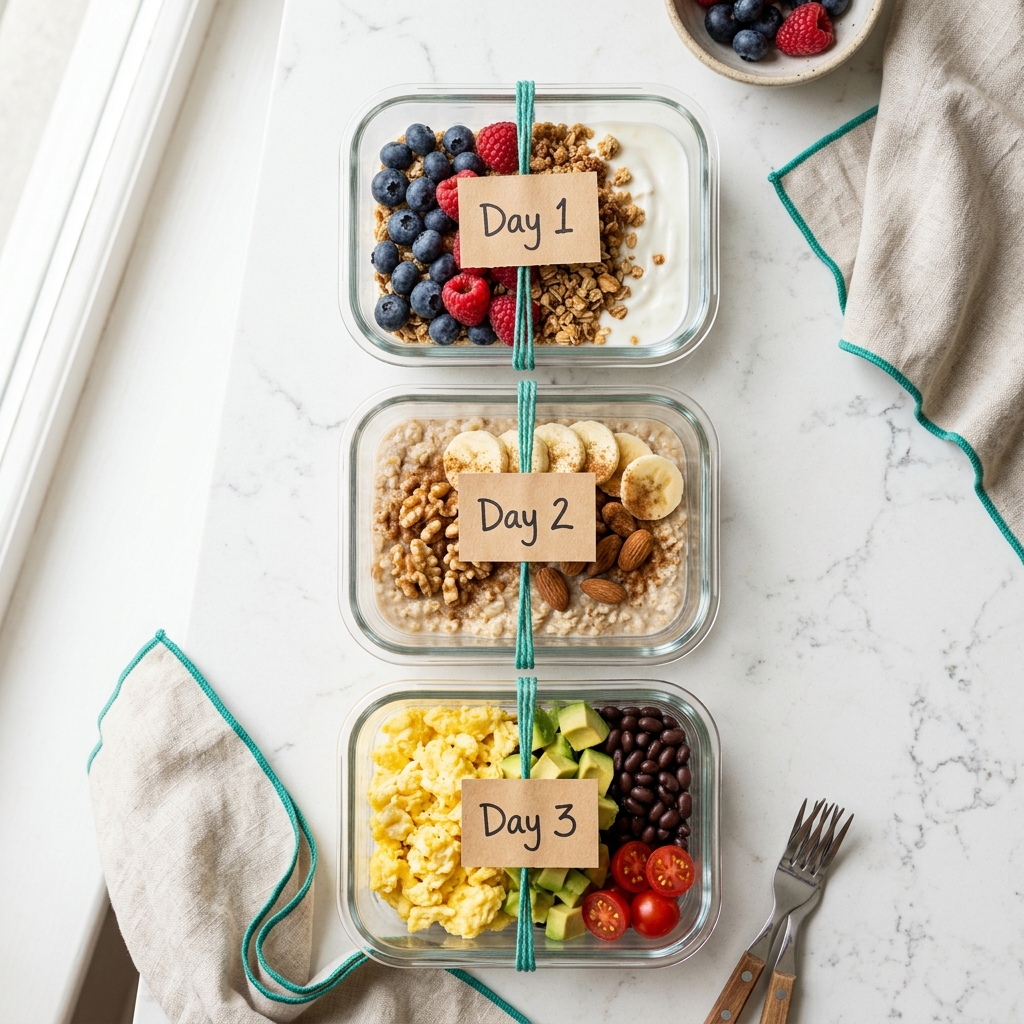
You do not need a 30-day reset to start. Three usable days is enough.
Day 1: Easy High-Protein, High-Fiber Start
- Breakfast: Greek yogurt, chia seeds, blueberries, walnuts
- Lunch: Chicken quinoa bowl with chickpeas, cucumbers, greens, olive oil
- Snack: Kefir with cinnamon
- Dinner: Salmon, lentils, roasted broccoli, sauerkraut
Day 2: Budget-Friendly GLP-1 Support
- Breakfast: Oats with flax, peanut butter, and plain yogurt
- Lunch: Lentil soup with a side salad and boiled eggs
- Snack: Cottage cheese with berries
- Dinner: Black bean turkey skillet with avocado and slaw
Day 3: Anti-Inflammatory GLP-1 Plate
- Breakfast: Eggs, avocado, black beans, salsa
- Lunch: Sardine or salmon salad with white beans and greens
- Snack: Kefir smoothie with spinach and berries
- Dinner: Tempeh stir-fry with edamame, cooled rice, and kimchi
That is the pattern. No perfect foods. No gimmicks. Just meals that hold better than the usual breakfast bar, sandwich, snack cycle.
I would keep supplements secondary here. If the food basics are not in place yet, supplements usually just make people feel like they are “working on it” without fixing the actual problem. Build the plate first. Then layer tools on top only if they are truly helping.
Are Natural GLP-1 Strategies Enough for Weight Loss?
This is where the tone needs to stay honest.
Natural GLP-1 support can absolutely help with weight loss by making meals more satisfying, reducing snack-driven overeating, and improving blood sugar stability. For some people, that is enough to create steady progress.
But natural strategies cannot honestly promise medication-level appetite suppression, rapid weight loss, or disease treatment. If a piece of content implies that chia seeds, kimchi, and one supplement are basically the same as a prescription GLP-1 drug, that content is trying to win attention, not trust.
The useful middle ground is simple: use food and lifestyle to improve the signal your body already has. Build better meals. Get fuller. Make appetite feel less chaotic.
It also makes sense to talk with a healthcare professional sooner if:
- You have type 2 diabetes or prediabetes
- You have significant obesity with other health concerns
- You have digestive symptoms that make higher-fiber eating difficult
- You take medications that may interact with supplements
- You are deciding whether prescription treatment belongs in the conversation
Natural support works best when it is honest about its role. It is a strong foundation. It is not a fantasy shortcut.
Frequently Asked Questions
What foods naturally trigger GLP-1?
Protein-rich foods, fiber-rich foods, and fermented foods are the most useful categories. The better move is combining them in one meal instead of chasing one “superfood.” Greek yogurt with chia and berries is a much stronger setup than any one of those foods by itself.
Can you increase GLP-1 without medication?
Yes, to a degree. Food and lifestyle can support your body’s own GLP-1 signaling, especially through protein, fermentable fiber, and gut-supportive eating. What they cannot do is replicate the strength of prescription GLP-1 receptor agonists.
Does protein trigger GLP-1 release?
Yes. Protein is one of the strongest meal-based satiety triggers, which is one reason protein-forward meals usually hold better than low-protein meals built around refined carbohydrates.
How does fiber increase GLP-1 naturally?
Fermentable fiber feeds gut bacteria that produce short-chain fatty acids. Those compounds are part of the signaling pathway associated with GLP-1 release and appetite regulation. That is one reason beans, lentils, oats, chia, and flax are so useful.
What is the best breakfast to increase GLP-1 naturally?
A breakfast with protein and fiber is the strongest place to start. Greek yogurt with chia and berries, eggs with avocado and beans, or a kefir smoothie with flax are all better bets than a carb-heavy breakfast with very little protein.
What is the fastest way to support GLP-1 naturally?
Upgrade one meal today using the Protein + Fiber + Ferment structure. You do not need a full reset. You need one better meal that leaves you fuller than the version you usually eat.
The Bottom Line
If you want to know how to increase GLP-1 naturally, stop hunting for a single magic food. Build better meals instead.
The most useful natural strategy is simple: anchor meals with protein, amplify them with fermentable fiber, and support the environment with fermented or microbiome-friendly foods. That combination gives your body a better chance to produce a stronger satiety signal and makes appetite feel less like a fight.
If you want to go deeper, start with fibermaxxing benefits for the fiber side, then move to probiotic foods list for the microbiome side.
And if you need help making the system easier on busy days, BioTRUST is a reasonable protein bridge when breakfast keeps falling apart. I still think food comes first. But a cleaner backup is better than another low-protein start that leaves you hungry all morning.

About Jane Smith
We turn solid evidence into everyday habits Americans can actually do—plain English, cups/oz, grocery-aisle swaps, and routines that fit real life. Our editorial process: Experience—we road-test tips in real schedules…