Top High-Collagen Foods for Healthy Skin & Joints
Collagen plays a major role in how your skin feels, how your joints move, and how your body stays strong...
Collagen plays a major role in how your skin feels, how your joints move, and how your body stays strong as you age. While supplements are popular, many people prefer getting collagen—or the nutrients that support it—directly from whole foods. The good news is that several budget-friendly ingredients available in US grocery stores can help your body maintain healthy collagen levels. Below, you’ll find a practical, food-focused guide to the best high-collagen foods and how to use them in everyday meals.
Why Collagen Matters for Everyday Wellness
As you explore foods that naturally support collagen, it’s helpful to understand why this protein is so essential. Collagen affects everything from the elasticity of your skin to the smoothness of your joint movement.
👉 Want to go further? Our complete breakdown of Vitamin C–Rich Foods for Everyday Wellness walks you through topics related to everyday step by step.
How Collagen Supports Skin, Joints, and Overall Strength
Collagen is the most abundant protein in the human body, making up roughly 30% of total protein content. It helps your skin stay firm, cushions your joints, and supports connective tissues like tendons and ligaments. For example, type I collagen—found in skin and bone—helps maintain firmness, while type II collagen is more joint-focused. When collagen declines, people may notice stiffness after long periods of sitting or reduced skin elasticity. Consuming collagen-rich foods can support your body’s natural production and maintenance of this important protein.
👉 This pairs well with our Nutrient-Rich Nuts & Seeds: Top Health Benefits guide if you want the full picture on topics related to benefits.
Common Lifestyle Factors That Lower Collagen Levels
Several everyday habits can contribute to declining collagen. Excess sun exposure, smoking, chronic stress, and diets low in antioxidants all speed up collagen breakdown. Even natural aging reduces collagen by about 1% per year after your mid-20s. High-sugar diets can also interfere with collagen repair through a process called glycation. Being mindful of these factors—and pairing awareness with nutrient-rich foods—can help your body maintain healthier collagen levels over time.
👉 If you’re also working on topics related to inflammatory, our detailed guide on 15 Easy Anti-Inflammatory Meals for Weeknights covers exactly what you need.
Animal-Based Foods Naturally High in Collagen

Now that you know why collagen is essential, let’s explore foods that deliver it directly. These options are common in US grocery stores and often budget-friendly.
Gelatin and Beef Tendon as Direct Collagen Sources
Gelatin is essentially cooked collagen and can be used in everyday recipes such as homemade jello, soups, or smoothies. One tablespoon of powdered gelatin contains around 6 grams of protein, most of it collagen. Beef tendon, while less common, is rich in type I collagen and becomes soft and flavorful when slow-cooked. Asian grocery stores or specialty butchers often carry tendon for just a few dollars per pound, making it a cost-effective option for collagen-focused meals.
Bone Broth for a Warm, Nutrient-Dense Option
Bone broth has become popular because it provides collagen along with minerals like calcium and magnesium. Simmering chicken or beef bones for 12–24 hours extracts collagen, which forms a gelatin-rich texture when cooled. Many grocery stores now sell ready-made bone broth in cartons or frozen pouches, usually containing 9–12 grams of protein per cup. Drinking it warm or using it as a soup base is an easy way to support your collagen intake.
Fruits That Help Your Body Make More Collagen

Animal foods offer collagen directly, but certain fruits help your body produce more of it. Most rely on vitamin C, a nutrient essential for collagen synthesis.
Citrus and Kiwi for Vitamin C Support
Oranges, lemons, and limes are loaded with vitamin C, which your body needs to convert amino acids into collagen. One medium orange supplies about 70 mg of vitamin C—nearly your entire daily requirement. Kiwi contains even more, averaging around 90 mg per fruit. Adding citrus slices to water, blending kiwi into smoothies, or squeezing lemon over salads are simple ways to help your body build collagen more efficiently.
Strawberries as an Antioxidant-Rich Choice
Strawberries provide a powerful mix of vitamin C and antioxidants that help protect existing collagen from oxidative stress. One cup of sliced strawberries has about 98 mg of vitamin C, plus polyphenols that support skin health. They make an easy breakfast topping, blend smoothly into protein shakes, and pair well with yogurt for a nutrient-rich snack that supports collagen production.
Plant and Protein Foods That Boost Collagen Production
Beyond fruits, several plant-based and protein-heavy foods play a supporting role in collagen maintenance.
Pumpkin Seeds for Zinc and Amino Acids
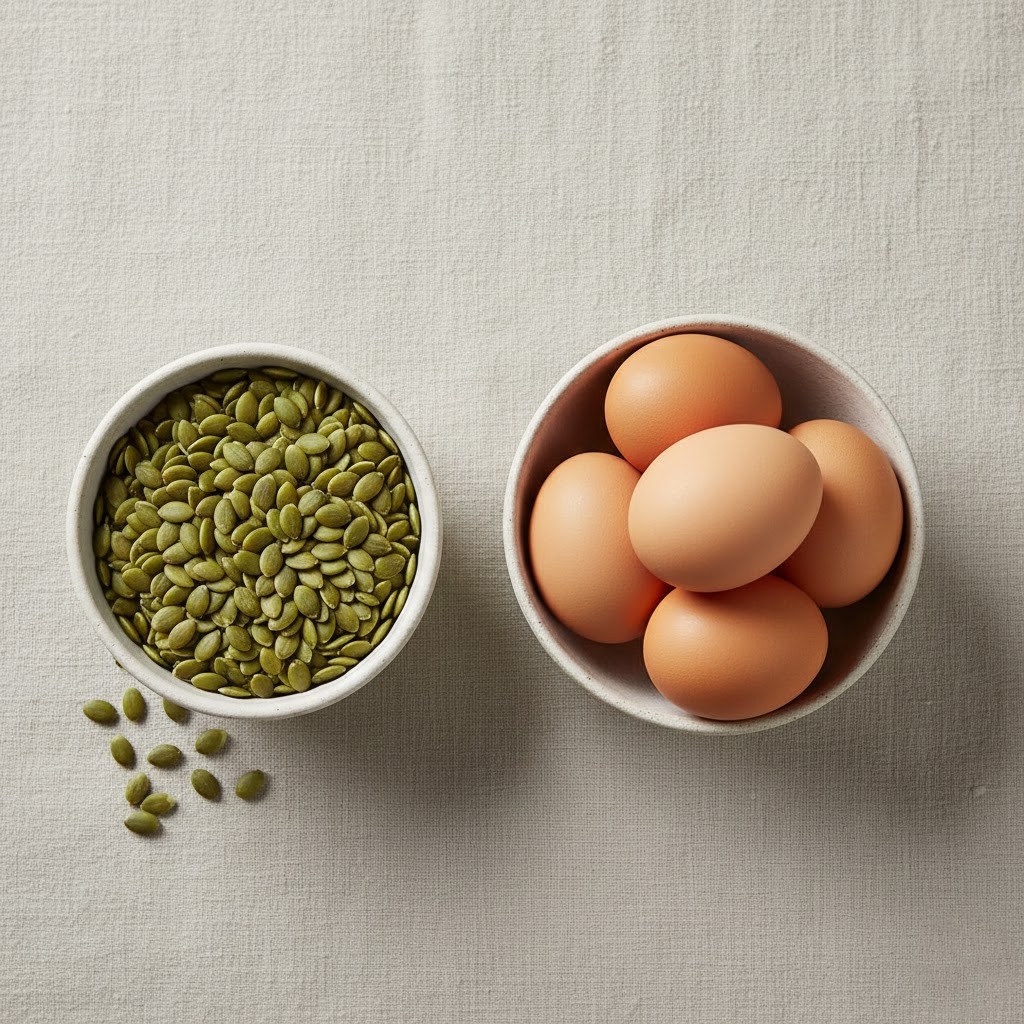
Pumpkin seeds are a convenient source of zinc—an essential mineral for collagen formation. Just 1 ounce contains about 2 mg of zinc, plus plant-based protein and healthy fats. Zinc plays a role in tissue repair, meaning it indirectly supports collagen integrity. Sprinkle pumpkin seeds over oatmeal, salads, yogurt bowls, or blend them into homemade sauces for a nutritional boost.
Eggs for Protein and Collagen-Building Nutrients
Eggs contain proline, an amino acid necessary for collagen synthesis. The egg white offers protein, while the yolk supplies nutrients like choline and biotin that support skin health. Eating two eggs provides roughly 12 grams of protein and a balanced mix of fats and micronutrients. Scrambled eggs, breakfast burritos, or hard-boiled eggs for meal prep all fit easily into a collagen-supporting routine.
Simple Ways to Add High-Collagen Foods to Your Routine
Once you know the best food sources, the next step is working them into meals that fit your busy lifestyle.
Easy Meal Ideas for Busy Schedules
You don’t need a complicated meal plan to increase collagen intake. For example, swap regular broth for bone broth when making chicken noodle soup, or add gelatin powder to your morning smoothie for an extra 6–8 grams of collagen. A slow-cooker beef tendon stew—using about 1 lb of tendon—can cook while you’re at work and deliver a collagen-rich dinner. Small adjustments like these help you incorporate more collagen without changing your entire routine.
Tips for Pairing Foods to Maximize Absorption
Combining collagen-rich foods with vitamin C sources boosts your body’s ability to use the collagen you eat. For example, drink a small glass of orange juice with your eggs at breakfast, or add lemon to bone broth for a bright flavor and better nutrient synergy. Pairing pumpkin seeds with strawberries in a yogurt bowl blends zinc and vitamin C in one simple, collagen-supporting meal.
FAQs
- How much collagen-rich food should I eat daily?
There’s no official recommendation, but many people aim for 10–20 grams of collagen per day through food or broth. A cup of bone broth or a tablespoon of gelatin offers a convenient way to meet this range without supplements. - Are collagen-boosting foods better than supplements?
Both options can help, but many people prefer whole foods because they include additional nutrients like vitamin C, minerals, and antioxidants. Foods also allow you to build collagen naturally through balanced meals rather than relying solely on powders. - Can you get collagen from plant foods?
Plants do not contain collagen directly, but they offer nutrients—especially vitamin C, zinc, and antioxidants—that support collagen formation. Fruits like kiwi and strawberries and seeds like pumpkin seeds are excellent for this purpose. - How long does it take to notice changes after eating collagen-rich foods?
Results vary, but most people notice benefits in 6–12 weeks when consistently including collagen-rich foods in their routine. This timeline depends on diet quality, lifestyle habits, and individual health factors. - Is bone broth the best source of collagen?
Bone broth is convenient and widely available, but gelatin and beef tendon contain similar collagen benefits. The best choice depends on your taste preferences and cooking habits.
Tips & Swaps
- Add gelatin to smoothies for extra protein.
- Use bone broth instead of water when cooking rice.
- Mix pumpkin seeds into trail mix for a zinc boost.
- Pair citrus with high-protein meals to support collagen.
Ready to support healthier skin and smoother joints? Try adding one or two high-collagen foods to your meals this week and see how easy it can be to nourish your body naturally.
Disclaimer: This content is for informational purposes only and is not a substitute for professional medical advice.

About Sarah Williams
We turn solid evidence into everyday habits Americans can actually do—plain English, cups/oz, grocery-aisle swaps, and routines that fit real life. Our editorial process: Experience—we road-test tips in real schedules…