Food Storage Tips for Fruits and Vegetables
Knowing the right food storage tips can dramatically reduce how much food gets thrown away at home. In the U.S.,...
- How food storage tips help reduce food waste
- How food storage tips keep produce fresh longer
- Fruits that belong on the counter (food storage tips)
- Fruits that should go in the refrigerator (food storage tips)
- Vegetables that prefer a cool, dry place (food storage tips)
- Vegetables that should stay out of the fridge (food storage tips)
- How to store bread properly (food storage tips)
- Why honey should never be refrigerated (food storage tips)
- Simple steps to organize your fridge (food storage tips)
- Common food storage mistakes to avoid (food storage tips)
Knowing the right food storage tips can dramatically reduce how much food gets thrown away at home. In the U.S., households waste billions of pounds of groceries every year, often because fruits and vegetables are stored incorrectly. Some produce lasts longer on the counter, while others stay fresh only in the refrigerator. With a few simple adjustments—like using the crisper drawer correctly or storing certain foods separately—you can keep groceries fresh longer, save money, and reduce food waste in your kitchen.
Why Smart Food Storage Matters
Proper food storage tips are more than just kitchen organization—they directly affect freshness, taste, and how long groceries last. Understanding where and how to store foods can extend shelf life by several days or even weeks.
How food storage tips help reduce food waste
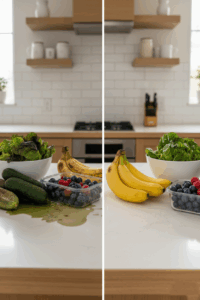
One major reason Americans waste food is improper storage. According to USDA estimates, the average U.S. household throws away about 30–40% of the food it buys. Much of that waste comes from produce spoiling too quickly.
Using basic food storage tips—such as separating ethylene-producing fruits (like bananas and apples) from sensitive vegetables—can slow spoilage. For example, apples stored in a refrigerator crisper drawer at 35–40°F (2–4°C) can last 3–6 weeks, while apples left on the counter may soften in just 5–7 days.
Another example is berries. Washing them immediately after purchase introduces moisture that speeds mold growth. Instead, keeping them dry in the fridge can extend freshness to 4–6 days, compared to just 2–3 days if washed too early.
How food storage tips keep produce fresh longer
Temperature, airflow, and humidity all affect how produce ages. Many refrigerators in the U.S. maintain temperatures between 35–38°F (2–3°C), which slows bacteria and enzyme activity that cause spoilage.
However, not all foods benefit from cold storage. Tomatoes, for example, lose flavor when stored below 50°F (10°C) because cold temperatures damage their cell structure. Similarly, bananas turn brown and mushy in the fridge.
By following proper food storage tips, you protect both texture and flavor. A simple change—like moving tomatoes to the counter and apples to the fridge—can make produce last several days longer while keeping its natural taste intact.
Food Storage Tips for Fruits
Different fruits require different storage environments. Understanding these food storage tips for fruit helps maintain sweetness, texture, and freshness.
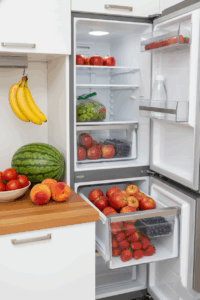
Fruits that belong on the counter (food storage tips)
Certain fruits continue ripening after harvest, which means they should stay at room temperature (68–72°F / 20–22°C) until they reach peak ripeness.
Bananas are a classic example. Keeping them on the counter allows natural sugars to develop, improving flavor. Refrigerating them too early stops the ripening process and causes the peel to darken.
Other fruits that benefit from counter storage include:
- Bananas
- Tomatoes
- Watermelon (whole)
- Stone fruits like peaches or nectarines
For example, a whole watermelon can stay fresh on the counter for 7–10 days. Once cut, however, it should be refrigerated in an airtight container and eaten within 3–4 days.
Fruits that should go in the refrigerator (food storage tips)
Other fruits last significantly longer when stored in the fridge, especially in the crisper drawer designed for produce.
Apples are a good example. When refrigerated at 35–38°F (2–3°C), apples may stay crisp for up to 6 weeks. On the counter, they soften quickly.
Berries also require cold storage. Strawberries, blueberries, and raspberries should be placed in the fridge immediately after purchase, ideally in a breathable container. Avoid sealing them tightly, as airflow prevents moisture buildup.
Here are common fruits best kept in the refrigerator:
- Apples
- Berries
- Cut watermelon or melon
- Grapes
These food storage tips help preserve texture and prevent mold growth.
Food Storage Tips for Vegetables
Vegetables also vary widely in their storage needs. Applying the right food storage tips ensures they stay crisp, flavorful, and safe to eat.
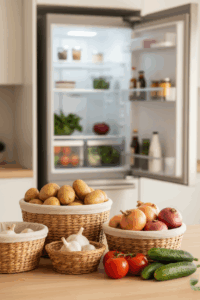
Vegetables that prefer a cool, dry place (food storage tips)
Some vegetables deteriorate quickly when refrigerated. Instead, they should be stored in a cool pantry or cupboard around 50–60°F (10–15°C).
Potatoes are a common example. Refrigerating potatoes converts starch into sugar, which changes flavor and causes them to brown when cooked. A dark pantry can keep potatoes fresh for 2–3 weeks.
Other vegetables that prefer cool, dry storage include:
- Onions
- Garlic
- Potatoes
Another important tip: store onions away from potatoes. When kept together, gases released by onions accelerate potato spoilage.
Vegetables that should stay out of the fridge (food storage tips)
Some vegetables suffer texture damage when refrigerated. Cucumbers, for example, can develop soft spots after just 2–3 days in a cold refrigerator.
Tomatoes also lose flavor when chilled below 50°F (10°C). Instead, keep them on the counter until fully ripe.
Vegetables best stored outside the fridge include:
- Tomatoes
- Cucumbers (short term)
- Whole garlic bulbs
- Whole onions
Following these food storage tips helps vegetables maintain their natural taste and crisp texture.
Pantry and Kitchen Storage Basics
Beyond produce, good food storage tips also apply to pantry staples and everyday kitchen items.
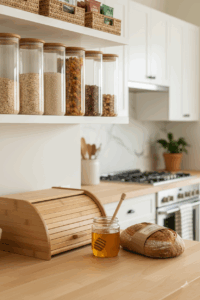
How to store bread properly (food storage tips)
Bread storage depends on how quickly you plan to eat it. At room temperature, most bread stays fresh for 2–3 days.
If you need to store bread longer, freezing is the best method. Bread stored in the freezer at 0°F (-18°C) can last up to 3 months without significant quality loss.
A good method is slicing bread before freezing so you can remove individual pieces as needed.
Avoid refrigerating bread whenever possible. The refrigerator actually speeds up the staling process due to moisture redistribution in the starch.
Why honey should never be refrigerated (food storage tips)
Honey is one of the few foods that can last indefinitely if stored properly. Because honey has very low moisture content, bacteria cannot grow easily.
Storing honey in the refrigerator causes crystallization, making it thick and difficult to pour. Instead, keep honey at room temperature (68–72°F / 20–22°C) in a sealed glass jar.
If crystallization occurs, simply place the jar in warm water (around 95°F / 35°C) for a few minutes to restore its smooth texture.
These pantry-focused food storage tips help extend the shelf life of common kitchen staples.
Easy Kitchen Habits That Help US Households Waste Less
Adopting a few consistent food storage tips can significantly reduce household food waste.
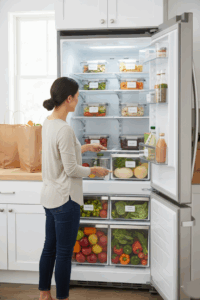
Simple steps to organize your fridge (food storage tips)
Follow these quick steps to improve food storage efficiency:
- Keep the refrigerator temperature between 35–38°F (2–3°C).
- Store fruits and vegetables in separate crisper drawers.
- Place dairy on middle shelves for stable temperatures.
- Avoid overcrowding so cold air circulates properly.
- Label leftovers with dates.
- Store raw meat on the lowest shelf to prevent contamination.
- Use clear containers so food is visible.
These steps help prevent forgotten leftovers and reduce spoilage.
Common food storage mistakes to avoid (food storage tips)
Many households unintentionally shorten food shelf life through small mistakes.
Common examples include washing berries too early, storing potatoes in plastic bags, or mixing ethylene-producing fruits with sensitive vegetables.
Quick food storage tips to remember:
- Store onions away from potatoes.
- Keep bananas on the counter.
- Refrigerate apples and berries.
- Freeze bread if keeping longer than 3 days.
- Store honey at room temperature.
Even applying just a few of these habits can reduce grocery waste significantly.
FAQs
What fruits should never go in the refrigerator?
Bananas, tomatoes, and whole watermelon are best kept at room temperature. Refrigeration slows ripening and damages texture in these fruits. For example, bananas stored below 50°F (10°C) can turn brown and mushy quickly. Once fruits like watermelon are cut, however, they should always be refrigerated and consumed within 3–4 days.
Why should onions be stored away from potatoes?
Onions release gases that accelerate the sprouting and spoilage of potatoes. When stored together in a pantry, potatoes may start sprouting within 7–10 days instead of lasting several weeks. Keeping them in separate baskets or bins can significantly extend their shelf life.
Should cucumbers be refrigerated?
Cucumbers are somewhat sensitive to cold temperatures. Storing them in the refrigerator can cause soft spots after 2–3 days. For short-term storage, they can stay on the counter in a cool kitchen. If your kitchen is warm, refrigerating them in the crisper drawer may still help extend freshness.
Why shouldn’t bread be stored in the refrigerator?
Refrigeration speeds up starch retrogradation, the process that makes bread stale. Bread stored in the fridge may become dry within 24 hours. Instead, keep bread at room temperature for 2–3 days or freeze it for longer storage.
How long do apples last in the refrigerator?
Apples can last 3–6 weeks in a refrigerator when stored in the crisper drawer at 35–38°F (2–3°C). Keeping them away from leafy vegetables can also help prevent premature wilting because apples release ethylene gas that accelerates ripening.
Tips & Quick Storage Swaps
- Freeze bread instead of refrigerating it.
- Keep berries dry until ready to eat.
- Store apples in the crisper drawer.
- Separate onions and potatoes.
- Keep tomatoes on the counter.
Small changes in food storage tips can save money, reduce grocery waste, and keep produce tasting fresh longer. Try reorganizing your fridge today and see how much longer your fruits and vegetables last.
Disclaimer: This content is for informational purposes only and is not a substitute for professional medical advice.

About Essentialwellnessaz Editorial Team
We turn solid evidence into everyday habits Americans can actually do—plain English, cups/oz, grocery-aisle swaps, and routines that fit real life. Our editorial process: Experience—we road-test tips in real schedules…