Digestion Time Chart: Chicken, Eggs, Nuts & More
Understanding how long food sits in your stomach can explain a lot about energy, cravings, and post-meal bloating. A digestion...
Understanding how long food sits in your stomach can explain a lot about energy, cravings, and post-meal bloating. A digestion time chart doesn’t tell the whole story, but it gives a helpful starting point. In this guide, we’ll walk through the digestion time of foods like chicken, eggs, nuts, fruits, and veggies, plus how to use that info when you plan everyday meals and snacks.
What “Digestion Time” Really Means
👉 Want to go further? Our complete breakdown of Best Time to Take Your Daily Supplements walks you through topics related to supplements step by step.
How Your Stomach and Small Intestine Work
When people talk about “digestion time,” they’re usually thinking about how long food stays in the stomach. After you eat, your stomach churns food with acid and enzymes for roughly 30 minutes to 4 hours, depending on what you ate. Then it slowly releases that mixture into your small intestine. Most nutrient absorption happens in the small intestine over another 2 to 6 hours. So even if a chart says “eggs: 30 minutes,” your body is still working on that breakfast long after you leave the table.
👉 If you’re also working on topics related to holistic, our detailed guide on The 4 Levels Of Holistic Healing covers exactly what you need.
Digestion Time vs. Total Gut Transit Time
Digestion time in a chart usually measures how long food takes to move out of the stomach. Total gut transit time is much longer—often 24 to 48 hours from plate to toilet for many adults. Fiber-rich foods may move more quickly, while high-fat, low-fiber meals can slow things down. For example, a baked potato might leave your stomach in about 60 minutes, but its starch and fiber can keep you feeling satisfied for several hours afterward.
👉 Want to go further? Our complete breakdown of Vegetarian Keto Meal Plan: Easy Meals & Shop List walks you through topics related to vegetarian step by step.
Why Charts Are Only Estimates
The numbers you see—like chicken taking 2–3 hours or cashews taking 2–6 hours—are averages, not guarantees. Your personal digestion time of foods can change based on stress, hormones, portion size, and even how well you chew. Two people can eat the same 6 oz piece of chicken and feel completely different afterward. Use any chart as a guide, not a strict rule, and pay attention to how your own body responds.
Food Digestion Time Chart at a Glance
-
Fast-Digesting Foods: Water and Fruit
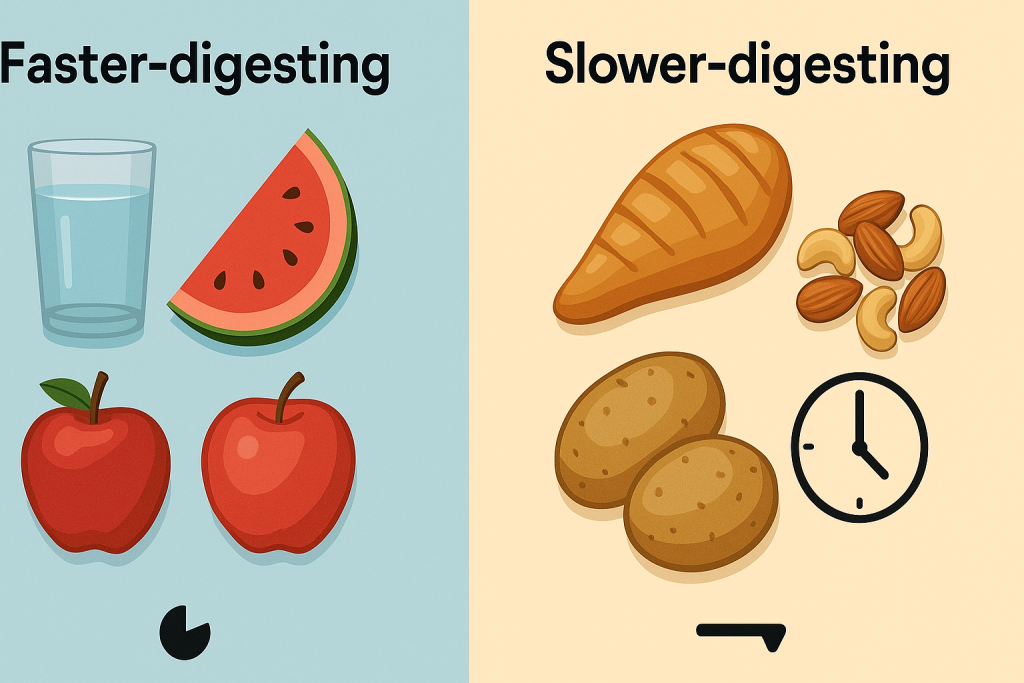
Some foods are in and out of the stomach quickly. Plain water may leave the stomach in about 5 minutes when you’re not eating anything else. Many fruits digest fairly fast as well. The chart image you saw lists watermelon at roughly 20 minutes and apples around 40 minutes. These foods can be great when you want quick energy before a light walk or a short workout, or when you need something gentle on an upset stomach.
-
Medium-Digesting Foods: Veggies and Potatoes
Non-starchy vegetables and simple starches often fall in the middle range. Carrots are listed around 50 minutes, and potatoes around 60 minutes, to move through the stomach. A meal like roasted carrots and potatoes with a small drizzle of olive oil might keep you full for a couple of hours without feeling too heavy. Many weeknight dinners in the US—think sheet-pan veggies or baked potatoes—live in this medium-digesting category, especially when portions stay moderate.
-
Slow-Digesting Foods: Protein and Nuts
Protein-rich foods and nuts usually take more effort for your digestive system. Chicken on the chart is estimated at 2–3 hours, while almonds are listed at 2–3 hours and cashews at 2–6 hours. This doesn’t mean they’re “bad”; in fact, these slower-digesting foods can help you stay satisfied between meals. However, eating a large serving of chicken wings or a big handful of nuts right before bed or intense exercise may feel heavy for some people.
Chicken, Eggs, Nuts, and Produce: What to Expect
-
Animal Protein: Chicken and Eggs
Chicken is a staple protein in many American kitchens, from grilled chicken breasts to rotisserie chicken. Because it’s dense in protein, it generally takes around 2–3 hours to move through the stomach, especially if you eat a portion of 4–6 oz. Eggs are different. The chart lists eggs at about 30 minutes, which typically refers to one or two eggs eaten on their own. When you pair eggs with cheese, bacon, or buttered toast, the added fat can stretch digestion closer to 1–2 hours.
-
Nuts and Seeds: Almonds and Cashews
Nuts come with protein, fat, and fiber, which is why a small handful—around 1 oz, or about 23 almonds—can keep you satisfied for a while. Almonds in the chart fall in the 2–3 hour range, while cashews may linger 2–6 hours, depending on portion size and what else you eat. Because nuts are calorie-dense, it’s easy to overshoot. For many people, sticking to 1–2 small handfuls works well as a slow-burn snack without causing heavy stomach discomfort.
-
Everyday Produce: Apples, Carrots, Potatoes, Watermelon
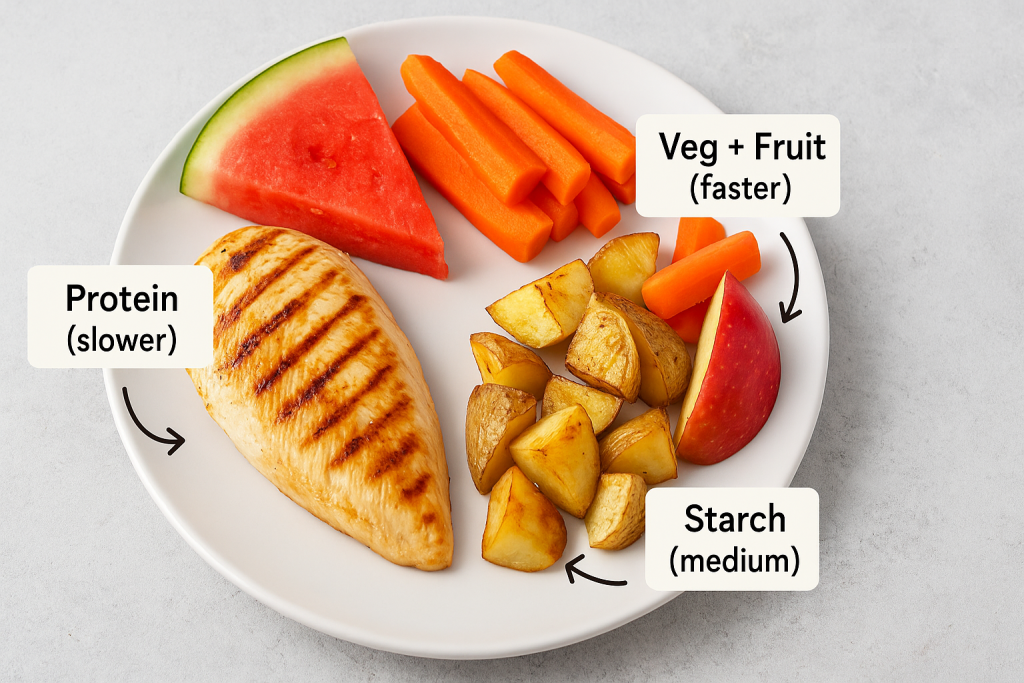
Everyday fruits and vegetables on the chart show a wide range of digestion times. Watermelon is listed at 20 minutes and can feel very light, especially on hot summer days. Apples, with more fiber, are shown at about 40 minutes. Carrots land around 50 minutes, and potatoes at roughly 60 minutes. A bowl with roasted potatoes, carrots, and a side of watermelon would give you a mix of fast and medium digestion times, helping balance quick energy with longer-lasting fullness.
Factors That Change Your Personal Digestion Time
-
Meal Size, Fat, and Fiber Content
Portion size makes a big difference. A 3 oz piece of chicken breast digests faster than a 10 oz plate loaded with creamy sauce. Fat tends to slow stomach emptying, so fried foods or heavy sauces can stretch digestion by an extra hour or more. Fiber has a mixed effect: small to moderate amounts, like 1 cup of carrots or an apple, can help things move smoothly, while very large amounts in one sitting might cause gas or cramping for some people.
-
Age, Activity Level, and Hormones
Your digestion time of foods isn’t fixed throughout life. Many people notice digestion slows somewhat with age, partly due to changes in muscle tone and activity. Regular movement—even a 10–15 minute walk after dinner—can support more comfortable digestion. Hormones also play a role. For example, some women notice their digestion shifts around their monthly cycle or during pregnancy, sometimes feeling fuller longer after favorite meals like grilled chicken or scrambled eggs.
-
Digestive Conditions and Medications
Digestive conditions can significantly change how long food remains in your system. Issues like irritable bowel syndrome (IBS), reflux, or gastroparesis can alter stomach emptying and overall transit time. Certain medications, including some pain relievers and antidepressants, may either slow or speed digestion as a side effect. If you notice big changes—like food feeling “stuck” for many hours or frequent diarrhea within 30–60 minutes of eating—it’s worth bringing up with a healthcare professional.
How to Use Digestion Times in Daily Life
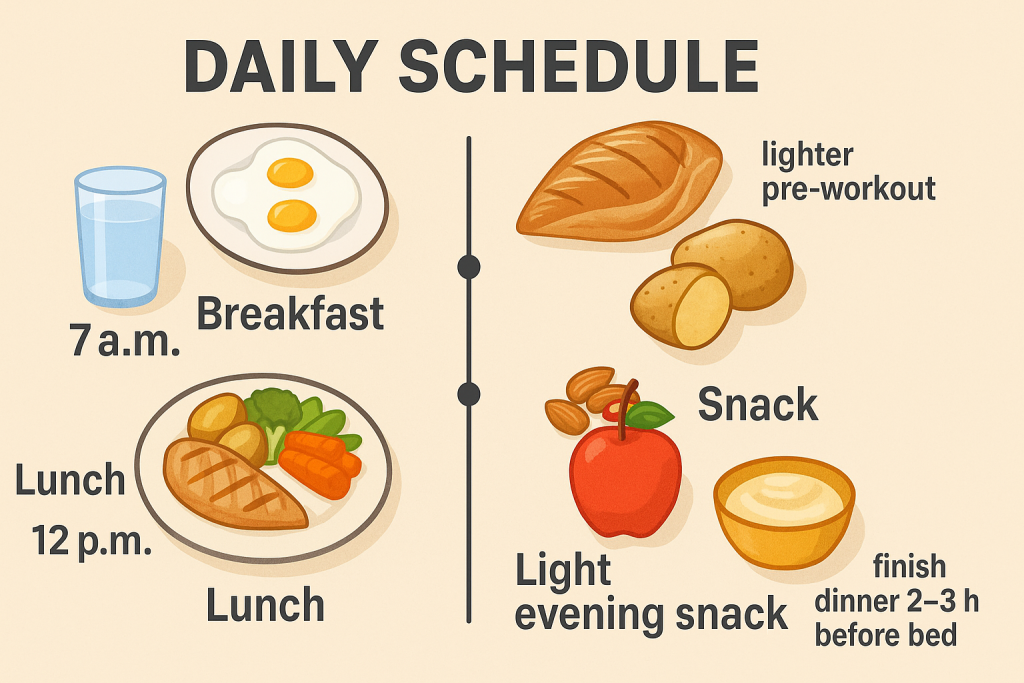
Planning Meals Around Work, Workouts, and Sleep
Knowing approximate digestion times can help you plan meals around a busy US schedule. If you have a workout in 45 minutes, a light snack—like a small piece of fruit or a slice of toast with a bit of nut butter—may feel better than a heavy chicken dinner. Before bed, many people prefer to finish their last full meal 2–3 hours earlier. That gives your body time to process slower-digesting foods like protein and nuts before you lie down.
Pairing Foods for Steady Energy and Comfort
You can also use digestion times to pair foods strategically. Combining a fast-digesting food, like watermelon or another fruit, with a slower option, such as a small handful of almonds, may give you both quick and steady energy. A lunch of grilled chicken, roasted potatoes, and veggies offers a mix of medium and slow digestion times, helping you avoid a sugar crash. Experiment with different combinations and note how your body feels over the next 3–4 hours.
When to Talk With a Healthcare Professional
While charts are helpful, your body’s signals matter most. If you regularly feel overly full for more than 4–5 hours after small meals, have ongoing heartburn, or notice unexplained weight loss or black, tarry stools, it’s important to reach out to a healthcare professional. They can help rule out underlying conditions and guide safe changes to your diet. Keep a simple food and symptom log for a week—it can be very useful during a 15–20 minute office visit.
FAQs
- How accurate are food digestion time charts?
They’re rough estimates based on research and observation, not exact promises. Your digestion can shift day to day with stress, sleep, hydration, and what you ate earlier. Use charts to spot patterns, then focus on how you personally feel 1–4 hours after meals. - Does drinking water with meals slow digestion?
For most healthy people, sipping water with meals is fine and does not drastically dilute stomach acid. Large amounts of fluid might make you feel more full, but they usually don’t change nutrient absorption dramatically. Aim for steady hydration throughout the day and see what feels best. - What’s the best pre-workout snack based on digestion time?
If you’re eating 30–60 minutes before exercise, many people do well with easily digested carbs and a little protein. Examples include a banana with 1 tbsp peanut butter or a slice of toast with a scrambled egg. Very fatty or heavy meals within an hour of workouts often feel uncomfortable. - Can eating late at night hurt digestion?
Eating a large, heavy meal—like a big plate of fried chicken and fries—right before bed may worsen heartburn or discomfort for some people. Many adults find they sleep better when their last full meal is finished 2–3 hours before lying down. A small, light snack is usually easier to tolerate. - How can I tell if my digestion time is “normal”?
There’s a wide range of normal. Generally, feeling comfortably satisfied for 2–4 hours after meals, having regular bowel movements, and not experiencing frequent pain, severe bloating, or vomiting are reassuring signs. If symptoms interfere with daily life, checking in with a healthcare professional is a good idea.
Use this digestion time chart as a gentle guide. Over the next week, notice how you feel 1–4 hours after different meals, and bring any concerns to your healthcare provider.
Disclaimer: This content is for informational purposes only and is not a substitute for professional medical advice.

About Sarah Williams
We turn solid evidence into everyday habits Americans can actually do—plain English, cups/oz, grocery-aisle swaps, and routines that fit real life. Our editorial process: Experience—we road-test tips in real schedules…