Essential Vitamins and the Best Foods to Get Them
Getting enough essential vitamins is one of the simplest ways to support your overall health, energy, and daily well-being. While...
Getting enough essential vitamins is one of the simplest ways to support your overall health, energy, and daily well-being. While supplements can help in certain cases, most people can meet their nutritional needs through a balanced, food-first approach. This guide breaks down the most important vitamins your body relies on, plus the best everyday foods—found in any US grocery store—that naturally provide them.
Why Essential Vitamins Matter for Daily Health
Understanding why vitamins matter makes it easier to prioritize them in your meals. They influence everything from vision and energy levels to immunity and bone strength.
👉 Want to go further? Our complete breakdown of Nutrient-Rich Nuts & Seeds: Top Health Benefits walks you through topics related to benefits step by step.
How Vitamins Support Everyday Body Functions
Vitamins act as helpers that keep your body functioning optimally. For example, Vitamin A supports your eyes, immune system, and skin health, while Vitamin D helps your body absorb calcium effectively. B vitamins convert the food you eat into usable energy, and Vitamin C plays a major role in collagen formation. Even small deficiencies can impact how you feel day-to-day. For instance, not getting enough B12 may affect red blood cell production, which carries oxygen throughout your body.
👉 Want to go further? Our complete breakdown of Liver-Cleansing Foods That Support Everyday Health walks you through liver health and detox step by step.
Signs You May Not Be Getting Enough
Vitamin deficiencies can develop slowly, making them easy to overlook. Early signs may include fatigue, frequent colds, dry skin, slow wound healing, or trouble concentrating. For example, low Vitamin D—commonly seen in US adults, especially during winter—may contribute to tiredness and weaker bone health over time. If you notice these patterns for more than 2–3 weeks, it may be worth discussing your nutrient intake with a healthcare provider.
👉 If you’re also working on topics related to inflammatory, our detailed guide on 15 Easy Anti-Inflammatory Meals for Weeknights covers exactly what you need.
Key Vitamins and Their Top US-Friendly Food Sources
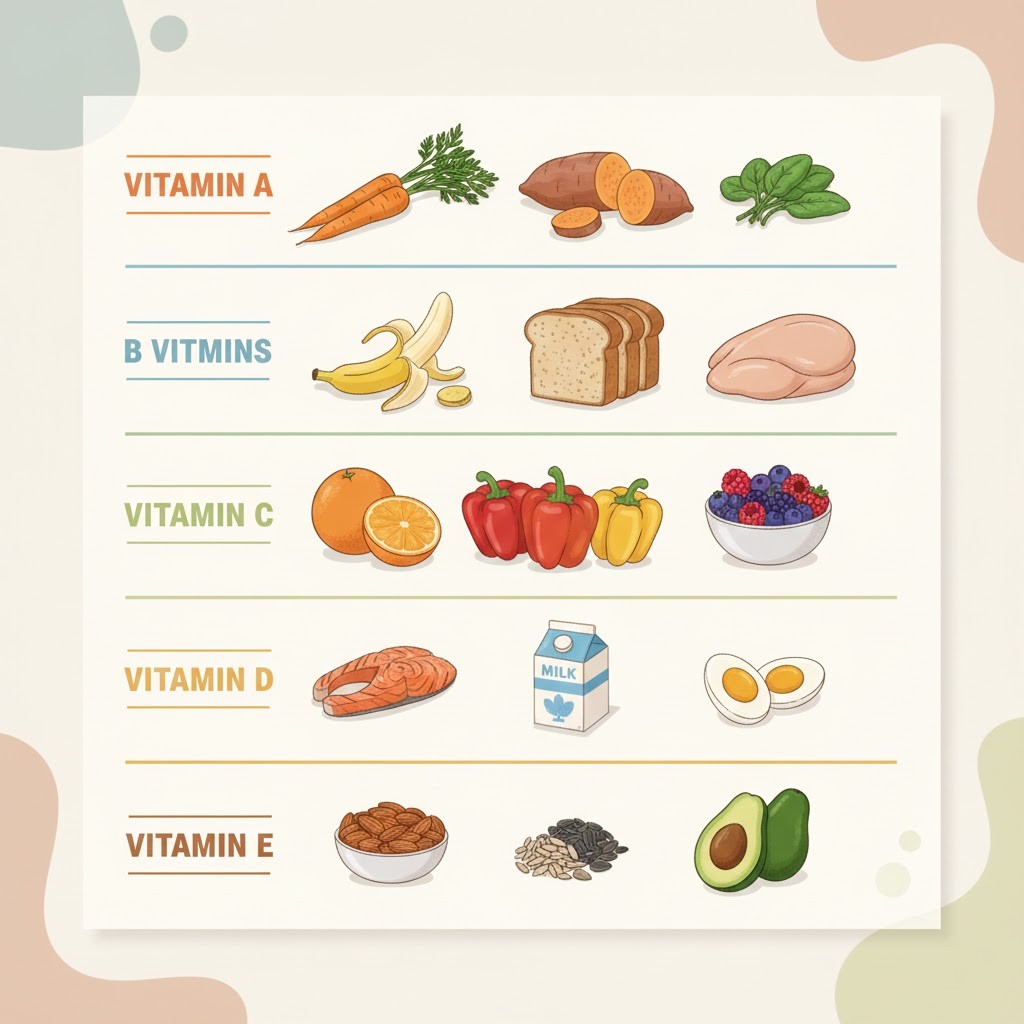
With so many foods rich in essential vitamins, the best approach is to mix and match options you enjoy and can easily access at local grocery stores.
Vitamin A for Eye and Skin Support
Vitamin A helps maintain clear vision, supports immune defenses, and contributes to healthy skin. Carrots, sweet potatoes, spinach, and kale are some of the most convenient sources. Even half a cup of cooked sweet potato provides more than 300% of your daily need. Animal-based foods like eggs and salmon also supply Vitamin A in a highly absorbable form. Including a variety of orange and leafy green foods ensures you have steady intake throughout the week.
B Vitamins for Energy, Metabolism & Mood
The B-vitamin family—especially B1, B6, and B12—helps convert carbohydrates, fats, and proteins into usable fuel. For example, one medium banana contains about 0.4 mg of B6, supporting brain and mood balance. B12 is primarily found in animal products like eggs, seafood, and dairy, but fortified cereals offer a reliable option for vegetarians. If you rely heavily on processed foods or skip meals often, you may unintentionally miss out on B vitamins.
Vitamin C for Immunity and Healthy Skin
Vitamin C helps your immune system work efficiently and supports collagen, which keeps skin firm and resilient. One medium orange provides around 70 mg—nearly the full daily recommendation for most adults. Bell peppers, strawberries, and broccoli are excellent alternatives, offering flexibility for smoothies, salads, or snacks. Since Vitamin C is sensitive to heat, try eating at least one raw serving per day for maximum benefit.
Vitamin D for Bone Strength and Mood Support
Vitamin D plays a crucial role in calcium absorption, bone health, and may even influence mood. Because most people don’t get enough sun exposure—especially during colder months—diet becomes essential. Fatty fish like salmon, fortified milk, and fortified orange juice are dependable sources. One cup of fortified milk provides about 120 IU of Vitamin D, helping close the common intake gap seen across US adults.
Vitamin E for Antioxidant Protection
Vitamin E works as an antioxidant, protecting your cells from everyday stressors. Nuts and seeds—especially almonds and sunflower seeds—offer an easy way to get more Vitamin E into your diet. Just 1 oz of almonds contains about 7 mg. Leafy greens also contribute smaller amounts, making them a great addition to meals. Since Vitamin E is fat-soluble, pairing these foods with healthy fats helps absorption.
Vitamin K for Blood Clotting and Bone Health
Vitamin K helps your blood clot effectively and supports strong bones. Leafy greens like kale, spinach, and broccoli are among the richest sources. A single cup of raw spinach contains nearly 145 mcg of Vitamin K. Many Americans fall short simply because they don’t eat greens regularly. Adding a small salad or sautéed side dish a few times per week can make a noticeable difference.
How to Build a Vitamin-Rich Everyday Meal Plan
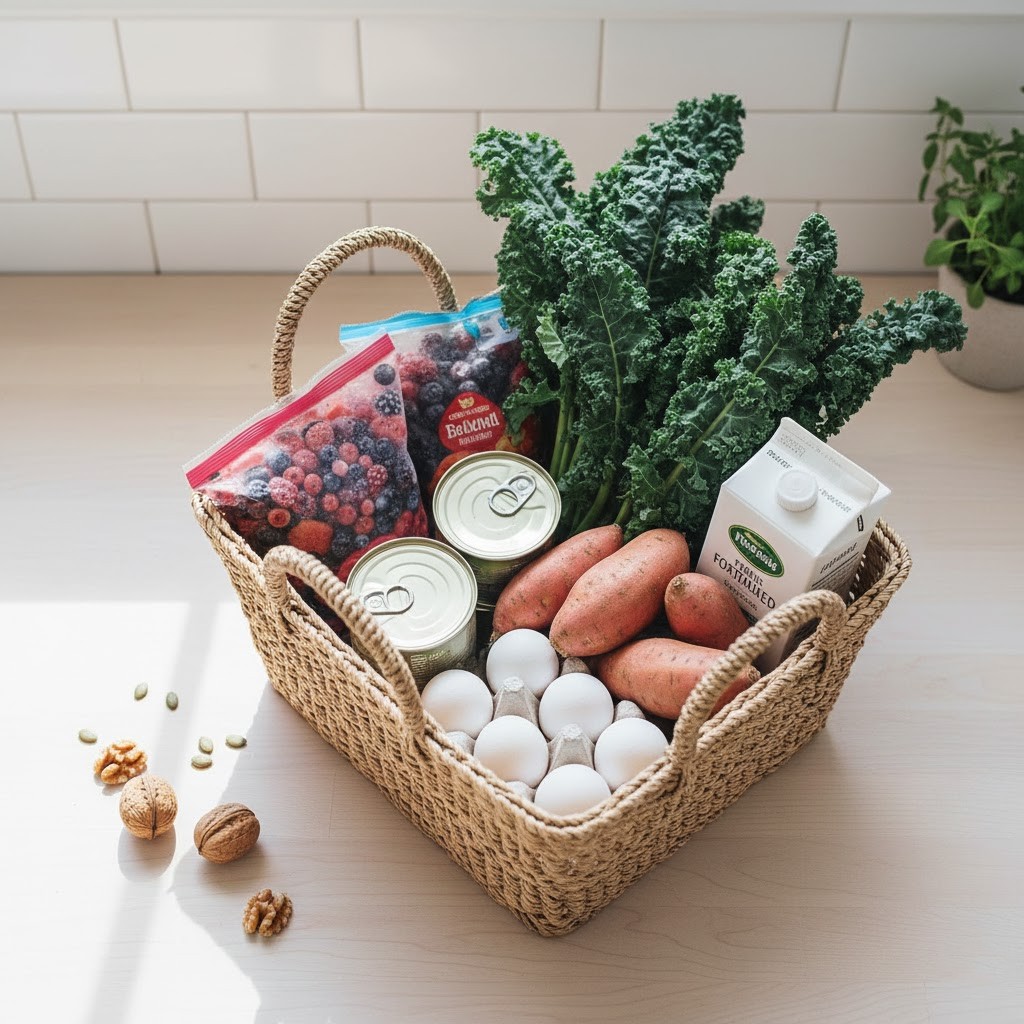
Now that you know which foods offer the biggest nutrient boost, creating simple, vitamin-packed meals becomes much easier.
Simple Ways to Add More Nutrient-Dense Foods
Start small by adding one fruit or vegetable to each meal. For example, toss spinach into scrambled eggs or blend frozen berries into a morning smoothie. Swapping white bread for whole-grain bread adds more B vitamins and fiber. Even keeping pre-cut veggies in the fridge can make healthier choices more convenient. Aim for 2–3 colorful foods per meal to naturally broaden your vitamin intake without overthinking it.
Budget-Friendly Swaps at US Grocery Stores
Buying frozen produce is one of the best money-savers, especially for Vitamin C and Vitamin A–rich foods. A $3–$5 bag of frozen mixed berries can last multiple breakfasts. Canned tuna, often under $1.50 per can, supplies Vitamin D and B12 without straining your budget. Store-brand nuts and large bags of spinach offer more nutrients per dollar than many packaged snacks. Building your vitamin intake doesn’t require expensive superfoods—just smart, accessible choices.
When Supplements Might Help (and When They Don’t)
While whole foods should be your foundation, there are times when supplements may be helpful.
Situations That May Increase Nutrient Needs
Some people may need extra support due to dietary restrictions, medical conditions, or limited sun exposure. For example, adults over 50 may absorb Vitamin B12 less efficiently and might benefit from supplementation. Individuals living in northern US states often have lower Vitamin D during winter. Vegans may require supplemental B12 since plant foods don’t naturally supply it. Always match your supplement choices to your personal lifestyle and needs.
How to Choose Supplements Safely
When shopping for supplements, look for third-party certifications such as USP or NSF to ensure product quality. Start with moderate doses rather than high-potency formulas unless directed by a healthcare provider. Avoid combining multiple supplements with overlapping ingredients—for example, taking a multivitamin plus individual Vitamin E or Vitamin A may result in excessive intake. If you take medications, confirm that supplements won’t interact with them.
Practical Tips for Staying Consistent
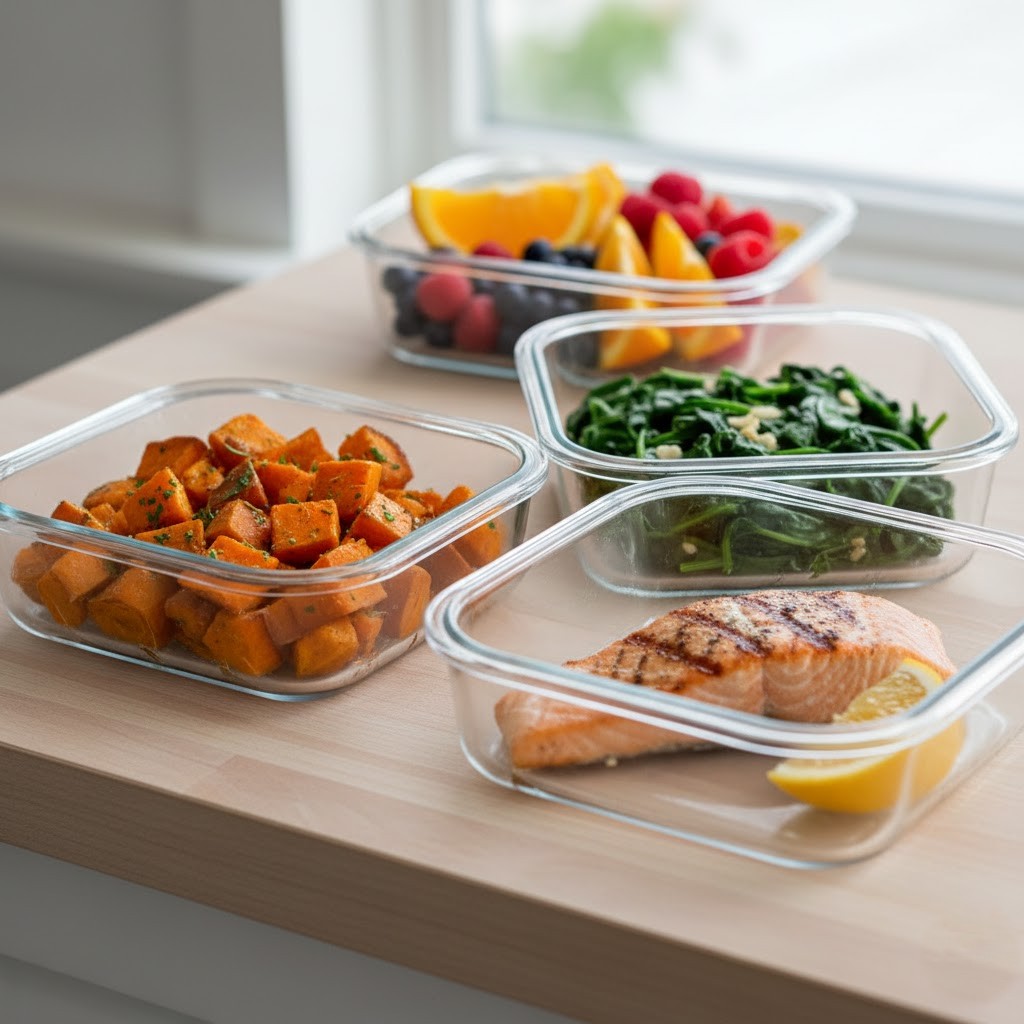
The easiest nutrition strategy is one you repeat daily, even on busy days.
Meal Planning for Busy Schedules
Batch-cooking on Sundays can save hours during the week. Roast a tray of sweet potatoes (400°F for about 30 minutes), chop leafy greens, and prep bags of frozen fruit for smoothies. Keep ready-to-eat snacks like nuts, Greek yogurt, and sliced peppers available so you’re never scrambling. Spending just 45 minutes prepping can set you up for a full week of vitamin-rich meals.
Easy Habits That Boost Daily Nutrition
Small habits go a long way. Add spinach to pasta sauces, keep fruit on the counter where you’ll see it, or replace one sugary snack with berries or nuts. Drinking fortified milk or orange juice at breakfast can cover 10–30% of your Vitamin D needs without any extra effort. Over time, these consistent actions create meaningful improvements in your essential vitamin intake.
Tips & Swaps (Quick List)
- Use frozen fruits to save money and boost Vitamin C.
- Swap white grains for whole grains to increase B vitamins.
- Add leafy greens to soups, omelets, or pasta.
- Keep nuts or seeds as grab-and-go Vitamin E snacks.
- Choose fortified milk for extra Vitamin D.
FAQs
- Can I get all essential vitamins from food alone?
Most people can get adequate vitamins through a balanced diet rich in vegetables, fruits, whole grains, dairy, and protein sources. However, nutrients like Vitamin D may be harder to maintain through food alone, especially in winter. Supplements can help fill specific gaps, but food should remain the foundation. - Are frozen fruits and vegetables as nutritious as fresh?
Yes. Frozen produce is usually picked at peak ripeness and flash-frozen, preserving nutrients. It’s especially helpful for Vitamin C and Vitamin A sources. In some cases, frozen options may retain more nutrients than “fresh” produce that has been transported long distances. - How do I know if I’m deficient in a vitamin?
Common signs may include fatigue, brittle nails, frequent colds, or dry skin, depending on the vitamin. However, symptoms are not always obvious. A healthcare provider can run blood tests to check levels of nutrients like Vitamin D, B12, and iron. - Should children take vitamin supplements?
Children can usually get enough vitamins from a varied diet, but picky eating, allergies, or specific health needs may require supplementation. Pediatricians often recommend Vitamin D supplements for young kids, especially during months with low sunlight. - Is taking too many vitamins harmful?
Yes. Fat-soluble vitamins (A, D, E, K) can build up in the body when taken in excessive amounts. More isn’t always better. Always follow recommended doses unless instructed otherwise by a healthcare provider.
Ready to build healthier meals with essential vitamins? Start by adding one nutrient-rich food per meal this week and watch how simple changes boost your everyday wellness.
Disclaimer: This content is for informational purposes only and is not a substitute for professional medical advice.

About Sarah Williams
We turn solid evidence into everyday habits Americans can actually do—plain English, cups/oz, grocery-aisle swaps, and routines that fit real life. Our editorial process: Experience—we road-test tips in real schedules…