Drinks to Avoid for Common Health Conditions
Managing a health condition often means paying close attention not only to what you eat, but also to what you...
Managing a health condition often means paying close attention not only to what you eat, but also to what you drink. Many popular beverages—like iced tea, cola, orange juice, or energy drinks—can worsen symptoms for certain conditions because of their sugar, acidity, caffeine, carbonation, or temperature. This guide breaks down which drinks to avoid for common issues such as diabetes, migraines, heart concerns, anemia, asthma, and digestive problems. By understanding how specific beverages affect the body, you can make more confident choices each day.
Why Certain Drinks Can Make Symptoms Worse
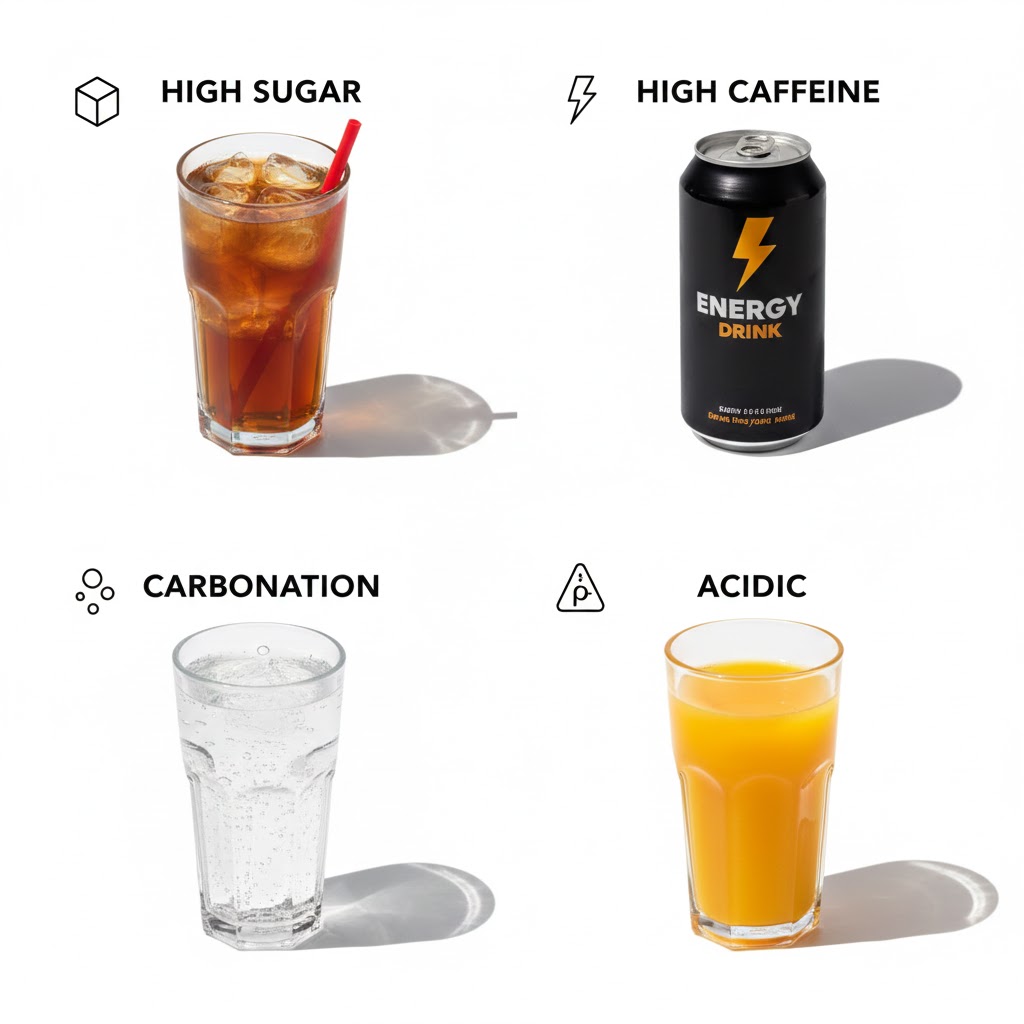
Before we go condition-by-condition, it helps to understand why some beverages can have outsized effects on your body. Many drinks contain ingredients that influence blood sugar, digestion, inflammation, and even the way your nervous system responds to stress.
👉 For a deeper dive into topics related to equipment, check out: 10-Minute Core Burn Workout at Home (No Equipment) — it’s packed with practical tips.
How sugar, caffeine, and carbonation impact the body
Sugar plays a major role in how your body maintains energy and blood glucose balance. Drinks like sweet iced tea and soda can contain more than 20–40 grams of added sugar per serving, which can cause sharp spikes in blood glucose—an issue for anyone managing diabetes or insulin resistance. Caffeine, found in coffee, energy drinks, and black tea, acts as a stimulant that can raise heart rate and trigger headaches or anxiety. For example, just one 16-oz energy drink may contain the caffeine equivalent of three cups of coffee, enough to trigger migraines or jitteriness in sensitive individuals. Carbonation can also worsen bloating and bone-health concerns; some evidence suggests that highly carbonated beverages may reduce calcium absorption and irritate the stomach lining.
👉 For a deeper dive into reading your body’s signals, check out: Body Warning Signs You Shouldn’t Ignore — it’s packed with practical tips.
When acidity and cold beverages trigger sensitivities
Acidic drinks like orange juice or cola can irritate the esophagus, triggering acid reflux symptoms in as little as 15–30 minutes after consumption. Even beverages that seem healthy, such as citrus juices, can have a pH level low enough to aggravate gastritis or reflux. Cold drinks, including iced beverages, sometimes tighten the airways for people with asthma, especially during exercise or cold weather. This tightening can happen quickly if the drink causes a sudden drop in airway temperature. Meanwhile, acidic coffee may aggravate an already-inflamed stomach lining, making gastritis symptoms more noticeable. These reactions vary by person, but knowing what triggers you is the first step toward relief.
👉 If you’re also working on reading your body’s signals, our detailed guide on Advanced Fatty Liver Disease: Warning Signs to Know covers exactly what you need.
Drinks to Avoid for Specific Conditions
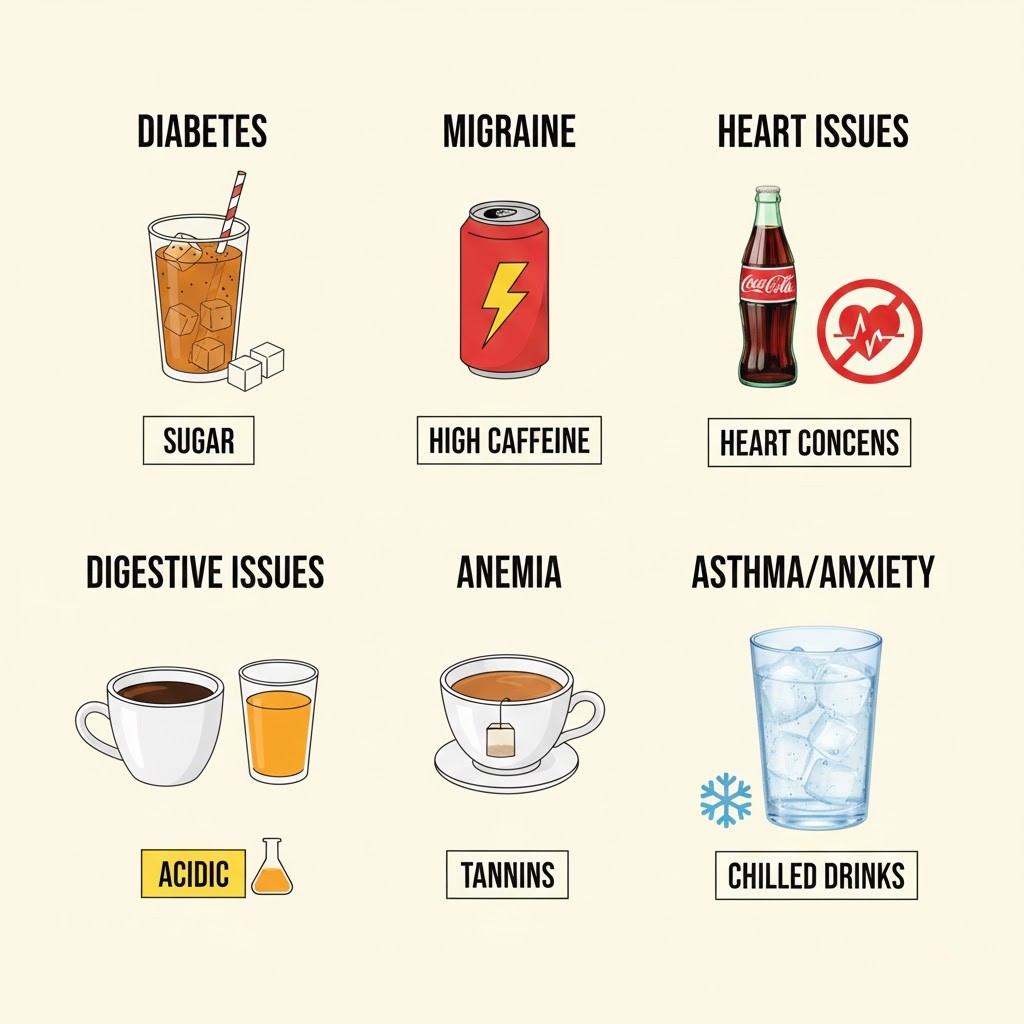
Now that we’ve covered the common triggers, let’s look at how certain drinks interact with specific health conditions and why avoiding them can be beneficial.
Diabetes, migraines, and heart-related concerns
People managing diabetes often experience blood sugar spikes from sweetened iced tea. A single 12-oz serving may contain up to 30 grams of sugar, nearly the amount recommended for an entire day. Reducing or avoiding these drinks helps support steadier glucose levels. For migraine sufferers, energy drinks are a frequent culprit. The combination of high caffeine and added sugars can trigger headaches within hours. For example, many migraine patients report that even 100–150 mg of caffeine can intensify symptoms, especially when consumed on an empty stomach. Heart-related issues, including high blood pressure, may worsen with colas. These beverages often contain caffeine, sugar, and phosphoric acid, which together can cause fluid retention and heart palpitations in sensitive individuals.
Digestive issues, anemia, asthma, and anxiety
Gastritis and acid reflux tend to flare with coffee and orange juice. Coffee’s acidity can irritate the stomach lining, while orange juice may trigger acid reflux within 20 minutes for people sensitive to citrus. Anemia becomes harder to manage when drinking black tea, because compounds called tannins can reduce iron absorption by up to 60% if consumed with meals. Asthma symptoms sometimes worsen after iced drinks, which can cause the airways to constrict slightly—especially noticeable during colder months. Meanwhile, anxiety may become more pronounced with energy drinks. The combination of caffeine and stimulants can heighten nervousness or racing thoughts, with some people experiencing effects at doses as low as 50–75 mg of caffeine.
Practical Steps to Reduce Symptom-Triggering Drinks
Here are simple steps you can take to avoid beverages that may trigger symptoms, while still enjoying what you drink each day.
- Identify your personal triggers and track reactions after drinking certain beverages.
- Replace high-sugar drinks with unsweetened or lightly sweetened alternatives.
- Choose warm or room-temperature drinks if cold beverages worsen symptoms.
- Cut back caffeine slowly to avoid withdrawal headaches.
- Limit acidic drinks to small servings and pair them with food.
- Drink more water-based beverages, like infused water or herbal tea.
- Read labels—many drinks contain hidden sugars or additives.
- Test low-caffeine alternatives for conditions worsened by stimulants.
Tips & Swaps
- Try herbal tea instead of black tea for anemia-friendly hydration.
- Use flavored sparkling water only if carbonation doesn’t bother you.
- Choose decaf coffee if acidity isn’t an issue but caffeine is.
- Replace orange juice with whole oranges for lower acidity.
- Pick electrolyte water instead of energy drinks when fatigued.
- Brew unsweetened iced tea and add lemon for flavor without sugar.
FAQs
- Can I still drink small amounts of my trigger beverage?
In many cases, yes—moderation is key. For example, people with acid reflux may tolerate small portions of citrus or coffee when taken with food. Tracking symptoms helps determine your personal limit. If symptoms worsen consistently, cutting the drink entirely for a few weeks can help you reassess. - Are sugar-free sodas better for my health condition?
Sugar-free sodas avoid blood sugar spikes, but carbonation and artificial sweeteners may still irritate digestion or trigger headaches for some people. Those with heart concerns or migraines should monitor how they feel after drinking them. They’re not always a safe replacement. - What’s the best alternative to energy drinks?
Electrolyte water, coconut water, or a small cup of coffee can provide mild energy without excessive caffeine or stimulants. Most energy drinks contain high levels of caffeine—sometimes over 200 mg per can—which can overstimulate your nervous system. - Can cold drinks really worsen asthma symptoms?
Cold beverages don’t affect everyone the same way, but some people feel chest tightness or coughing after drinking iced beverages. The sudden temperature change can cause the airways to narrow temporarily. If this happens frequently, choose room-temperature options. - Does switching to decaf eliminate caffeine-related issues?
Going decaf often helps, but even decaf drinks contain trace amounts of caffeine—usually 2–5 mg per cup. If you’re highly sensitive, herbal teas or warm water with lemon might be a better choice.
If you’re working to manage a health condition, small changes—like choosing the right drinks—can make daily life smoother. Start by swapping just one trigger beverage this week and see how your body responds.
Disclaimer: This content is for informational purposes only and is not a substitute for professional medical advice.

About Sarah Williams
We turn solid evidence into everyday habits Americans can actually do—plain English, cups/oz, grocery-aisle swaps, and routines that fit real life. Our editorial process: Experience—we road-test tips in real schedules…