Daily Habits That Slowly Harm Your Body
Many people picture health as a result of big lifestyle choices, but often it’s the small, repeated habits that quietly...
Many people picture health as a result of big lifestyle choices, but often it’s the small, repeated habits that quietly chip away at your well-being. Daily behaviors like eating too quickly, skipping water, or scrolling late into the night may not feel harmful in the moment, yet they build up over months and years. This article breaks down the everyday habits that slowly harm your body and offers practical, US-friendly ways to replace them with healthier routines that fit real-life schedules.
Everyday Habits That Can Undermine Your Health
Even if your overall lifestyle feels balanced, certain daily patterns can gradually impact the way your body functions. From your digestion to your energy levels, these small habits add up more than most people realize.
👉 This pairs well with our 8 Simple Daily Habits for Better Everyday Health guide if you want the full picture on topics related to everyday.
Behaviors That Stress Your Digestion and Metabolism
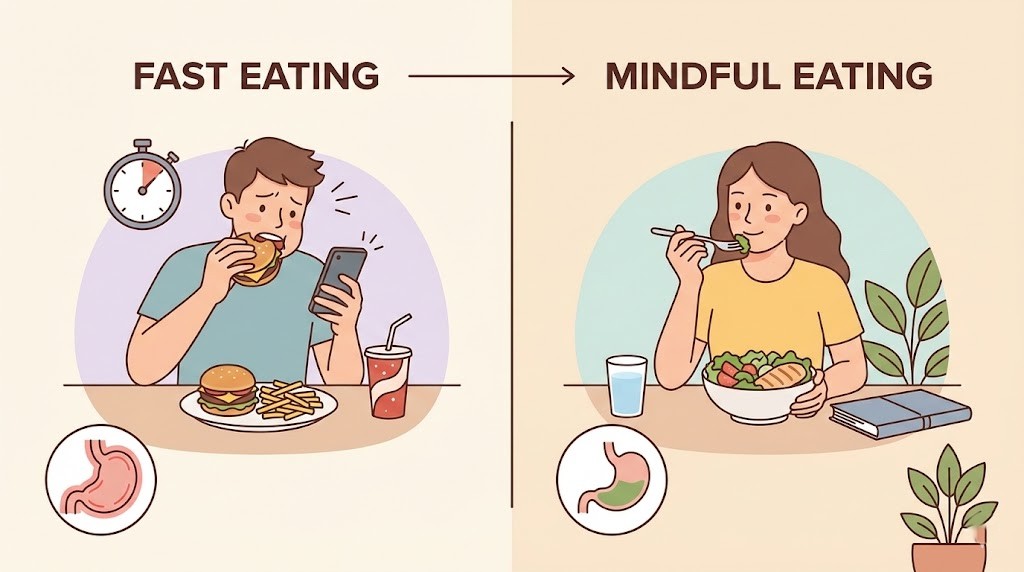
One of the most common habits affecting digestion is eating too fast. When you eat quickly, your stomach doesn’t have enough time to signal fullness, which can lead to overeating by 150–200 extra calories per meal for many people. Fast eating also makes it harder for your digestive system to break down food properly, sometimes causing bloating or discomfort. A simple example: taking at least 15 minutes to finish a meal can help your body register satiety more naturally.
Sugary drinks are another habit that can strain your metabolism. The average American consumes about 17 teaspoons of added sugar per day—much of it from sodas, flavored coffees, and energy drinks. Regularly drinking these beverages forces your pancreas to work harder to regulate blood sugar levels. Even replacing just one 12 oz soda per day with water or unsweetened tea can make a noticeable difference over time.
👉 If you’re also working on topics related to digestion, our detailed guide on Digestion Time Chart: Chicken, Eggs, Nuts & More covers exactly what you need.
Daily Patterns That Strain Your Organs and Energy Levels

Sleeping late—even by just one hour past your normal schedule—can disrupt your brain’s ability to recover from daily stress. Consistently staying up past midnight may reduce alertness the next day by up to 30%, according to sleep researchers. A simple example: shifting your bedtime earlier by 10 minutes each week can help reset your rhythm without feeling overwhelming.
Another subtle but damaging habit is skipping water. Many people drink less than 40 oz per day, far lower than the commonly recommended 64 oz. Dehydration forces your kidneys to work harder to filter waste, which may leave you feeling more fatigued. Keeping a 20 oz bottle nearby and refilling it three times daily is a simple, practical fix.
And while screen time feels unavoidable, always being on a device puts strain on your eyes. Focusing on a screen for more than two hours at a time can cause dryness, irritation, or headaches. A helpful example is the “20-20-20 rule”: every 20 minutes, look at something 20 feet away for 20 seconds.
👉 For a deeper dive into sustained daily energy, check out: Simple Habits for Steady All-Day Energy — it’s packed with practical tips.
Practical Ways to Replace Harmful Habits
Now that the common challenges are clearer, the next step is identifying changes that feel manageable for everyday American life. Small adjustments—done consistently—can support your long-term health without requiring a full lifestyle overhaul.
Simple Wellness Swaps for Busy Americans
A practical starting point is slowing down mealtimes. Instead of rushing through lunch, set a 15-minute timer and aim to chew each bite 5–10 times more than usual. This mindful eating method can reduce overeating and help your stomach signal fullness earlier. If evenings are busy, try prepping meals in advance so you can eat calmly instead of grabbing something on the go.
For those who rely heavily on sugary drinks, gradual reduction works best. Replace just one daily soda or sweet coffee with flavored sparkling water or an 8 oz unsweetened iced tea. This small shift can reduce weekly sugar intake by several dozen teaspoons. Another useful trick is keeping sweetened drinks out of the house so they’re reserved for occasional cravings, not everyday consumption.
Improving hydration can be as simple as keeping a refillable 20–24 oz bottle at your desk or in your car. Aim to drink one bottle before lunch and another before dinner. Many Americans find it easier when they add electrolytes or a splash of citrus to encourage consistent sipping throughout the day.
How to Build Sustainable Routines That Support Long-Term Health

Creating healthier routines doesn’t require dramatic changes—it requires consistent ones. If you struggle with late-night screen time, set your phone to “Do Not Disturb” at least 30 minutes before bed. A small shift, like dimming screens after 9 PM, can help regulate your natural sleep cycle over time. For example, reading a physical book in the last 10 minutes of the day can help signal your brain to wind down.
To support kidney and liver health, experiment with reducing processed foods. Swap packaged snacks for whole-food options like nuts, fruit, or yogurt. Even replacing two processed snacks per week can reduce your intake of preservatives and sodium. Shopping the outer aisles of the grocery store—produce, dairy, and fresh proteins—naturally guides you toward less processed choices.
Lastly, incorporating sunlight into your daily routine can support your bones. Something as simple as 10 minutes of morning sunlight while walking the dog or grabbing your mail can make a positive difference. Pairing sunlight with movement—like a short stroll—also boosts mood and energy levels throughout the day.
Tips & Swaps
- Drink at least 64 oz of water daily using a refillable bottle.
- Replace one sugary drink per day with flavored sparkling water.
- Eat meals over 15 minutes to support digestion.
- Take a 10-minute morning sunlight break.
- Power down electronics 30 minutes before bed.
- Keep processed snacks out of your main pantry shelves.
FAQs
- Are these harmful daily habits really that significant?
Yes—because they happen repeatedly. Each habit on its own may seem small, but when repeated 300–365 times a year, the impact adds up. For example, drinking one extra sugary beverage per day can add tens of thousands of calories annually. Small improvements compound in the same way, making consistent changes more effective than intense short-term fixes. - How much water should I realistically aim for each day?
Many Americans do well with around 64 oz per day, but individual needs vary depending on activity level, climate, and health factors. The key is to drink consistently throughout the day instead of consuming a large amount at once. Keeping a bottle nearby and tracking refills can help build the habit without feeling forced. - Is screen time really harmful to my eyes?
Extended screen use can lead to dryness, strain, and headaches because screens reduce natural blinking. Using the 20-20-20 rule, adjusting screen brightness, and taking short breaks can significantly ease discomfort. Even lowering your screen time by 20–30 minutes before bed can make a noticeable difference in eye comfort and sleep quality. - Can small lifestyle changes really improve my digestion?
Yes. Slowing down your meals, chewing more thoroughly, and eating mindfully can support your digestive process. For example, extending your meal by just five minutes can help your stomach signal fullness, reducing overeating. Consistent small improvements are often more sustainable than drastic diet changes. - How do I break a long-standing unhealthy habit?
Start with one manageable adjustment. For example, if you stay up late, shift your bedtime earlier by 5–10 minutes each week. Pair the new habit with an existing routine—such as drinking water after brushing your teeth—to reinforce it. Celebrate progress, even when it feels small.
Ready to take control of your daily habits? Start with just one small change this week. Over time, these simple shifts can create long-lasting benefits for your energy, focus, and overall wellness.
Disclaimer: This content is for informational purposes only and is not a substitute for professional medical advice.

About Mike Johnson
We turn solid evidence into everyday habits Americans can actually do—plain English, cups/oz, grocery-aisle swaps, and routines that fit real life. Our editorial process: Experience—we road-test tips in real schedules…