Best Time to Take Your Daily Supplements
Understanding the best time to take supplements can make a noticeable difference in how well your body absorbs them. While...
Understanding the best time to take supplements can make a noticeable difference in how well your body absorbs them. While supplements don’t replace a balanced diet, timing them correctly can support energy levels, sleep quality, digestion, and nutrient absorption. This guide breaks down when to take common vitamins, minerals, probiotics, and omega-3s, so you can build a simple, effective daily routine that fits a busy US lifestyle.
Why Supplement Timing Matters
Finding the right timing helps your supplements work with—rather than against—your natural rhythms. This section explains why timing plays a bigger role than many people realize.
👉 If you’re also working on topics related to holistic, our detailed guide on The 4 Levels Of Holistic Healing covers exactly what you need.
How Your Body Absorbs Nutrients
Your body absorbs different nutrients at different speeds, depending on factors like stomach acidity, food intake, and time of day. For example, some nutrients—such as fat-soluble vitamins (A, D, E, K)—need dietary fat to be absorbed efficiently, which is why taking them with a meal can make them up to 20–30% more effective. Meanwhile, water-soluble nutrients like B vitamins absorb quickly and often provide a noticeable energy lift, making the morning an ideal time. Timing also affects tolerance; magnesium absorbed too early may cause drowsiness, while zinc taken too close to iron competes for absorption.
👉 For a deeper dive into reading your body’s signals, check out: Warning Signs Your Body May Be Low in Key Nutrients — it’s packed with practical tips.
Meal Timing vs. Empty Stomach Supplements
Whether you take supplements with food or on an empty stomach can strongly influence how well they’re absorbed. Probiotics, for instance, often survive stomach acid better when taken first thing in the morning or 30 minutes before a meal, helping more live cultures reach your gut. On the other hand, calcium carbonate absorbs better with food because stomach acid helps break it down. Supplements like iron and zinc may cause stomach discomfort if taken without food, so spacing them between meals—at least 2 hours apart from one another—can support better digestion and absorption.
👉 If you’re also working on topics related to vegetarian, our detailed guide on Vegetarian Keto Meal Plan: Easy Meals & Shop List covers exactly what you need.
The Best Time to Take Key Vitamins

Now that we’ve covered the basics of absorption, here’s how to apply them to your daily vitamin routine.
Vitamin D With Breakfast
Vitamin D is fat-soluble, so pairing it with a meal containing healthy fats—like eggs, avocado, or nut butter—helps boost absorption. Many people find taking it with breakfast is easiest to remember and supports steady daily energy. Studies suggest morning intake may also help avoid sleep disturbances, particularly for people sensitive to hormonal shifts. Taking 1,000–2,000 IU with breakfast is common, though your needs depend on your blood levels and provider guidance.
Vitamin E After Meals
Vitamin E also requires dietary fat for absorption. Taking it after meals—ideally lunch or dinner—can reduce the chance of stomach upset and increase how much your body absorbs. Because vitamin E acts as an antioxidant, spreading it away from other fat-soluble vitamins (like vitamin D) may help reduce nutrient competition. A simple strategy is to take your vitamin E softgel right after a meal with healthy fats, such as salmon, olive oil, or nuts.
B-Complex in the Morning
B vitamins play a key role in energy metabolism, making the morning the ideal time to take them. Many people report feeling more alert when taking B12 or a full B-complex within the first hour of waking. Each B vitamin supports different processes—B6 for mood regulation, B12 for energy, B9 for cell growth—but together they help reduce fatigue. Because they are water-soluble, they absorb quickly and don’t require food, though pairing them with breakfast works well.
The Best Time to Take Minerals

Minerals follow different timing rules than vitamins, especially when it comes to competing for absorption. This section breaks down the best timing for the most common minerals.
Magnesium Before Bed
Magnesium is widely known for its calming effects, supporting muscle relaxation and nighttime rest. Taking it 1 hour before bed helps many people wind down without feeling groggy. Some forms, like magnesium glycinate, are gentler on digestion and support relaxation, while magnesium citrate may have a mild laxative effect. If using citrate, aim for 200–300 mg before bedtime with plenty of water.
Calcium Morning and Evening
Your body absorbs calcium most efficiently in doses under 500 mg, so splitting it between morning and evening helps maximize absorption and reduces the risk of stomach discomfort. Many US adults incorporate one dose with breakfast and another with dinner. If you take calcium carbonate, pair it with food; calcium citrate offers flexibility and can be taken with or without meals. Keep calcium and iron separate by at least 2–3 hours to prevent absorption issues.
Zinc Away From Iron
Zinc and iron compete for absorption, so they should be spaced out for the best results. Zinc works well mid-morning or mid-afternoon, at least 2 hours apart from any iron supplement. Taking zinc with a small snack helps reduce nausea, which some people experience when taking zinc on an empty stomach. A typical supplemental dose ranges from 15–30 mg depending on individual needs.
Probiotics and Omega-3 Timing
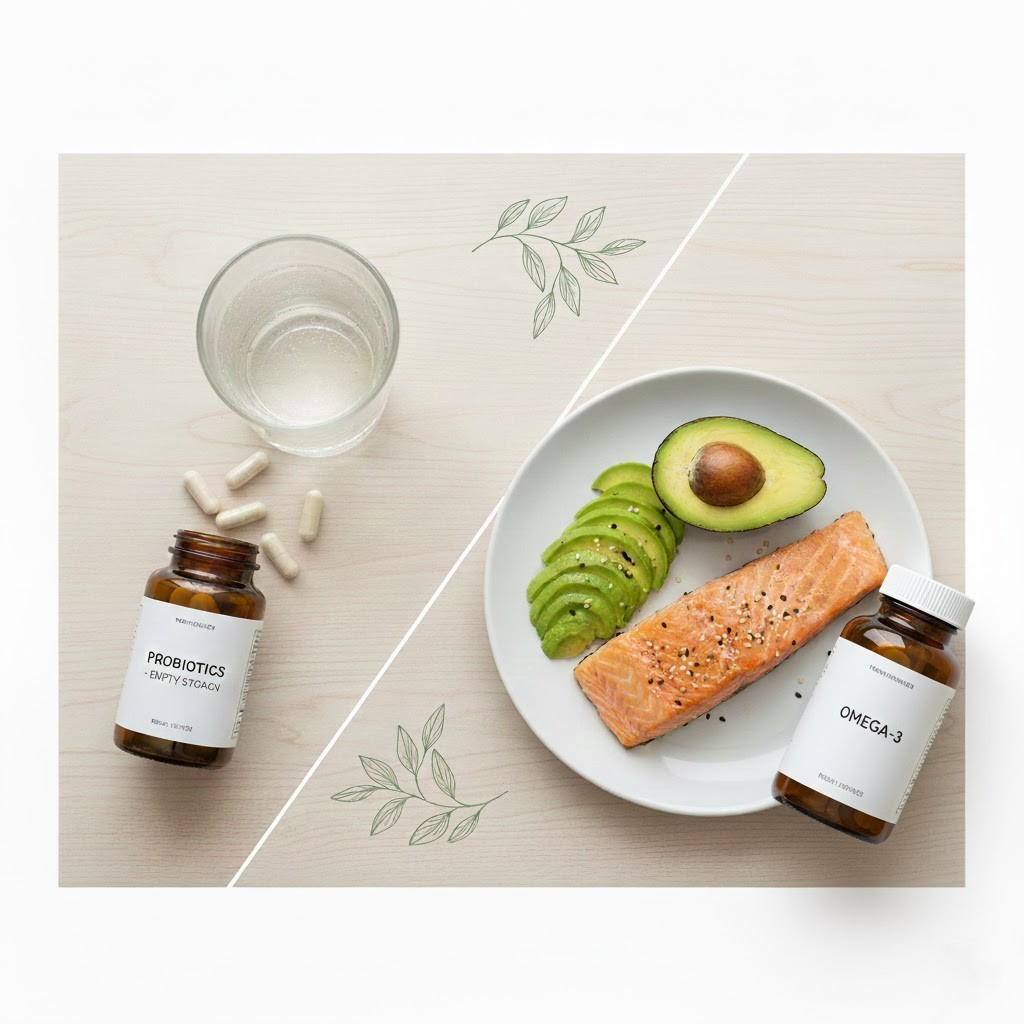
To complete your supplement routine, here’s when to take two of the most popular wellness supplements.
Probiotics on an Empty Stomach
Taking probiotics on an empty stomach allows more beneficial bacteria to survive stomach acid and reach your intestines. Many people take them first thing in the morning with a glass of water or 30 minutes before breakfast. If mornings don’t work, taking probiotics before bed is another effective option, since stomach acid is at its lowest. Consistency is more important than exact timing, so choose a routine you can maintain daily.
Omega-3 With Fat-Containing Meals
Omega-3 supplements—especially fish oil—are best absorbed with meals containing fats, helping increase bioavailability by up to 40%. Taking omega-3 with lunch or dinner often improves absorption and reduces fishy aftertaste. Pair it with meals like salmon, peanut butter toast, or avocado salad. Splitting large doses (e.g., 2,000 mg) between two meals may also improve tolerance and reduce burping.
Tips for Building a Consistent Routine
A consistent routine makes supplement timing easier and more effective.
Pairing Supplements With Daily Habits
The simplest strategy is to attach supplements to habits you already do daily: drinking morning coffee, brushing your teeth, or preparing dinner. For example, take vitamin D with your breakfast smoothie and magnesium right after your nightly skincare routine. People who pair supplements with existing habits are more likely to stick to them long-term.
When to Separate or Combine Supplements
Some supplements work well together—like vitamin D with meals or probiotics before breakfast—while others require spacing. For example, zinc and iron should be separated by at least 2 hours, and calcium should be divided into smaller doses for better absorption. Using a small weekly pill organizer helps schedule everything without confusion.
Tips & Swaps
- Take vitamin D with a meal containing healthy fats for better absorption.
- Split calcium into two doses to improve uptake.
- Space zinc and iron by at least two hours.
- Choose magnesium glycinate if citrate is too harsh on digestion.
- Pair omega-3 with lunch or dinner for fewer aftertastes.
- Use a pill organizer to keep timing consistent.
FAQs
- Can I take all my supplements at the same time?
Not always. Some supplements—like zinc and iron—compete for absorption, while others work best with food. Dividing your routine into morning and evening doses helps improve absorption and reduce digestive discomfort. Reviewing which supplements pair well together helps create a simplified schedule. - Should I take supplements with coffee?
Coffee can interfere with the absorption of certain minerals like calcium and iron. It’s best to take those supplements at least one hour apart from coffee. Vitamins like B-complex generally pair fine with breakfast coffee, but always pay attention to how your body responds. - Does supplement timing really make a big difference?
Yes. While timing doesn’t replace a balanced diet, it can improve how well your body uses vitamins and minerals. Fat-soluble vitamins absorb better with food, probiotics prefer an empty stomach, and magnesium before bed supports nighttime relaxation. - Can I take supplements before working out?
Some supplements—like B vitamins—may support energy when taken in the morning or pre-workout. Minerals like magnesium or zinc, however, are best taken later to avoid stomach upset. Always choose timing that supports your comfort and performance. - What if I forget a dose?
If you miss a dose, simply take it at your next preferred time—don’t double up unless specifically instructed. Consistency over weeks and months matters more than the occasional missed day.
Want clearer guidance on building a supplement routine that fits your lifestyle? Explore more evidence-based wellness tips and simple routines designed for busy US households.
Disclaimer: This content is for informational purposes only and is not a substitute for professional medical advice.

About Sarah Williams
We turn solid evidence into everyday habits Americans can actually do—plain English, cups/oz, grocery-aisle swaps, and routines that fit real life. Our editorial process: Experience—we road-test tips in real schedules…