Kidney Healing Foods: What to Eat for Better Kidney Health
Your kidneys work around the clock to filter waste, balance fluids, and regulate key minerals in your body. What you...
Your kidneys work around the clock to filter waste, balance fluids, and regulate key minerals in your body. What you eat directly affects how hard they have to work. Choosing kidney healing foods can help reduce strain, support natural detox processes, and promote overall kidney health—especially in the early stages of kidney stress. This guide focuses on practical, U.S.-friendly food choices you can find at any grocery store, with realistic portions and simple meal ideas to help you eat with confidence.
What Are Kidney Healing Foods?
Kidney healing foods are foods that support kidney function by being easier to filter, lower in harmful minerals, and rich in protective nutrients. They don’t “cure” kidney disease, but they can help reduce workload and inflammation when used consistently as part of a balanced diet.
👉 For a deeper dive into topics related to magnesium, check out: 9 Magnesium-Rich Foods to Add This Week — it’s packed with practical tips.
How Your Kidneys Work (Quick Overview)
Your kidneys filter about 120–150 quarts of blood per day, removing waste through urine while keeping electrolytes in balance. Foods high in sodium, phosphorus, or excessive protein increase that workload. Kidney healing foods are typically lower in sodium and phosphorus, moderate in protein, and rich in antioxidants. For example, replacing processed deli meat with 3 oz of egg whites can significantly reduce phosphorus intake while still providing protein. The goal is to support what kidneys already do—filter efficiently—without overwhelming them.
👉 For a deeper dive into topics related to benefits, check out: Nutrient-Rich Nuts & Seeds: Top Health Benefits — it’s packed with practical tips.
What Makes a Food “Kidney-Friendly”?
A kidney-friendly food usually meets at least one of these criteria: low sodium (≤140 mg per serving), lower potassium, lower phosphorus, or high antioxidant content. Cauliflower, for instance, provides fiber and vitamin C with far less potassium than a baked potato. Blueberries deliver antioxidants without the potassium load of bananas. It’s not about perfection—it’s about consistently choosing foods that are gentler on your kidneys most of the time.
👉 If you’re also working on getting all your essential vitamins, our detailed guide on Essential Vitamins and the Best Foods to Get Them covers exactly what you need.
Why Diet Matters for Kidney Health
Diet plays a direct role in how efficiently your kidneys function. Even small daily choices—like sauces, snacks, and cooking methods—can add up over weeks and months.
Toxins, Fluid Balance, and Blood Pressure
High sodium intake causes the body to retain fluid, increasing blood pressure and forcing kidneys to work harder. The average American consumes over 3,400 mg of sodium per day, far above the recommended 2,300 mg limit. Swapping packaged meals for home-cooked foods using olive oil and herbs can easily cut sodium by 1,000 mg or more per day. Stable blood pressure helps protect the tiny blood vessels inside your kidneys from long-term damage.
Inflammation and Oxidative Stress
Oxidative stress contributes to kidney tissue damage over time. Foods rich in antioxidants—like red grapes and cranberries—help neutralize free radicals. For example, ½ cup of blueberries provides anthocyanins that support cellular health without adding excessive sugar or potassium. While antioxidants won’t reverse kidney disease, research suggests they may help slow progression when paired with an overall kidney-conscious diet.
Top Kidney Healing Foods to Add to Your Diet
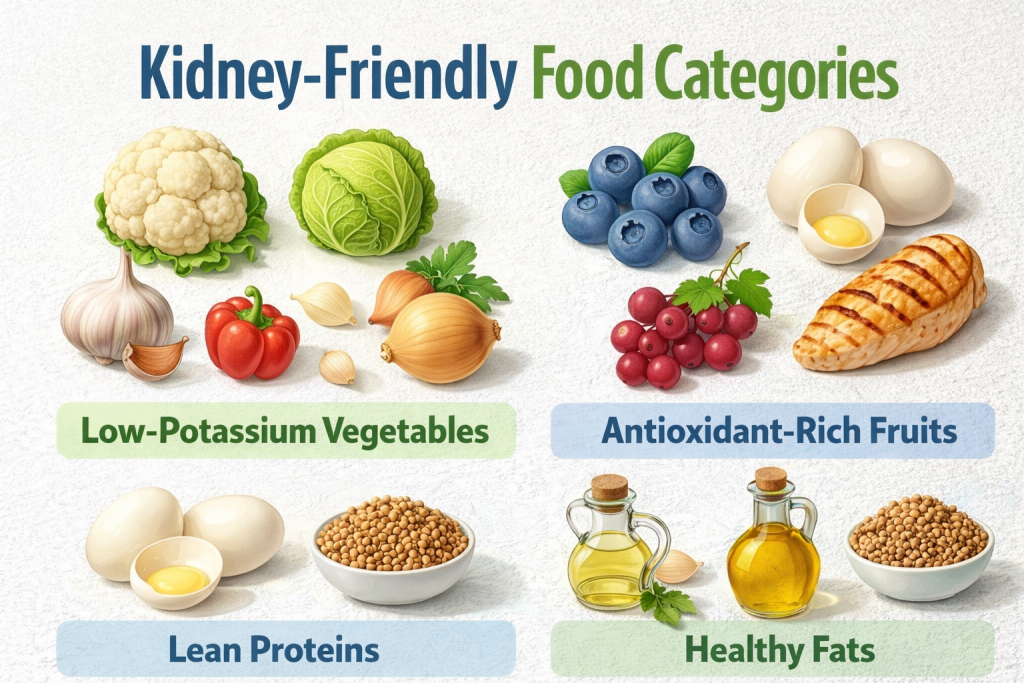
With the basics in mind, let’s look at specific kidney healing foods and why they work well in everyday meals.
Low-Potassium Vegetables That Are Kidney-Friendly
Vegetables are essential, but potassium levels matter. Cauliflower, cabbage, bell peppers, onions, and garlic are excellent choices. One cup of raw cauliflower contains about 320 mg of potassium, much lower than many starchy vegetables. Bell peppers add vitamin C—one medium pepper provides over 150% of daily needs—without stressing the kidneys. These vegetables also work well roasted at 400°F, sautéed, or eaten raw, making them easy to include at lunch or dinner.
Antioxidant-Rich Fruits That Support Kidneys
Not all fruit is ideal for kidney health, but blueberries, red grapes, and cranberries stand out. ½ cup of cranberries contains less potassium than most fruits and supports urinary tract health. Red grapes offer resveratrol, linked to reduced inflammation. A practical example: swap a banana smoothie for a blueberry–cranberry yogurt bowl to cut potassium while keeping flavor and antioxidants.
Lean Proteins and Healthy Fats
Protein quality matters more than quantity. Egg whites provide high-quality protein with almost no phosphorus—2 large egg whites offer about 7 grams of protein. Pair them with healthy fats like olive oil, which supports heart health without taxing kidneys. Using 1 tbsp olive oil instead of butter reduces saturated fat and sodium, benefiting both kidney and cardiovascular systems.
How to Build a Kidney-Friendly Plate
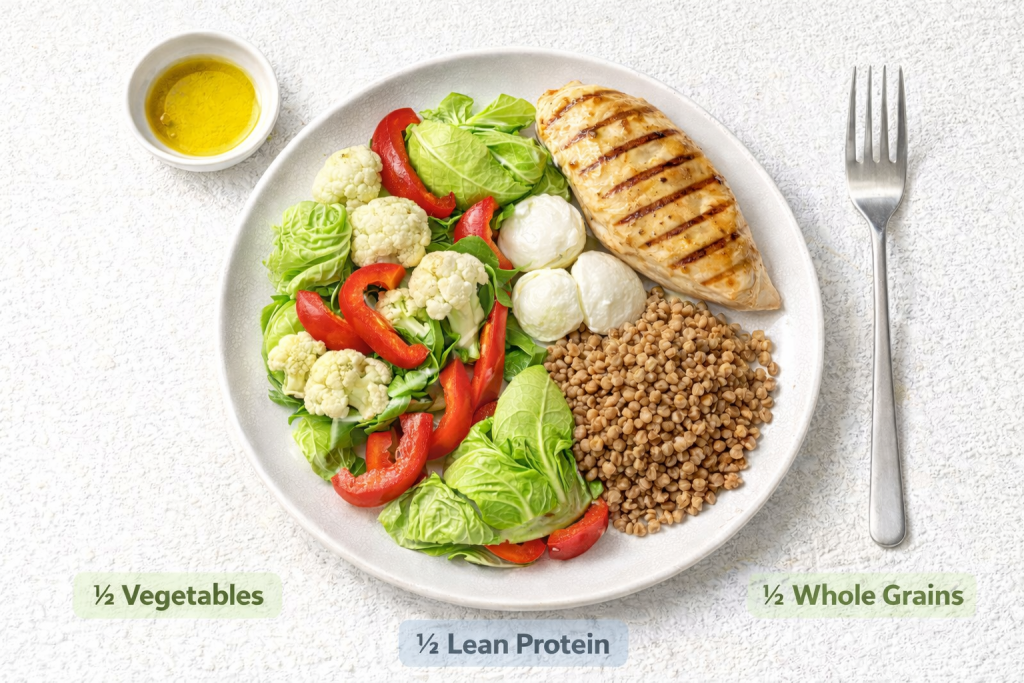
Putting kidney healing foods together correctly is just as important as choosing the foods themselves.
Portion Sizes and Cooking Methods (U.S. Style)
A kidney-friendly plate typically includes ½ plate vegetables, ¼ lean protein (3–4 oz), and ¼ grains like buckwheat. Cooking methods matter: boiling, roasting, and sautéing reduce the need for added sodium. For example, boiling vegetables and discarding the water can slightly reduce potassium content. Avoid seasoning blends with hidden sodium—1 tsp of some blends can contain 300 mg sodium.
Grocery Shopping Tips in the U.S.
Shop the perimeter of the grocery store where fresh foods dominate. Read labels carefully: choose products with ≤140 mg sodium per serving. Look for “no salt added” canned vegetables and rinse them under water for 30 seconds, which can reduce sodium by up to 40%. Keeping kidney-friendly staples—olive oil, garlic, onions, frozen blueberries—on hand makes consistent choices easier.
Tips & Smart Swaps
- Swap white potatoes for cauliflower mash
- Use garlic and herbs instead of salt
- Choose fresh meats over processed deli meats
- Replace soda with water + cranberries
- Use egg whites instead of whole eggs
- Snack on bell pepper slices, not chips
Simple Kidney-Friendly Meal Ideas
Eating kidney healing foods doesn’t require complicated recipes. Simple, repeatable meals work best.
Easy Breakfast, Lunch, and Dinner Examples
For breakfast, try an egg white scramble (3 egg whites) with bell peppers and onions cooked in 1 tsp olive oil. Lunch could be a cabbage and arugula salad with grilled chicken (3 oz) and olive oil–lemon dressing. Dinner might be roasted cauliflower and buckwheat (½ cup cooked) with garlic and herbs. These meals keep sodium low, portions controlled, and nutrients balanced—ideal for long-term kidney support.
Making It Sustainable Long-Term
Consistency beats perfection. Aim for kidney-friendly choices 80% of the time rather than eliminating favorite foods completely. Planning two or three repeat meals each week reduces decision fatigue and helps maintain steady nutrient intake without feeling restricted.
Frequently Asked Questions
- Are kidney healing foods safe for everyone?
Most kidney healing foods are safe for healthy adults, but people with advanced kidney disease may need stricter limits on potassium, phosphorus, or protein. Always follow individualized guidance from a healthcare provider. - Can these foods reverse kidney damage?
No foods can reverse kidney damage. However, kidney healing foods may help slow progression and reduce symptoms when combined with medical care and lifestyle changes. - How much protein should I eat for kidney health?
Many adults benefit from moderate intake, around 0.6–0.8 grams per pound of body weight unless otherwise directed. Lean sources like egg whites are often preferred. - Is drinking cranberry juice good for kidneys?
Unsweetened cranberry juice (½ cup) may support urinary tract health, but it’s not a cure. Whole cranberries or diluted juice are better options to limit sugar. - Do I need to avoid potassium completely?
No. Potassium is essential, but balance matters. Choosing lower-potassium fruits and vegetables helps keep intake within a safer range.
If you’re concerned about kidney health, start small. Pick two kidney healing foods from this list this week and build one meal around them. Consistent, simple changes can make a meaningful difference over time.
Disclaimer: This content is for informational purposes only and is not a substitute for professional medical advice.

About Jane Smith
We turn solid evidence into everyday habits Americans can actually do—plain English, cups/oz, grocery-aisle swaps, and routines that fit real life. Our editorial process: Experience—we road-test tips in real schedules…