Best Calcium-Rich Foods for Strong Bones
Strong bones aren’t built overnight—they’re supported by consistent nutrition, especially enough calcium. Calcium-rich foods play a central role in maintaining...
Strong bones aren’t built overnight—they’re supported by consistent nutrition, especially enough calcium. Calcium-rich foods play a central role in maintaining bone density, supporting muscle movement, and helping nerves communicate properly. In the US, many adults fall short of daily calcium needs due to busy schedules, dietary restrictions, or limited food variety. The good news is that calcium is widely available in both dairy and plant-based foods you can find at any grocery store. Below, you’ll find a practical, food-first guide to getting more calcium every day.
What Is Calcium and Why Your Body Needs It
Calcium is one of the most abundant minerals in the body, and nearly 99% of it is stored in bones and teeth—making daily intake especially important.
👉 For a deeper dive into topics related to everyday, check out: Full Body Cleanse Foods for Everyday Wellness — it’s packed with practical tips.
How calcium supports bones, teeth, and muscles
Calcium gives bones and teeth their structure and strength, but its role goes beyond the skeleton. It helps muscles contract, including the heart, and supports blood clotting and nerve signaling. For example, when you lift a grocery bag or walk upstairs, calcium ions enable muscle fibers to shorten properly. If your diet lacks calcium, the body pulls it from bones to maintain these functions, which can weaken bone structure over time.
👉 For a deeper dive into topics related to healthy, check out: Top Foods for Strong, Healthy Bones — it’s packed with practical tips.
Daily calcium needs for adults in the US
According to US dietary guidelines, most adults ages 19–50 need about 1,000 mg of calcium per day, while women over 50 and men over 70 need 1,200 mg daily. To put that in context, one cup of milk provides roughly 300 mg, or about 30% of daily needs. Meeting these levels consistently helps support long-term bone strength.
👉 If you’re also working on topics related to benefits, our detailed guide on Benefits Of Drinking Gallon Water Daily covers exactly what you need.
Signs You May Not Be Getting Enough Calcium
Not getting enough calcium doesn’t always cause immediate symptoms, but subtle signs can appear over time.
Short-term signs to watch for
Early signs of low calcium intake may include muscle cramps, brittle nails, or frequent fatigue. For example, recurring leg cramps after exercise can sometimes be linked to mineral imbalances, including calcium. While these signs are not exclusive to calcium deficiency, they can signal the need to review your diet—especially if dairy or fortified foods are limited.
Long-term risks of low calcium intake
Over the long term, inadequate calcium can contribute to bone loss and a higher risk of fractures. In the US, adults over age 50 experience millions of bone fractures annually, many related to low bone density. While calcium alone isn’t a cure-all, regular intake through food helps support bone maintenance as part of a balanced diet.
Best Calcium-Rich Foods to Add to Your Diet
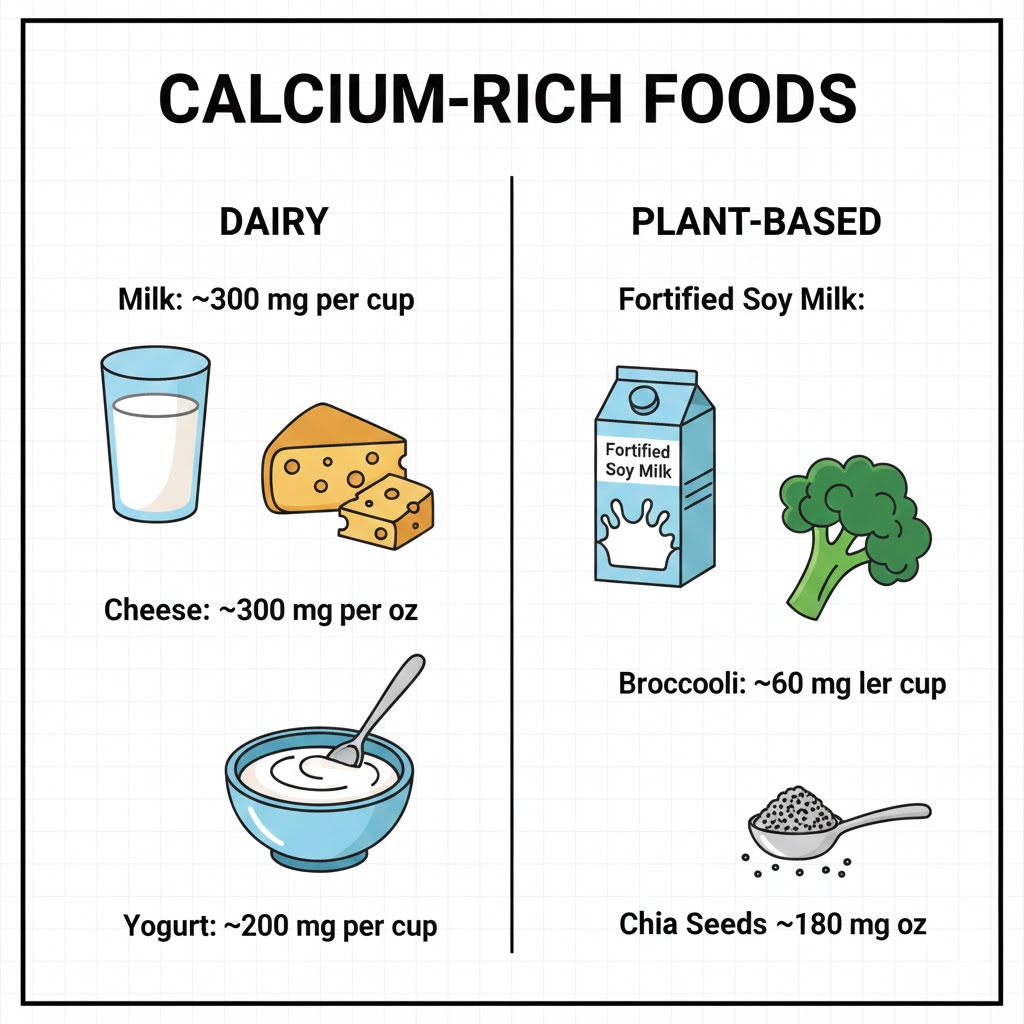
Fortunately, calcium-rich foods are easy to find and fit into many eating styles.
Dairy foods high in calcium
Dairy products are among the most concentrated sources of calcium. One cup of plain yogurt contains about 400 mg, while 1 oz of cheddar cheese provides roughly 200 mg. Milk—whether whole, low-fat, or skim—offers around 300 mg per cup. These foods are convenient options for breakfast, snacks, or cooking, and they also supply protein and vitamin B12.
Plant-based calcium-rich foods
Plant-based eaters can still meet calcium needs with the right choices. Calcium-set tofu can contain 250–350 mg per ½ cup, depending on the brand. Leafy greens like kale offer about 100 mg per cooked cup, while chia seeds provide roughly 180 mg per 2 tbsp. Many US grocery stores also carry fortified plant milks with calcium levels similar to dairy milk.
Calcium-Rich Foods by Dietary Preference

Different diets require different strategies, but calcium can fit them all.
Options for vegetarians and vegans
Vegetarians can rely on dairy, yogurt, and cheese, while vegans often use fortified foods and calcium-set tofu. For example, a smoothie made with fortified almond milk (300 mg per cup) plus 2 tbsp chia seeds can deliver nearly 500 mg of calcium in one serving. Reading nutrition labels is key, as calcium content varies by brand.
Lactose-free and dairy-free choices
For those avoiding lactose, lactose-free milk offers the same calcium as regular milk. Dairy-free options include fortified oat or soy milk, almonds (about 75 mg per 1 oz), and finger millet (ragi), which is increasingly available in specialty US stores and provides significant calcium when cooked.
Easy Ways to Add More Calcium to Everyday Meals
Making calcium-rich foods part of daily meals doesn’t require a major diet overhaul.
Simple meal and snack ideas
Start the day with yogurt topped with almonds and fruit, adding over 400 mg of calcium before noon. At lunch, include kale in salads or soups. For snacks, pair fortified plant milk with whole-grain cereal or enjoy tofu added to stir-fries. Small additions throughout the day help you reach calcium goals without relying on supplements.
Tips and smart swaps
- Use fortified plant milk instead of water in oatmeal
- Add chia seeds to smoothies or yogurt
- Choose calcium-set tofu for cooking
- Snack on almonds instead of chips
- Add leafy greens to soups and pasta
Frequently Asked Questions
- Can you get enough calcium without dairy?
Yes. Many people meet calcium needs through fortified plant milks, tofu, seeds, and leafy greens. For example, two cups of fortified soy milk plus tofu and greens can exceed 1,000 mg in a day. - Is calcium from food better than supplements?
Food sources are generally preferred because they provide additional nutrients and are easier for the body to regulate. Supplements may be helpful in some cases but should be discussed with a healthcare professional. - Does cooking reduce calcium in foods?
Cooking can slightly reduce calcium in some vegetables, but many foods like tofu and dairy retain most of their calcium after cooking. - How does vitamin D relate to calcium?
Vitamin D helps the body absorb calcium. Foods like fortified milk or safe sun exposure support this process, making calcium intake more effective.
Building stronger bones starts with simple food choices. Add one or two calcium-rich foods to your meals this week and build from there—your future bones will thank you.
Disclaimer: This content is for informational purposes only and is not a substitute for professional medical advice.

About Sarah Williams
We turn solid evidence into everyday habits Americans can actually do—plain English, cups/oz, grocery-aisle swaps, and routines that fit real life. Our editorial process: Experience—we road-test tips in real schedules…