High-Protein Seafood Choices for a Healthy Diet
Seafood is one of the easiest ways to boost protein intake without relying on heavy or highly processed foods. Many...
Seafood is one of the easiest ways to boost protein intake without relying on heavy or highly processed foods. Many fish and shellfish deliver impressive protein per serving while staying relatively low in calories and saturated fat. For US shoppers, options like salmon, tuna, cod, and shrimp are widely available fresh, frozen, or canned. This guide breaks down what counts as high-protein seafood, why it matters, and how to include these choices in everyday meals—using practical portions, grocery-friendly examples, and simple cooking ideas.
What Counts as “High-Protein” Seafood?
Before filling your cart, it helps to understand how protein in seafood is measured and compared.
👉 Want to go further? Our complete breakdown of High Protein Mac & Cheese Under 500 Calories walks you through getting enough protein step by step.
Protein per Serving vs. a 3 oz Portion
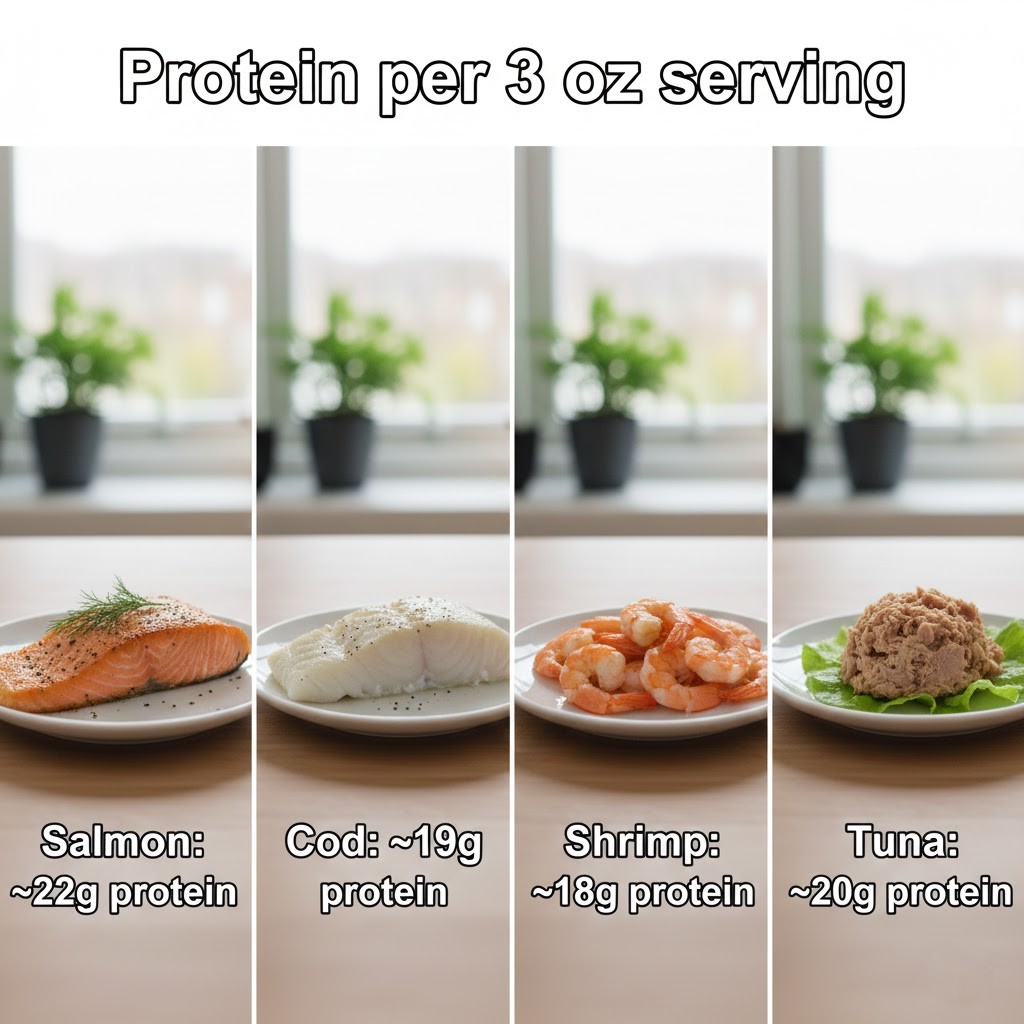
Most nutrition labels in the US list protein per serving, but serving sizes vary. A common reference is 3 ounces cooked fish, about the size of a deck of cards. Many high-protein seafood options provide 18–22 grams of protein per 3 oz. For example, cooked cod offers roughly 19 g protein per 3 oz, while salmon delivers about 21–22 g. Larger portions—like a 5–6 oz fillet—can easily reach 30–35 g of protein, which is comparable to a chicken breast.
👉 For a deeper dive into getting enough protein, check out: Protein-Rich Foods to Power a Healthy Diet — it’s packed with practical tips.
Lean vs. Fatty Fish (Protein + Calories)
Lean fish such as pollock, hake, and cod are high in protein relative to calories, often under 100–120 calories per 3 oz. Fatty fish like salmon and mackerel still offer similar protein amounts but with higher calories due to healthy fats. For example, salmon may contain 175–200 calories per 3 oz, but also supplies omega-3 fats. Both types qualify as high-protein seafood; the best choice depends on calorie needs and personal preferences.
👉 Want to go further? Our complete breakdown of How to Get 100 Grams of Protein a Day walks you through getting enough protein step by step.
Why High-Protein Seafood Is Worth Adding
Once you know what qualifies, the next step is understanding why seafood protein stands out in a balanced diet.
Supports Muscle Maintenance and Recovery
Protein provides amino acids needed for muscle repair and maintenance. Many adults aim for 20–30 g protein per meal, and a single seafood serving can cover most or all of that target. For instance, a 5 oz salmon fillet can supply about 30–35 g protein, making it an efficient main dish after workouts or during active days. Seafood protein is also considered high quality, meaning it contains all essential amino acids.
Helps With Fullness and Meal Planning
High-protein foods are known to increase satiety. Meals built around seafood protein—like shrimp stir-fry or baked cod with vegetables—can help you feel full with fewer calories. For example, swapping a refined-carb-heavy lunch for a tuna salad made with 4 oz canned tuna adds roughly 26–28 g protein, which may help curb mid-afternoon snacking and support more consistent energy levels.
High-Protein Seafood Picks (Easy US Grocery Finds)
Transitioning from theory to practice, here are popular, easy-to-find options that deliver strong protein numbers.
Lean White Fish Options
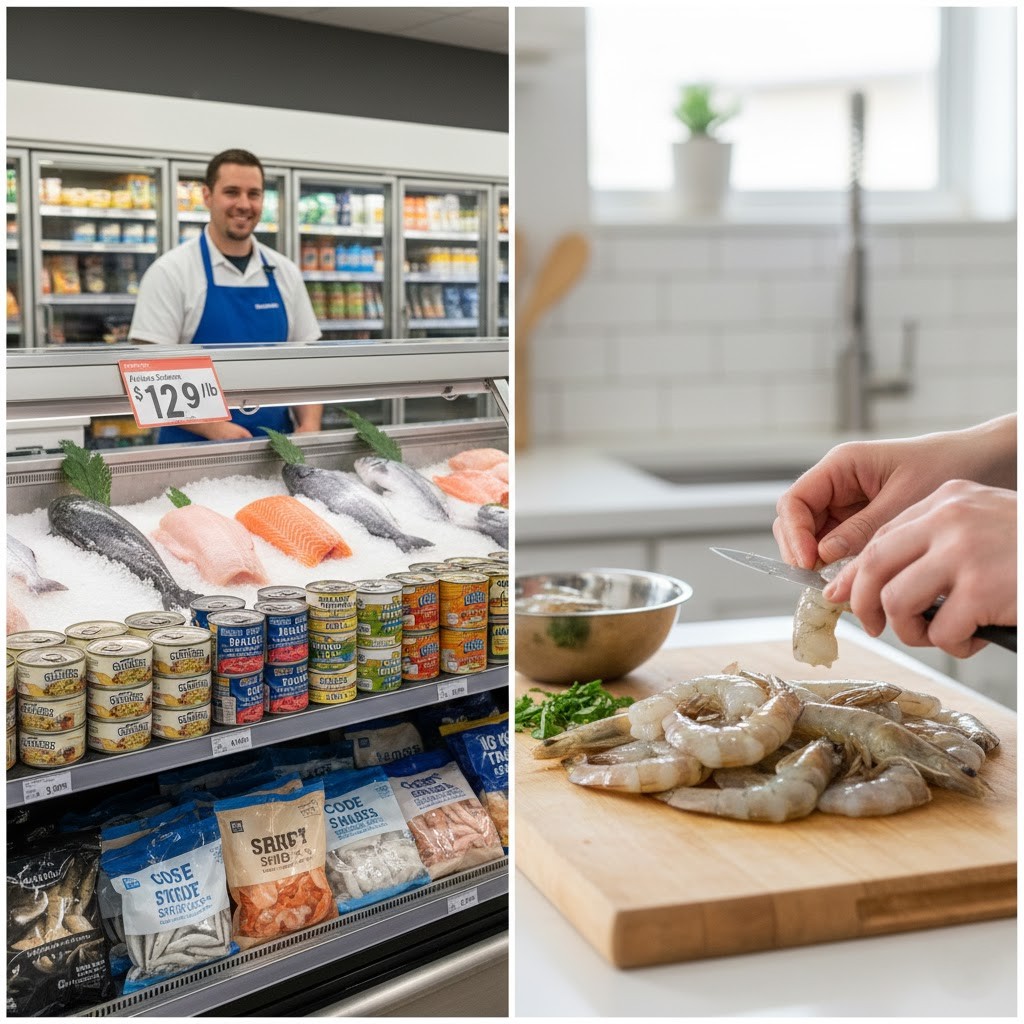
White fish are staples in US supermarkets, often sold frozen in 1 lb bags. Cod, pollock, and hake typically provide 18–20 g protein per 3 oz cooked with minimal fat. Pollock is especially budget-friendly and commonly used in fish sticks and fillets. Baking or air-frying a 6 oz pollock fillet can yield about 36 g protein for under 200 calories, making it ideal for lighter meals.
Protein-Rich Favorites and Canned Options
Salmon, trout, tuna, and sardines combine protein with additional nutrients. Canned light tuna packed in water offers about 20 g protein per 3 oz drained and is widely available for under a few dollars per can. Sardines provide roughly 22–23 g protein per 3.75 oz can and are rich in calcium when bones are included. Shrimp also stands out, with 20–21 g protein per 3 oz, and cooks in under 5 minutes.
Simple Ways to Eat More Seafood Protein
Knowing the options is helpful, but consistency comes from easy preparation and realistic portions.
Portion Sizes and Meal Formulas
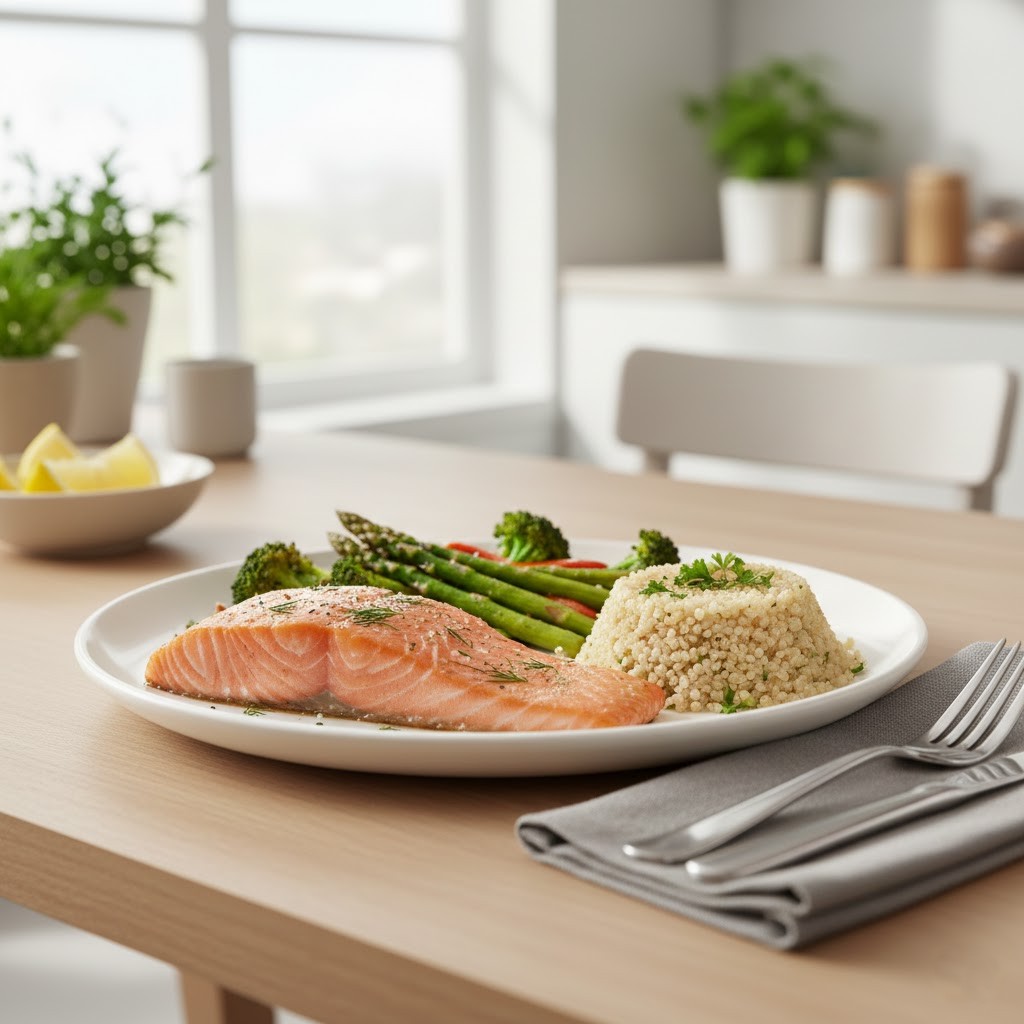
For most adults, a practical protein portion is 3–6 oz cooked seafood per meal. A simple formula is: seafood + vegetable + carb. For example, 5 oz baked salmon, 1 cup roasted broccoli, and ½ cup cooked rice create a balanced plate with about 35 g protein. Tacos, grain bowls, and salads also work well for shrimp or white fish.
Freezer Staples and Meal Prep Tips
Frozen seafood is often just as nutritious as fresh and lasts longer. Keeping 1–2 lb bags of frozen shrimp or fillets on hand makes last-minute meals easier. Portion seafood into freezer bags of 4–6 oz before freezing. Thaw overnight in the fridge or under cold running water for 10–15 minutes before cooking.
Portions, Safety, and What to Watch For
As you add more seafood, it’s important to balance portions with safety considerations.
Mercury, Sodium, and Smart Choices
Most people can safely eat seafood 2–3 times per week. Lower-mercury options include salmon, sardines, pollock, cod, and shrimp. Canned seafood can be higher in sodium—some tuna or sardines contain 300–400 mg sodium per serving—so look for “low-sodium” labels or rinse before eating. Cooking seafood to an internal temperature of 145°F (63°C) ensures safety.
Cooking Methods That Keep Protein High
Gentle cooking preserves protein quality. Baking, grilling, steaming, and air-frying require little added fat and keep calories predictable. For example, air-frying shrimp at 400°F for 6–8 minutes results in a high-protein entrée with minimal oil. Avoid deep-frying frequently, as it adds extra calories without increasing protein.
Tips & Swaps
- Swap chicken with 5 oz shrimp in stir-fries for similar protein, faster cooking.
- Choose pollock or cod instead of breaded fish for fewer calories.
- Use Greek yogurt instead of mayo in tuna salad.
- Keep tuna packets for portable, high-protein lunches.
- Pair seafood with vegetables before adding starches to control calories.
FAQs
- How much protein is in seafood compared to meat?
Most fish provide 18–22 g protein per 3 oz, similar to chicken or beef. Fatty fish like salmon match meat protein levels while adding beneficial fats. Lean fish may be slightly lower in calories than meat for the same protein amount. - Is canned seafood as good as fresh?
Yes, canned tuna, salmon, and sardines retain most of their protein. A 3 oz drained serving usually offers 18–22 g protein. Watch sodium levels and choose water-packed options when possible. - How often should I eat high-protein seafood?
For most adults, 2–3 servings per week fits general dietary guidance. Spreading servings across the week helps balance nutrients and reduces concerns about mercury exposure. - What’s the best seafood for weight management?
Lean options like cod, pollock, shrimp, and hake offer high protein with fewer calories. A 5 oz serving can deliver 30+ g protein for under 200 calories, supporting fullness without excess energy. - Can kids eat high-protein seafood?
Yes, children can benefit from seafood protein. Choose low-mercury fish like salmon or pollock and keep portions smaller, such as 1–2 oz cooked, depending on age.
Looking to boost your protein intake without overcomplicating meals? Start by adding one high-protein seafood dish this week—simple, affordable, and easy to find at your local US grocery store.
Disclaimer: This content is for informational purposes only and is not a substitute for professional medical advice.

About Mike Johnson
We turn solid evidence into everyday habits Americans can actually do—plain English, cups/oz, grocery-aisle swaps, and routines that fit real life. Our editorial process: Experience—we road-test tips in real schedules…