Roti vs Rice: Which Is Better for Your Diet?
When it comes to choosing carbs, few debates are as common as roti vs rice. Both are staples in many...
When it comes to choosing carbs, few debates are as common as roti vs rice. Both are staples in many households and can absolutely fit into a healthy eating pattern. But portion size, preparation, and your personal goals matter more than most graphics suggest. This article breaks down roti vs rice using realistic servings, US-friendly measurements, and practical meal examples so you can decide what works best for your diet—without cutting out foods you enjoy.
Roti vs Rice: The Quick Answer
At first glance, roti often looks “healthier” than rice, but the better choice depends on calories, carbs, and how you eat it. Let’s set expectations before diving deeper.
👉 This pairs well with our Nutrient-Rich Nuts & Seeds: Top Health Benefits guide if you want the full picture on topics related to benefits.
Lower Calories and Carbs
One medium whole-wheat roti (about 6 inches across) contains roughly 90 calories and 15 g carbs. By comparison, ½ cup cooked white rice (about 100 g) has around 130–140 calories and 28–30 g carbs. If calorie control or carb reduction is your priority, roti usually comes out ahead per serving.
👉 Want to go further? Our complete breakdown of High Protein Mac & Cheese Under 500 Calories walks you through getting enough protein step by step.
Blood Sugar and Fullness
Roti made from whole-wheat flour tends to digest more slowly than white rice, helping with steadier blood sugar. However, rice portions often creep up—1 cup cooked rice (about 200 g) can easily hit 280 calories, which changes the comparison quickly.
👉 If you’re also working on managing blood sugar naturally, our detailed guide on Diabetes Superfoods: What to Eat for Better Blood Sugar covers exactly what you need.
What Counts as a “Serving” in Real Life
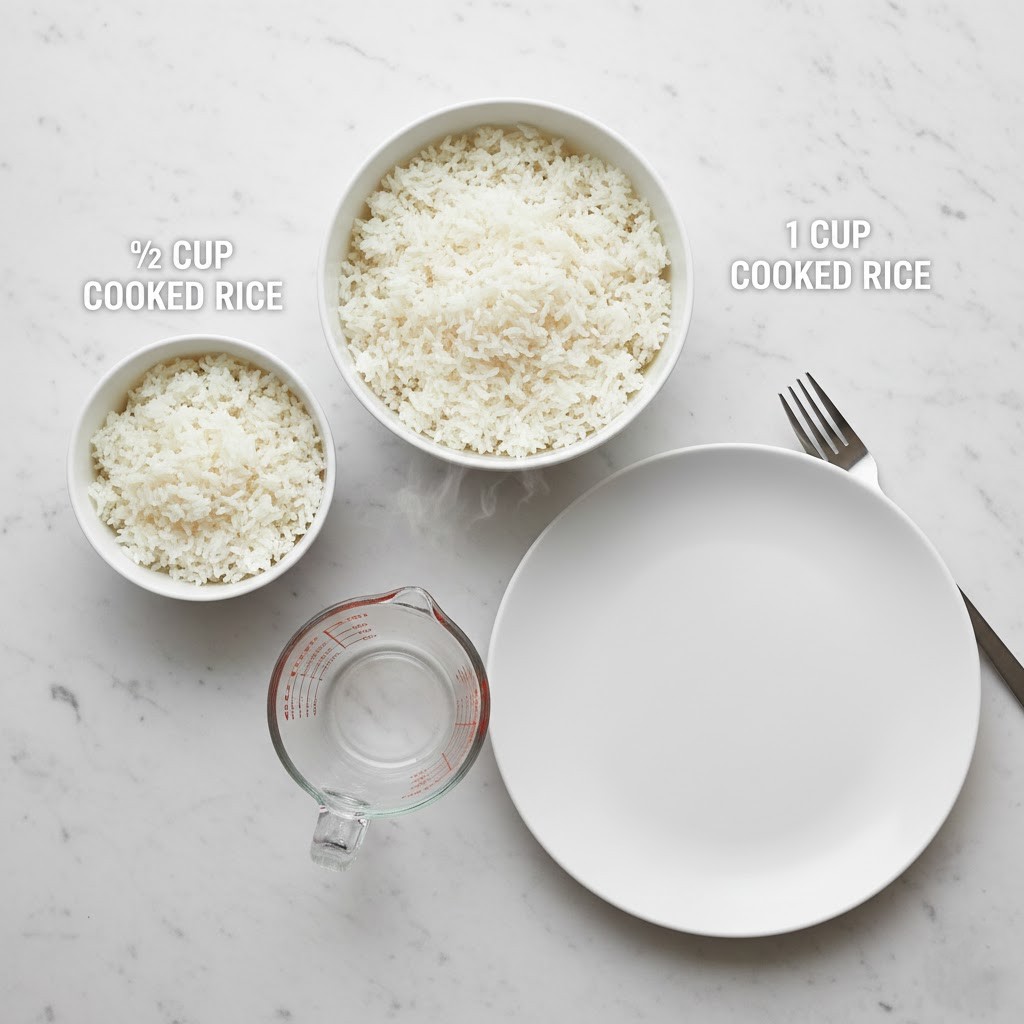
To fairly compare roti vs rice, we need to define portions the way people actually eat them in the US.
Roti vs Rice: Side-by-Side Portions
- 1 roti: ~6 inches, made from ~¼ cup whole-wheat flour
- ½ cup cooked rice: about the size of a tennis ball
Many bowls served at home or restaurants hold 1–1½ cups cooked rice, which equals 2–3 rotis worth of calories. This portion gap explains why rice often feels more “fattening,” even though the food itself isn’t the issue.
Why Portion Size Changes Everything
If you eat 2 rotis (~180 calories) versus 1½ cups cooked rice (~420 calories), the difference isn’t subtle. Measuring rice with a standard US measuring cup—even once or twice a week—can dramatically change your calorie intake without changing what foods you enjoy.
Nutrition Breakdown: Calories, Carbs, Protein, Fat
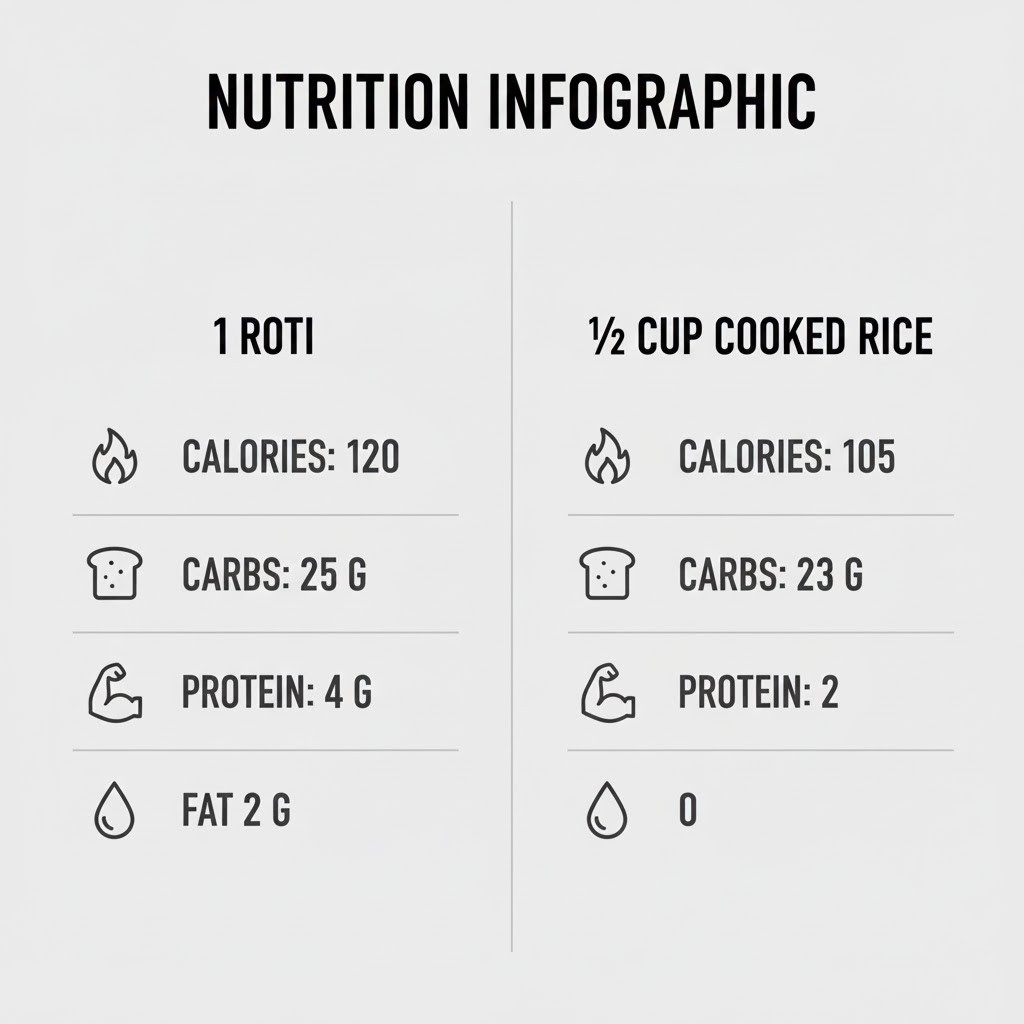
Now let’s compare roti vs rice more precisely, using common nutrition ranges.
Calories and Carbohydrates
- 1 roti: ~90 calories, ~15 g carbs
- ½ cup cooked white rice: ~135 calories, ~28 g carbs
Rice delivers almost double the carbs per serving. For people watching blood sugar or total daily carbs (for example, aiming for 130–180 g carbs/day), this difference adds up fast.
Protein and Fat (Both Are Low)
Both foods are carb-dominant. One roti provides about 3 g protein, while ½ cup rice offers 2.5–3 g protein. Fat is minimal in both unless oil or ghee is added. The takeaway: neither roti nor rice is a meaningful protein source—you’ll want lentils, beans, eggs, tofu, chicken, or fish alongside them.
Weight Goals and Blood Sugar Control
If your main concern is weight loss or steady energy, the context of the meal matters more than the carb choice itself.
Satiety and Chewing
Roti usually requires more chewing and contains slightly more fiber when made from whole-wheat flour. That extra chewing time and fiber can help you feel full on 200–300 fewer calories compared to a large rice bowl.
Glycemic Impact in Real Meals
White rice has a higher glycemic index than whole-wheat roti, but pairing rice with protein and fat makes a big difference. For example:
- ½ cup rice + 4 oz grilled chicken + veggies leads to a steadier response than rice alone.
- 2 rotis + lentil curry + sautéed vegetables offers fiber, protein, and slower digestion.
How to Choose Based on Your Diet Style
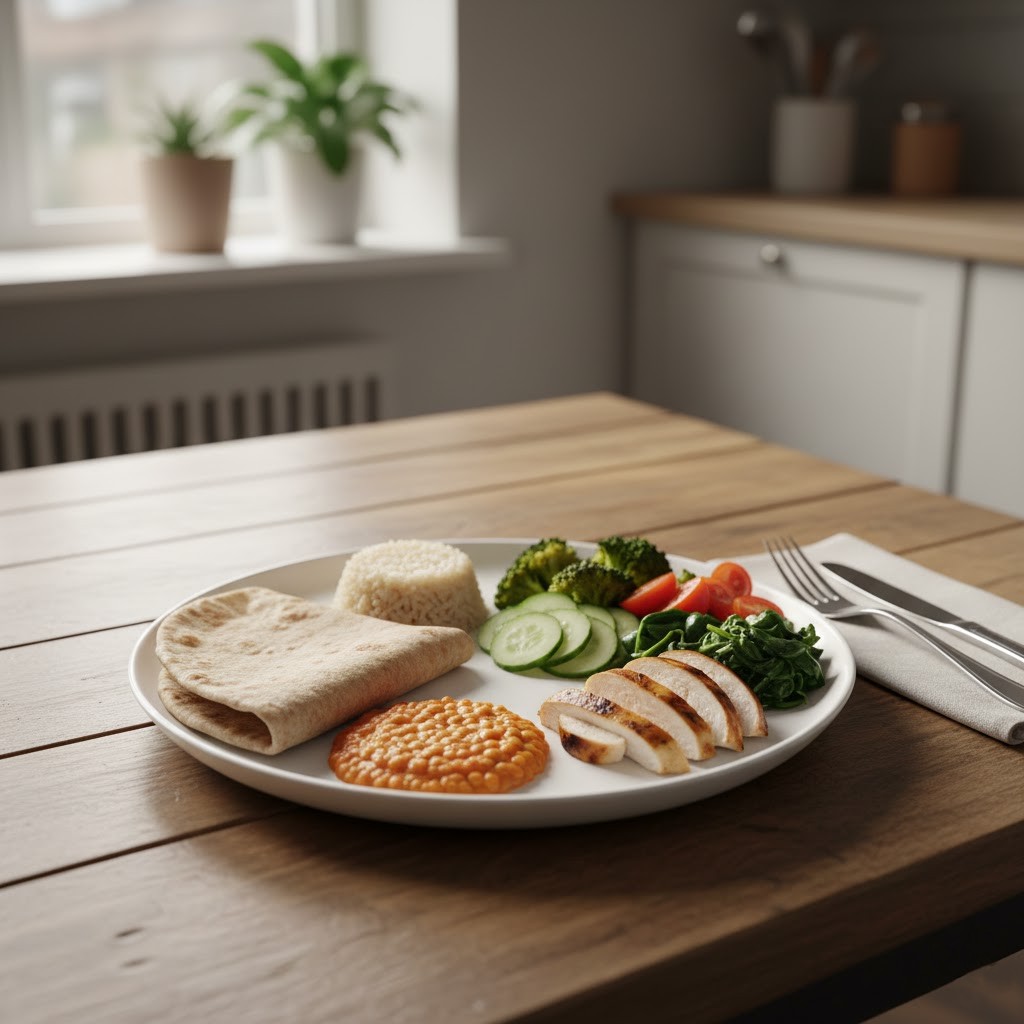
Rather than asking “Is roti healthier than rice?” a better question is: Which fits my lifestyle today?
Best Choice for Different Needs
- Weight loss: Roti is often easier to portion and lower in calories.
- Diabetes or prediabetes: Whole-wheat roti or smaller rice portions with protein.
- Gluten-free diets: Rice is naturally gluten-free; roti is not unless specially made.
- High activity days: Rice can be useful post-workout when you need quick carbs.
Practical Tips and Easy Swaps
- Use a ½-cup measuring cup for rice.
- Choose whole-wheat roti, not refined flour.
- Add 1–2 cups non-starchy vegetables to every meal.
- Pair carbs with 4–6 oz protein.
- Limit added ghee or butter to 1 tsp per serving.
- Alternate rice and roti across the week.
- Try brown or basmati rice for better portion control.
FAQs
1. Is roti healthier than rice?
Roti is often lower in calories and carbs per serving, especially when made from whole-wheat flour. However, rice can still be part of a healthy diet if portions are controlled and meals include protein and vegetables. The “healthier” option depends on how much you eat and what you eat it with.
2. Is basmati rice better than regular white rice?
Basmati rice typically has a slightly lower glycemic impact and a stronger aroma, which can help with portion control. A ½ cup cooked basmati rice (~120–130 calories) is comparable to other white rice types but may feel more satisfying.
3. How many rotis equal 1 cup cooked rice?
Roughly speaking, 1 cup cooked rice (~280 calories) equals about 3 medium rotis (~270 calories). This comparison highlights why rice portions can drive higher calorie intake if you’re not measuring.
4. Can I eat rice and still lose weight?
Yes. Weight loss depends on total calorie intake, not a single food. Eating ½ cup rice instead of 1–2 cups, combined with protein and vegetables, can easily fit into a calorie-controlled diet.
When it comes to roti vs rice, neither is “bad.” Roti usually wins for portion control and lower calories, while rice offers flexibility and quick energy. Choose based on your goals, measure portions, and build balanced plates.
Want better portion control without giving up your favorite foods? Start by measuring rice once a day this week—you might be surprised how much that one habit helps.
Disclaimer: This content is for informational purposes only and is not a substitute for professional medical advice.

About Sarah Williams
We turn solid evidence into everyday habits Americans can actually do—plain English, cups/oz, grocery-aisle swaps, and routines that fit real life. Our editorial process: Experience—we road-test tips in real schedules…