12 Foods That Support Healthy Lungs
Maintaining strong, healthy lungs isn’t just important for athletes or people with breathing concerns—it matters for everyone. The foods you...
Maintaining strong, healthy lungs isn’t just important for athletes or people with breathing concerns—it matters for everyone. The foods you choose each day can influence how well your lungs handle stress, inflammation, and environmental irritants. This list of 12 lung-supportive foods reflects ingredients most US households can easily find at grocery stores or farmers markets. Below, you’ll learn why these foods matter, how they help your lungs function more comfortably, and simple ways to work them into your routine.
Why Nutrition Matters for Lung Health
Choosing the right foods creates a foundation for easier breathing and long-term lung support. While food alone cannot prevent or treat medical issues, the nutrients in everyday ingredients play a meaningful role in how your lungs respond to oxidative stress and hydration needs.
👉 For a deeper dive into topics related to benefits, check out: Nutrient-Rich Nuts & Seeds: Top Health Benefits — it’s packed with practical tips.
How antioxidants protect lung tissue
Antioxidants are compounds that help reduce oxidative stress, which can affect the delicate tissues in your lungs. Foods like apples, leafy greens, and bell peppers provide vitamins A, C, and E—nutrients known for supporting cellular repair. For example, one medium apple supplies about 14% of the daily value of vitamin C, which can help neutralize free radicals your lungs encounter from pollution or smoke. Eating antioxidant-rich produce several times per week may help your lungs maintain resilience as you age.
👉 If you’re also working on topics related to inflammatory, our detailed guide on 15 Easy Anti-Inflammatory Meals for Weeknights covers exactly what you need.
The role of hydration in easier breathing
Hydration influences mucus consistency, airway comfort, and overall respiratory function. Drinking enough water throughout the day keeps mucus thin, making it easier for your lungs to clear irritants. Even a simple habit—like drinking 8–10 cups of water daily—can support smoother airflow. Hydrating fruits such as oranges and apricots also contribute water and electrolytes, offering an additional way to keep your lungs functioning more comfortably in dry climates or during winter months.
👉 For a deeper dive into topics related to benefits, check out: Benefits Of Drinking Gallon Water Daily — it’s packed with practical tips.
Top Fruits for Better Lung Function

Adding certain fruits to your routine is an easy way to nourish your lungs with vitamins, hydration, and lung-supportive antioxidants. These options are convenient for busy households and can be found in most US grocery stores year-round.
Apples, apricots, and citrus benefits
Apples are known for their flavonoids, which may help the lungs respond better to environmental stress. One study-referenced serving—just one apple a day—can add notable antioxidant support. Apricots contain beta-carotene, which the body converts into vitamin A, a nutrient linked to healthy lung lining function. Oranges and other citrus fruits add more vitamin C than many people expect: a single orange offers close to 70 mg, which is about 75% of the daily value. Together, these fruits provide convenient, sweet ways to support your breathing and overall lung function.
How these fruits support daily breathing
These fruits help your lungs work more efficiently by offering hydration, vitamins, and gentle anti-inflammatory compounds. For instance, eating ½ cup of apricots or drinking a small glass of orange juice in the morning helps keep mucus moving comfortably as your day begins. Including fruit as an afternoon snack also provides steady energy without heavy digestion demands, making it easier for the lungs to stay relaxed rather than strained. The key is consistency—choosing fruit several times per week supports long-term benefits.
Vegetables and Spices That Strengthen the Lungs
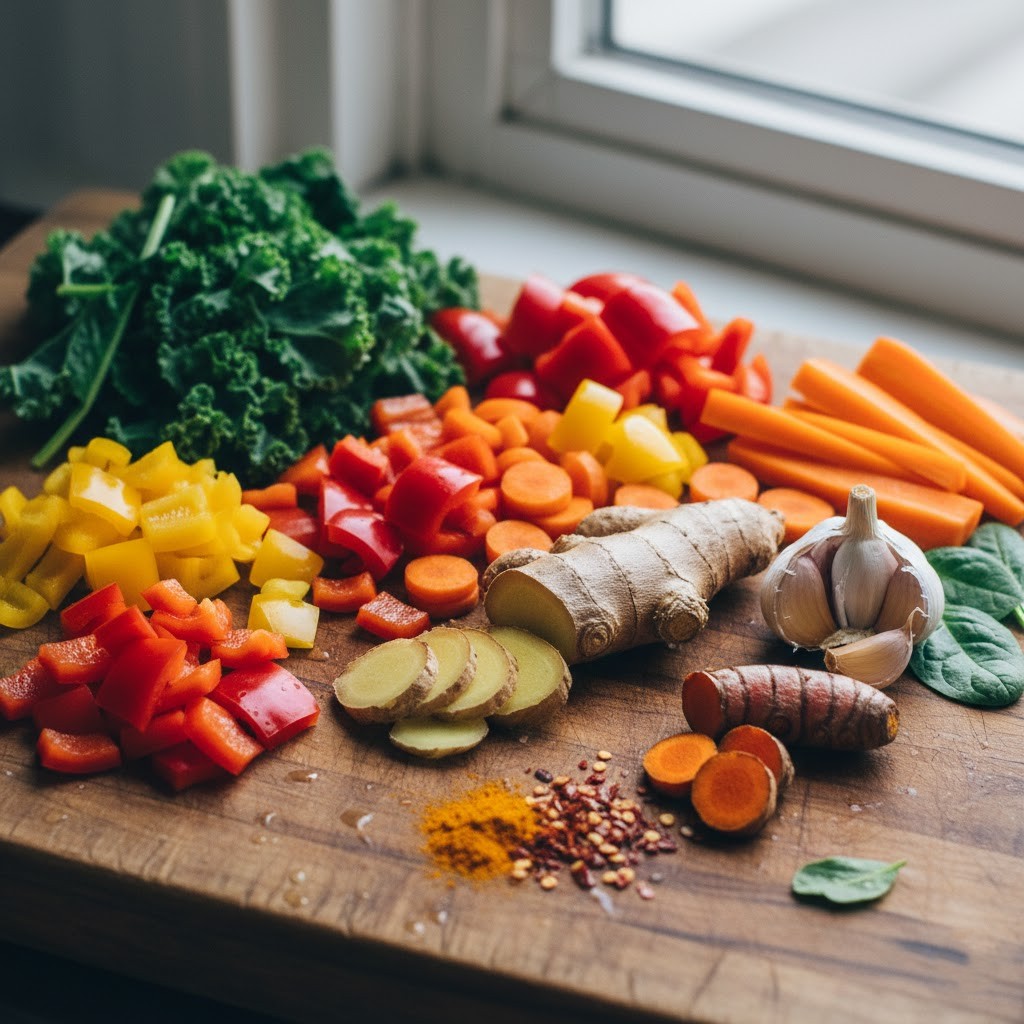
Beyond fruit, vegetables and aromatic spices offer potent compounds that may help reduce inflammation and support lung tissue health. These foods also integrate seamlessly into soups, stir-fries, and everyday meals.
Bell peppers, leafy greens, and carrots
Bell peppers—especially red ones—deliver high levels of vitamin C, often more than an orange. A ½-cup serving of chopped red bell pepper contains around 95 mg. Leafy greens like spinach and kale add folate and antioxidants that play a role in lung cell repair. Carrots, rich in beta-carotene, convert to vitamin A, which supports the respiratory lining. Even adding one extra serving of vegetables per meal—like ½ cup of sliced peppers or shredded carrots—can boost your nutrient intake in a meaningful way.
Anti-inflammatory foods like ginger, garlic, and turmeric
Ginger contains gingerol, a compound known for gentle anti-inflammatory support that may help soothe the airways. Garlic offers allicin, which has been researched for its potential antioxidant benefits. Turmeric provides curcumin, a compound that supports your body’s natural inflammatory response. For example, adding just ¼–½ teaspoon of turmeric to a soup or roasted vegetables offers a flavorful and accessible way to incorporate these lung-supportive spices into your week.
How to Add These Lung-Friendly Foods to Your Routine

Knowing which foods help your lungs is one thing; using them daily is another. Fortunately, adding lung-supportive ingredients doesn’t require major lifestyle changes—just small, steady shifts built into familiar meals.
Simple daily swaps and snack ideas
Try replacing one processed snack with a whole-food option, like baby carrots or an apple. For breakfast, add orange slices or a spoonful of turmeric to oatmeal. Including vegetables in every dinner—such as mixing bell peppers into pasta or adding leafy greens to a chicken stir-fry—can increase lung-supportive nutrients without extra cooking steps. Even drinking a glass of water before each meal can help keep your airways hydrated throughout the day.
Budget-friendly ways to include more produce
Frozen fruits and vegetables are often just as nutritious as fresh options and can cost 20–30% less at many US grocery stores. Buying carrots, onions, or garlic in bulk offers long shelf life at a low price. Store-brand frozen spinach or bell pepper strips work well in soups, eggs, or sautés and reduce food waste. For spices like turmeric or ginger, choose small containers or buy from bulk bins to keep costs manageable while still supporting lung health.
When to Seek Professional Guidance
While food is a powerful tool, it shouldn’t replace medical attention when your lungs show signs of distress. Understanding when to seek help ensures you get the right support at the right time.
Signs your breathing needs medical attention
If you experience symptoms such as persistent shortness of breath, wheezing, chest tightness, or coughing that lasts longer than three weeks, it’s important to consult a healthcare professional. These symptoms can signal underlying conditions that food alone cannot address. Likewise, if you notice a sudden drop in your exercise tolerance—such as struggling with a flight of stairs you normally handle easily—it’s important to get evaluated promptly.
How diet supports—but doesn’t replace—medical care
A balanced diet rich in the 12 lung-friendly foods can complement your overall care plan, but it should not be viewed as a treatment. Instead, think of nutrition as one pillar—alongside exercise, clean air, hydration, and professional guidance. For example, someone taking prescribed inhalers or undergoing respiratory therapy may feel more supported when their diet includes antioxidant-rich fruits and vegetables, yet medical treatment remains essential. Combining both approaches ensures the best long-term outcomes.
Tips & Swaps
- Add ½ cup bell peppers to omelets for extra vitamin C.
- Swap chips for an apple or orange at least three times weekly.
- Use frozen leafy greens in soups for convenience and savings.
- Stir ¼ tsp turmeric into rice or roasted vegetables.
- Keep baby carrots or ginger tea on hand for quick snacks.
- Pair garlic with roasted vegetables for better flavor and antioxidants.
FAQs
- How often should I eat lung-supportive foods?
Aim to include at least one lung-friendly food in two meals each day. Consistency is more important than quantity. Even adding apples, leafy greens, or ginger several times per week can contribute meaningful antioxidant support without requiring major diet changes. - Are these foods helpful for people with asthma or allergies?
They may offer gentle nutritional support, particularly because antioxidants and hydration can help the body respond to environmental irritants. However, these foods do not treat asthma or allergies. Anyone with a respiratory condition should continue prescribed care and discuss dietary changes with their clinician. - Can kids benefit from lung-healthy foods?
Yes. Children often enjoy sweet fruits like apples and oranges, which naturally provide vitamins that support lung development. Add finely chopped vegetables to sauces or soups for an easy boost. Still, always follow pediatric guidance if a child has breathing difficulties. - Are supplements necessary for lung health?
Most people can get beneficial nutrients from whole foods without supplements. For example, a single red bell pepper often provides over 100% of daily vitamin C needs. If you’re considering supplements—especially turmeric or ginger extracts—speak with a healthcare professional to ensure safety. - Do I need to buy organic produce for lung benefits?
Not necessarily. Both organic and conventional options provide the same lung-supportive vitamins and minerals. Washing produce thoroughly with water is usually enough to remove surface residues. Choose the option that fits your budget and availability.
Start supporting your lungs today by adding just one extra fruit or vegetable to your next meal. Over time, these simple habits build a foundation for easier breathing and better long-term respiratory wellness.
Disclaimer: This content is for informational purposes only and is not a substitute for professional medical advice.

About Sarah Williams
We turn solid evidence into everyday habits Americans can actually do—plain English, cups/oz, grocery-aisle swaps, and routines that fit real life. Our editorial process: Experience—we road-test tips in real schedules…