What Your Urine Color and Smell Reveal
Urine is something most of us don’t think about—yet its color and smell can offer valuable clues about hydration, diet,...
Urine is something most of us don’t think about—yet its color and smell can offer valuable clues about hydration, diet, and overall health. While changes in urine are usually harmless, noticeable shifts can sometimes signal that your body needs attention. Understanding what’s normal, what’s not, and when to get help empowers you to respond early. This guide breaks down the most common urine colors and smells, what they may mean, and when it’s time to talk with a healthcare professional.
Why Urine Color and Smell Matter
As your body filters blood and removes waste, urine naturally varies in appearance. But consistent changes can reveal patterns worth noticing. This section explains why these variations occur and the situations where they matter most.
👉 Want to go further? Our complete breakdown of What Your Tongue Color Says About Your Health walks you through topics related to health step by step.
How urine reflects hydration and health
Urine’s color depends heavily on hydration. When you’re well-hydrated, your urine is usually pale yellow because it’s more diluted. But when fluid intake drops—sometimes by as little as 16–24 oz—your urine may turn dark yellow or amber. This shift happens because the pigments in urine, especially urochrome, become more concentrated. Smell can also change as hydration levels shift; for example, dehydration may create a noticeably stronger odor. Certain foods like asparagus or coffee can temporarily change the smell too, while vitamins—particularly B-complex—can make urine appear bright yellow. These changes are generally harmless and improve once your fluid intake increases.
👉 This pairs well with our Habits Linked to Common Health Issues guide if you want the full picture on topics related to health.
When changes should prompt medical attention
Some urine changes reflect more than hydration or diet. For example, red or pink urine can appear after eating beets, but if the color persists for more than 24 hours, it may indicate blood in the urine. Strong or unusual odors that last more than a day may suggest infection or metabolic conditions. A sweet or fruity smell—especially if paired with symptoms like thirst or fatigue—may be associated with elevated blood sugar. While one-time changes are common, persistent shifts lasting 48 hours or longer, or those accompanied by pain, fever, or back discomfort, should be evaluated by a healthcare professional. Tracking how long changes last can help determine whether they’re harmless or worth investigating.
👉 If you’re also working on topics related to equipment, our detailed guide on 10-Minute Core Burn Workout at Home (No Equipment) covers exactly what you need.
What Different Urine Colors Can Mean
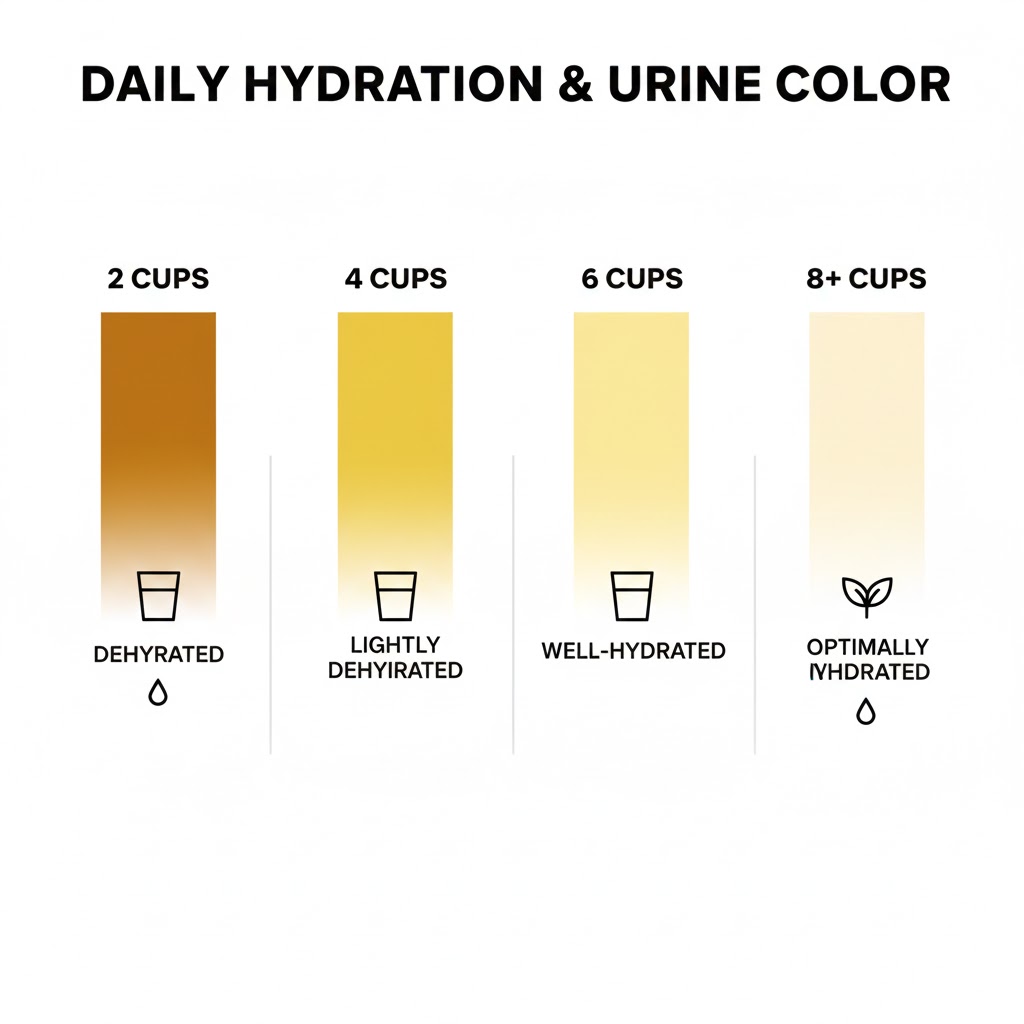
As you pay closer attention, you’ll notice that urine color can shift throughout the day. This section breaks down some of the most common colors and what they may signal.
Pale to dark yellow (hydration levels)
A pale-yellow color generally indicates adequate hydration, especially when you’re drinking around 8 cups (64 oz) of water daily. If the color becomes bright or neon yellow, vitamin supplements—particularly B-12—are often to blame. On the other hand, urine that appears dark yellow or amber may be an early sign that you need more fluids. Even a mild level of dehydration can cause the kidneys to conserve water, making urine more concentrated. In hot climates or during activities like jogging, losing as little as 1–2% of your body’s water can intensify urine color quickly. Drinking regular fluids usually restores urine to its lighter shade within a few hours.
Red or pink (possible blood or food causes)
Seeing red or pink urine can be alarming, but it isn’t always a medical emergency. Beets, blackberries, and rhubarb can temporarily tint urine these colors, often within 2–4 hours of eating them. However, if the color persists or appears without dietary explanation, it could be linked to blood in the urine, known as hematuria. Even small amounts—sometimes invisible to the eye—can show as pink or red. Causes range widely from urinary tract irritation to kidney stones. Rarely, strenuous exercise like long-distance running can also cause temporary urinary bleeding. Persistent red or pink urine always deserves medical attention, especially when accompanied by burning, frequency changes, or back pain.
Green, orange, or purple (rare but important signs)
Green urine is uncommon but can appear after consuming certain food dyes or taking specific medications, such as some antihistamines. Bacterial infections can also cause a green tint due to pigments produced during the infectious process. Orange urine often links to dehydration or medications like phenazopyridine, sometimes used for urinary discomfort. Purple urine is rare and most commonly seen in catheterized patients due to a biochemical reaction involving bacteria and dietary compounds. While not typically dangerous on its own, purple urine can signal a metabolic or bacterial imbalance. Any unusual color lasting more than a day—especially without a clear cause—should be discussed with a healthcare provider.
What Different Urine Smells Can Indicate
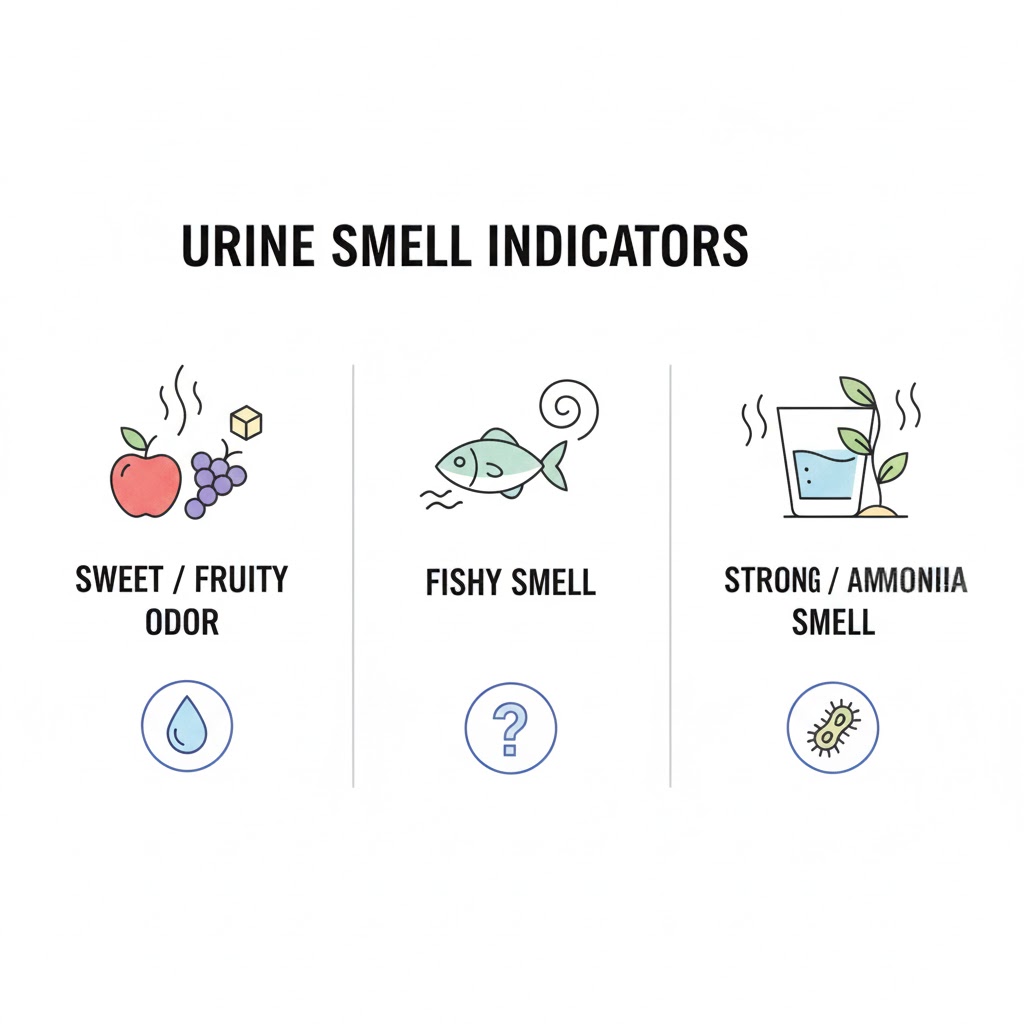
Urine naturally has a mild scent, but noticeable or persistent odor shifts can offer important insights. This section outlines the most common smells and their possible meanings.
Sweet or fruity odors
A sweet or fruity urine smell can appear when sugars or ketones build up in the body. For example, if you’ve gone several hours without eating, ketones can rise and create a slightly sweet odor. However, a more pronounced fruity smell—especially when paired with symptoms like increased thirst or frequent urination—may indicate elevated blood sugar. Some people also notice a sweet smell after consuming large amounts of sugary drinks or certain vitamins. While diet can influence odor for a short time, persistent sweetness lasting more than 24 hours is worth discussing with a clinician, as it may signal an underlying metabolic imbalance.
Fishy, strong, or beer-like smells
A fishy odor can suggest a bacterial imbalance, particularly if accompanied by urinary urgency or discomfort. Infections in the urinary tract may produce ammonia-like smells, sometimes described as sharp or sour. Drinking too little water can make these odors stronger because waste products become more concentrated. A “beer-like” odor—deep, musky, or fermenting—may occur when the body processes certain foods or medications but can also signal liver-related issues. Additionally, consuming strong-smelling foods like garlic, onions, or asparagus can alter urine odor for 8–12 hours. If smell changes persist or worsen, especially alongside fever or pelvic pain, a medical evaluation is recommended.
When to Talk to a Healthcare Professional
Although most urine changes resolve quickly, some patterns indicate the need for medical guidance. This section helps clarify what signs should prompt a conversation with a healthcare provider.
Persistent changes that don’t improve
If urine color or odor remains unusual for more than 48 hours—especially after increasing fluid intake—consider reaching out to a healthcare professional. Changes that recur frequently over several weeks may indicate an underlying condition, such as chronic dehydration, urinary tract issues, or medication effects. For example, if you consistently notice dark yellow urine even when drinking 8–10 cups of water each day, it may be worth assessing kidney function or checking for electrolyte imbalances. Keeping a short log of fluid intake and urine changes can help clinicians identify patterns and rule out temporary causes.
Red-flag symptoms to watch for
Some symptoms require prompt medical attention. These include: visible blood in urine, persistent pain in the lower back or side, fever paired with urinary discomfort, and sudden color changes without clear cause. For instance, red or pink urine accompanied by sharp flank pain could indicate kidney stones. Severe burning while urinating plus cloudy or foul-smelling urine may suggest infection. If you experience nausea, vomiting, or fatigue along with unusual urine changes, these could be signs of systemic issues. Trust your instincts—it’s better to seek guidance early rather than wait for symptoms to escalate.
FAQs
- What is the healthiest urine color?
The healthiest urine is generally pale yellow, similar to the color of lemonade. This usually indicates you’re well-hydrated and your kidneys are filtering properly. Variations throughout the day are normal, but urine that stays pale yellow consistently is a good sign of balanced hydration. - Why does my urine smell stronger in the morning?
Morning urine often smells stronger because it’s more concentrated after several hours without drinking water. Waste products accumulate overnight, which intensifies the odor. Drinking a glass of water before bed and rehydrating in the morning can help reduce this effect. - Can foods really change urine color?
Yes, certain foods can noticeably change urine color. Beets, blackberries, and rhubarb can turn urine red or pink, while asparagus may create a sulfur-like smell. These changes are temporary and should resolve within 12–24 hours depending on fluid intake and metabolism. - What does cloudy urine mean?
Cloudy urine can stem from dehydration, dietary factors, or the presence of minerals. However, cloudiness paired with burning or urgency may indicate infection. If the cloudiness lasts longer than a day or occurs frequently, consider getting a urinalysis to check for bacteria or crystals. - When should I be concerned about urine smell?
If the odor is unusually strong, sweet, or fishy and persists for more than 24–48 hours, it may indicate infection or metabolic imbalance. Persistent odor paired with pain, fever, or abdominal discomfort is a sign to seek medical attention promptly.
Want more simple, science-backed wellness insights? Explore our latest guides to stay informed and support your everyday health with confidence.
Disclaimer: This content is for informational purposes only and is not a substitute for professional medical advice.

About Sarah Williams
We turn solid evidence into everyday habits Americans can actually do—plain English, cups/oz, grocery-aisle swaps, and routines that fit real life. Our editorial process: Experience—we road-test tips in real schedules…