High-Protein Breakfast Options for Busy Mornings
Starting your day with enough protein can make a meaningful difference in how energized and satisfied you feel through the...
Starting your day with enough protein can make a meaningful difference in how energized and satisfied you feel through the morning. For many US adults juggling work, kids, and a tight schedule, a high-protein breakfast doesn’t just support overall wellness—it helps prevent midmorning cravings and keeps you focused. This guide walks you through simple, everyday high-protein breakfast options you can assemble quickly using common grocery staples, along with tips to help you build balanced, realistic morning routines.
Why High-Protein Breakfasts Matter
Before choosing your favorite options, it helps to understand why protein in the morning is so beneficial. This section outlines the key roles protein plays in energy, fullness, and daily eating habits.
👉 Want to go further? Our complete breakdown of High Protein Mac & Cheese Under 500 Calories walks you through getting enough protein step by step.
How protein supports steady morning energy
Protein is digested more slowly compared to simple carbohydrates, which helps maintain a steadier release of energy throughout the morning. For example, starting the day with 2 scrambled eggs provides roughly 12 grams of protein, which can help prevent the typical 10 a.m. energy crash that many people experience after eating only toast or cereal. Because protein supports muscle repair and maintenance, having at least 15–25 grams at breakfast may also help active adults feel more stable and focused. Even small additions—like 1 tablespoon of peanut butter (around 3–4 grams of protein)—can make your breakfast more sustaining.
👉 If you’re also working on getting enough protein, our detailed guide on Protein-Rich Foods to Power a Healthy Diet covers exactly what you need.
The role of protein in appetite and weight control
Eating protein early in the day may help regulate hunger hormones, making it easier to avoid overeating later. Studies suggest that meals containing at least 20 grams of protein can support better appetite control compared to low-protein meals. For example, pairing 1 cup of Greek yogurt (about 15–18 grams of protein) with ½ cup of berries adds natural sweetness while keeping your breakfast filling. Protein also helps maintain lean body mass, which is especially important for adults trying to manage weight or improve metabolism. While protein alone is not a magic solution, it can be a helpful anchor in a balanced breakfast.
👉 For a deeper dive into getting enough protein, check out: High-Protein Seafood Choices for a Healthy Diet — it’s packed with practical tips.
Simple High-Protein Breakfast Options You Can Mix & Match
Now that you know why protein matters, here are practical options—many shown in the image—you can combine to reach your morning protein target.
Grab-and-go choices (nuts, fruit, yogurt)
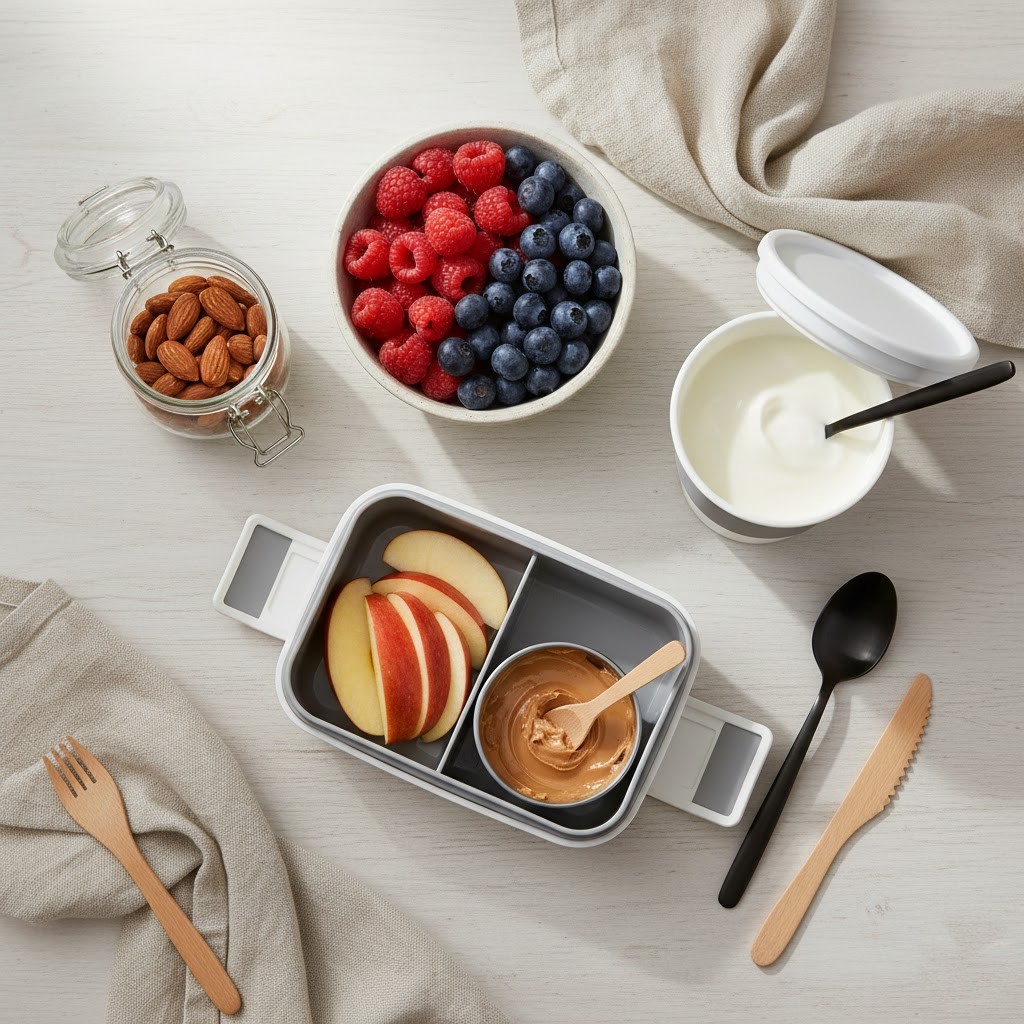
Quick items are essential for busy mornings when you’re rushing out the door. Almonds are a great portable option; 10 pieces provide around 2–3 grams of protein and pair well with fruit. A single apple won’t provide protein on its own, but it adds fiber and volume that help your breakfast feel more complete. Greek yogurt is one of the easiest high-protein foods available in US grocery stores, offering up to 18 grams per cup. Add ½ cup of berries for antioxidants and natural sweetness. Even 1 tablespoon of peanut butter can be added to fruit or oatmeal to increase protein slightly and provide healthy fats.
Easy-prep meals (eggs, chia pudding, oatmeal)
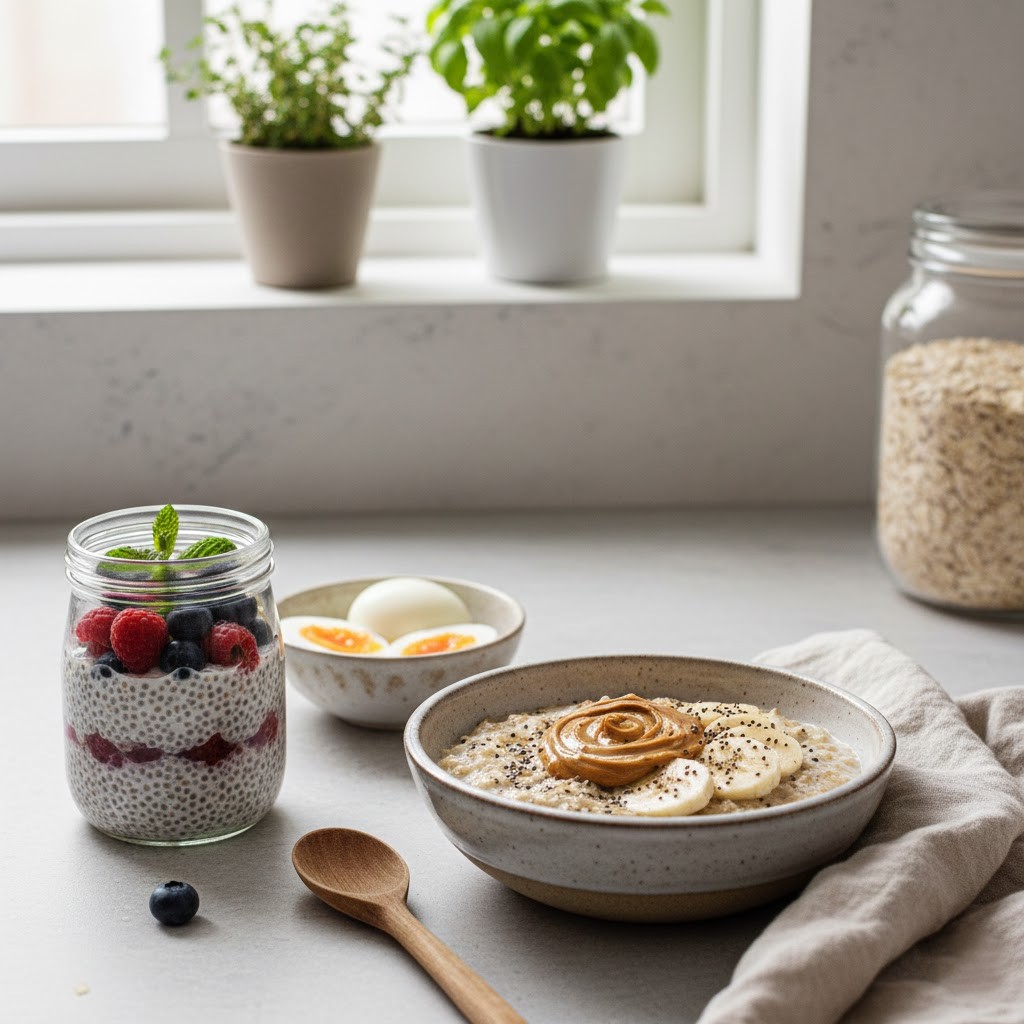
If you have a few minutes to prepare breakfast, these ideas provide more substantial protein while staying simple. Two boiled or scrambled eggs each supply around 6 grams of protein, offering a fast meal in under 5 minutes. Chia pudding—made from chia seeds soaked overnight—delivers roughly 4–5 grams of protein per ounce (28g), especially when mixed with Greek yogurt or milk. A bowl of oatmeal contains only 5 grams of protein on its own, but adding peanut butter, chia seeds, or pumpkin seeds increases the protein significantly. For example, just 1 cup of pumpkin seeds provides 12 grams of protein and a satisfying crunch.
How to Build a High-Protein Breakfast (Step-by-Step)
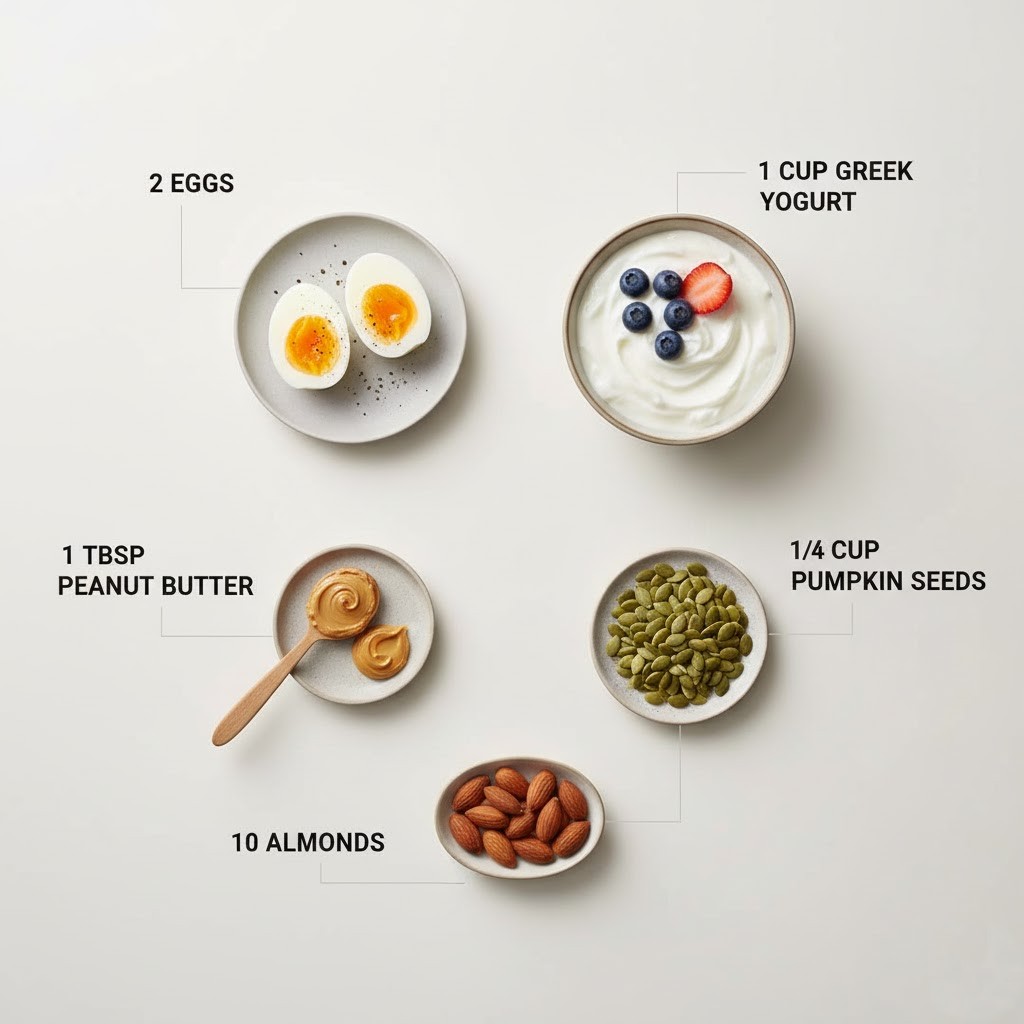
These simple steps help you turn individual ingredients into balanced, high-protein breakfasts.
- Choose one primary protein source like eggs, Greek yogurt, or chia pudding.
- Add a secondary protein booster such as nuts, seeds, or peanut butter.
- Include fiber-rich fruit like apples or berries to add volume and nutrients.
- If eating oatmeal, mix in at least 2 tablespoons of seeds or nut butter for extra protein.
- Prepare grab-and-go items the night before to save time.
- Adjust portion sizes to meet your personal protein target—usually 15–25 grams for breakfast.
Tips & Swaps
- Add chia or pumpkin seeds to oatmeal for a protein boost.
- Choose Greek yogurt over regular yogurt for nearly double the protein.
- Mix peanut butter into warm oats for flavor and healthy fats.
- Pair almonds with fruit to create a balanced snack-style breakfast.
- Prep boiled eggs on Sunday for quick weekday meals.
- Use low-fat cheese slices to add 4–5 grams of protein per slice.
FAQs
- How much protein should a typical breakfast include?
Most adults benefit from about 15–25 grams of protein at breakfast, though needs vary by activity level and personal goals. A combination like 1 cup of Greek yogurt plus ½ cup berries and a tablespoon of chia seeds can easily reach this range. The goal isn’t perfection—just choosing options that help you stay full and energized. - Are plant-based protein options enough for breakfast?
Yes, especially when you combine multiple plant sources. For instance, chia seeds, pumpkin seeds, almonds, and oatmeal can create a satisfying plant-based breakfast. Plant proteins may require slightly larger portions to match animal-based protein amounts, but they still provide excellent nutrients and fiber. - Is fruit alone enough for breakfast?
Fruit offers valuable vitamins and fiber but lacks significant protein. Pairing fruit with yogurt, eggs, nuts, or seeds helps create a more balanced meal that prevents midmorning hunger. A simple combo like an apple with 1 tablespoon of peanut butter works well for busy mornings. - Can I increase protein without using protein powder?
Absolutely. Everyday foods like eggs, Greek yogurt, chia seeds, peanut butter, and pumpkin seeds allow you to boost protein naturally. Many of these items are budget-friendly and available in any US grocery store. Combining two or three small portions can raise your breakfast protein quickly.
Try mixing two or three of these high-protein breakfast options this week to find a routine that fits your lifestyle. Small, consistent changes can make mornings feel more energized and satisfying.
Disclaimer: This content is for informational purposes only and is not a substitute for professional medical advice.

About Mike Johnson
We turn solid evidence into everyday habits Americans can actually do—plain English, cups/oz, grocery-aisle swaps, and routines that fit real life. Our editorial process: Experience—we road-test tips in real schedules…